
Decentralized domestic or similar biodegradable wastewater
Industrial water treatment · Project-specific configuration
Containerized Water Treatment Systems
Integrated water-treatment equipment packages designed for compact installation, coordinated delivery, and practical deployment at industrial sites.
Direct answer: Baihuipu integrates selected treatment, clarification, disinfection, pumping, and control functions into a modular enclosure when a project benefits from reduced site work, a compact footprint, or coordinated delivery. Suitability still depends on wastewater type, flow, climate, access, and maintenance requirements.
Configuration starts with water data, the treatment target, and site conditions.
Not sure which system you need? Ask About System Selection →
01
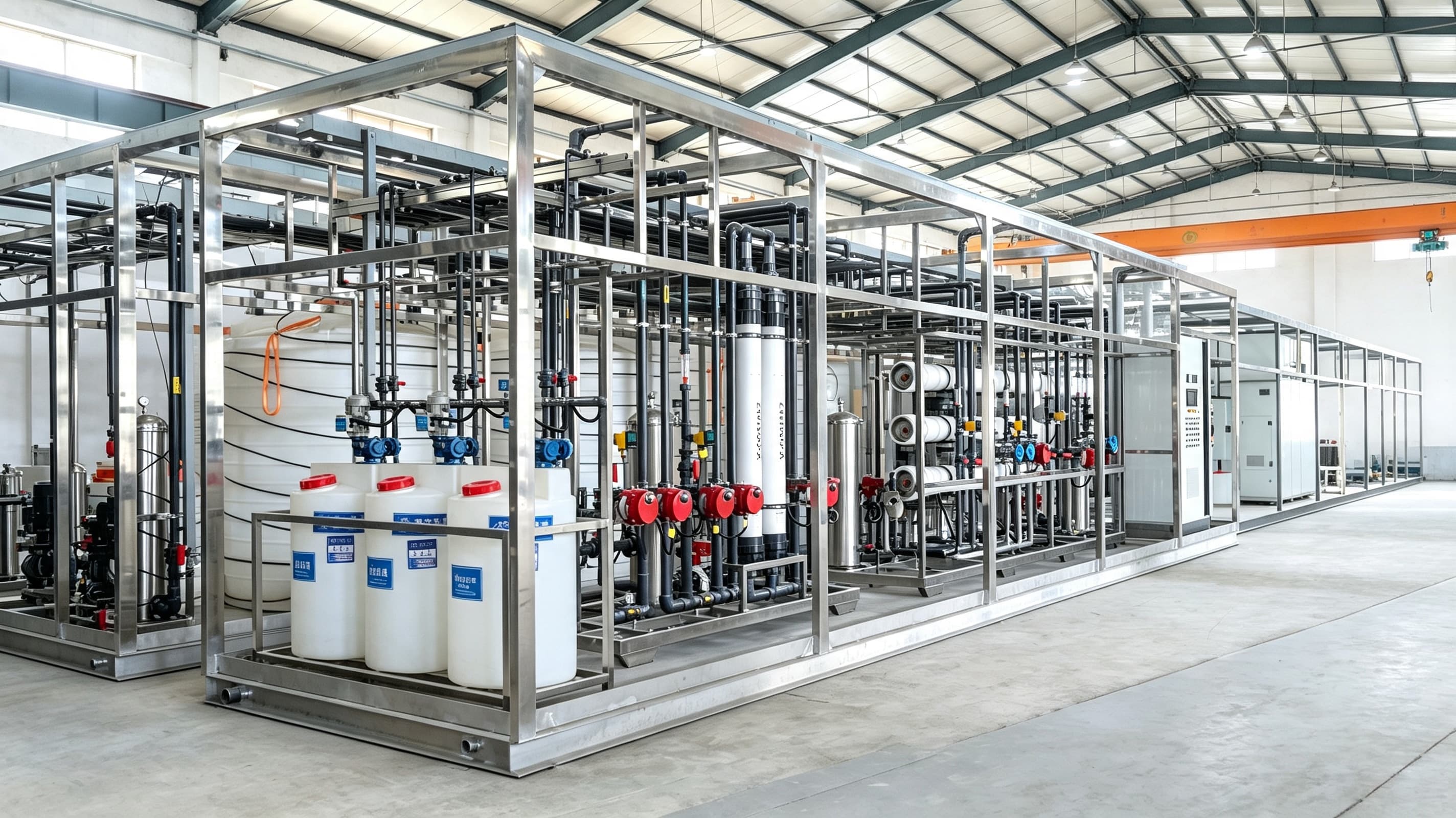
A defined system package for your siteThe system scope is arranged around the project footprint, treatment target, and installation conditions.
Buyer fit
When This System Should Be Evaluated.
Use these application boundaries as a screening guide. Final suitability still requires representative water data and an agreed treatment objective.
Schools, communities, hotels, scenic areas, service stations, and remote camps
Small industrial streams only after water-quality review
Remote, phased, or fast-deployment sites with defined lifting and utility access
System value
Integrated Treatment Equipment, Ready for Practical Deployment.
Containerized systems bring key treatment modules into an organized equipment package for projects that benefit from compact installation and coordinated delivery.
Integrated equipment scope
Organize selected treatment modules within a defined delivery package.
Site-ready planning
Review footprint, utility conditions, and installation requirements early.
Coordinated logistics
Support packing, shipment, and delivery planning for international projects.
Selection basis
What Defines the Right Configuration.
Capacity, materials, utilities, automation, and guaranteed performance are confirmed against these project inputs—not assumed from a generic model.
| Decision input | What the technical review needs |
|---|---|
| Hydraulic basis | Average flow, peak flow, batch patterns, operating hours, and future expansion |
| Wastewater and target | Source, biodegradability, key pollutants, temperature, and required discharge or reuse standard |
| Site arrangement | Above-ground or buried preference, footprint, access, noise, odor, drainage, and maintenance clearance |
| Delivery conditions | Transport envelope, lifting route, climate, utilities, civil works, and site connection boundaries |
Typical treatment route
Plan the Package Around the Project Site.
The solution is configured with treatment needs and installation conditions considered together from the start.
Site and water review
Confirm the treatment target, site conditions, and utilities.
Package design
Define the selected treatment modules and equipment layout.
Factory assembly
Assemble and prepare the agreed package for delivery.
Installation support
Coordinate delivery and the agreed site integration support.
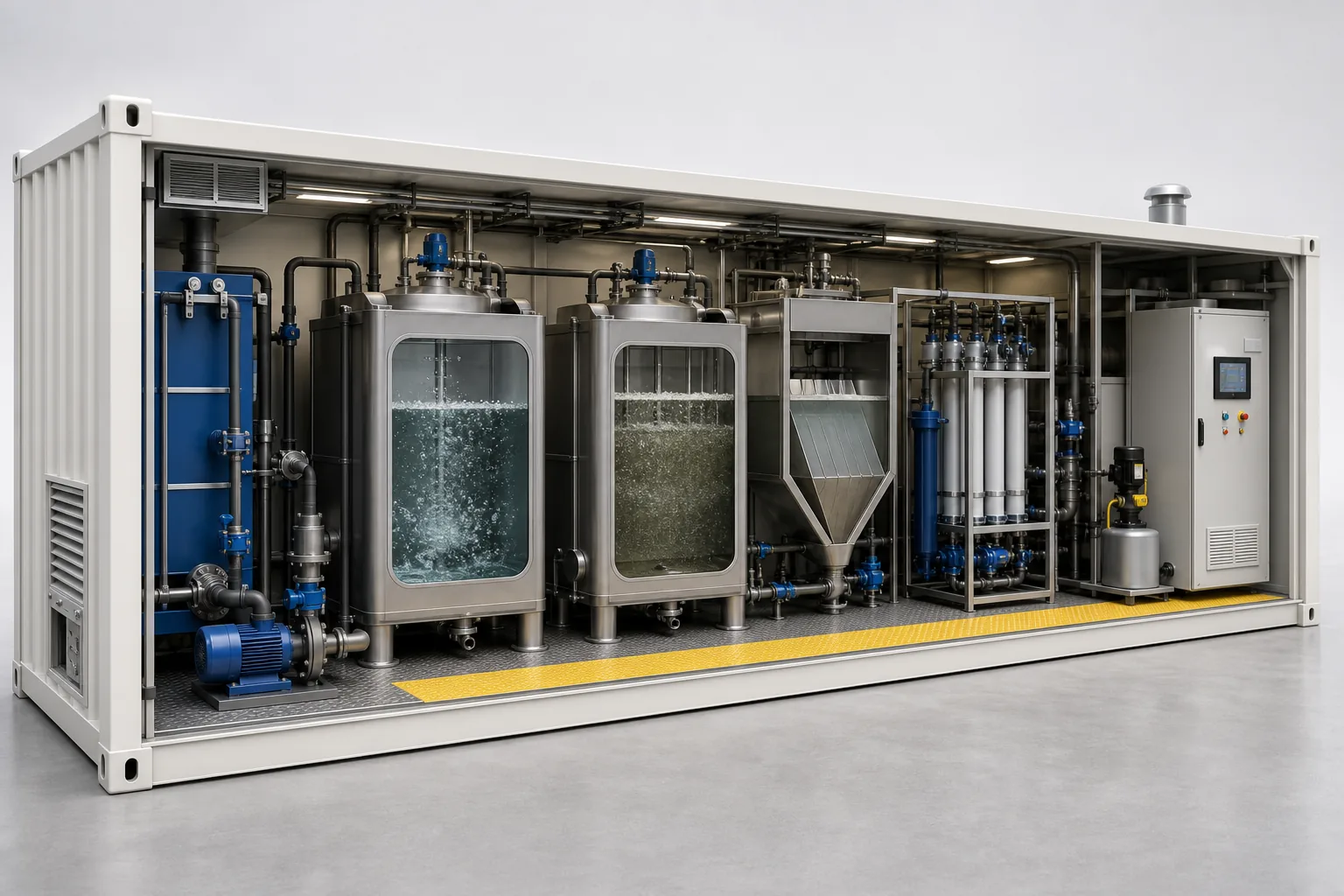
Relevant project context
Selected Anonymous Project Records.
These records help buyers understand comparable water types and scales. They are not a promise that another project will use the same process or achieve the same result.
Domestic wastewater
Biological treatment in an integrated enclosure is recorded for the project
Integrated treatment package
The source records enclosure fabrication; detailed wastewater and process data were not published
Integrated treatment package
The source records enclosure fabrication; detailed wastewater and process data were not published
Prepare a useful RFQ
Send the Data That Changes the Design.
A quotation becomes more reliable when the design basis and project boundaries are visible from the start.
Send Your RequirementsWastewater source and analysis
Average and peak flow
Target standard and reuse point if applicable
Site layout, climate, and installation preference
Transport and lifting limits
Utilities and civil-work boundaries
Buyer FAQ
Questions to Resolve Before Selection.
These answers define the decision process without turning project-specific values into universal specifications.
Is every containerized system a standard container size?
No. The enclosure and module arrangement depend on capacity, process, access, maintenance space, transport limits, and site connections.
What wastewater is suitable for a containerized system?
Domestic and similar biodegradable wastewater are common candidates. Industrial wastewater requires a specific water-quality review before the treatment route and enclosure are selected.
Does containerization eliminate all site work?
No. Foundations, drainage, utilities, lifting, interconnecting piping, electrical interfaces, and commissioning preparation may still be required.
Can the system be expanded later?
A phased or modular arrangement can be considered when future flow and site space are defined early, but expansion is not automatic for every design.
What information is needed for a quotation?
Provide wastewater data, average and peak flow, target standard, climate, site plan, installation preference, access and lifting limits, utilities, and scope boundaries.
Company context
Engineering and Manufacturing in Dongguan.
Guangdong Baihuipu Environmental and Energy Conservation Development Co., Ltd. was established in 2007 and integrates R&D, manufacturing, and sales.
- 150+ employees and 50 technical professionals
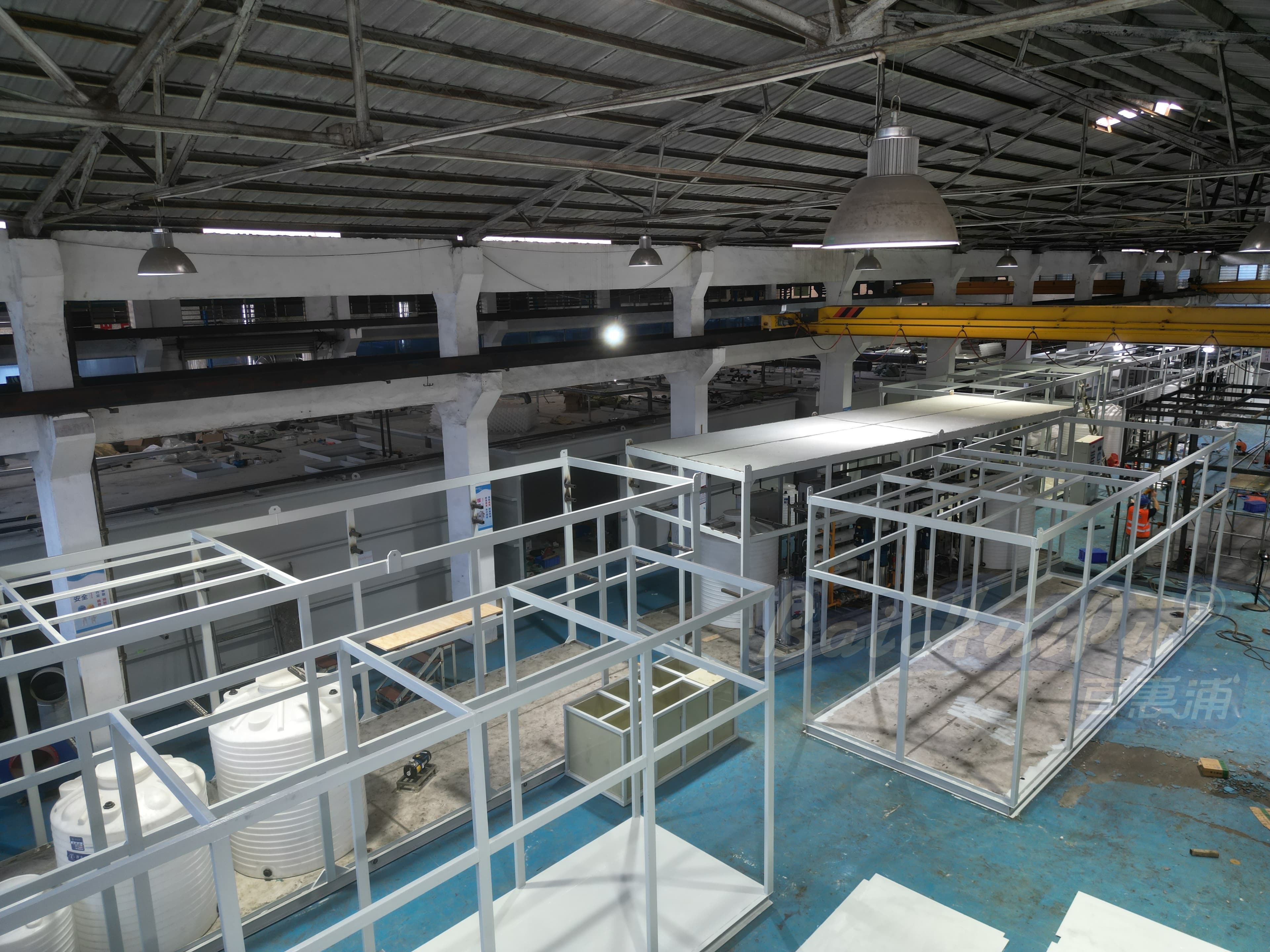
- Factory workshops and a wastewater laboratory shown in company materials
- Project references across multiple international markets
Discuss your requirement
Turn Your Project Data into a Clear Technical Scope.
Send your wastewater data, flow, site constraints, and target standard for a containerized-system configuration review.