Electronics and semiconductor process water
Industrial water treatment · Project-specific configuration
Ultrapure Water Systems
High-purity water systems configured for process stability, consistent water quality, and the specific requirements of industrial operations.
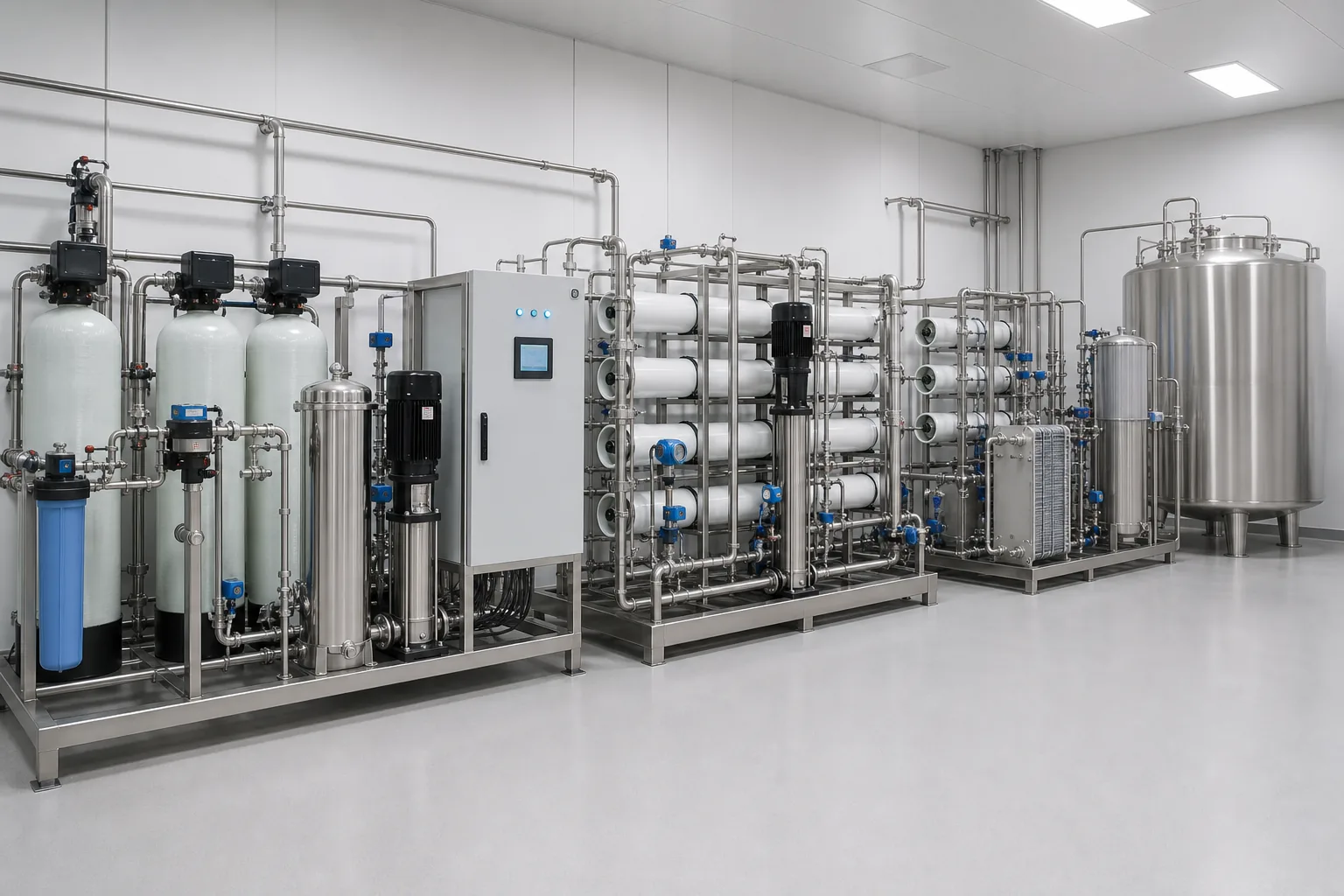
Direct answer: Baihuipu combines pretreatment, reverse osmosis, EDI, monitoring, and project-specific polishing stages around the feed-water condition and the required water quality at the point of use. The final purity guarantee is defined only after the design basis is confirmed.
Configuration starts with water data, the treatment target, and site conditions.
Not sure which system you need? Ask About System Selection →
01
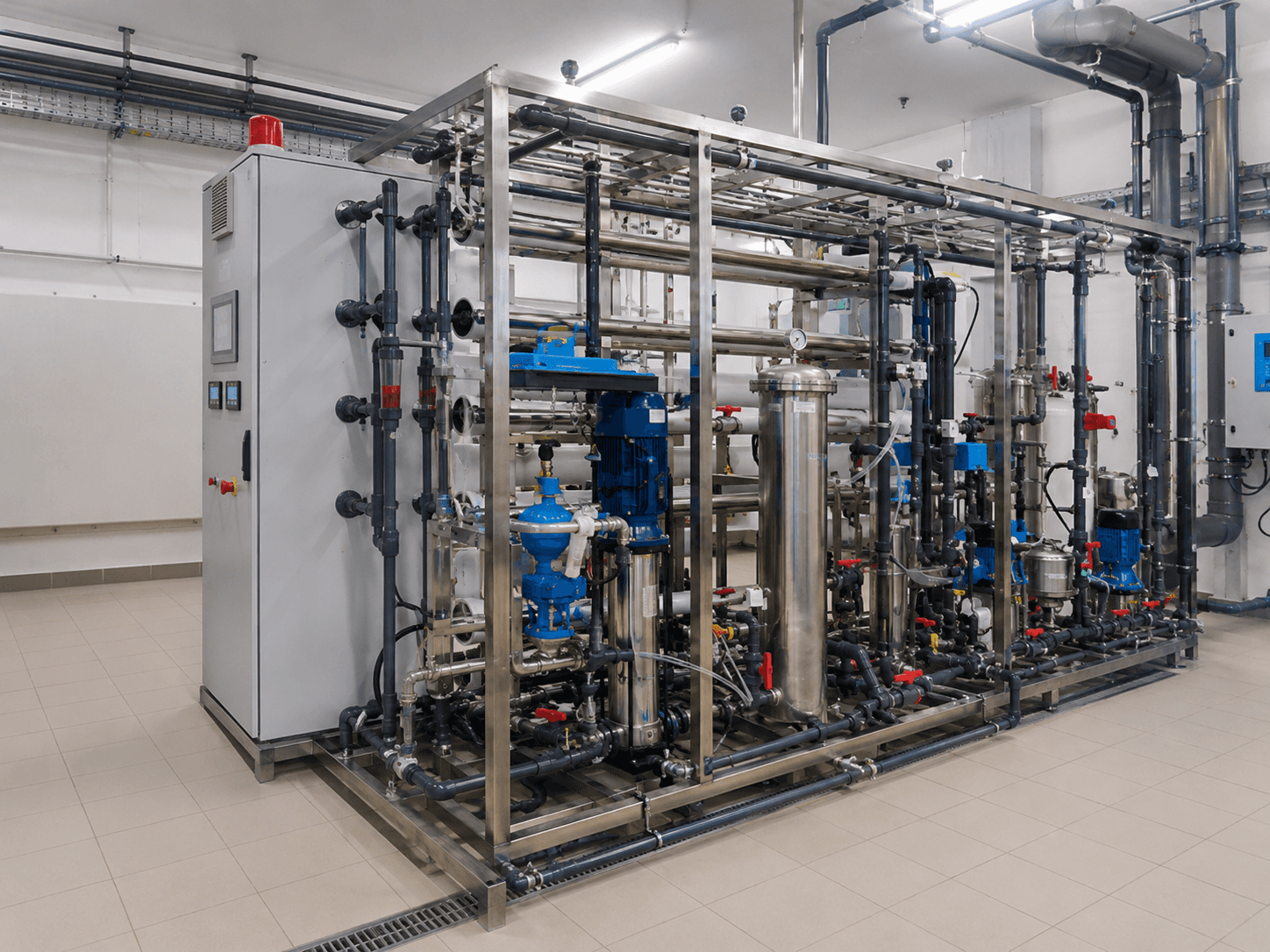
Purity starts with a clear system scopeSystem configuration follows the required water quality, point-of-use requirements, and operational conditions.
Buyer fit
When This System Should Be Evaluated.
Use these application boundaries as a screening guide. Final suitability still requires representative water data and an agreed treatment objective.
Pharmaceutical and fine-chemical process water
Power-plant chemical water and high-pressure boiler make-up
Laboratory, precision-manufacturing, food, beverage, and new-energy applications
System value
A Water-Quality System Designed for Your Process.
We help define an ultrapure-water system around the expected feed water, purity target, process requirements, and delivery conditions.
Targeted water quality
Plan treatment stages around the required process water standard.
Stable operation
Configure pretreatment and purification stages for reliable industrial use.
Integrated system design
Align equipment scope, controls, and delivery with the project.
Selection basis
What Defines the Right Configuration.
Capacity, materials, utilities, automation, and guaranteed performance are confirmed against these project inputs—not assumed from a generic model.
| Decision input | What the technical review needs |
|---|---|
| Feed-water basis | Source, conductivity, dissolved constituents, temperature, and expected variation |
| Water-quality target | Required conductivity or resistivity and the specification at each point of use |
| Demand profile | Production flow, peak demand, operating continuity, storage, and distribution requirements |
| Operating priorities | Recovery target, monitoring, redundancy, cleaning strategy, utilities, and available footprint |
Typical treatment route
From Feed Water Review to Reliable Process Water.
The final configuration is guided by the incoming water quality and the purity requirements of the production process.
Feed water review
Confirm the incoming water condition and the required output.
Pretreatment
Prepare the water for the selected purification stages.
Purification
Apply the configured separation and polishing process.
Point-of-use support
Deliver the required water quality to the operating process.
Relevant project context
Selected Anonymous Project Records.
These records help buyers understand comparable water types and scales. They are not a promise that another project will use the same process or achieve the same result.
Pure-water production
Pretreatment, two-pass RO, EDI, and a final demineralization stage recorded in the project data
Integrated ultrapure-water, slurry-recovery, and wastewater-reuse project
The ultrapure-water package was one part of a wider plant water-management scope
Pure-water production
Two recorded production capacities for the project
Prepare a useful RFQ
Send the Data That Changes the Design.
A quotation becomes more reliable when the design basis and project boundaries are visible from the start.
Send Your RequirementsFeed-water analysis
Required product-water specification
Normal and peak flow
Operating schedule
Point-of-use and distribution requirements
Monitoring, redundancy, and utility requirements
Buyer FAQ
Questions to Resolve Before Selection.
These answers define the decision process without turning project-specific values into universal specifications.
When is EDI added after reverse osmosis?
EDI is typically considered when the required water quality is beyond the practical target of RO alone and the RO product water is suitable as EDI feed.
Should buyers specify conductivity or resistivity?
Specify the required value, measurement point, temperature basis, and whether it is a normal operating target or a contractual limit.
Is one-pass RO enough for ultrapure water?
Not necessarily. The number of RO passes and the need for EDI or other polishing depend on feed water, the final specification, recovery, reliability, and operating requirements.
What information is needed for selection?
Provide feed-water analysis, target water quality, flow profile, operating hours, storage and distribution conditions, monitoring needs, utilities, and installation limits.
Are purity and capacity fixed across all systems?
No. The system capacity and guaranteed water quality must be defined in the approved proposal for the specific feed water and point-of-use requirement.
Company context
Engineering and Manufacturing in Dongguan.
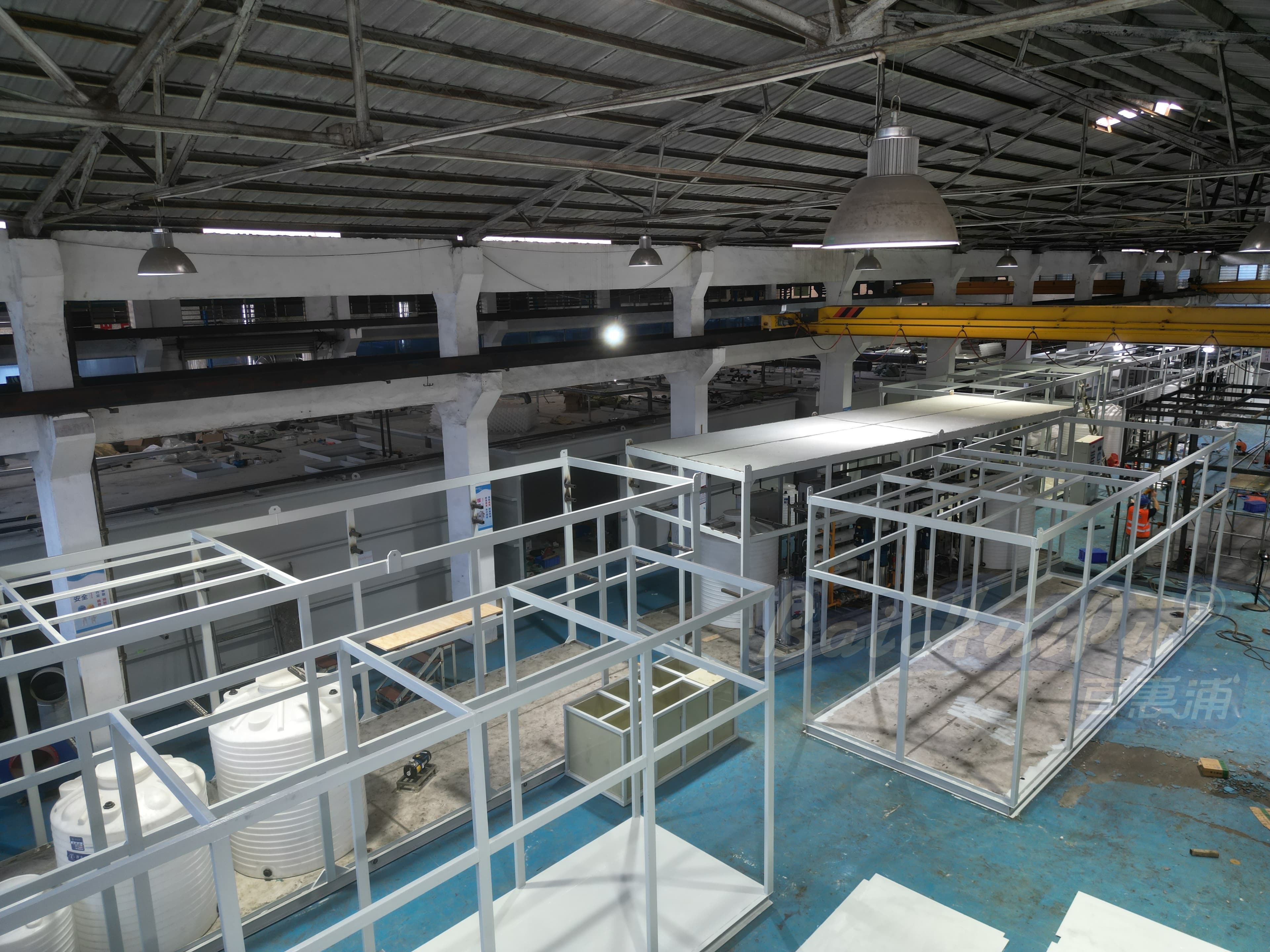
Guangdong Baihuipu Environmental and Energy Conservation Development Co., Ltd. was established in 2007 and integrates R&D, manufacturing, and sales.
- 150+ employees and 50 technical professionals
- Factory workshops and a wastewater laboratory shown in company materials
- Project references across multiple international markets
Discuss your requirement
Turn Your Project Data into a Clear Technical Scope.
Send your feed-water analysis, required flow, and target water quality for a tailored RO/EDI ultrapure-water proposal.