- Plant owners and facility teams
- Engineering and technical teams
- EPC contractors and project integrators
- Procurement teams evaluating treatment scope
Purified process water & complex wastewater
Pharmaceutical & Biotechnology Water Treatment Solutions
Customized process-water and wastewater treatment solutions for pharmaceutical, biotechnology, cosmetics, medical products and fermentation operations.

Direct answer
What Usually Defines the Treatment Route?
Pharmaceutical and biotechnology sites may require purified process water as well as treatment for production, fermentation, cleaning and laboratory wastewater. The water grade, validation responsibilities, wastewater segregation, discharge target and site quality procedures must be defined before equipment scope is confirmed.
- Intended process-water use and required grade
- Source-water and wastewater analyses
- Production, cleaning and laboratory stream list
- Purified process water
- High-COD wastewater
- Project-specific sanitary scope
- Ultrapure Water Systems
- Industrial Wastewater Treatment Systems
- Industrial Water Reuse Systems
Confirm equipment, materials, capacity and performance targets from representative water data, site conditions and the agreed project scope.
Applications covered
Where This Industry Solution Applies.
Use the closest application as a starting point. The treatment route still depends on the actual water source and project target.
Pharmaceutical Manufacturing
Define process-water grade, cleaning wastewater, product residues, documentation scope and discharge target.
Biopharmaceuticals
Confirm water-quality requirements, batch operations, biological residues, cleaning streams and project responsibilities.
Biotechnology
Map laboratory, production, cleaning and fermentation-related streams and identify any inhibitory compounds.
Cosmetics Manufacturing
Review surfactants, oils, fragrances, product losses, cleaning wastewater and batch-to-batch variation.
Medical Products
Define process-water quality, cleaning requirements, wastewater sources and the site's quality procedures.
Fermentation Industry
Assess high biodegradable load, nutrients, suspended biomass, batch discharge and temperature variation.
Buyer-critical conditions
Issues to Resolve Before Equipment Selection.
These conditions influence process reliability, operating workload, footprint and the treatment boundary.
Two different water objectives
Process-water generation and wastewater treatment have different specifications, controls and acceptance criteria.
Variable or refractory wastewater
Active ingredients, solvents, cleaning chemicals, fermentation residues and high organic loads may need segregation or pretreatment.
Project-standard boundaries
Water grade, sanitary materials, documentation and validation responsibilities belong in the agreed project specification.
Water streams & treatment direction
Do Not Design from an Industry Label Alone.
Map the source, contaminants and treatment objective of each important stream before combining flows.
| Water stream | What must be checked | Possible treatment direction |
|---|---|---|
| Purified process water | Source-water quality and required point-of-use grade | Pretreatment, RO, optional polishing, storage and distribution |
| Production and cleaning wastewater | COD, pH variation, surfactants and product residues | Segregation, equalization and a combined physicochemical/biological route |
| Fermentation wastewater | High biodegradable load, nutrients and batch variation | Load buffering and biological treatment after characterization |
| Difficult organic streams | Low biodegradability or inhibitory compounds | Separate collection and oxidation or other pretreatment evaluation |
| Concentrate and residuals | Salts, concentrated organics and sludge | Mass-balance review and a defined downstream handling route |
Request a process review
Send the Water Source, Flow and Treatment Target.
Available analysis, stream list and site conditions help identify the questions that must be resolved before the treatment route is selected.
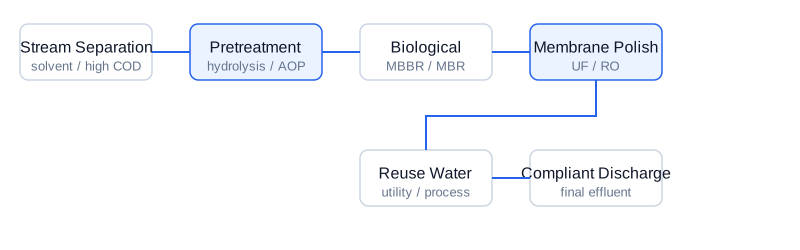
Typical process route
Keep purified-water production and wastewater treatment clearly separated
The diagram focuses on a typical wastewater route. Purified-water generation must follow its own confirmed quality specification.
Equipment options
Evaluate Each Module Against a Defined Treatment Job.
Match every equipment stage to the actual water, operating conditions, required outlet quality and residuals route.
Purified-water systems
Evaluation focusConfigure pretreatment, RO, polishing, storage and distribution for the stated project water grade.
Physicochemical pretreatment
Evaluation focusControl pH, solids or specific production residues before downstream treatment.
Advanced oxidation
Evaluation focusEvaluate oxidation for difficult organic wastewater through water data and treatability work.
Biological treatment
Evaluation focusUse aerobic, MBR or other suitable processes for biodegradable loads and the available footprint.
Water reuse
Evaluation focusAdd polishing only for a defined reuse point and quality requirement.
Residuals management
Evaluation focusPlan sludge and concentrate handling as part of the total process boundary.
Selection framework
Match the Process to the Condition That Drives the Design.
Compare each project condition against water analysis, operating requirements and the treatment target before selecting the process route.
| Project condition | Evaluate | Possible direction |
|---|---|---|
| Purified-water requirement | Required grade, source water, distribution and monitoring | RO and project-specific polishing with suitable storage/distribution |
| High biodegradable load | BOD/COD relationship, batch pattern and temperature | Equalization and biological treatment |
| Inhibitory organic wastewater | Toxicity, biodegradability and variability | Segregation and treatability-led pretreatment |
| Reuse or concentrate reduction | Reuse quality, salt balance and residual route | Membrane polishing or concentration after feasibility review |
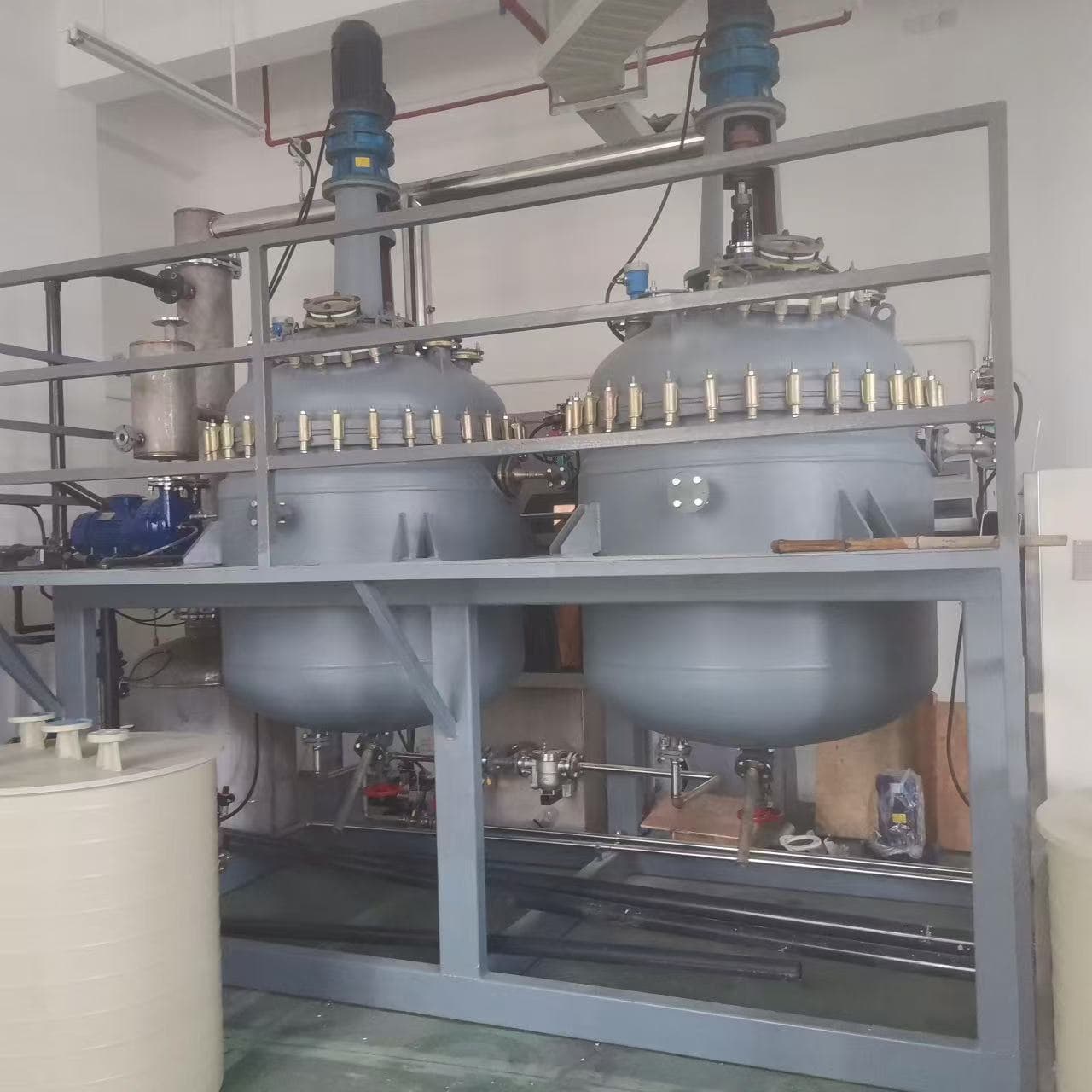
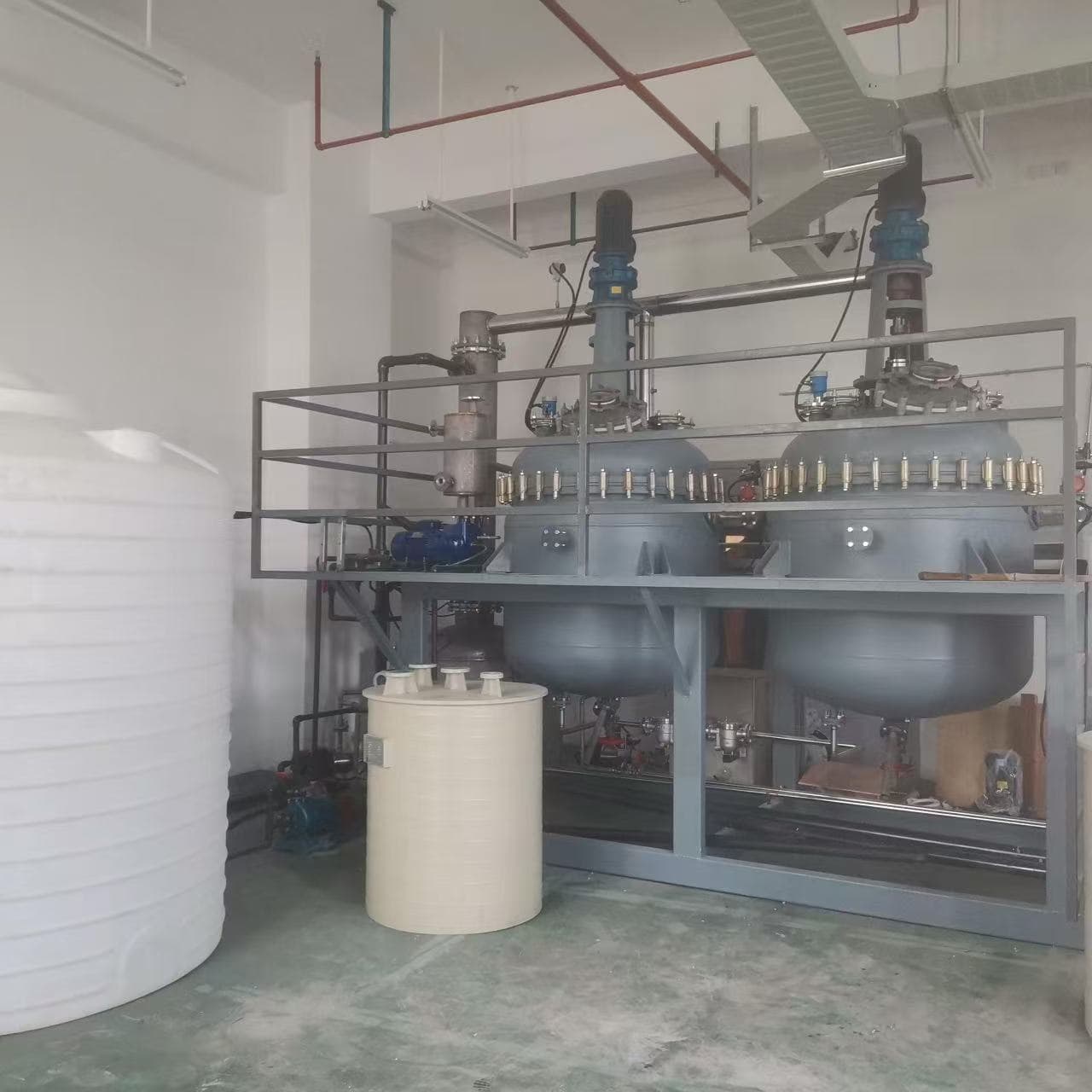
Equipment and layout
Review Equipment Arrangement and Site Access.
Use these views to discuss equipment arrangement, operating access, piping interfaces and the space available for the treatment system.
Prepare a useful RFQ
Provide the Inputs That Change the Design.
Share what is available now. The missing inputs can then be identified before equipment scope, materials and performance targets are confirmed.
Send Project RequirementsIntended process-water use and required grade
Source-water and wastewater analyses
Production, cleaning and laboratory stream list
Average, peak and batch flow
Discharge or reuse target
Materials, documentation and validation scope
Footprint, utilities and residuals route
Buyer FAQ
Questions to Resolve Before Requesting a Final Quote.
Answers remain conditional where water data, local requirements or project standards determine the result.
Can one system produce purified water and treat wastewater?
They are normally separate treatment trains with different objectives. They can be coordinated within one project, but each requires its own design basis and acceptance criteria.
Is RO/EDI always required for pharmaceutical process water?
No. The route depends on the required water grade, feedwater and project standard. EDI should not be specified without confirming those requirements.
How should solvent or high-strength wastewater be handled?
Potentially inhibitory or concentrated streams should be identified separately before they enter the main biological system. The final route may require characterization or treatability testing.
Does the equipment automatically meet every pharmaceutical standard?
No. Materials, instrumentation, documentation, sanitization and validation responsibilities must be agreed for the specific project standard.
Plan your industry solution
Turn Your Water Data into a Clear Technical Scope.
Send the stream source, flow, available analysis, treatment objective and site conditions for a project-specific discussion.