Introduction
Industrial wastewater proposals often contain one of three statements: “a jar test is required,” “laboratory testing is recommended,” or “a pilot test may be necessary.” These phrases are sometimes used as if they mean the same thing. They do not.
The right test depends on the technical decision the project must make. A jar test may help compare coagulants, but it cannot reproduce a full biological system. A membrane coupon test may indicate separation behaviour, but it does not automatically define long-term fouling. A pilot unit may reveal hydraulic, control, and solids-handling issues, but it still represents only the wastewater and operating window provided during the trial.
For an overseas buyer, treatability testing is also a commercial tool. A well-defined test can reduce uncertainty before equipment manufacture, clarify which assumptions belong in the proposal, and establish what still needs to be confirmed during commissioning. A poorly defined test produces attractive numbers without a defensible design basis.
This guide explains how to choose among jar, bench, and pilot testing; how to prepare representative samples; what records to request; and how to translate results into an industrial wastewater treatment specification.
Start With the Decision, Not the Test Equipment
Before asking a laboratory or supplier to test wastewater, write one sentence describing the decision the test must support. Examples include:
- select a coagulant and preliminary dose range;
- determine whether pH adjustment improves metal precipitation;
- evaluate oil and suspended-solids separation before biological treatment;
- screen whether activated carbon reduces a specific residual organic load;
- examine membrane flux and rejection under defined pretreatment conditions;
- assess whether the wastewater is biodegradable and identify inhibition risk;
- investigate scaling, foaming, or crystallization during concentration;
- compare two treatment sequences before pilot design;
- generate a preliminary solids or residuals mass balance.
If the objective is not defined, the test programme can expand without answering the project’s real question. The objective should identify the wastewater source, target parameter, success criterion, operating condition, and limitation.
Representative Wastewater Comes Before Representative Testing
A precise laboratory procedure cannot correct a poor sample. Industrial wastewater may change by shift, product, cleaning cycle, raw material, batch recipe, season, or upstream operating condition. The sampling plan should therefore reflect the process that will feed the future system.
Grab samples and composite samples serve different purposes
A grab sample describes the wastewater at one point in time. It can be useful for short batch discharges, extreme conditions, rapidly changing parameters, or streams that cannot be stored or composited without changing. A composite sample combines aliquots over time or flow and can better represent an average condition when the wastewater varies during production.
The US EPA’s industrial-user sampling guidance distinguishes these purposes and notes that composite samples are useful for average characteristics, while grab samples can help identify fluctuations and extremes. The applicable local sampling and preservation requirements should always take priority.
Define the sample identity
Every container should be traceable to:
- facility and sampling point;
- wastewater source or combined stream;
- date and time;
- production product, line, and operating state;
- instantaneous or corresponding flow information where available;
- grab or composite method;
- preservation and storage conditions;
- parameters requiring immediate field measurement;
- unusual events, chemical additions, or shutdowns.
For variable wastewater, consider testing more than one condition: typical, high-load, low-pH or high-pH, cleaning-related, start-up, or other credible cases. Do not create an artificial “worst case” by mixing incompatible streams that would never arrive together.
What Is a Jar Test?
A jar test is a controlled, parallel comparison of chemical coagulation and flocculation conditions, commonly followed by settling. ASTM D2035 describes a general practice for evaluating coagulants, coagulant aids, concentration, order of addition, and variables associated with coagulation-flocculation and gravity settling.
What a jar test can investigate
Depending on the wastewater and objective, a jar test may help screen:
- pH adjustment range;
- coagulant type and preliminary dose;
- coagulant-aid or polymer selection;
- chemical addition order;
- rapid- and slow-mixing conditions;
- floc formation and visible strength;
- settling behaviour;
- supernatant turbidity, colour, suspended solids, metals, COD fraction, phosphorus, or other relevant parameters;
- preliminary chemical-sludge generation.
The selected analyses should match the decision. A clear-looking supernatant is not sufficient when dissolved metals, COD, toxicity, salinity, or another parameter controls the project.
What a jar test cannot prove
A jar test does not automatically establish:
- full-scale hydraulic performance;
- dissolved-air-flotation recycle pressure and bubble behaviour;
- continuous chemical control under variable flow;
- long-term sludge pumping and dewatering performance;
- biological treatability;
- membrane fouling rate;
- final plant energy or chemical consumption;
- reliable performance for water outside the tested range;
- compliance under the site’s formal sampling and averaging rules.
Scale-up also matters. Mixing energy, chemical dispersion, floc contact, tank geometry, recycle conditions, and solids return cannot be represented completely by a set of beakers.
What Is Bench-Scale Treatability Testing?
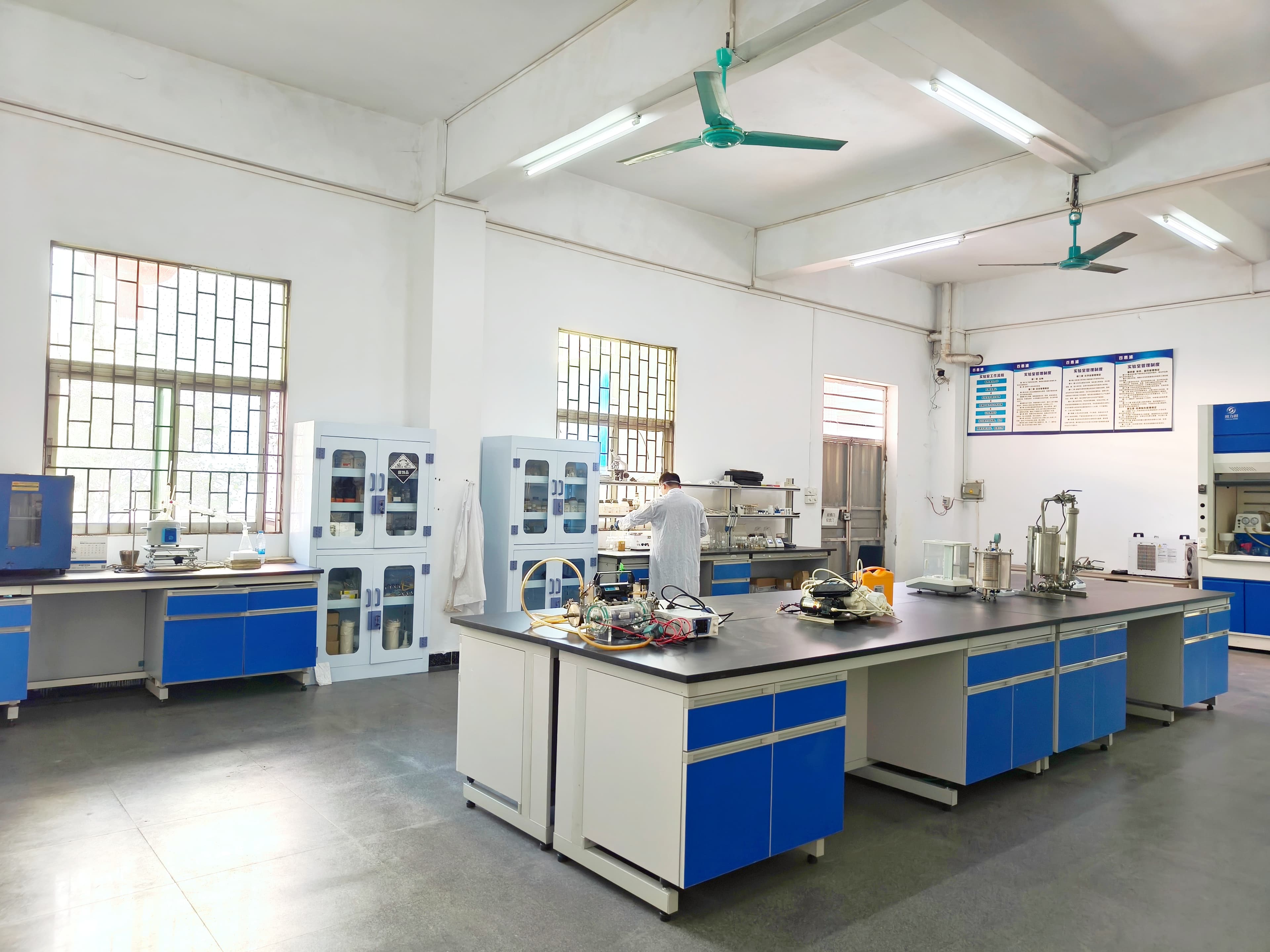
“Bench test” is a broad project term rather than one universal method. It means a controlled small-scale investigation designed around a specific process question. The apparatus and protocol depend on the technology.
Physical and chemical bench tests
These may evaluate precipitation, neutralization, oxidation-reduction, adsorption, filtration, oil separation, sludge conditioning, or chemical compatibility. A valid protocol should state chemical identity and concentration, mixing, contact time, temperature, filtration method, analytical method, blanks, and controls.
For wastewater containing multiple reactive components, the sequence of treatment can be as important as the individual dose. The test matrix should avoid changing several variables at once unless the experimental design accounts for their interaction.
Membrane screening
Bench membrane testing may examine pretreatment effectiveness, permeate quality, flux, pressure, recovery, or concentrate behaviour over a limited period. Buyers should ask whether the test used the proposed membrane family, realistic crossflow, temperature correction, cleaning assumptions, and representative feed concentration.
A short test does not establish long-term scaling, organic fouling, biological fouling, membrane life, or clean-in-place frequency. It can support screening and pilot design, but the proposal should state the remaining uncertainty.
Biological treatability testing
Biological questions may require biodegradability, oxygen-uptake, toxicity, nutrient, respirometry, acclimation, or sequencing studies. The test should distinguish soluble and particulate load where relevant and identify whether the inoculum represents the proposed process.
An encouraging short test does not reproduce full-scale biomass adaptation, temperature changes, sludge age, solids separation, shock loading, or production interruptions. Biological startup and process control still require a commissioning plan.
Evaporation and concentration testing
For complex high-salinity wastewater, bench work may investigate boiling behaviour, foaming, precipitation, viscosity change, scaling tendency, corrosion concerns, condensate quality, and concentrate handling. A small evaporation test should not be used alone to declare full-scale steam consumption, heat-transfer performance, cleaning interval, or crystallizer behaviour.
What Is Pilot Testing?
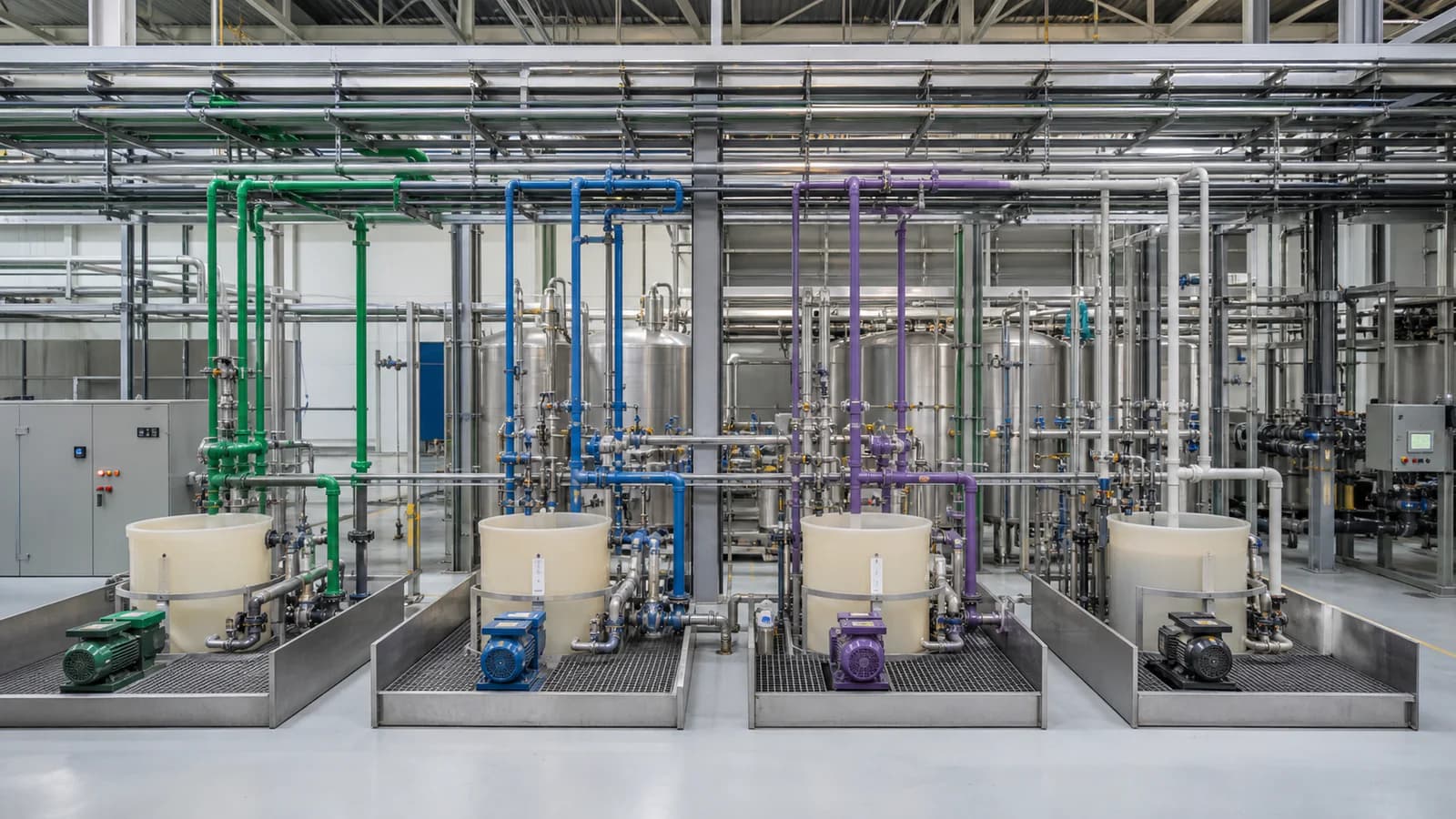
A pilot test uses equipment and operating logic that represent important parts of the proposed treatment train at a reduced scale. It may operate continuously or in batches and may run long enough to observe feed variation, control response, solids behaviour, fouling, cleaning, biological acclimation, or operator requirements.
When a pilot test is worth considering
Pilot work may be justified when:
- wastewater variability is high and poorly represented by laboratory samples;
- the process combines several dependent stages;
- treatability or fouling risk is material to project viability;
- the buyer needs operating data before a major capital decision;
- a new or unusual wastewater stream lacks relevant experience;
- residuals handling could determine the economics;
- local approval or internal governance requires demonstration;
- the consequence of process failure is high;
- the site wants to train personnel or verify interfaces before full-scale design.
Not every project needs a pilot. Established applications with representative data and a well-understood process may proceed through targeted bench testing and conservative engineering. The decision should be based on uncertainty and consequence, not on the assumption that more testing is always better.
What a pilot can reveal
A well-designed pilot can provide evidence about:
- process sequence and interactions;
- hydraulic stability and equalization needs;
- chemical-control response;
- achievable performance within the tested feed envelope;
- preliminary loading rates or flux behaviour;
- sludge quantity, character, settling, and dewaterability;
- membrane fouling and cleaning response over the test period;
- biological acclimation and sensitivity;
- alarm, interlock, and control needs;
- sampling and analytical practicality;
- operator attention and maintenance access;
- data needed to refine the full-scale design.
What a pilot still cannot prove
Pilot results should not be extended beyond the data without engineering review. A pilot may not capture seasonal variability, future production changes, rare shock loads, long-term corrosion, component life, full-scale hydraulics, or the final site’s installation quality. If the pilot uses a prepared feed, temporary utility, or different residuals route, these differences must remain visible in the report.
Build a Defensible Treatability Test Protocol
1. State the objective and decision rule
Write what the project will decide from the result. For example: “Select a preliminary coagulation condition that reduces suspended solids and nickel in the defined rinse-water sample sufficiently for the proposed downstream filtration test.” This is more useful than “find the best chemical.”
2. Define feed cases
List sample IDs, wastewater sources, typical and extreme conditions, storage, preservation, and any blending. If a composite is used, document how it was produced. Record baseline analyses before treatment.
3. Identify controlled variables
These may include pH, chemical dose, addition sequence, mixing, contact time, temperature, pressure, flux, recovery, biomass concentration, airflow, or loading. Change variables systematically and include appropriate blanks or baseline runs.
4. Define measurements and methods
Specify which parameters will be measured, where, when, and by which method or laboratory. Include field measurements, analytical detection limits where important, sample filtration status, QA/QC, and handling of results below detection.
5. Record residuals and mass balance
Measure or estimate chemical addition, sludge, concentrate, reject water, off-gas, and other residuals. A treatment result is incomplete when the main contaminant is removed from water but the resulting residual is ignored.
6. Establish safety and disposal controls
Wastewater samples may contain corrosive, toxic, reactive, infectious, volatile, or unknown constituents. The test plan should address safety data, segregation, ventilation, personal protective equipment, incompatible chemicals, spill response, and lawful disposal of tested samples and residuals.
7. Agree on reporting before testing
The report should include objective, sample history, methods, apparatus, raw data, observations, calculations, photographs where useful, analytical reports, deviations, uncertainty, conclusions, and recommended next step. Negative or inconclusive results are valuable when they prevent an unsuitable full-scale choice.
Translate Test Results Into the Equipment Proposal
Testing should change the proposal in visible ways. The supplier should identify:
- which design assumption was confirmed or revised;
- the selected process condition and acceptable range;
- chemicals and preliminary consumption basis;
- new pretreatment, equalization, or control requirements;
- expected residual streams;
- scale-up method and safety factors;
- conditions that remain untested;
- additional pilot or site verification required;
- proposed performance-test conditions.
Do not copy the best laboratory result directly into a contractual guarantee. Full-scale guarantees should account for representative influent limits, equipment design, instrumentation, operator actions, analytical method, sampling point, test period, utilities, and commissioning status.
Treatability Testing Is Not Factory Acceptance Testing
Treatability testing investigates whether and how a wastewater can respond to a process under defined conditions. Factory acceptance testing verifies that manufactured equipment, controls, documents, and available functions match the approved supply before shipment.
A factory can test pumps, valves, instruments, panels, alarms, interlocks, rotation, leakage, and programmed sequences using clean water or another safe medium. Unless the factory has representative wastewater and an agreed process protocol, the FAT should not be presented as proof of final effluent performance.
Both forms of testing are useful, but they answer different questions and usually occur at different project stages.
Frequently Asked Questions
Is a jar test required for every industrial wastewater project?
No. It is relevant when coagulation, flocculation, precipitation, settling, or related chemical treatment is being evaluated. It may add little value when the controlling question concerns a different process unless it is part of a broader test programme.
How much wastewater is needed for testing?
The volume depends on the number of conditions, replicates, analytical requirements, apparatus hold-up, safety margin, and whether residuals need further testing. The laboratory or supplier should calculate the required volume from the agreed matrix rather than request an arbitrary container size.
Can I ship an industrial wastewater sample internationally?
Possibly, but classification, packaging, documentation, carrier acceptance, customs, preservation, and hazardous-material rules must be checked before shipment. In many projects, testing at a qualified local laboratory is more practical.
Does the best jar-test result define the full-scale chemical dose?
Not by itself. The result is a starting point within the tested sample and conditions. Full-scale mixing, chemical strength, dosing equipment, flow variation, feedback control, temperature, and commissioning optimization can change the operating dose.
How long should a pilot test run?
Long enough to observe the operating conditions and risks relevant to the decision. A chemical clarification pilot may need a different period from a biological or membrane pilot. Define required feed cases, stabilization, data quantity, cleaning cycles, and acceptance logic instead of selecting a universal number of days.
Can a successful pilot guarantee final plant performance?
It can materially reduce uncertainty, but only within the tested and properly scaled conditions. The final guarantee must still define influent limits, design changes, full-scale interfaces, commissioning, sampling, utilities, and operator responsibilities.
Conclusion
Jar, bench, and pilot tests are not competing levels of sales proof. They are different engineering tools. Select the smallest test that can answer the project decision without hiding material uncertainty.
Begin with representative wastewater and a written objective. Control the test variables, measure the parameters that determine the treatment decision, record residuals, and preserve raw data. Then require the supplier to show how the findings affect the full-scale process, equipment scope, guarantee conditions, and commissioning plan.
Send Your Water and Test Requirements
If your industrial wastewater project has uncertain chemistry, variable loading, fouling risk, or a process route that needs validation, send Baihuipu the wastewater source, sampling history, available analysis, flow profile, treatment target, and the decision your team needs to make. We can help structure a technical discussion around an appropriate jar, bench, or pilot-testing boundary without claiming that a small test proves conditions it did not evaluate.
CTA button: Send Your Requirements
Technical Reference Notes
- ASTM D2035 — Standard Practice for Coagulation-Flocculation Jar Test of Water.
- US EPA — Industrial User Inspection and Sampling Manual: guidance on grab and composite sampling purposes and representative industrial wastewater sampling.