Introduction
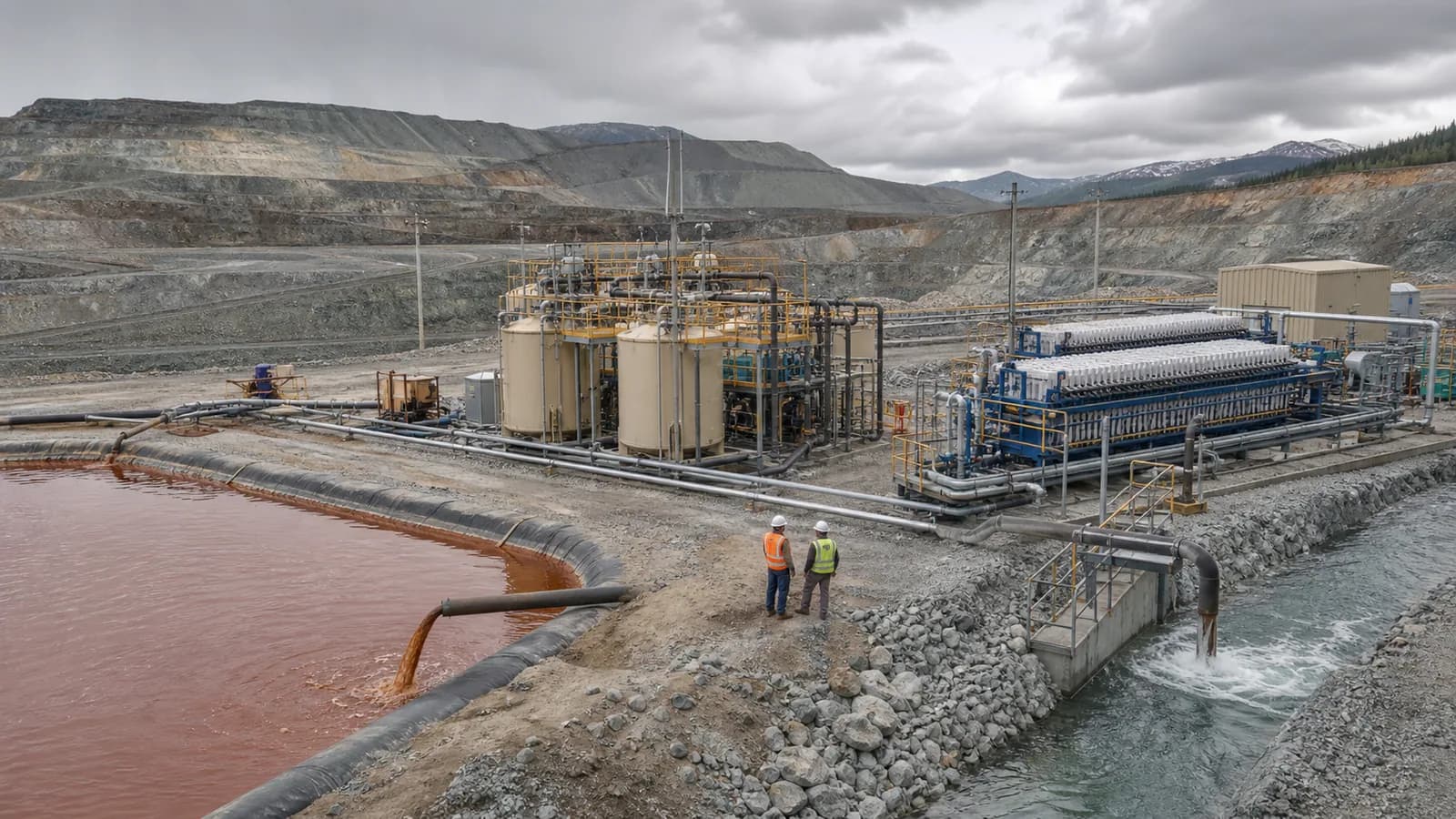
Mining projects manage water from pits, underground workings, waste rock, tailings facilities, mineral processing, rainfall, seepage and site utilities. These waters do not share one chemistry. Some mine drainage is highly acidic and metal-bearing. Some is near neutral but still contains iron, manganese, sulfate or other dissolved constituents. Tailings supernatant may carry fine mineral solids and residual reagents. Process-water recycle may gradually accumulate salts that affect flotation, equipment and product recovery.
The U.S. Geological Survey defines mine drainage broadly as surface water or groundwater draining from an active or abandoned operation. It can range from water similar to natural background conditions to acidic, metal-laden water. This distinction matters: specifying an “acid mine drainage plant” before confirming net acidity, flow and mineral chemistry can lead to the wrong reagent, sludge system or process boundary.
Mine-water projects are also shaped by geography. A remote site may have limited power, chemicals, operators and road access. A high-rainfall operation may face seasonal peaks. A cold site may need freeze protection. Closure and post-closure water can continue long after production equipment is removed.
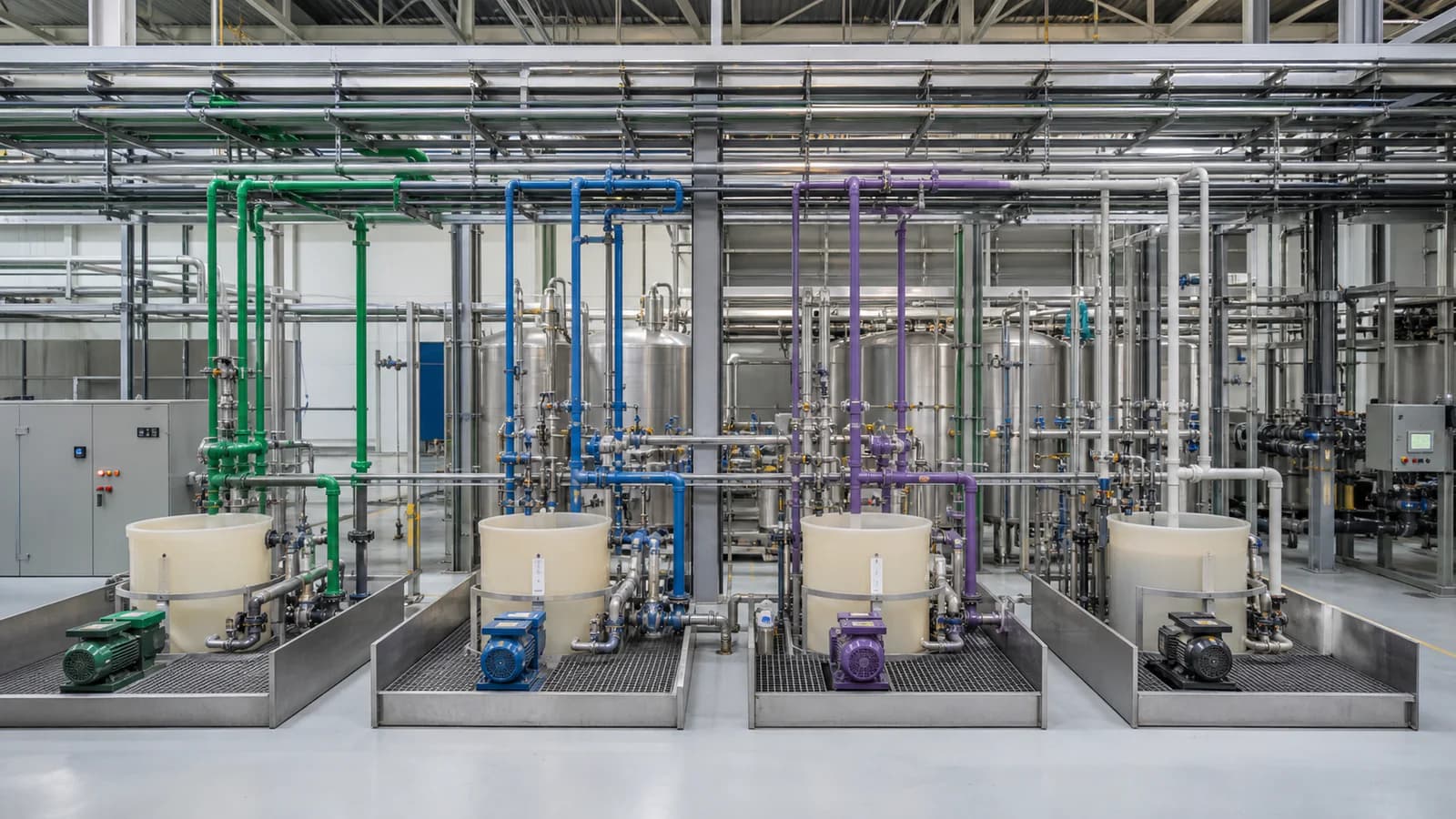
This guide gives mine owners, EPC teams, environmental managers and procurement specialists a framework for comparing source control, active and passive treatment, metals precipitation, sulfate control, membranes, residuals and modular delivery. It supports the Mining, Metals & Steel water-treatment solution and related industrial wastewater treatment equipment.
Use “Mining-Influenced Water,” Not One Generic Wastewater Label
The U.S. EPA uses mining-influenced water as an umbrella term that includes acid rock drainage, neutral and alkaline water, mineral-processing water and residual water. The first project task is therefore a source inventory.
Map the main water sources
| Water source | Buyer-critical questions | Possible treatment driver |
|---|---|---|
| Pit or underground dewatering | Geology, depth, inflow, seasonal variation, suspended solids and oxygen exposure | Discharge, reuse or mine-operation water balance |
| Acid or neutral mine drainage | Net acidity/alkalinity, pH, iron, aluminum, manganese, trace metals, sulfate and flow | Neutralization, metals removal and long-term sludge management |
| Tailings supernatant and seepage | Fine solids, dissolved salts, residual reagents, metals, cyanide or nitrogen species where applicable | Clarification, reagent-specific treatment, recycle compatibility |
| Waste-rock runoff | Rainfall relationship, first flush, acidity generation and sediment | Collection, equalization, sediment and source control |
| Mineral-processing water | Ore, flotation or leaching reagents, TSS, salinity and recycle effects | Process reuse and impurity accumulation control |
| Workshop and utility water | Oil, detergents, sewage separation and cooling or boiler sources | Dedicated pretreatment or separate management |
Do not combine streams simply because they occur within the mine boundary. A low-flow, high-acidity seep and a large stormwater stream can require different collection and treatment strategies. Keeping clean water away from contaminated areas often reduces treatment capacity more effectively than enlarging a plant.
Define the Whole-Site Water Balance
Treatment equipment cannot compensate for an undefined water balance. Quantify inflows, storage, evaporation, process demand, recycle, discharge and seasonal events.
The design basis should distinguish:
- average dry-weather flow;
- normal operating flow;
- wet-season or snowmelt flow;
- peak pumping rate;
- batch releases from tailings or process areas;
- closure and post-closure flow, where relevant;
- emergency storage and bypass philosophy.
Water quality should be linked to flow. Concentration alone can mislead; mass load is the product of concentration and flow. A small acidic seep with high metals and a large near-neutral drainage with lower concentration may need different priorities.
Sampling should include field measurements because pH, dissolved oxygen, oxidation state and metal speciation can change after collection. Record source, time, weather, production state, pumping condition, preservation and filtered versus unfiltered analytical results. A representative programme may require dry- and wet-season data rather than one laboratory report.
Acidic, Neutral and Alkaline Mine Drainage Need Different Decisions
Acid mine drainage forms when sulfide-bearing minerals are exposed to air and water. USGS notes that such water may contain elevated sulfate, iron, aluminum and other metals. However, mine-impacted water can also be circumneutral or alkaline while still carrying dissolved constituents.
The design should use acidity and alkalinity data, not pH alone. Two samples with the same pH can require different neutralizing doses because buffering and dissolved metals differ. Laboratory titration or treatment tests can establish reagent demand more reliably than a theoretical pH correction.
Questions for the reaction basis
- Which metals must be removed, and in what oxidation states?
- What pH range favours precipitation of each controlling constituent?
- Is oxidation needed for iron or manganese treatment?
- Could arsenic, selenium or another metalloid require a separate mechanism?
- What neutralizing reagent is available and practical at the site?
- How much sludge will form, and how will it settle and dewater?
- Will recycle streams increase dissolved salts or reagent consumption?
The answers determine the reaction sequence. One-stage neutralization may not be sufficient when different metals precipitate at different conditions or when co-precipitation and oxidation are important.
Active Neutralization and Metals Precipitation
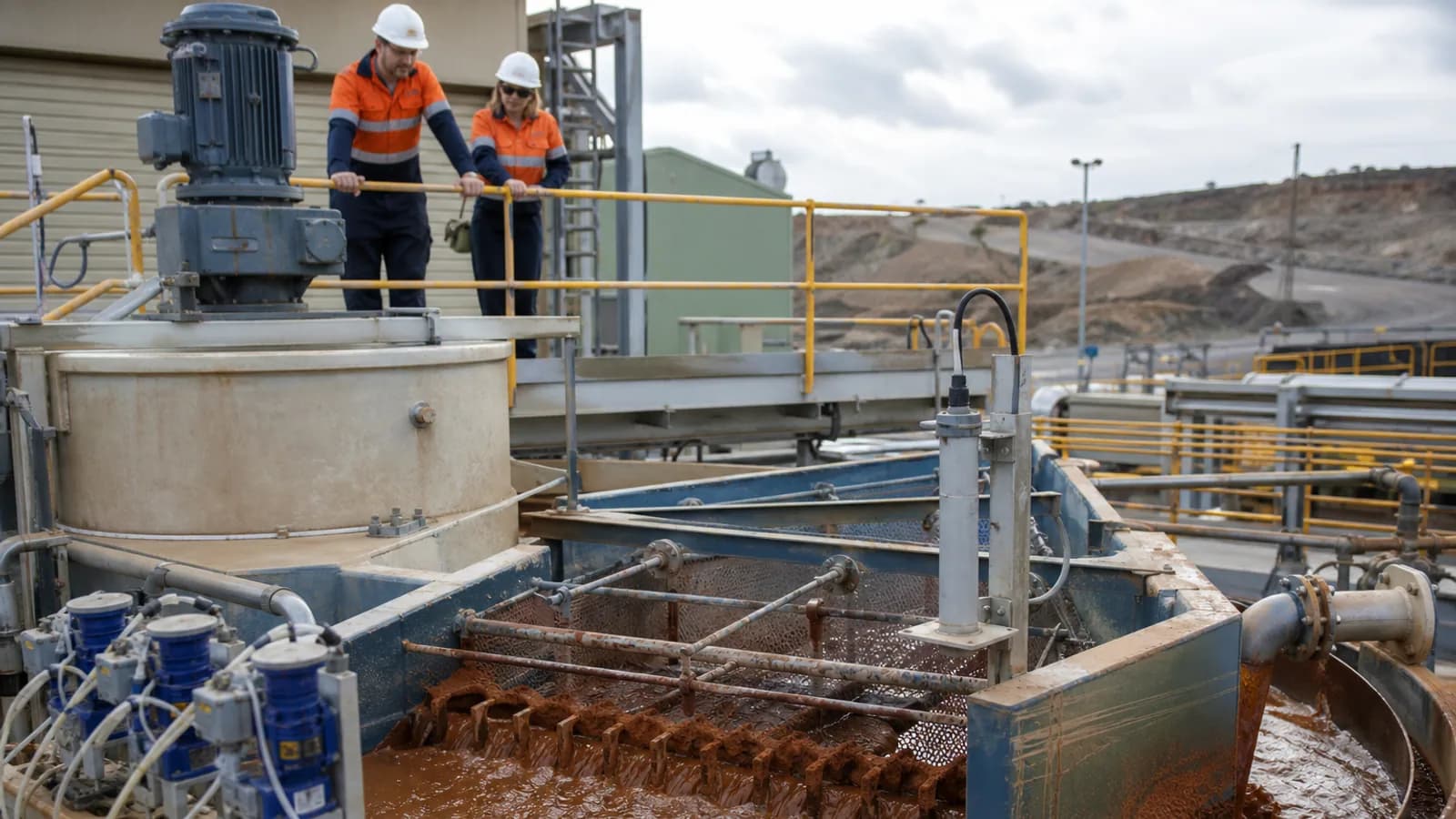
Active treatment uses controlled reagent addition, mixing, reaction, oxidation or reduction, clarification and sludge handling. Common alkalinity sources may include lime, limestone, caustic or other site-approved reagents. Selection depends on water chemistry, local supply, safety, storage, preparation and sludge characteristics.
The process can include:
- flow balancing and coarse-solids management;
- controlled alkalinity addition;
- oxidation or reduction where required;
- staged metal precipitation;
- coagulation and flocculation;
- clarification or high-rate solids separation;
- filtration or polishing;
- sludge thickening and dewatering.
Reaction pH should not be copied from a generic chart without testing the actual water. Complexation, sulfate, temperature, competing ions and particle behaviour can change removal and settling. The final treatment pH may also need adjustment before discharge or downstream membranes.
Clarifier selection must reflect solids loading, particle settling, hydraulic peaks and maintenance. High-density sludge or sludge-recycle configurations may improve solids characteristics in some applications, but recycle rate, seed inventory and control logic must be defined.
Passive and Hybrid Treatment
Passive systems may use limestone drains, settling ponds, wetlands, successive alkalinity-producing systems, biochemical reactors or other low-energy processes. Their advantages can include reduced continuous reagent and power requirements. Their limitations can include large land area, long retention time, climate sensitivity, clogging, substrate replacement and lower flexibility during changing loads.
Passive treatment is not simply “no maintenance.” The buyer must evaluate hydraulic residence time, oxygen condition, alkalinity generation, metal loading, solids accumulation, short-circuiting, vegetation or substrate condition, access and long-term monitoring.
Passive systems may fit steady, lower-load drainage with sufficient land and predictable chemistry. Active systems may be more appropriate where the flow or chemistry varies widely, the footprint is limited, or tight control is required. Hybrid systems can combine active pretreatment with passive polishing or use passive alkalinity generation before controlled solids separation.
Mine stage matters. An active operating mine with staff and utilities has different options from a remote abandoned discharge that may require decades of low-attention treatment.
Tailings Water and Mineral-Processing Recycle
Tailings return water is not always acid mine drainage. Its main issues may be fine suspended solids, turbidity, dissolved metals, salinity and residual flotation, leaching or detoxification reagents.
Clarification, coagulation, flocculation and filtration can improve suspended-solids control. Reagent residuals may require targeted chemical, biological or adsorption steps. If cyanide or another process chemical is present, use a process-specific destruction or recovery basis developed by qualified specialists; do not assume that ordinary neutralization provides control.
Water recycle can reduce freshwater demand, but dissolved constituents accumulate when they have no outlet. Increasing sulfate, chloride, calcium, magnesium, sodium or residual reagents may affect scaling, corrosion, flotation selectivity, leaching or downstream product quality. The reuse target should therefore be defined by process compatibility, not only discharge limits.
Build a circulating-water mass balance that identifies which ions and reagents enter, leave with product or tailings, precipitate, or accumulate. A small controlled bleed and treatment route may be more stable than attempting unlimited recycle.
Sulfate and Salinity Treatment
Neutralization and metals precipitation may leave sulfate and other dissolved salts in solution. Whether further removal is needed depends on the permit, receiving environment, reuse process and water balance.
Possible sulfate-control approaches include precipitation under specific chemistry, biological sulfate reduction, ion exchange or membrane separation. Each creates residuals and has feed requirements. Biological sulfate reduction requires suitable electron donor, temperature, residence time and control of sulfide and metal sulfide solids. Membranes require pretreatment and produce concentrate. Precipitation may require high chemical input and generate mineral sludge.
Do not specify sulfate removal from one concentration number. Include calcium, alkalinity, metals, salinity, temperature and target because these influence scaling, reagent demand and achievable performance.
Membranes for Mine-Water Reuse
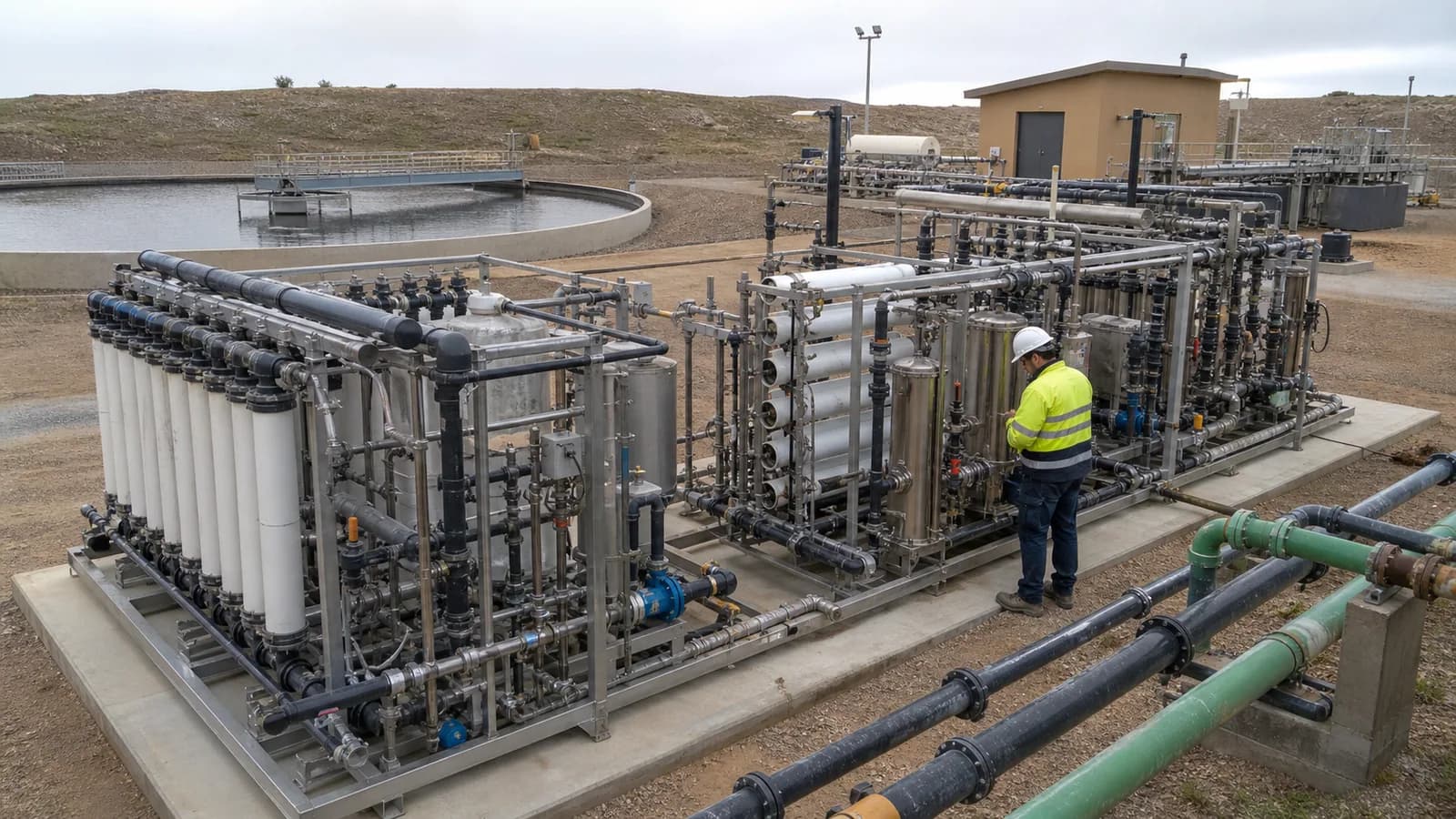
Ultrafiltration can provide particulate control before a dissolved-solids treatment stage. Nanofiltration or reverse osmosis can support sulfate reduction, desalination or reuse, depending on the feed and target.
Membrane feasibility depends on:
- suspended and colloidal solids;
- iron, manganese and aluminum;
- calcium, magnesium, sulfate, carbonate and silica;
- organic or flotation reagents;
- temperature and pH;
- osmotic pressure and target recovery;
- cleaning strategy and chemical compatibility;
- concentrate volume and outlet.
Pretreatment may require oxidation, metals precipitation, clarification, media filtration, softening or cartridge filtration. The RO recovery should come from scaling and mass-balance analysis, not a standard marketing percentage.
If treated water will return to grinding, flotation, dust suppression, washing, cooling or another process, define the quality required by that use. Review the industrial water-reuse feasibility guide before choosing a membrane configuration.
Concentrate, Sludge and Long-Term Residuals
Mine-water treatment transfers contaminants into solids or concentrate. These residuals are part of the project, not an afterthought.
Neutralization sludge can contain metal hydroxides, gypsum, unreacted reagent and entrained water. Its volume and dewatering behaviour depend on chemistry and process conditions. Test settling and filtration where sludge handling affects equipment size or transport.
Membrane concentrate may contain the highest dissolved load in the system. Its route could involve controlled return, lined storage, further treatment, evaporation or another approved option. Returning concentrate upstream without a mass balance can create a closed loop of salts.
Residual characterization, storage and disposal must follow the applicable mine plan and local requirements. Equipment suppliers should state the expected residual streams and design assumptions, but should not invent a waste classification or disposal approval.
Materials, Abrasion and Remote-Site Design
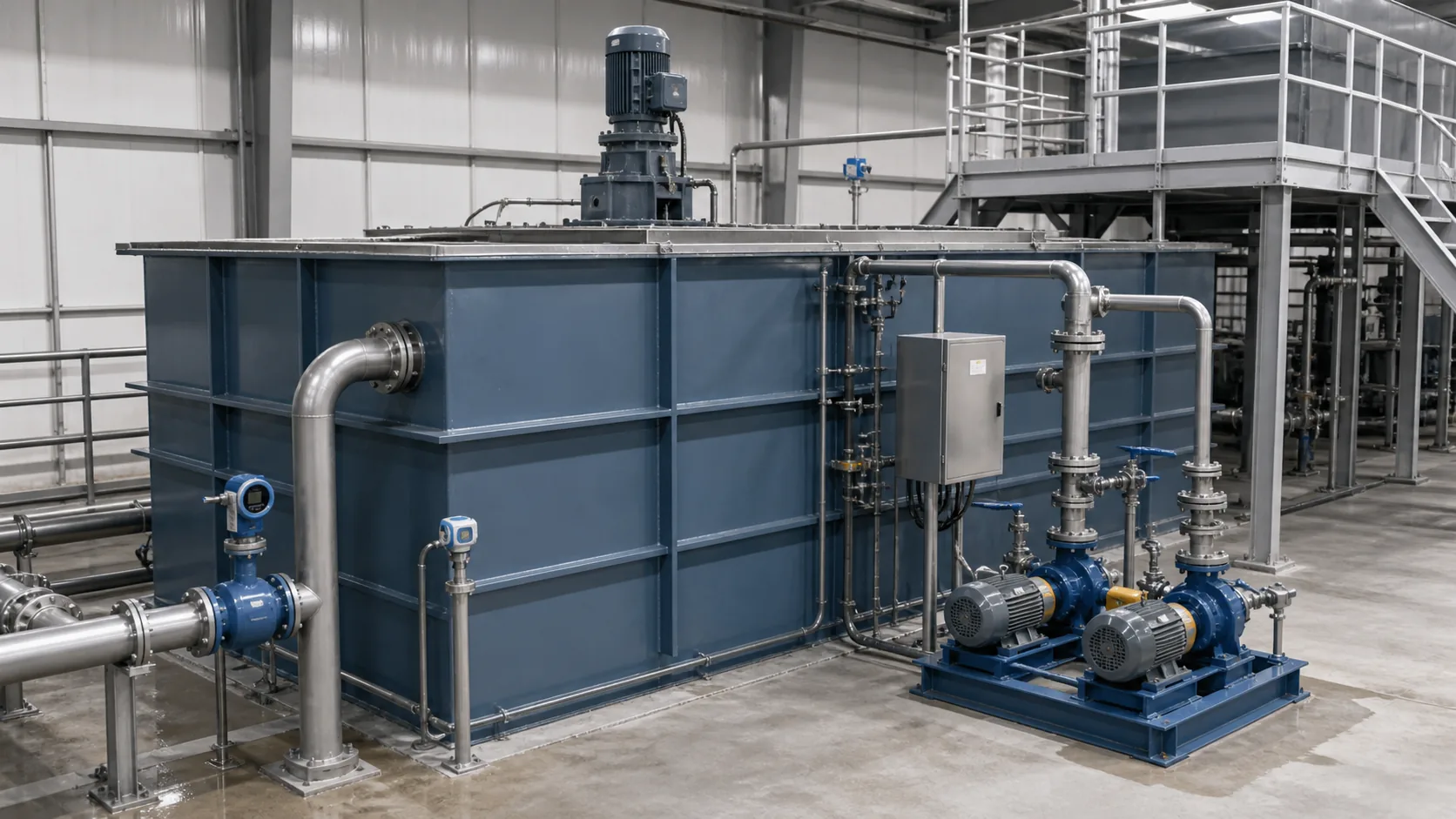
Mine water can combine low pH, chlorides, sulfate, suspended mineral solids and scaling conditions. Select wetted materials component by component. Tanks, piping, pumps, valves, instruments and filter equipment may require different materials.
Abrasive solids affect pump type, velocity, bends, valves and maintenance intervals. Reagent systems need dust control, safe unloading and reliable preparation. Outdoor installations may require weather protection, heat tracing, insulation, shade, ventilation or freeze protection.
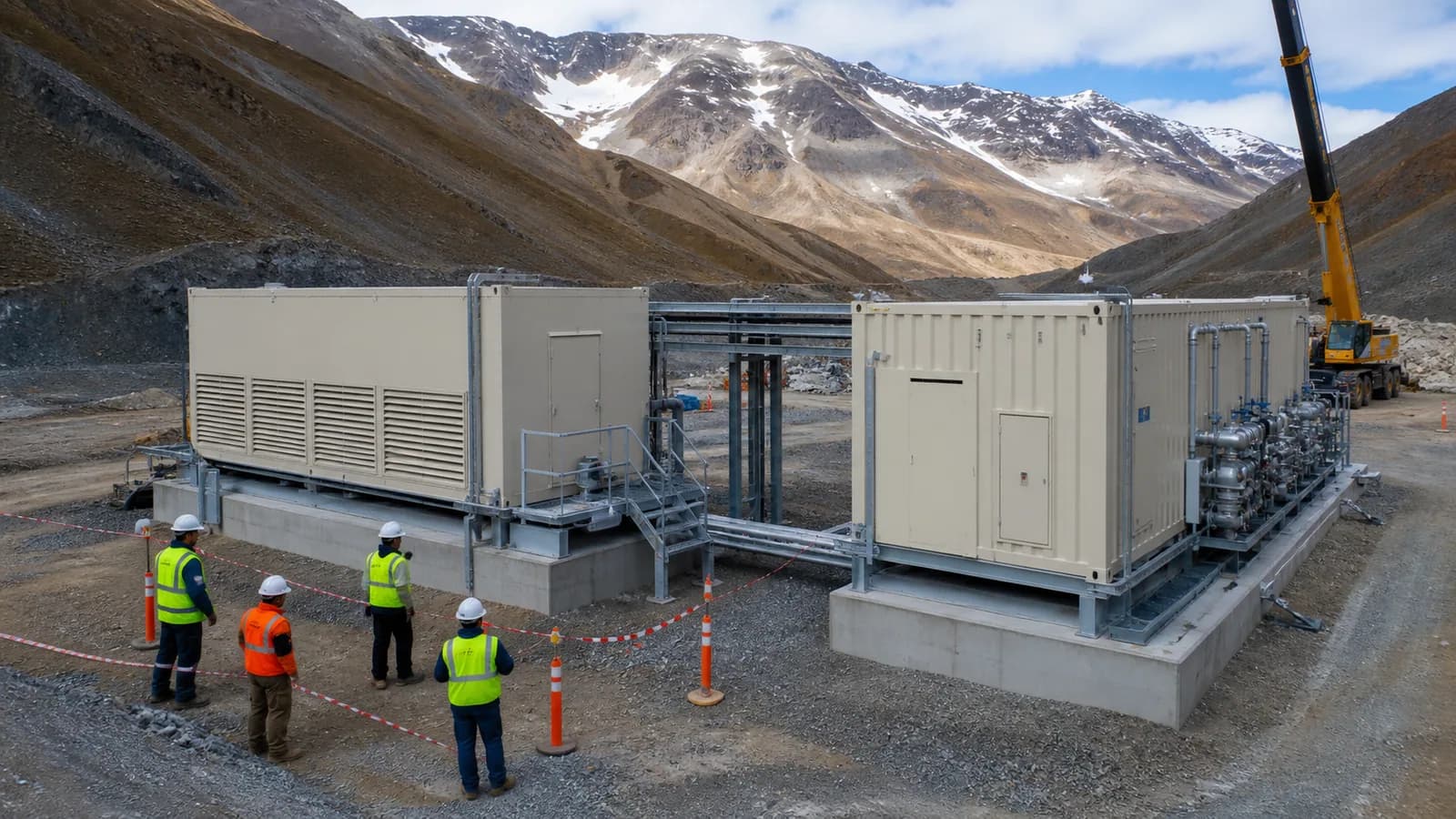
Remote sites benefit from clear modular boundaries, but a container is not automatically the best solution. Check road limits, crane capacity, transport dimensions, foundation loads, chemical deliveries, spare parts and operator skills. The skid-mounted versus containerized system guide provides a useful delivery comparison.
Testing, Factory Inspection and Commissioning
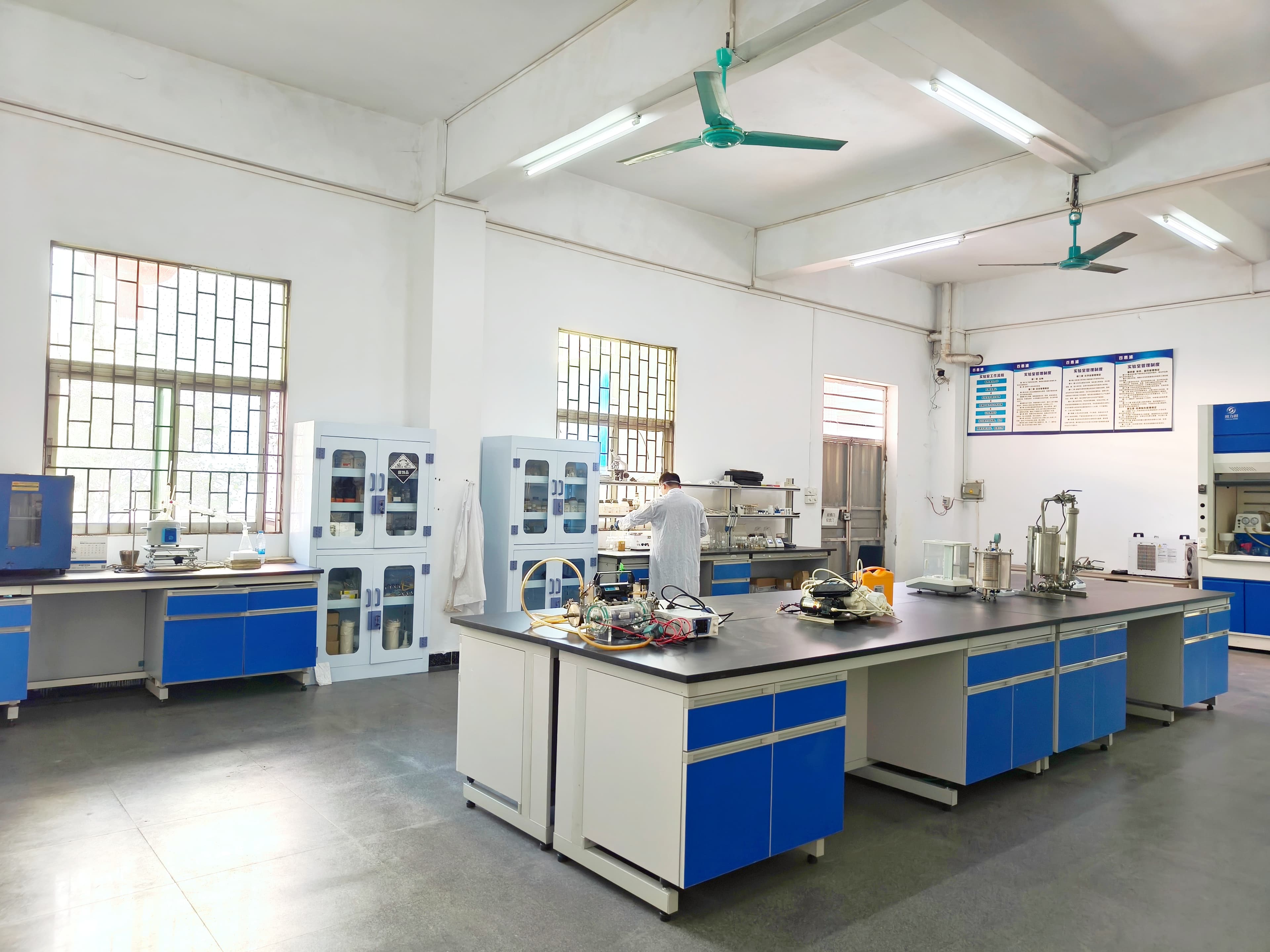
Bench testing can evaluate neutralizing reagent, dose, reaction sequence, oxidation, flocculation, settling and sludge production. Membrane tests can investigate pretreatment, flux and rejection. Pilot testing may be justified where water varies, long-term fouling is uncertain, passive treatment kinetics control the footprint, or a novel process is proposed.
Factory testing should verify the equipment scope: dimensions, materials, pumps, mixers, dosing systems, instruments, control logic, alarms, interlocks and documents. Clean-water functional testing cannot prove mine-water chemistry performance, and the FAT report should say so.
Shipment inspection should confirm transport braces, protected instruments, capped connections, spare and loose items, lifting points and packing suitable for the route. Installation preparation should address foundations, drainage, access, chemical storage, sludge area, water for commissioning, laboratory support, power quality and communications.
Commissioning acceptance should state the influent envelope, flow, seasonal condition, sampling method, operator responsibilities and time available for process stabilization. A short test during favourable dry weather should not be treated as proof for an untested wet-season load.
Mine Water Treatment RFQ Checklist
Provide:
- Mine type, ore and processing route.
- Water-source map and current collection system.
- Seasonal average, peak and minimum flows.
- Field and laboratory analyses for each important source.
- Acidity, alkalinity and metal speciation where relevant.
- Total and dissolved metals, sulfate, chloride, TDS, TSS and silica.
- Process reagents that can enter tailings or recycle water.
- Discharge limits, reuse destination and sampling point.
- Whole-site water balance and recycle streams.
- Climate, elevation, site access and available land.
- Power, water, air and reagent availability.
- Existing ponds, clarifiers, pipelines and sludge facilities.
- Residual storage, dewatering and disposal route.
- Automation, remote monitoring and operator coverage.
- Testing, shipment, installation, commissioning and post-closure expectations.
FAQ
Is all mine drainage acidic?
No. Mine drainage can be acidic, neutral or alkaline. Near-neutral water may still contain sulfate, iron, manganese or other constituents. Measure acidity, alkalinity and the full chemistry instead of selecting treatment from pH alone.
What is the first step in acid mine drainage treatment?
First characterize the source, flow, net acidity, dissolved and total metals, sulfate, seasonal variation and outlet target. Treatment often includes alkalinity addition and metals precipitation, but the reagent and reaction sequence require testing.
Can a passive system replace an active mine-water plant?
It can in suitable conditions, especially where flow and load are stable, land is available and long residence times are acceptable. Passive systems still need design, monitoring and maintenance. Variable high-load or tightly controlled projects may require active or hybrid treatment.
Can reverse osmosis treat mine water?
RO can reduce dissolved constituents and support reuse after adequate pretreatment. Metals, suspended solids and scaling ions must be controlled, and the concentrate route must be defined. Recovery depends on actual chemistry.
How should tailings water be evaluated for reuse?
Review suspended solids, dissolved salts, metals, reagent residuals and their effect on the mineral-processing circuit. Use a circulating mass balance to identify accumulation and define a controlled bleed or treatment route.
What usually drives mine-water treatment operating cost?
Important drivers include flow and seasonal peaks, reagent demand, sludge production, power, membrane cleaning, concentrate or residual disposal, operator coverage and logistics to a remote site. Compare lifecycle boundaries, not equipment price alone.
Conclusion
Mine-water treatment begins with source control, a seasonal water balance and chemistry linked to mass load. Distinguish acid drainage, neutral mine water, tailings supernatant, process recycle and stormwater. Then assign clear roles to neutralization, metals precipitation, clarification, passive treatment, sulfate control and membranes.
The strongest procurement specification makes residuals, remote-site conditions and long-term operation visible. It also separates what laboratory and pilot testing can establish from what must be demonstrated during commissioning. This avoids selecting a generic package that works on one sample but cannot manage the mine’s seasonal or operational reality.
Send Your Mine Water Requirements
Share the mine and process description, water-source map, seasonal flow, available analyses, discharge or reuse target, site conditions, reagent availability and residual-management plan. Baihuipu can identify the missing inputs needed before a project-specific process route and equipment scope are discussed.
CTA: Request a Mine Water Process Review