Introduction
Industrial water reuse is often discussed as a technology decision: should a factory use ultrafiltration, reverse osmosis, ion exchange, evaporation, or another process? Those technologies can be important, but the first decision should be the reuse target.
Water intended for floor washing does not need the same control as water intended for a sensitive production step. Cooling-related use has different scaling, corrosion, and microbiological concerns from equipment cleaning. A project should start with the value and risk of its specific reuse point, then select treatment around that need.
Industrial reuse is commonly evaluated for manufacturing and cooling-related applications, but the required water quality and applicable conditions are specific to the final use and local rules. EPA industrial water reuse resources similarly treat reuse as an application-specific planning exercise rather than a universal standard.
Start With the Reuse Target, Not the Equipment
Before evaluating a treatment train, ask:
- Where will the treated water be used?
- Which contaminants matter at that point of use?
- Is reuse demand continuous or intermittent?
- What happens when reuse demand is lower than treatment output?
- Is there a fresh-water backup?
- How will sludge, concentrate, cleaning waste, and off-spec water be managed?
The most suitable first reuse target is not always the most demanding target. It is often a stable internal use point with a meaningful water-saving opportunity, a clear quality requirement, and a practical fallback arrangement.
Six Common Industrial Reuse Targets
1. Equipment and floor washing
Washdown can be a practical first reuse target when treated water is controlled for visible solids, odor, corrosion, scaling, and safety. The acceptable quality still depends on the facility. Food, pharmaceutical, electronics, and other sensitive operations may impose restrictions that general industrial sites do not.
2. Cooling-related support use
Some facilities evaluate treated water for cooling-tower make-up or auxiliary cooling support. The water should be reviewed for hardness, alkalinity, chlorides, silica, solids, biological control, scaling tendency, corrosion potential, and compatibility with the plant's cooling-water program. A TDS number by itself is not enough to approve this use.
3. Wet scrubbers and pollution-control support
Scrubber support can have a different water-quality requirement from a high-purity application, but salts, solids, foaming substances, and process contaminants can still affect nozzles, recirculation stability, or the next waste stream. Define the full loop, not only the incoming water.
4. Non-critical rinsing and process use
Some facilities consider reuse for selected rinse stages or non-critical process duties. This requires close review of residual salts, organics, particles, metals, and microbiological risk. Sensitive production may need additional polishing, monitoring, and a reliable bypass to fresh-water supply.
5. Boiler or high-purity feedwater preparation
High-purity reuse can be feasible in selected projects, but it should not be assumed after conventional wastewater treatment. Boiler and high-purity applications require control of dissolved solids, hardness, silica, organics, gases, and other parameters defined by downstream equipment and operating practice.
6. Higher recovery and reduced liquid discharge
Where water scarcity or discharge limitations justify higher recovery, reuse may be combined with concentration, evaporation, crystallization, or managed off-site disposal. These projects require a mass balance for salts, energy, pretreatment, concentrate handling, and site maintenance capability. They are not simply "reuse plus an evaporator."
A Practical Reuse Feasibility Workflow
Map the water balance
Create a basic plant water balance showing freshwater inputs, wastewater sources, discharge points, potential reuse demand, storage capacity, and expected expansion. This often reveals a more realistic reuse target than a broad objective to "reuse everything."
Separate wastewater streams where practical
Combined wastewater can be harder to reuse than a segregated source stream. A relatively clean rinse stream may be suitable for recovery, while a concentrated cleaning stream may need separate treatment or disposal. The right segregation plan depends on process layout, operations, and the economics of collection piping.
Characterize quality and variability
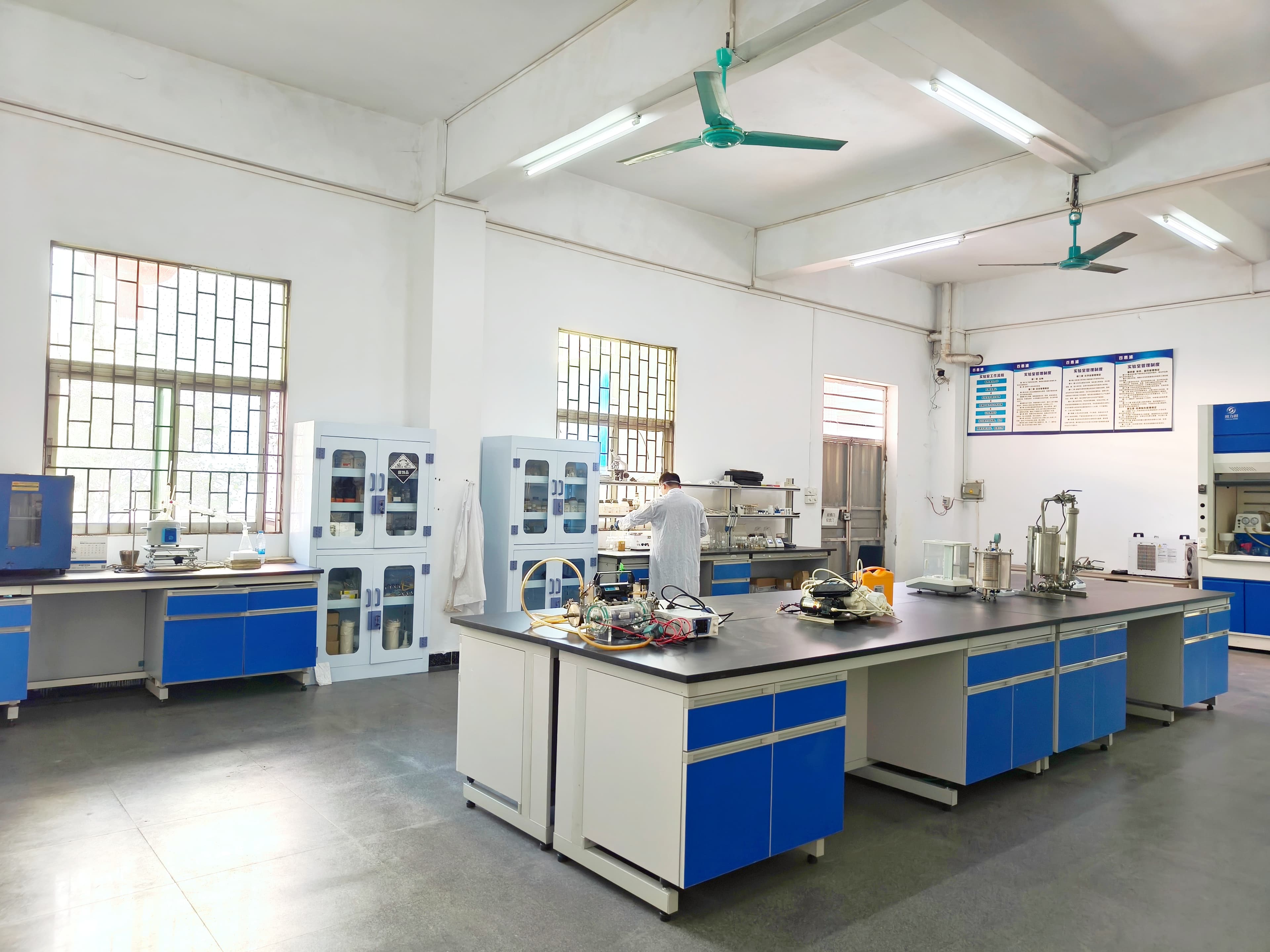
Use representative laboratory analysis from normal production, high-load periods, cleaning cycles, and chemistry changes where relevant. Review the contaminants that matter for the intended reuse point rather than relying only on standard wastewater parameters.
Record flow patterns as well. A modest daily average can conceal a high-load batch that determines equalization volume, treatment capacity, and treated-water storage requirements.
Define the reuse-water specification
Write a specification for the actual destination. It may include physical, chemical, microbiological, and process-specific limits. Define sampling point, monitoring frequency, storage conditions, and the action taken if water falls outside the intended range.
This step turns a general reuse objective into a measurable engineering target.
Select treatment around known risks
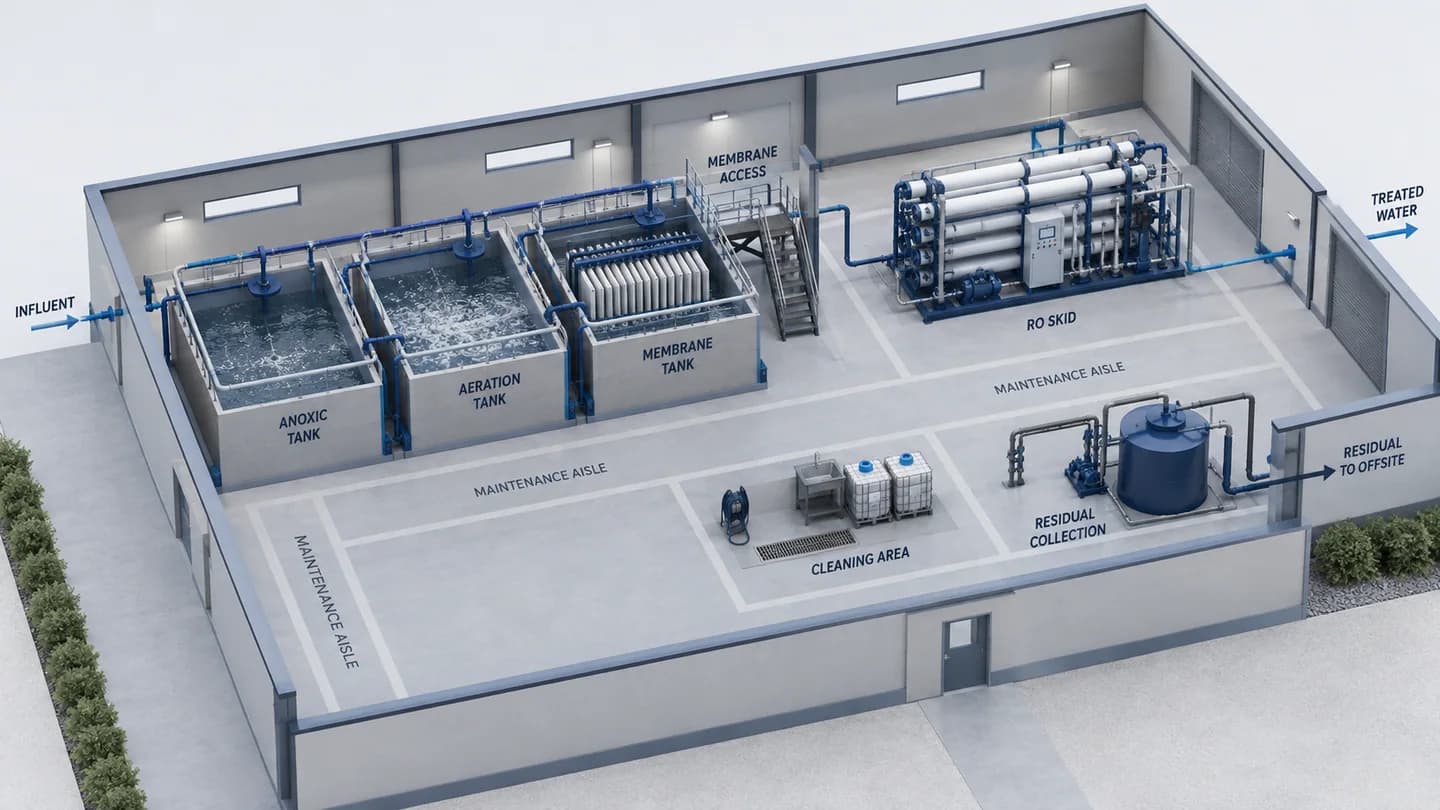
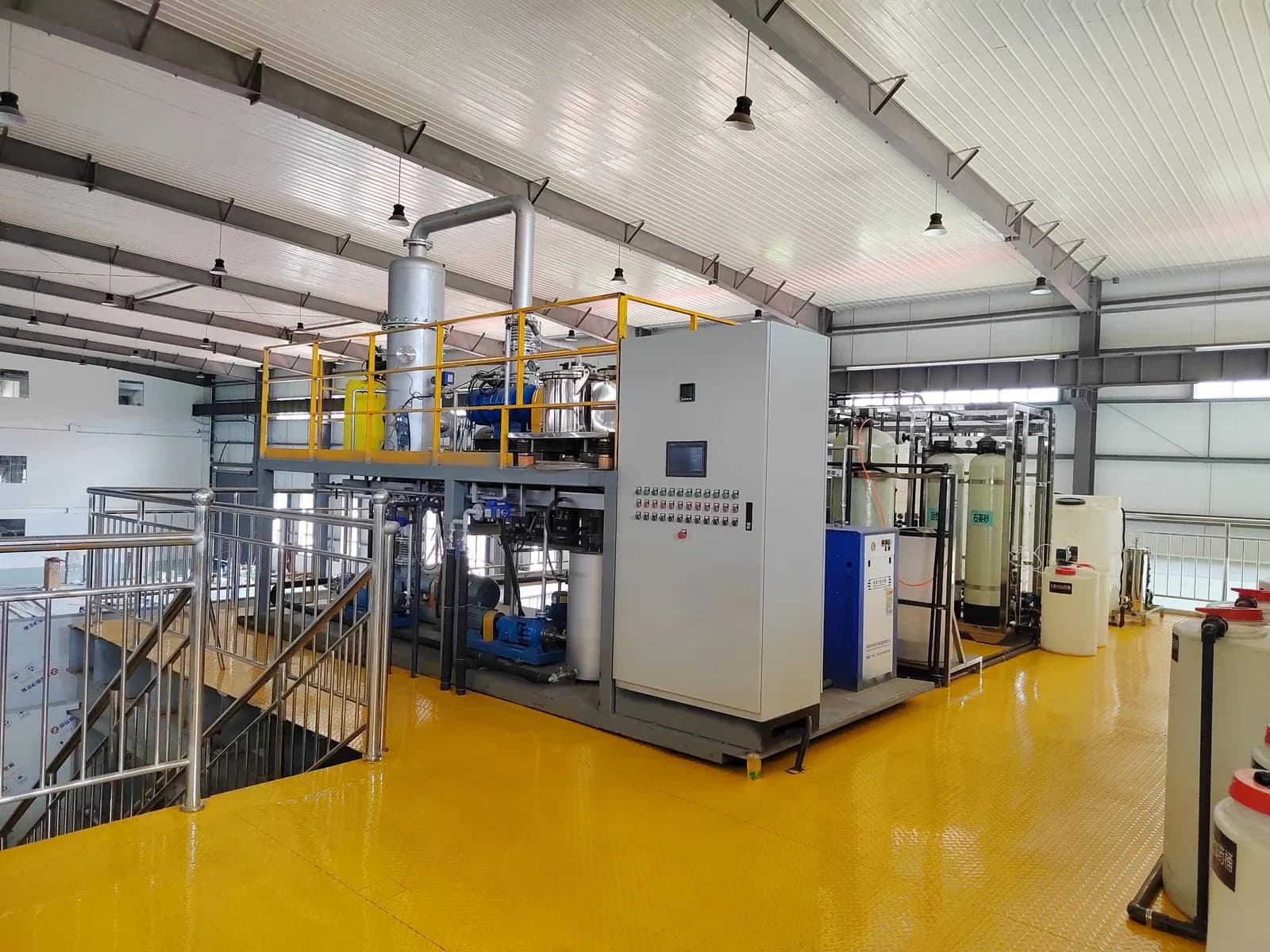
A reuse system may combine screening, oil separation, equalization, pH adjustment, precipitation, clarification, filtration, activated carbon, ultrafiltration, reverse osmosis, ion exchange, EDI, disinfection, oxidation, or concentration. Not every project needs every stage. Each unit should have a stated purpose linked to a contaminant, water-quality risk, or downstream requirement.
Plan for residuals and downtime
Reuse feasibility should include sludge, membrane-cleaning waste, RO concentrate, spent chemicals, off-spec water, maintenance downtime, and backup discharge or disposal routes. Treatment moves or concentrates contaminants; it does not make the residuals question disappear.
Factory Testing, Shipment Inspection, and Site Preparation
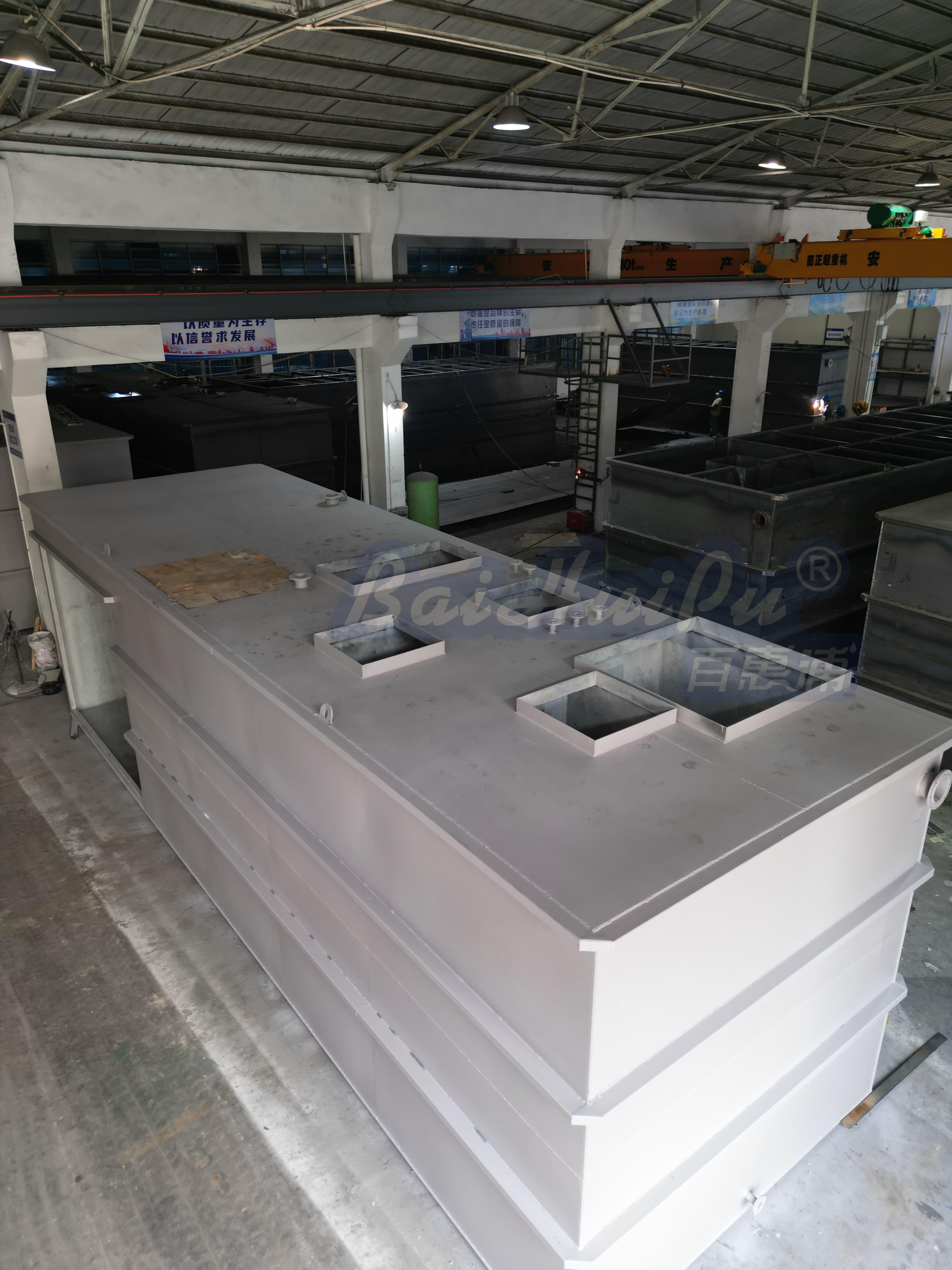
For a packaged reuse system, factory testing should verify what can reasonably be checked before delivery: equipment configuration, components, electrical functions, control sequences, alarms, instruments, and clean-water functional testing where appropriate.
If final treated-water performance depends on actual site wastewater, that condition should be stated clearly. Real water can vary in ways that cannot be fully recreated during a factory water run. A trustworthy test plan separates functional verification from site performance validation.
Before shipment, verify transport dimensions, lifting points, packing list, manuals, spare parts, and connection drawings. Before installation, confirm utility supplies, drainage, chemical storage, ventilation, treatment-water storage, and distribution piping. These checks turn installation preparation into a planned activity rather than a last-minute response.
FAQ
Can all industrial wastewater be reused?
Not automatically. Many streams can be treated for selected reuse applications, but feasibility depends on source quality, variability, reuse target, treatment requirements, residuals management, and local conditions.
Is reverse osmosis always required?
No. RO can be valuable when dissolved contaminants must be reduced, but other reuse targets may require a different treatment route. Select technology after defining the final water-quality requirement.
What is the first step in a reuse project?
Map the facility water balance and identify a realistic reuse point. Then review representative water data and operating variability before deciding on equipment.
Can reused water be used in a production process?
In some applications, yes. The downstream process must define acceptable quality and risk limits. Sensitive operations may require extensive polishing, monitoring, and a dependable fresh-water backup.
Conclusion
Industrial reuse works best when it begins with a clear destination for recovered water. Define the reuse point, characterize the source, identify the critical quality risks, and plan for residual streams before selecting equipment. This produces a project route that is easier to test, install, operate, and scale.