Introduction
For an electroplating plant, reusing wastewater is a production decision as well as a water-treatment decision. Reclaimed water must support acceptable rinsing, stable bath chemistry and consistent finished parts. A clear sample or a low metal result does not establish all three.
Procurement becomes difficult when suppliers quote different boundaries. One proposal may recover water from a segregated rinse, another may polish the combined treatment-plant outlet, and a third may include concentrate evaporation. Comparing their recovery percentages or equipment prices without identifying those differences is misleading.
This guide explains how to define an electroplating rinse water recycling project, compare treatment options and write acceptance conditions that connect water quality with its actual product application. It is intended for plant engineers, production managers, environmental teams and equipment buyers preparing a new system or an upgrade.
1. Define Where the Reclaimed Water Will Be Used
Start by naming the receiving operation. “Water for reuse” is too broad for a purchasing specification.
An early rinse, a final rinse before drying and water used to prepare a process bath may require different quality. Have the production team and process-chemical supplier agree on what the water must achieve at each point. Include the consequences of an off-specification supply: staining, contamination carryover, rejected parts or a production interruption.
Separate two decisions:
- Discharge suitability: whether the outlet meets the requirements applicable to its discharge destination.
- Production suitability: whether the water meets the operating and quality requirements of the receiving process.
Passing a discharge test does not automatically answer the production question. For example, the U.S. EPA’s metal-finishing framework addresses wastewater discharges through applicable permits and control mechanisms; it is not a universal rinse-water specification. Overseas projects must establish their own destination-specific requirements. EPA metal-finishing guidance.
Write a separate acceptance sheet for every proposed reuse point before requesting a final system guarantee.
2. Select the Stream Before Selecting Equipment
Segregated rinse water
A defined rinse stream is a useful starting point because its source chemistry can be traced. Record the plating bath, drag-out, rinse sequence, flow pattern and any cleaners or additives that can enter it.
First review how much water the operation actually needs. Counter-current arrangements, drag-out control and demand-based makeup may reduce the flow requiring treatment. Conductivity-controlled rinsing is an established approach, but its setpoint must be related to acceptable rinsing and process performance. EPA guidance on conductivity-controlled rinsing.
Combined treated wastewater
Centralized reuse should be evaluated from the actual outlet of the upstream treatment plant. Sample it across different production conditions, including periods when chemistry, loading or treatment stability changes. Do not size the polishing system using the best grab sample available.
Concentrated or incompatible streams
Identify spent baths, concentrated drag-out, chromium-bearing, cyanide-bearing, oily and strongly complexing streams separately. Their collection and treatment boundaries require a site-specific engineering review. In particular, cyanide-bearing streams must not be mixed with acidic waste.
The collection map should show normal routing, exceptional batches and how an unsuitable batch is isolated from the reuse feed.
3. Compare Treatment Options by Their Actual Duty
| Option | Potential role | What the quotation must clarify |
|---|---|---|
| Chemical treatment and solids separation | Condition metal-bearing wastewater and remove separable solids before reuse polishing | Actual dissolved residuals and downstream feed quality |
| Reverse osmosis | Separate suitable feed into lower-salt permeate and concentrate | Pretreatment, product-water quality and concentrate destination |
| Ion exchange | Remove selected ions or provide deionization, depending on resin configuration | Target ions, service cycle, regeneration and residual handling |
| Evaporation | Concentrate an appropriate residual stream and recover condensate | Energy, materials, carryover, condensate quality and final residue |
Pretreatment: establish a dependable feed
Ask the supplier to state the conditions under which the next stage can operate. These should include the relevant solids, metals, organic contamination and chemical compatibility limits, with monitoring points and responses to an excursion.
The upstream system and reuse package must share the same design basis. A polishing supplier should not assume clean, stable feed if the upstream supplier has only committed to a different discharge objective. Where complexed metals affect treatment, review the dedicated chelated heavy metal wastewater guide before finalizing the feed specification.
Reverse osmosis: evaluate both outlet streams
RO performance depends on feed composition, pretreatment, membrane selection, temperature and recovery. Increasing recovery also increases the concentration burden within the system. DuPont’s technical manual relates membrane design limits to feedwater fouling tendency and operating conditions. FilmTec RO/NF technical manual.
Request a projection based on representative analysis, identify the assumed feed range and explain how the design will be checked during testing. The quotation should describe both permeate use and concentrate management. Review the industrial RO system scope with those two destinations in mind.
Ion exchange: distinguish selective removal from deionization
A metal-selective resin and a deionization train do not perform the same job. The former may target particular metals while leaving other ions in solution. The latter uses an appropriate resin arrangement to reduce a broader ionic load. Captured contaminants require a regeneration, replacement or service arrangement. EPA technical report on ion exchange for metal finishing.
Ask for the proposed resin duty, expected service cycle under the specified feed, breakthrough criteria, standby arrangement and regenerant destination. “Ion exchange included” is not enough detail for comparing proposals.
Evaporation: close the residuals balance
If evaporation is proposed, identify its feed precisely: raw wastewater, RO concentrate or another segregated stream. Require an evaluation of concentration behavior, material compatibility, energy demand, cleaning and condensate quality.
Do not specify the evaporator solely from the desired reduction in liquid volume. Require a destination for the remaining concentrate or solids and verify whether recovered condensate needs additional treatment. Return to production should depend on tested quality, not the fact that the water has been condensed.
4. Specify Water Quality Beyond Appearance and Conductivity
Conductivity is useful for tracking ionic changes, but it does not identify each contaminant or establish coating compatibility. Build the monitoring plan around the selected feed and reuse duty.
| Measurement | Decision it supports |
|---|---|
| pH and temperature | Process compatibility and interpretation of operating data |
| Conductivity and major ions | Ionic loading, concentration trends and reuse suitability |
| Total and dissolved metals, where relevant | Distinguishing particulate carryover from dissolved residuals |
| Turbidity, suspended solids and an appropriate fouling assessment | Pretreatment effectiveness and downstream protection |
| COD or TOC, oils and relevant process additives | Contamination that a metal-only test may miss |
| Part-quality checks | Whether reclaimed water is acceptable in the intended production step |
Specify units, sampling points and analytical methods. A conductivity-derived TDS estimate should be identified as an estimate, including the conversion used. It is not a substitute for a full ionic analysis when that analysis is needed for process design.
Use baseline samples from the existing acceptable water supply to help define the comparison. Avoid copying a final-rinse limit from an unrelated factory.
5. Compare Net Reuse, Not Just Membrane Recovery
Every proposal should state its calculation boundary. RO recovery describes one separation stage; net reuse describes acceptable water actually delivered back to the intended operation.
Consider this illustrative calculation, not project performance data:
- A plant generates 120 m³/day of wastewater.
- A selected 100 m³/day stream reaches an RO package.
- At an assumed 75% RO recovery, it produces 75 m³/day of permeate and 25 m³/day of concentrate.
- The remaining 20 m³/day follows a separate treatment route.
Even if all permeate is suitable and reused, the amount returned equals 62.5% of the original 120 m³/day. Cleaning, off-specification diversion and downtime could reduce the net amount further. Any externally supplied cleaning or regeneration water must also be included in the overall balance.
Thus, two suppliers quoting “75% recovery” may be describing different outcomes. Ask each to report the same feed boundary, accepted return volume, residual volumes and operating period. Neither RO recovery nor a high reuse percentage, by itself, establishes zero liquid discharge.
6. Plan Installation Around Access and Maintenance
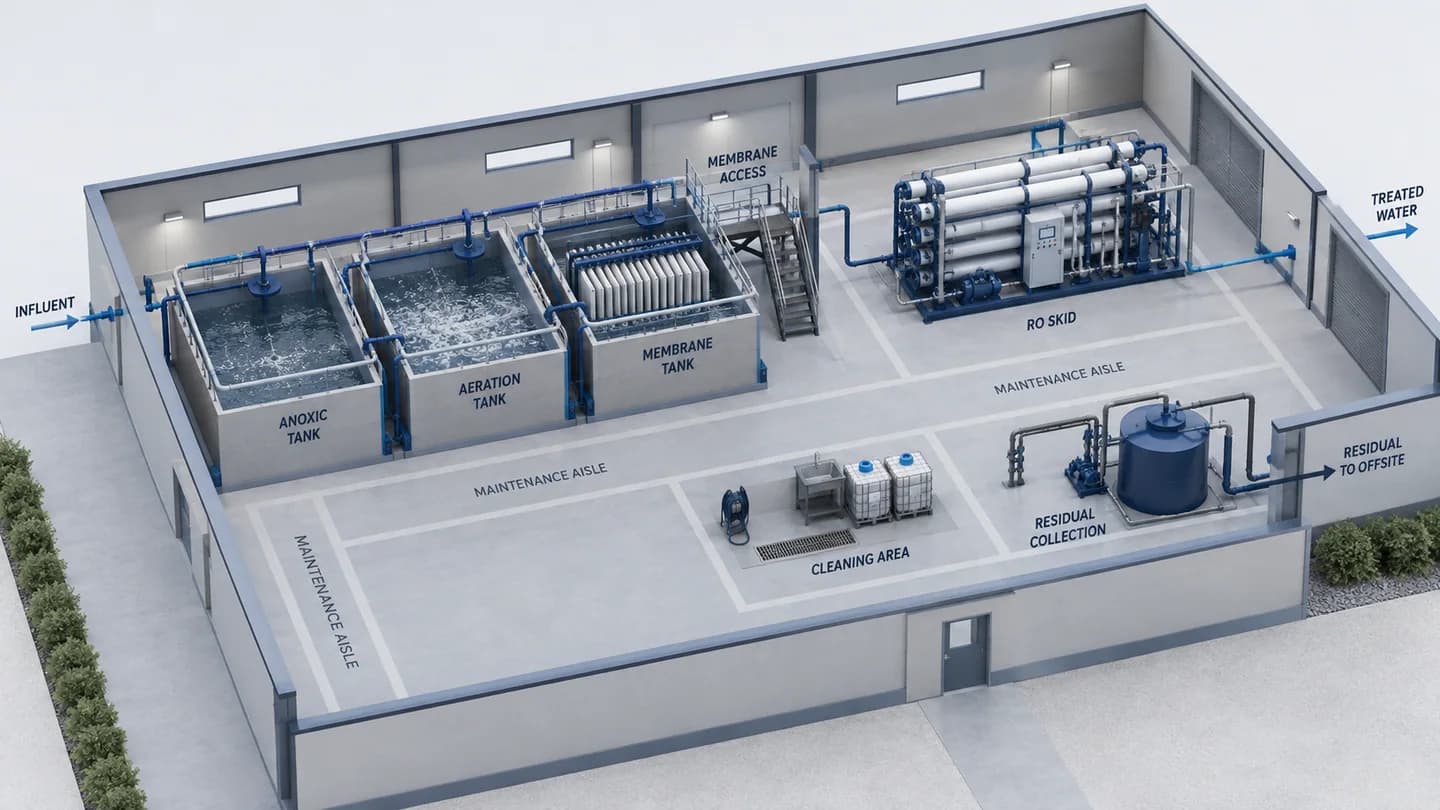
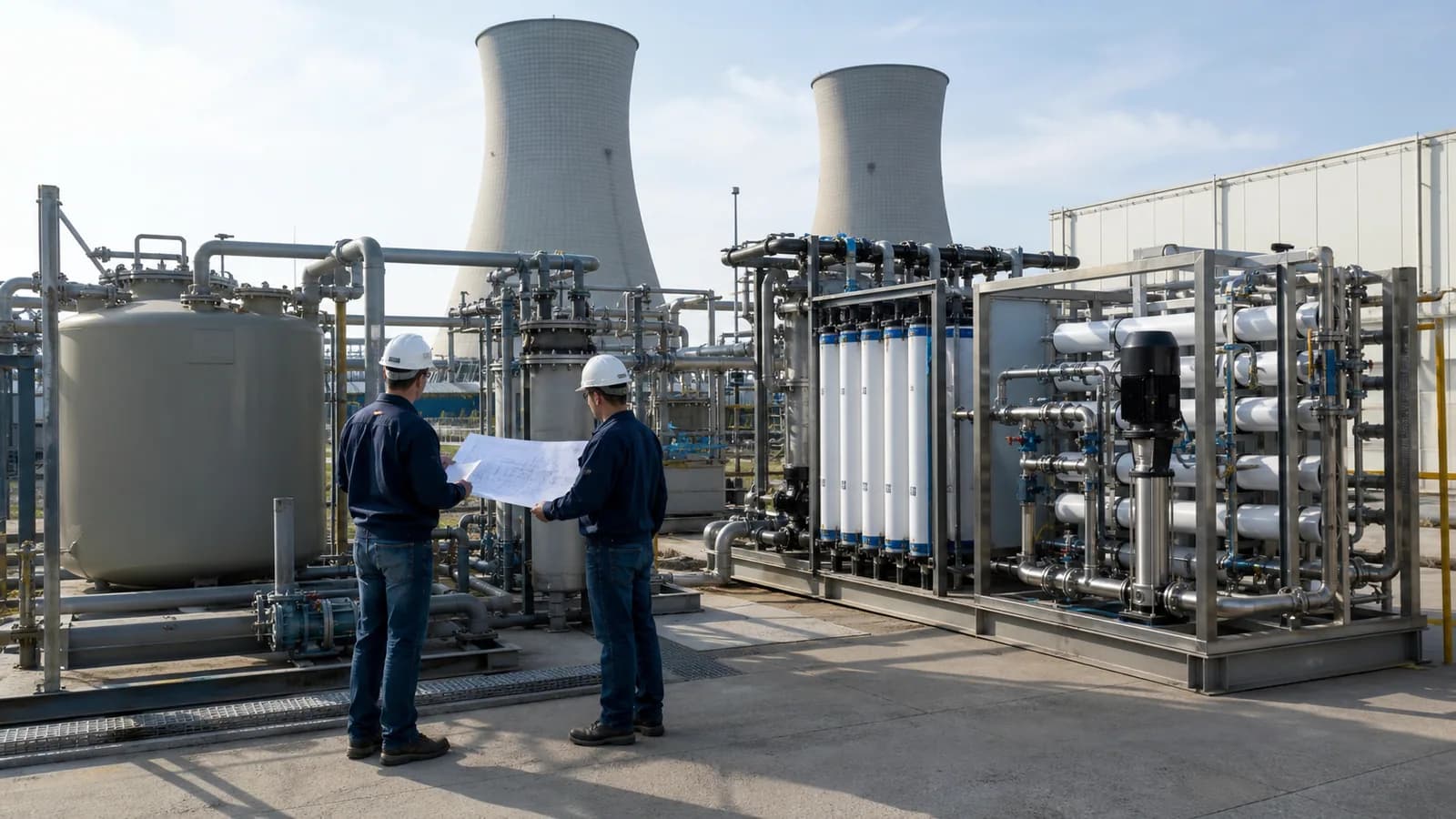
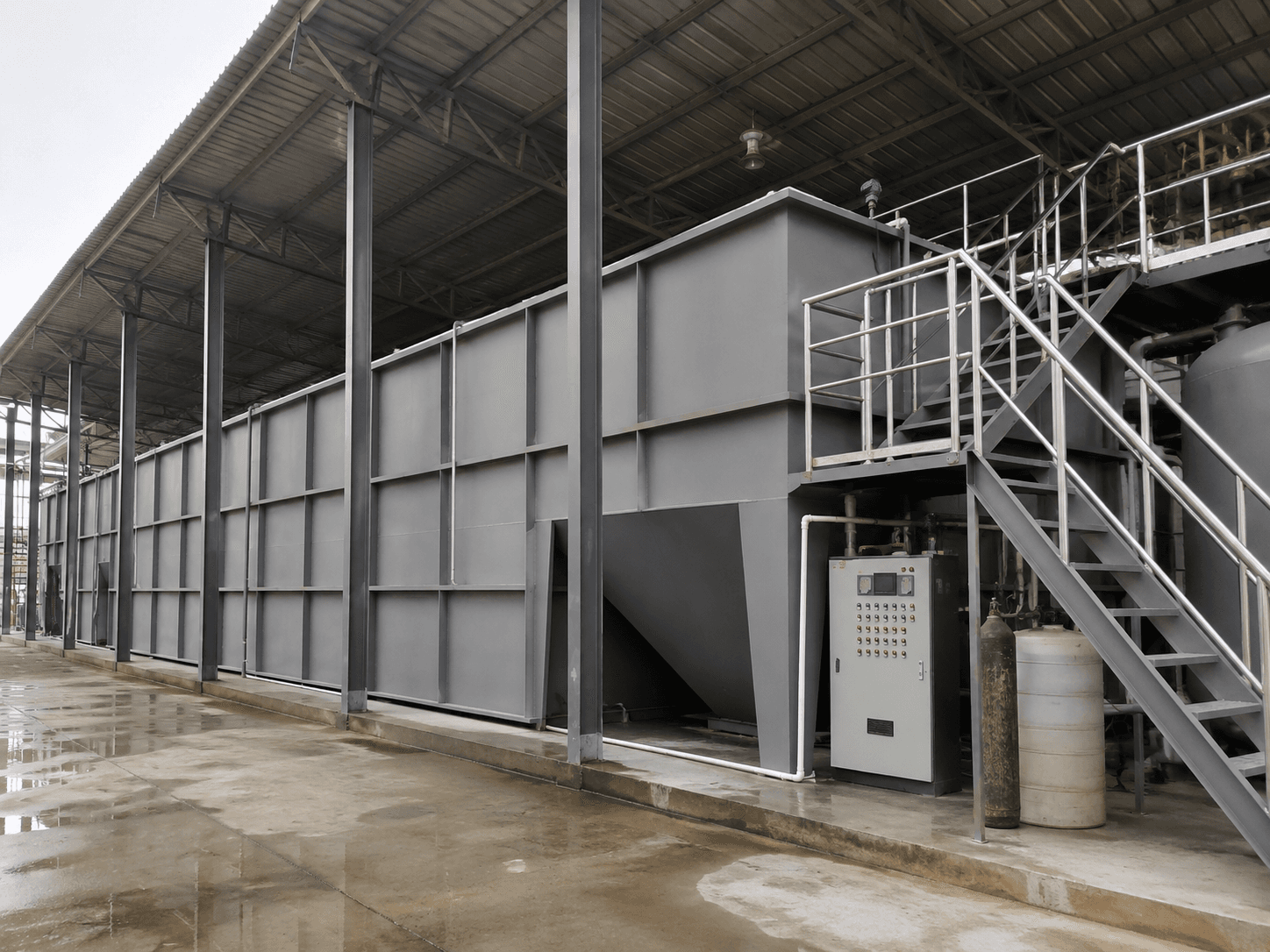
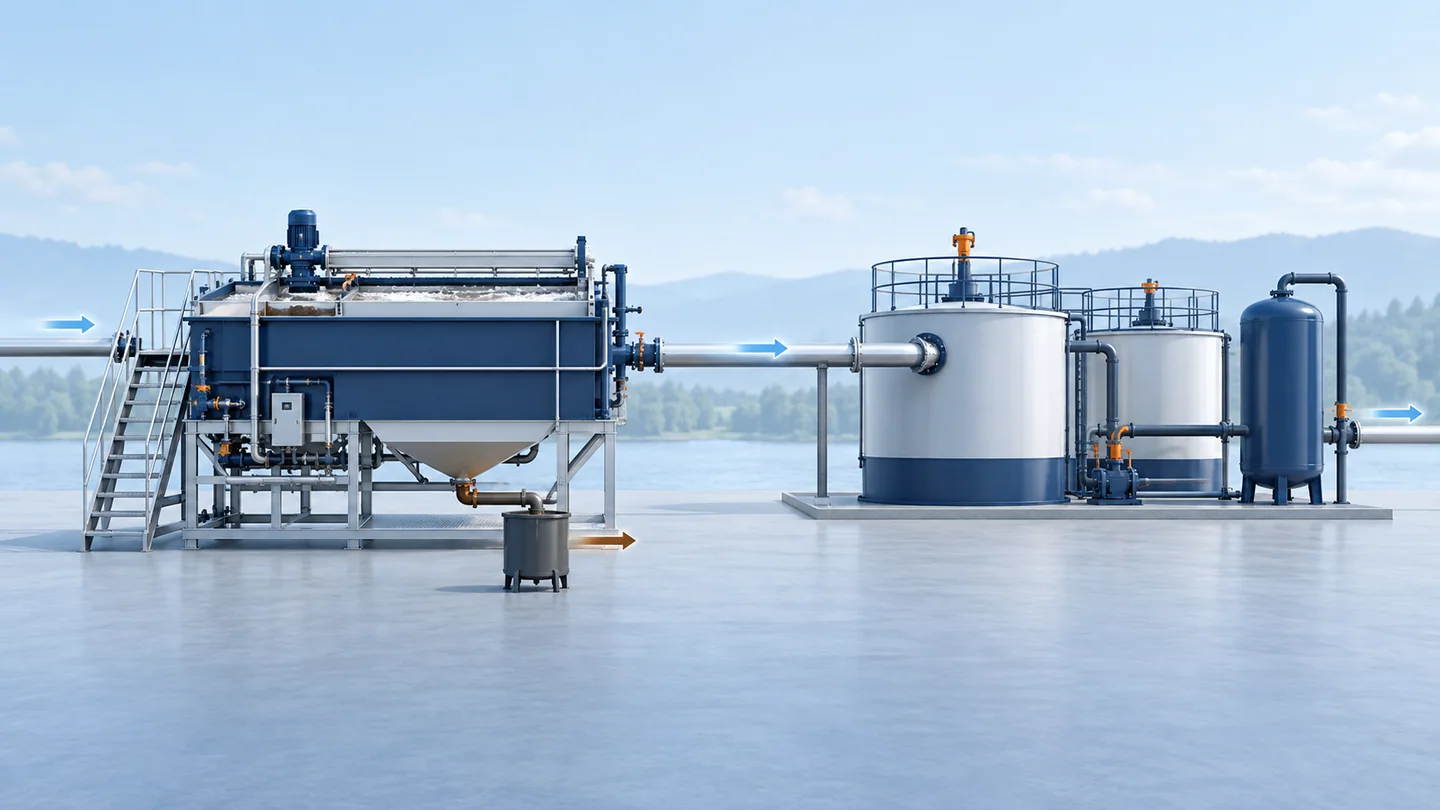
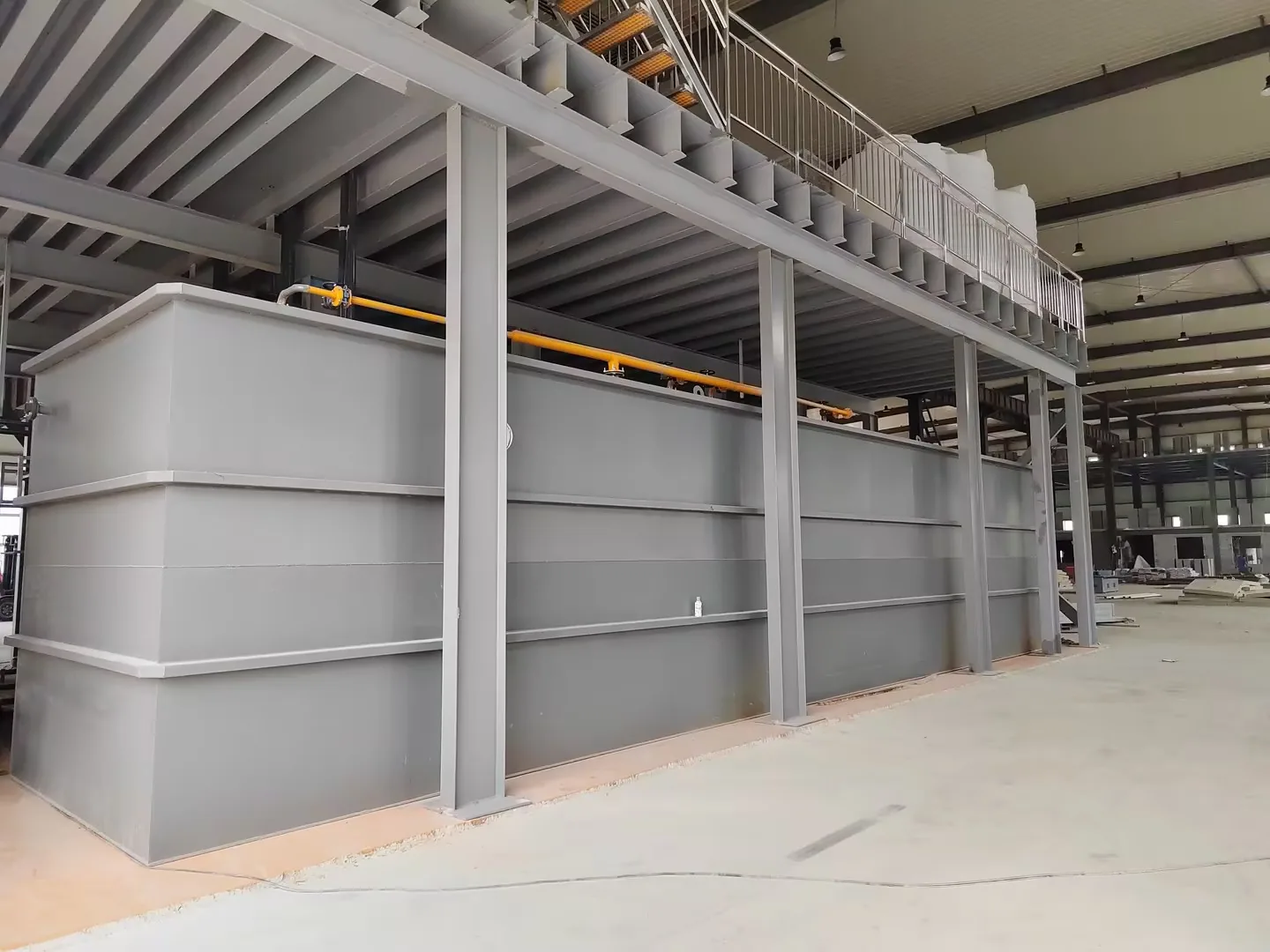
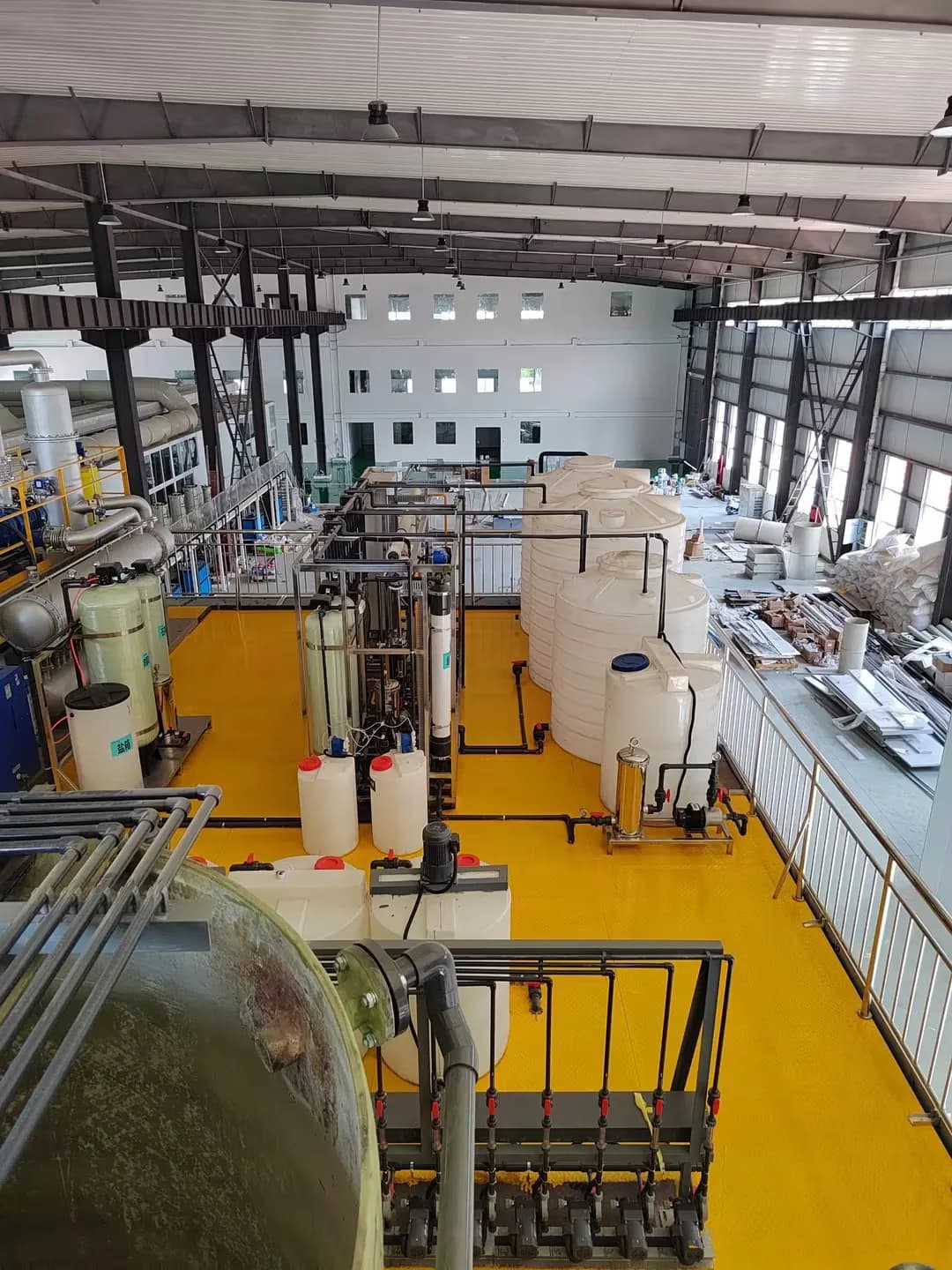
The installation photographs accompanying this guide show equipment arranged at different elevations, large rectangular tanks, piping, vessels and access platforms. These visible features make layout an important part of the procurement discussion. They do not establish a particular treatment sequence, capacity or recovery result.
For installation preparation, check floor loading, anchoring, drainage, containment, lifting routes and clearances around serviceable equipment. Allow space to withdraw membrane elements, remove pumps, service valves and open electrical cabinets. Locate sampling points where operators can reach them safely during normal operation.
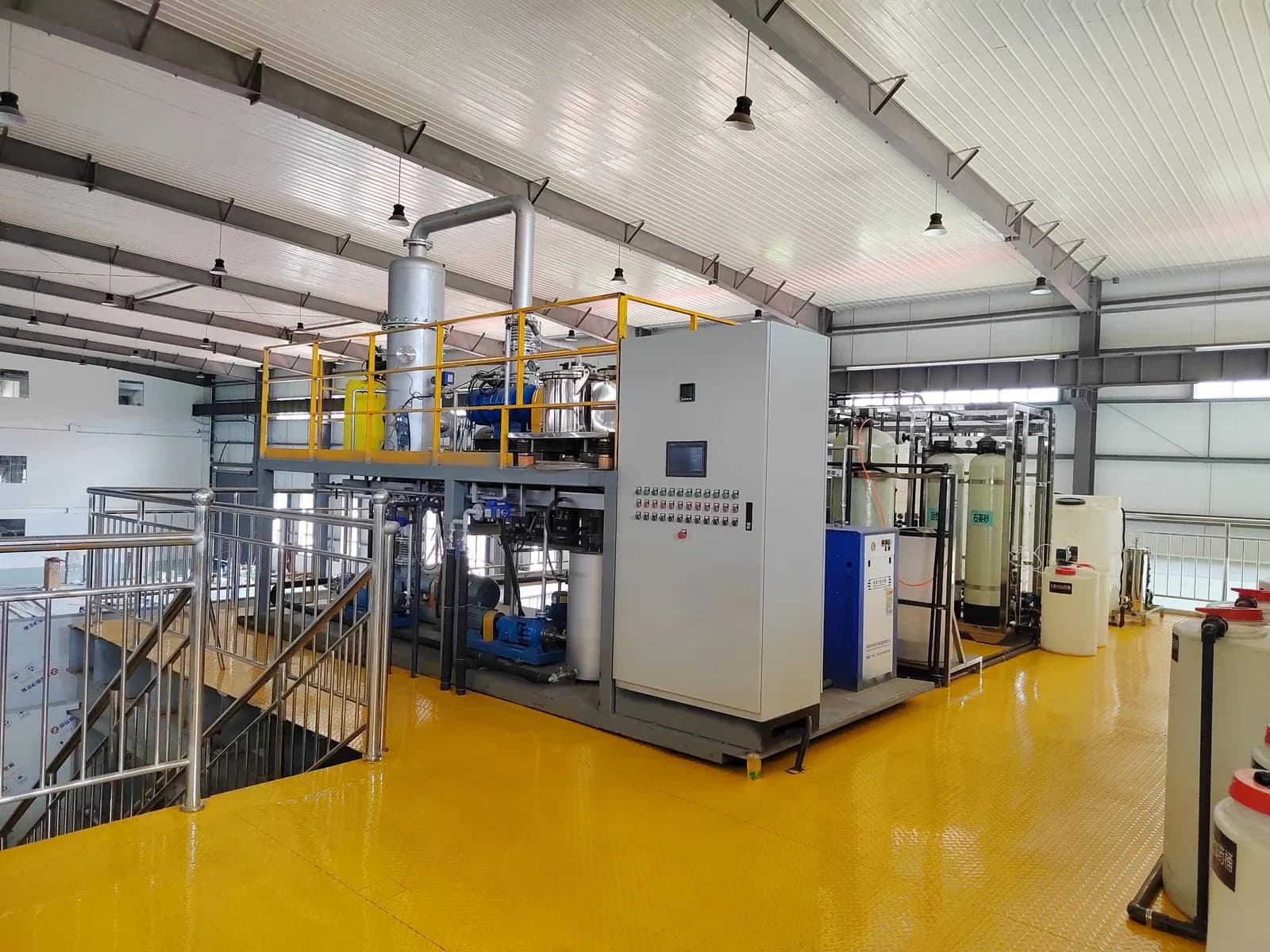
Have the supplier mark responsibility for interconnecting pipework, power, ventilation, drains and commissioning utilities. A compact equipment footprint is only useful if the completed installation can be operated and maintained.
7. Separate Factory Testing from Reuse Acceptance
Treatability and pilot testing
The test program should answer the unresolved purchasing questions. Which streams can be accepted? Does pretreatment produce stable feed? Does the selected polishing stage provide suitable water? What residuals and cleaning requirements emerge over a representative operating period?
Use samples that reflect expected production variation. Record their source and collection conditions. A short trial on one favorable sample supports a limited conclusion, not an unrestricted operating guarantee.
Factory testing and shipment inspection
Define factory testing against the agreed equipment scope: component identity, instruments, control logic, interlocks, alarms and applicable hydraulic or clean-water checks. Record what was tested and any items deferred to site commissioning.
Shipment inspection should confirm packing, identification, protected openings, loose components and documentation. These checks establish delivery readiness; they do not establish treated-water performance with the customer’s wastewater.
Site performance and production acceptance
The written site protocol should name the approved feed range, operating conditions, sampling locations, test methods and evaluation period. Include produced water, delivered reuse water, concentrate, backwash and other relevant residuals in the operating record.
Test the response to off-specification water, instrument failure and treatment downtime. Specify whether water is held, diverted or replaced by an approved backup supply.
Finally, validate reclaimed water at its intended production step. The production team should approve the agreed part-quality checks before continuous reuse becomes the normal operating arrangement.
8. Compare Lifecycle Cost on a Common Basis
Ask for the annual cost of delivering acceptable reclaimed water, supported by stated operating assumptions. Include power, chemicals, membranes or resin, cleaning, maintenance labor, analytical testing, consumables and residual disposal.
For water savings, count the fresh-water supply actually displaced. Avoid counting both internal recirculation and final water returned as separate savings. Consider production interruptions and the cost of maintaining backup water when evaluating availability.
Compare base and less favorable scenarios: lower production, poorer feed quality, more frequent cleaning or higher concentrate-disposal charges. A proposal with a lower equipment price may require a more expensive operating arrangement, while a higher recovery target may add treatment stages without proportionate economic benefit.
A useful comparison presents these assumptions openly so procurement can see which uncertainty matters most.
9. What to Include in Your RFQ
Prepare a single technical package for all suppliers:
- Plating processes, chemical inventory and stream collection map.
- Representative analyses with dates, methods and sample locations.
- Normal, peak and batch flows, operating hours and production variations.
- Existing treatment performance and the proposed reuse-feed connection.
- Water-quality requirements at each receiving rinse or process point.
- Intended concentrate, sludge, regenerant and cleaning-waste destinations.
- Site layout, utilities, access limitations and installation responsibilities.
- Testing, acceptance, training, spare-parts and service requirements.
Ask suppliers to identify missing information and assumptions before issuing a final performance commitment. Customer requirements should remain traceable from the RFQ through the process design, equipment list and acceptance protocol.
FAQ
Can electroplating wastewater be reused for rinsing?
Yes, selected streams can be evaluated for reuse. Suitability depends on treatment capability and the receiving rinse specification, including its effect on finished parts. Mixed wastewater, concentrated bath waste and segregated rinse water should not be assumed to need the same treatment.
Is RO always necessary for plating wastewater recycling?
No. The appropriate route depends on the contaminants and required water quality. RO may serve a broad desalting duty, while suitably configured ion exchange may serve selective removal or deionization. Pretreatment and residual management must be evaluated with either option.
Is low conductivity enough to prove that reclaimed water is suitable?
No. Conductivity provides an overall ionic indicator, not a complete contaminant analysis or production-quality test. Confirm the relevant metals, organics and process-specific requirements, then verify performance at the intended point of use.
Can RO concentrate be returned to a plating bath?
Only after confirming its composition and compatibility with that bath. A concentrate may contain unwanted substances or incorrect chemical proportions. Specify chemical recovery as a separate, verified objective rather than assuming every concentrated stream has reuse value.
What reuse percentage should a supplier guarantee?
An agreed value tied to a defined feed range, accepted-water quality, calculation boundary and operating period. Ask for both stage recovery and net water returned to production. Excluded streams and operating losses must be visible in the calculation.
Does wastewater recycling mean the plant has zero liquid discharge?
No. Recycling can leave concentrate, regenerant, cleaning waste and other liquid residuals. A zero-liquid-discharge claim requires a complete defined plant balance and an appropriate management route for all relevant residual streams, not just reuse of RO permeate.
Conclusion
A useful electroplating wastewater recycling specification connects a defined source to a defined reuse point. It explains the treatment duty, demonstrates water suitability, accounts for every residual and provides an acceptance method that production and environmental teams can both use.
The next purchasing step is to establish that design basis and compare suppliers against it. A larger equipment package or a higher headline recovery percentage cannot replace a clear boundary and representative evidence.
Discuss Your Electroplating Water Reuse Requirements
Baihuipu’s industrial water reuse systems can be evaluated alongside its metal finishing and electroplating solutions.
Send your wastewater analysis, process description, flow profile, reuse-water requirement, site layout and concentrate-disposal constraints. Contact Baihuipu to discuss the project scope and identify the information needed for a technically comparable proposal.