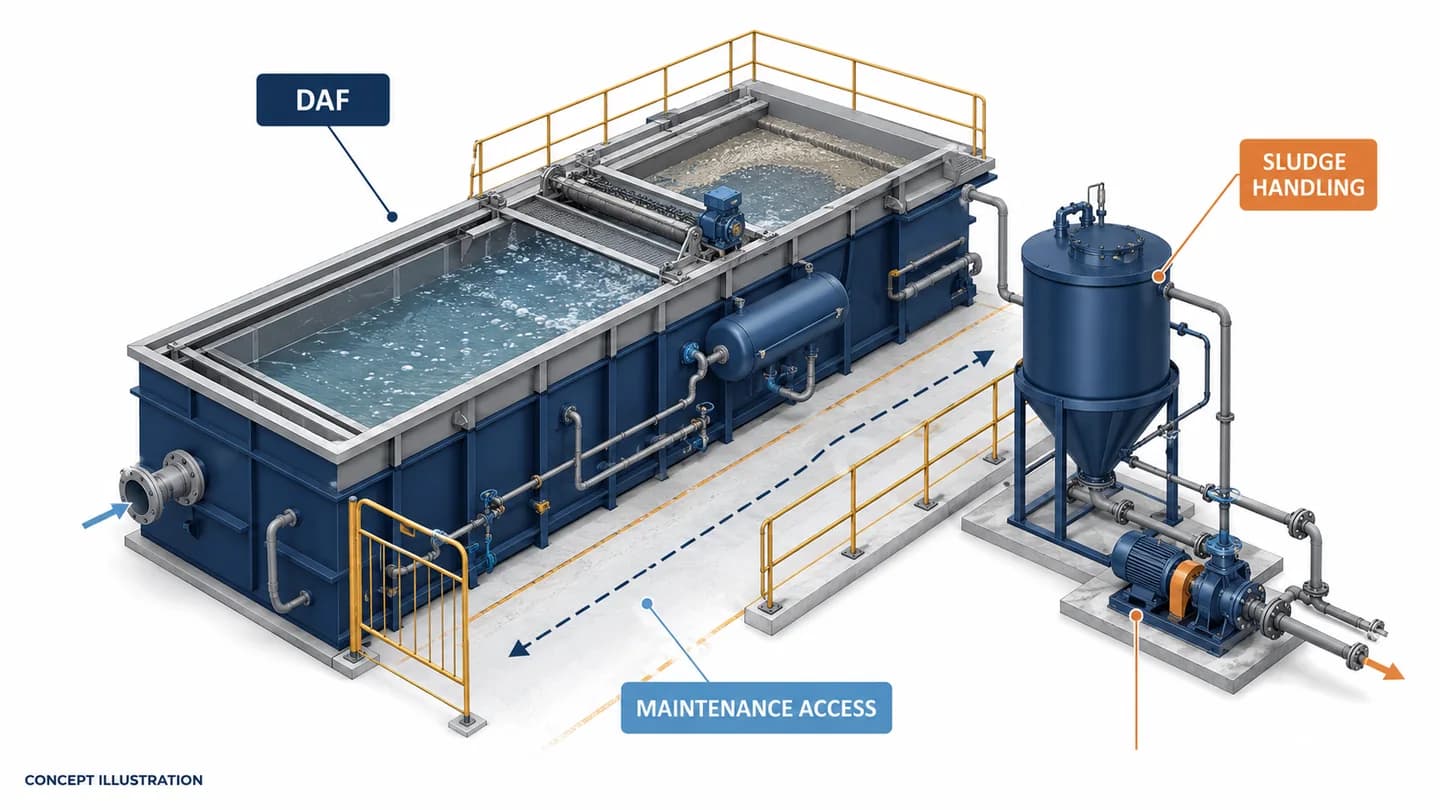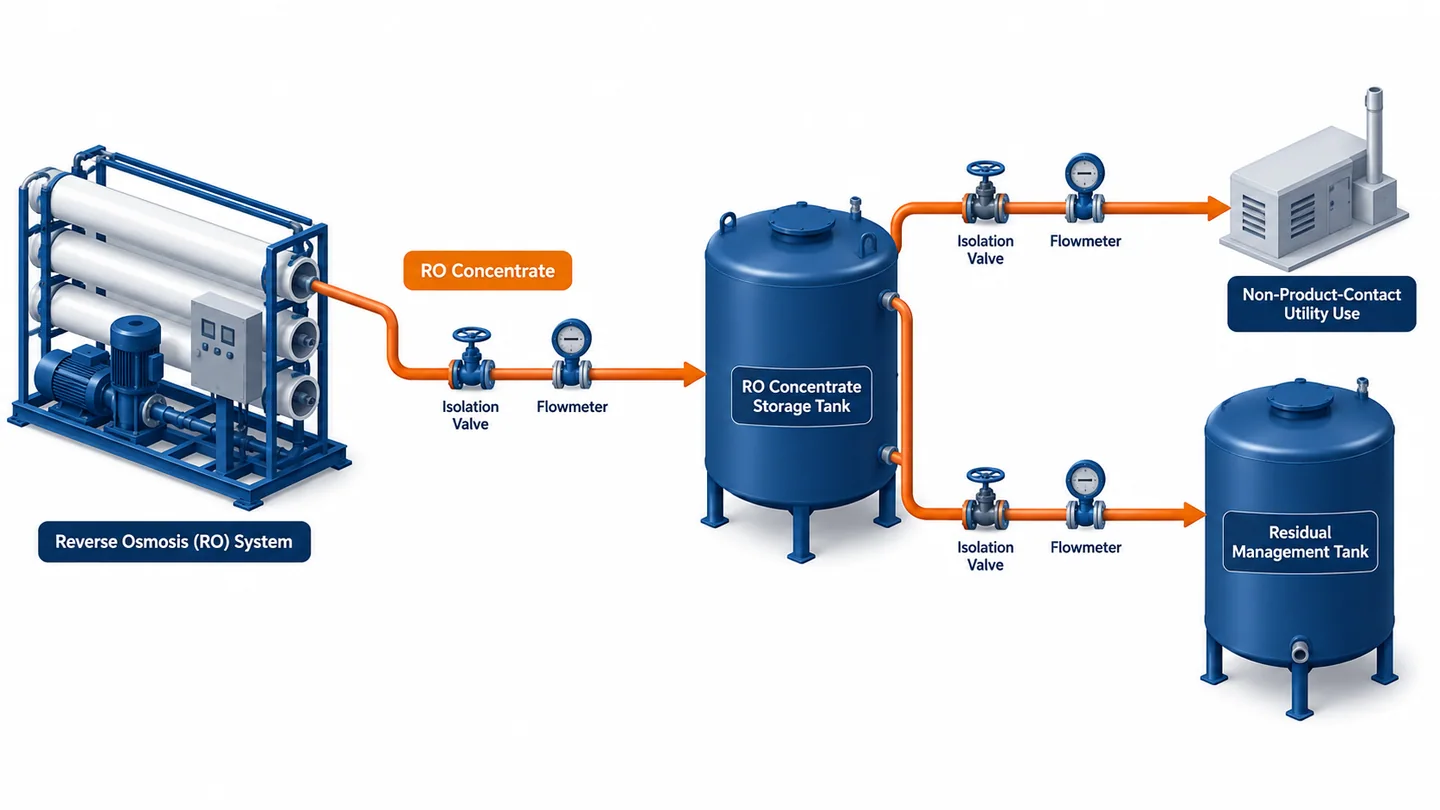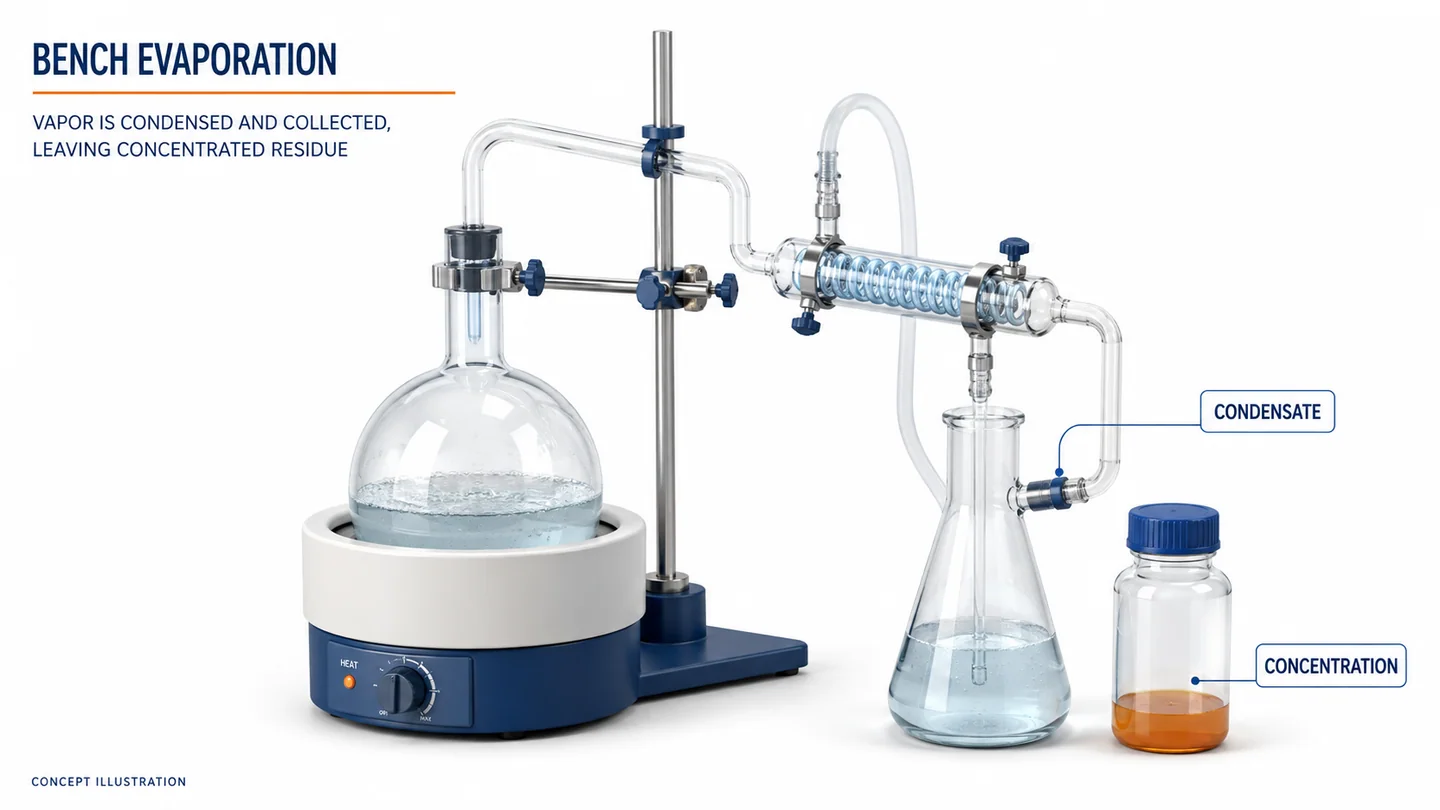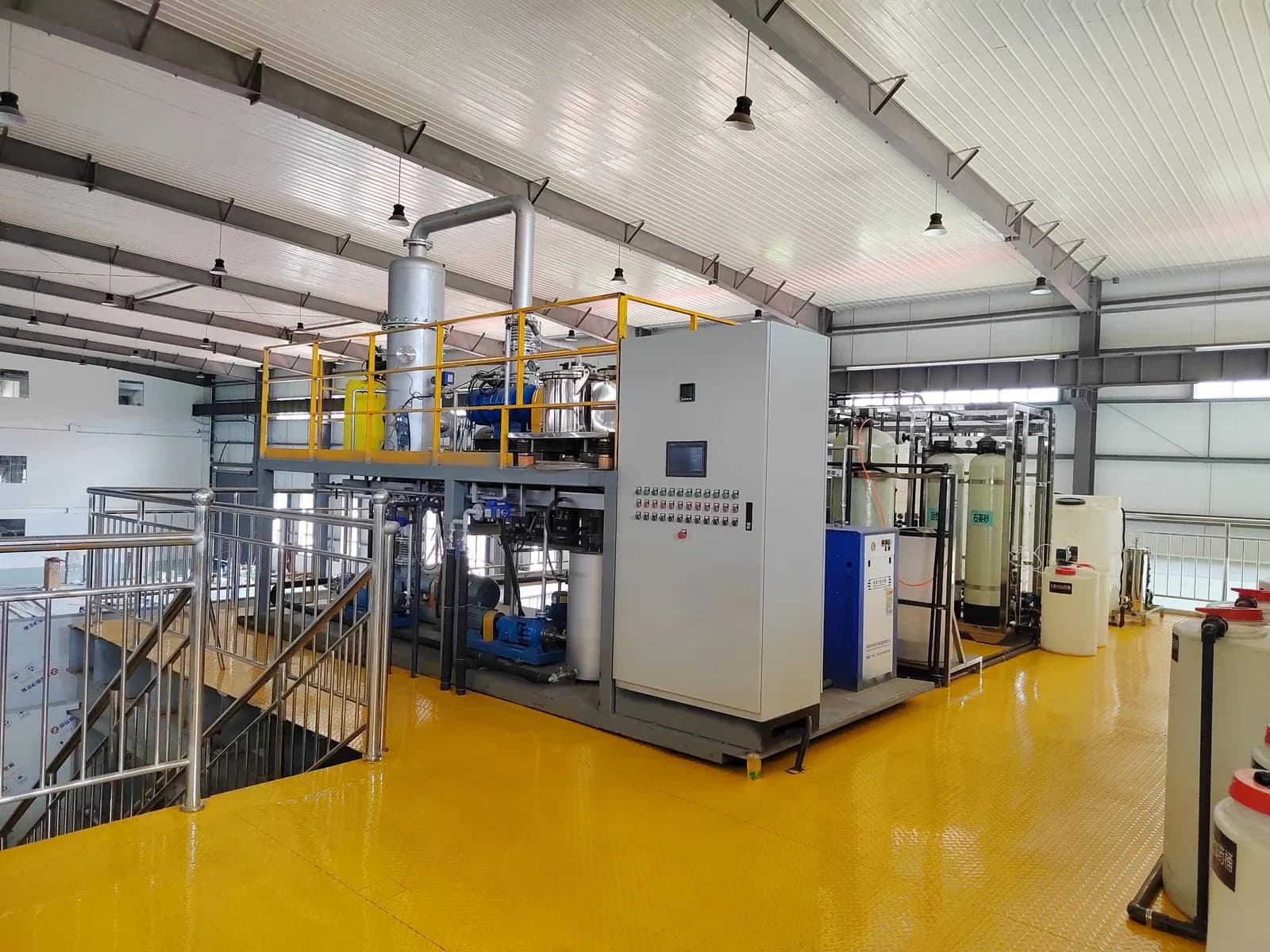
A dissolved air flotation system can produce visibly clearer water while leaving a substantial chemical oxygen demand, or COD, in the effluent. For a factory buyer, that creates an uncomfortable question: is the DAF underperforming, or was it asked to remove contamination that flotation cannot reliably separate?
The answer changes the investment decision. A hydraulic or chemical-conditioning problem may justify upgrading the DAF package. A high dissolved organic load may require biological treatment or another process instead. Buying a larger flotation tank without distinguishing these situations can leave the original problem unresolved.
This guide explains how to investigate high COD after DAF, build a useful testing program, and write a purchase specification that separates flotation performance from the performance of the complete wastewater plant. It is an engineering decision guide, not a record of a Baihuipu treatment trial. All numerical examples below are illustrative.
Quick Answer: Does DAF Remove COD?
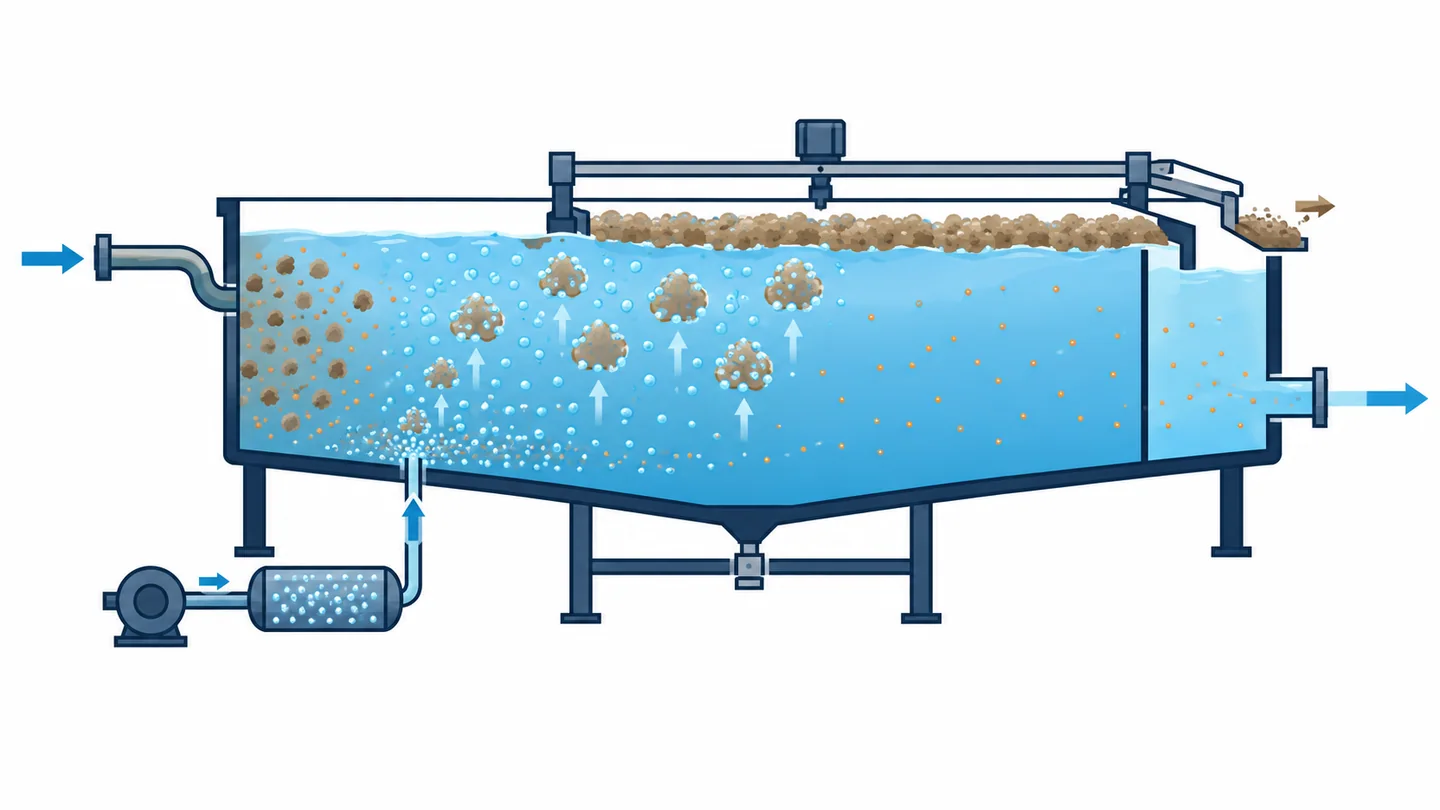
DAF removes the portion of COD associated with material that can be floated and separated, including some suspended solids, fats, oils, and chemically conditioned particles. It does not inherently destroy dissolved organic compounds. Consequently, excellent solids removal and limited total COD removal can occur together.
The next step is to compare total COD, operationally defined filtered COD, TSS, and oil and grease before and after treatment. Combine these measurements with representative flotation testing rather than selecting equipment from water appearance or a generic removal percentage.
Veolia's technical handbook describes DAF as bubble-assisted separation and identifies recycle flow, air delivery, solids concentration, and bubble dispersion as important operating variables. Those variables affect separation; they do not turn flotation into a universal dissolved-organic treatment process. Veolia wastewater treatment handbook
1. Identify Which Part of the COD Remains
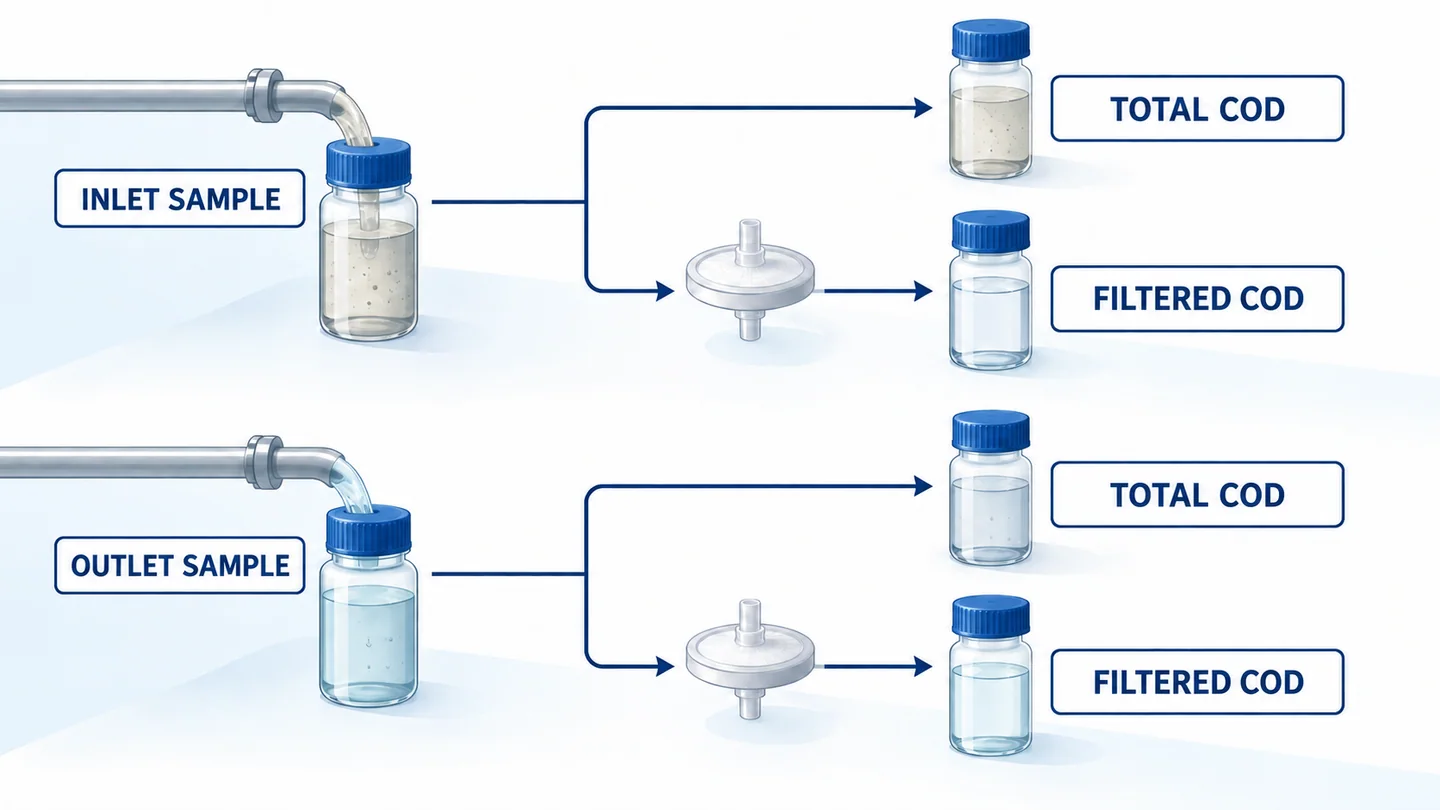
Total COD and filtered COD answer different questions
Total COD measures the oxygen equivalent of chemically oxidizable material in the prepared sample. It is not a direct measurement of suspended solids, nor does it identify individual pollutants.
A filtered COD test can help distinguish material removed by the selected laboratory filter from material passing through it. However, “filtered” is an operational definition. Filter type, pore size, sample preparation, and handling must be consistent. Very small colloids may pass through, so filtered COD should not automatically be called completely dissolved or non-removable COD.
For a practical investigation, request paired results using an agreed laboratory method. Record the filtration procedure on the report. Changing filters between samples can make a treatment change appear larger or smaller than it really is.
A transparent calculation example
Consider this hypothetical set of results, expressed as mg/L as O₂:
| Measurement | DAF feed | DAF outlet |
|---|---|---|
| Total COD | 2,000 | 1,150 |
| Filtered COD, same preparation method | 1,100 | 1,050 |
| Difference between total and filtered COD | 900 | 100 |
Total COD reduction is:
(2,000 − 1,150) ÷ 2,000 × 100 = 42.5%.
The total-minus-filtered fraction falls by approximately 88.9%. This does not prove that every removable contaminant has been captured. It does show why a clear-looking outlet can coexist with a substantial residual COD concentration.
If the desired outlet were 250 mg/L, this result would not support assuming that more flotation capacity alone could close the gap. Additional testing would need to address the material remaining in the filtered fraction.
2. Check the Samples Before Changing the Equipment
A before-and-after comparison is only useful when the samples represent comparable operating conditions.
An inlet grab taken during a production spill and an outlet grab taken during a clean-water flush are not a valid performance pair. Equalization, pipe residence time, chemical mixing, and flotation residence time can all separate the arrival of a wastewater batch from its eventual discharge.
Prepare a sampling schedule around production activities. Include normal operation, cleaning-in-place events, shift changes, and known high-load batches. Flow-proportional composites may help characterize average loads, while targeted grabs can capture short-duration problems. The appropriate approach depends on the analytical parameter and the acceptance objective.
Ask the laboratory how samples containing oil or settling solids should be collected, mixed, preserved, and transported. An oil layer left behind in a sample container can distort the result. Different laboratories can also report non-comparable numbers if preparation methods differ.
EPA Method 410.4 includes analytical quality-control requirements and an applicable measurement range. Concentrated or difficult matrices require suitable laboratory handling; a test number without method information is weak evidence for an equipment guarantee. EPA COD Method 410.4
3. Separate a Flotation Problem from a Process-Selection Problem
The following observations are investigation prompts, not diagnoses on their own.
| Observation | What to investigate first |
|---|---|
| High outlet TSS and visible floc carryover | Hydraulic loading, conditioning, air delivery, and sludge removal |
| Low outlet TSS but high filtered COD | Residual dissolved or fine-colloidal contamination |
| Good results on normal days, poor results during cleaning | Changes in pH, detergents, emulsions, flow, or organic load |
| Bench flotation works but the installed unit does not | Differences in mixing, residence time, loading, recycle, or controls |
| Increasing chemicals produces more sludge but little COD improvement | Whether the remaining contamination responds to the selected chemistry |
Avoid diagnosing a pump, saturator, or chemical program from COD alone. A useful operating record includes actual flows, pH, chemical consumption, recycle conditions, sludge withdrawal, and analytical results on the same timeline.
A troubleshooting visit should also compare actual operation with the equipment's agreed design envelope. A system treating a new production stream is not necessarily failing its original duty; the duty itself may have changed.
4. Investigate Chemical Conditioning Without Assuming More Is Better
Coagulation and flocculation have different roles
Chemical conditioning can destabilize certain colloids and promote floc formation before flotation. Its success depends on wastewater chemistry, reagent selection, pH, mixing, and contact time.
A chemical dose copied from another factory is not a specification. Product recipes, surfactants, cleaning chemicals, oils, and dissolved salts can change the response, even when average COD appears similar.
During testing, record the chemical product, concentration, dose basis, addition sequence, and mixing conditions. Report whether dose means commercial solution or active ingredient. These are different quantities and can materially change operating-cost estimates.
Use a response curve
Test a controlled range of conditions instead of selecting the jar that looks clearest. Compare outlet total COD, filtered COD, TSS, oil and grease where relevant, sludge volume, and floc behavior.
A condition that produces the lowest outlet TSS may generate excessive wet sludge. Another may achieve similar treatment with less chemical use. The decision should account for both water quality and residual handling.
Do not provide operators with an arbitrary instruction to keep increasing coagulant or polymer. Changes should remain within an approved procedure, with chemical compatibility and downstream effects reviewed.
5. Confirm That the Test Represents Flotation
A settling jar test is useful for screening chemistry, but it does not reproduce bubble attachment and flotation separation.
For DAF selection, follow promising chemistry with a suitable bench flotation test. Document the sample volume, conditioned feed, recycle or pressurization method, separation time, and sampling point. Compare multiple representative samples, not only the easiest batch.
The useful question is not merely, “Can a clear layer be produced?” It is, “Can the proposed conditioning and flotation arrangement repeatedly achieve the required result under the expected range of feed conditions?”
Where variability or scale-up risk is significant, a pilot can help establish operating stability. It should examine sustained loading, chemical response, sludge withdrawal, and recovery after realistic disturbances. A brief demonstration with selected wastewater should not be described as proof of year-round plant performance.
For the different purposes of screening and longer testing, see the jar, bench, and pilot testing guide.
6. Check Flow and Pollutant Load Together
A COD concentration is only part of the treatment duty. Flow determines how much contaminant arrives over time.
For an illustrative factory treating 100 m³/day at 2,000 mg/L COD:
COD load = 100 × 2,000 ÷ 1,000 = 200 kg/day.
If the outlet is 1,150 mg/L at approximately the same daily flow, the residual load is about 115 kg/day. The implied reduction is 85 kg/day.
That simplified calculation assumes comparable flows and neglects water leaving with sludge or entering through chemical solutions. A detailed acceptance balance should account for material flows that are significant for the particular installation.
Record sustained peak flow as well as average daily volume. A high-flow cleaning period may reduce separation time even while it dilutes the inlet COD concentration. Conversely, a concentrated batch may overload solids handling without a large hydraulic peak.
The DAF sizing guide covers equipment capacity. This article addresses a different question: which part of the COD that capacity can reasonably remove.
7. Decide What Should Follow DAF
When biological treatment deserves evaluation
If the residual organic load is biodegradable and compatible with the proposed biomass, biological treatment may address contamination that physical separation leaves behind.
The evaluation should include biodegradability, temperature, salinity, nutrients, inhibitory substances, and production interruptions. A single BOD-to-COD ratio can be a screening clue, but it is not sufficient to size a biological plant or guarantee treatment of a difficult industrial mixture.
A dairy or food-processing factory may have soluble product losses and cleaning-related loads after effective solids removal. That situation calls for a process assessment, not an automatic conclusion that its flotation tank is too small.
When polishing or source segregation may be more useful
A poorly biodegradable residual may require investigation of adsorption, oxidation, selective treatment, or segregation of a concentrated source stream. Each option has limits and produces its own cost and residual-management requirements.
For example, an oxidation proposal should define the targeted contaminants, test conditions, chemical demand, and relevant by-products. An adsorption proposal should address capacity and media replacement, not just a short initial removal test.
Source reduction may be simpler than treating everything after dilution. Keep recoverable product, concentrated cleaning liquids, and incompatible waste streams under review before enlarging the end-of-pipe plant.
8. Do Not Forget the Sludge Bill
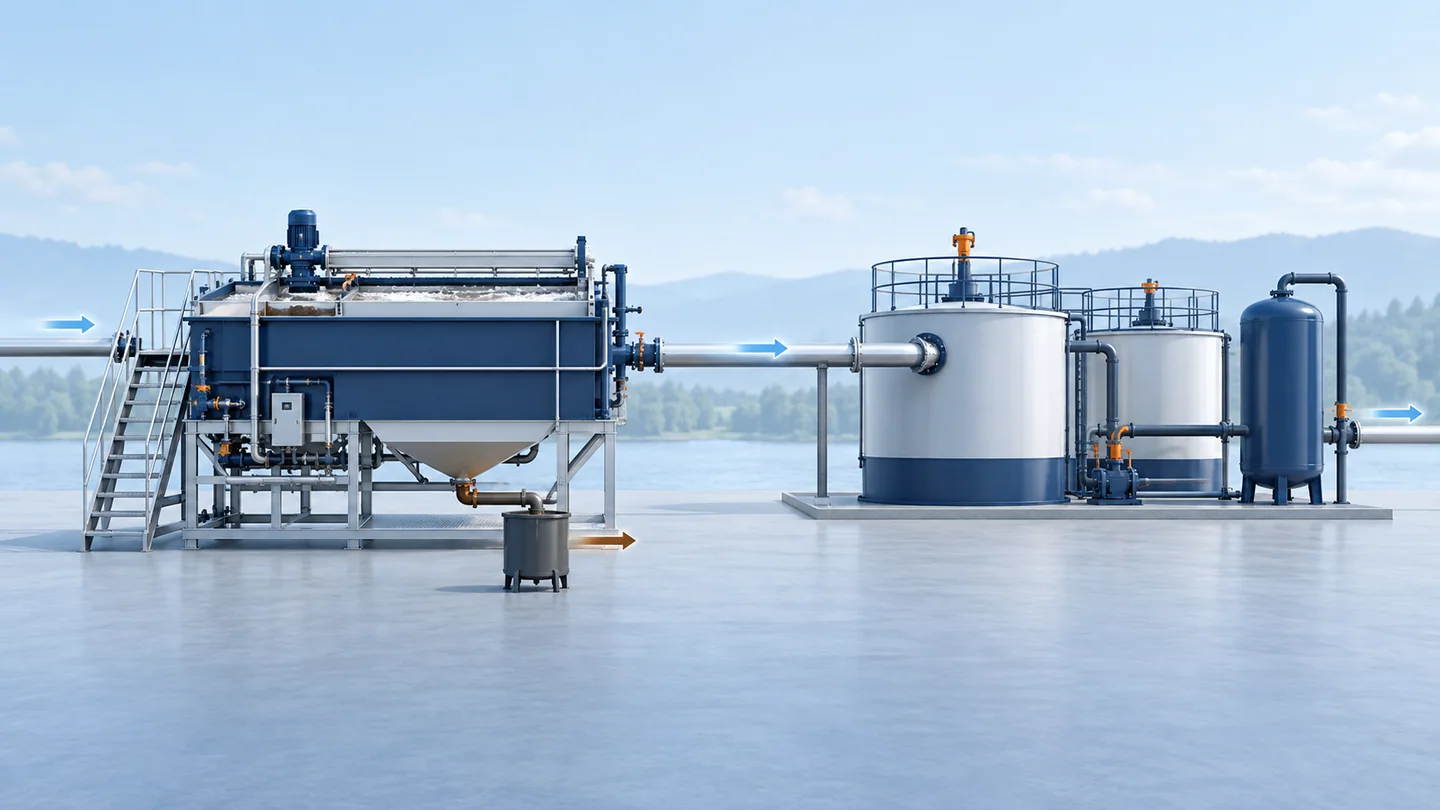
DAF transfers captured material into a floating sludge stream. Better separation can increase the mass requiring collection, storage, and dewatering.
Evaluate chemical consumption and sludge generation together. Request a reasonable basis for dry solids, expected wet volume, storage duration, and downstream dewatering tests. Avoid comparing disposal quotations using inconsistent moisture assumptions.
Return streams also matter. Water from sludge handling may carry suspended or dissolved load back to the wastewater plant. If these returns occur during a short period, the impact may be different from the daily average.
Factory layout should provide access to dosing systems, safe sludge transfer, and maintainable withdrawal equipment. Installation preparation should include chemical containment, washdown arrangements, drains, and space for the residual-handling equipment actually included in the project.
9. Turn the Investigation into a Better Supplier Specification
Request a proposal with separate statements for:
- The expected feed range and excluded abnormal streams.
- Guaranteed or targeted DAF outlet parameters.
- The chemical-conditioning basis and consumables.
- Hydraulic, solids, and air-delivery design assumptions.
- Sludge quantity and handling responsibilities.
- Required downstream treatment and its scope boundary.
- Sampling, analytical methods, and acceptance conditions.
- Available corrective actions if agreed criteria are not achieved.
A useful acceptance criterion is tied to measurable operating conditions. “High COD removal” is not sufficiently precise. Neither is a photograph of a transparent beaker.
Factory testing can verify equipment identity, pump operation, instrumentation, alarms, and agreed functional sequences. Shipment inspection can verify completeness, protection, labeling, and loose parts. Neither activity establishes pollutant-removal performance unless a representative wastewater test is expressly included and properly documented.
During site commissioning, keep the treatment record linked to production activity. Note when chemicals were prepared, tanks cleaned, instruments calibrated, or unusual batches introduced. Otherwise, the best-performing day can become detached from the conditions required to reproduce it.
For a retrofit, ask the supplier to state which existing components it relies on. A revised DAF guarantee may depend on an upstream equalization tank, a dosing system, or a sludge pump supplied by someone else. Responsibility for those interfaces should be agreed before purchase, not argued about after commissioning.
Compare proposals on the same boundary
Two quotations can both claim COD reduction while describing different treatment trains. One may include only flotation; another may include coagulation, pH adjustment, equalization, and biological treatment. Compare the defined inlet, outlet, and equipment scope rather than headline percentages.
Prepare a one-page comparison sheet showing excluded civil works, operator labor, analytical costs, chemical storage, and sludge disposal. Ask each supplier to identify assumptions requiring confirmation. A qualified assumption is more useful than an apparently firm promise based on missing information.
When customer requirements are still changing, commission the minimum testing needed to resolve the next decision. Do not buy a full polishing package before establishing whether the residual COD actually requires that treatment route.
FAQ
Why is the DAF outlet clear but the COD still high?
Clarity mainly reflects visible particles and light scattering. Dissolved organic compounds and some fine colloids can remain in clear water. Compare total and consistently prepared filtered COD with TSS before deciding that the flotation equipment is defective.
Can adding more polymer solve high outlet COD?
Not necessarily. Polymer may improve capture of responsive flocs, but it is not a general treatment for dissolved organic contamination. Test dose response and downstream effects rather than assuming that a higher dose must improve total COD.
What COD removal percentage should a DAF supplier guarantee?
There is no universal percentage suitable for all industrial wastewaters. A defensible commitment depends on representative testing, feed characteristics, operating conditions, and the precise treatment scope. An outlet concentration and agreed feed envelope are often more useful than an isolated percentage.
Is a jar test enough to buy a DAF system?
It can screen chemical conditions, but settling behavior is not identical to flotation behavior. Add representative flotation testing and, where uncertainty justifies it, pilot work before relying on a full-scale performance commitment.
Does high COD mean the water is unsafe for every reuse application?
COD alone does not establish suitability for reuse. The receiving application may also require limits on salts, specific chemicals, solids, microorganisms, and other parameters. Use an application-specific assessment rather than judging safety from COD or appearance.
Conclusion: Diagnose the Remaining COD Before Buying More Equipment
High COD after DAF is a reason to investigate the treatment mechanism, not automatically a reason to replace the flotation unit. Establish comparable samples, distinguish total and filtered COD, test chemical and flotation response, and quantify the load passed downstream.
The best purchasing decision may be a targeted equipment correction, better source management, or an additional treatment process. Make that choice from evidence rather than visual clarity.