
- Plant owners and facility teams
- Engineering and technical teams
- EPC contractors and project integrators
- Procurement teams evaluating treatment scope
Metal-bearing wastewater
Metal Finishing & Electroplating Wastewater Treatment Solutions
Project-specific electroplating and metal-finishing wastewater treatment for chromium, nickel, copper, zinc, pickling, phosphating, sludge and reuse.

Direct answer
What Usually Defines the Treatment Route?
Electroplating and metal-finishing wastewater should be planned stream by stream. Chromium-bearing, nickel or copper-bearing, acid, alkali, phosphating, oily and rinse-water streams can require different pH, redox or precipitation conditions before clarification, filtration and sludge dewatering.
- Process-line and wastewater stream list
- Average, peak and batch flow by stream
- Metal species and concentrations
- Source segregation
- Heavy-metal removal
- Sludge planning
- Industrial Wastewater Treatment Systems
- Industrial Water Reuse Systems
- Zero Liquid Discharge Systems
Confirm equipment, materials, capacity and performance targets from representative water data, site conditions and the agreed project scope.
Applications covered
Where This Industry Solution Applies.
Use the closest application as a starting point. The treatment route still depends on the actual water source and project target.
Electroplating
Keep metal-bearing, chromium-bearing, cyanide-bearing, acidic and alkaline streams identifiable for treatment control.
Metal Finishing
Map cleaning, degreasing, rinsing and finishing baths by chemistry and discharge pattern.
Anodizing
Review acidic and alkaline rinses, aluminum-bearing solids, bath dumps and peak neutralization demand.
Pickling
Confirm acid type, dissolved metals, free acidity, batch discharge and sludge-handling requirements.
Phosphating
Identify phosphate, metal, oil and cleaning streams and check their effect on precipitation and sludge production.
Galvanizing
Map zinc-bearing rinses, acids, flux-related streams and intermittent bath discharges separately.
Printed Metal Products
Review cleaning, coating, printing and rinse-water chemistry together with production changeovers.
Buyer-critical conditions
Issues to Resolve Before Equipment Selection.
These conditions influence process reliability, operating workload, footprint and the treatment boundary.
Incompatible chemical streams
Premature mixing can increase chemical use, complicate redox control and create less manageable sludge.
Metal and complexing chemistry
Removal depends on metal species, pH, concentration, complexing agents and the required discharge limit.
Sludge and reuse trade-offs
Precipitation creates residuals, while reuse systems require control of salts and remaining concentrate.
Water streams & treatment direction
Do Not Design from an Industry Label Alone.
Map the source, contaminants and treatment objective of each important stream before combining flows.
| Water stream | What must be checked | Possible treatment direction |
|---|---|---|
| Chromium-bearing wastewater | Chromium species, pH and oxidizing conditions | Dedicated redox and precipitation route where required |
| Nickel, copper or zinc rinses | Metal concentration and complexing agents | Segregation, pH control, precipitation and clarification |
| Pickling and anodizing streams | Acidity, dissolved metals and salts | Separate collection, neutralization and solids separation |
| Phosphating wastewater | Phosphate, metals and suspended solids | Chemical precipitation and clarification |
| Oil-bearing cleaning water | Oil, surfactants and emulsion stability | Oil separation or coagulation before the main treatment line |
Request a process review
Send the Water Source, Flow and Treatment Target.
Available analysis, stream list and site conditions help identify the questions that must be resolved before the treatment route is selected.
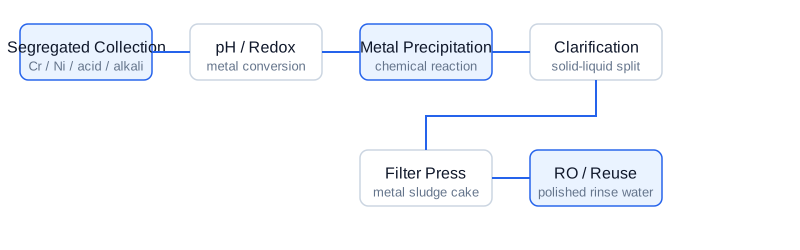
Typical process route
Start with segregated collection, not a single mixed tank
The sequence below is a planning reference; actual reaction stages and dosing require project water data and, where needed, treatability testing.
Equipment options
Evaluate Each Module Against a Defined Treatment Job.
Match every equipment stage to the actual water, operating conditions, required outlet quality and residuals route.
Segregation and equalization
Evaluation focusKeep chemically different streams controllable before treatment.
pH and redox treatment
Evaluation focusSet reaction conditions for the metal species and treatment objective.
Chemical precipitation
Evaluation focusConvert treatable dissolved metals into separable solids under confirmed conditions.
Clarification and filtration
Evaluation focusSeparate precipitated solids and protect any downstream polishing step.
Sludge dewatering
Evaluation focusCondition and dewater metal-bearing sludge for the site’s approved handling route.
Rinse-water reuse
Evaluation focusEvaluate membranes only after pretreatment, reuse quality and concentrate management are defined.
Selection framework
Match the Process to the Condition That Drives the Design.
Compare each project condition against water analysis, operating requirements and the treatment target before selecting the process route.
| Project condition | Evaluate | Possible direction |
|---|---|---|
| Chromium-bearing stream | Chromium species, pH and oxidation state | Dedicated redox and precipitation treatment |
| Complexed metals | Chelating agents and treatability | Specialized pretreatment before precipitation |
| Oily cleaning wastewater | Free versus emulsified oil and surfactants | Oil separation or coagulation before metal treatment |
| Rinse-water reuse | Salt build-up, required quality and concentrate route | Filtration and membrane polishing after metals removal |
Equipment and layout
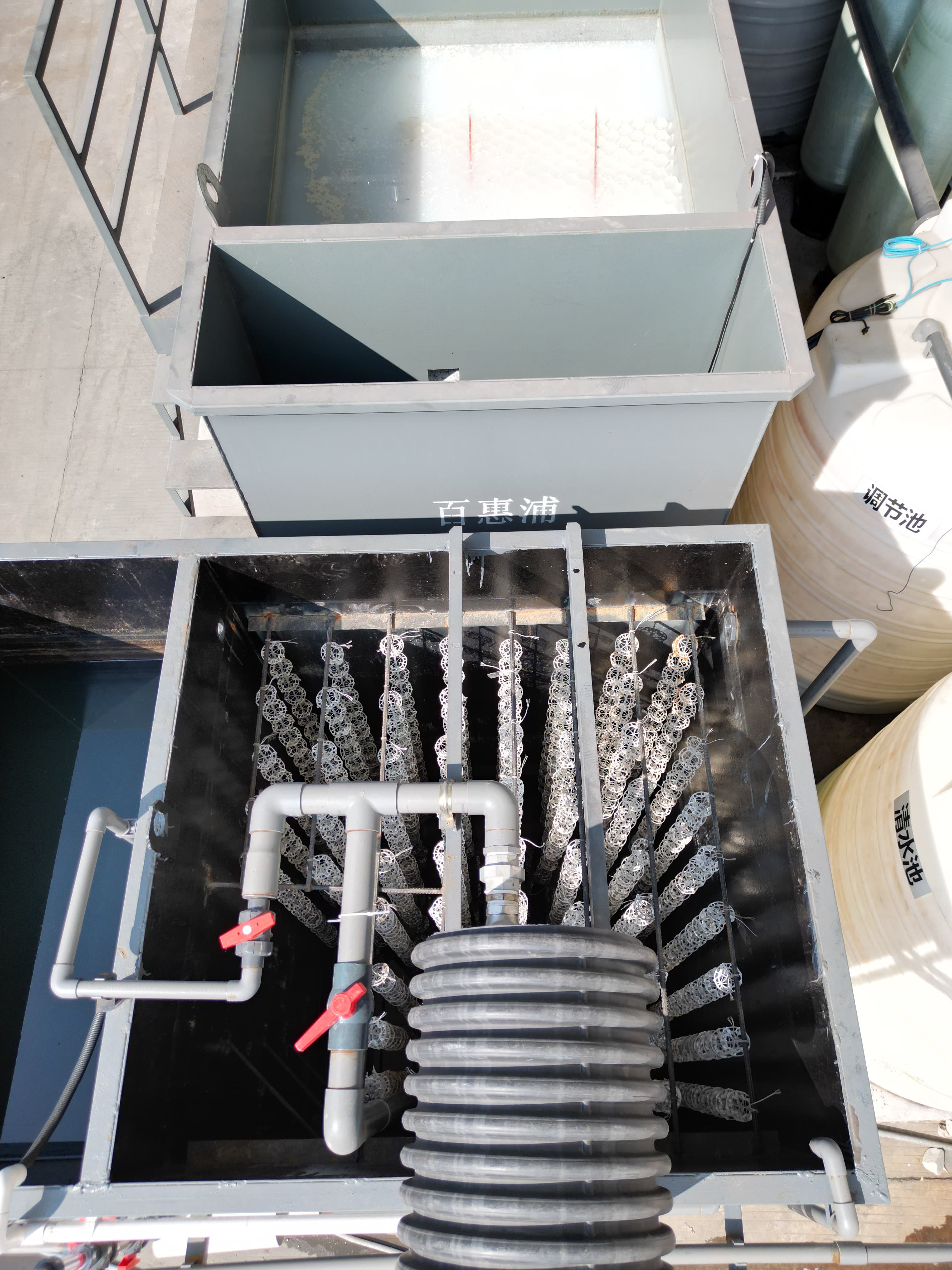
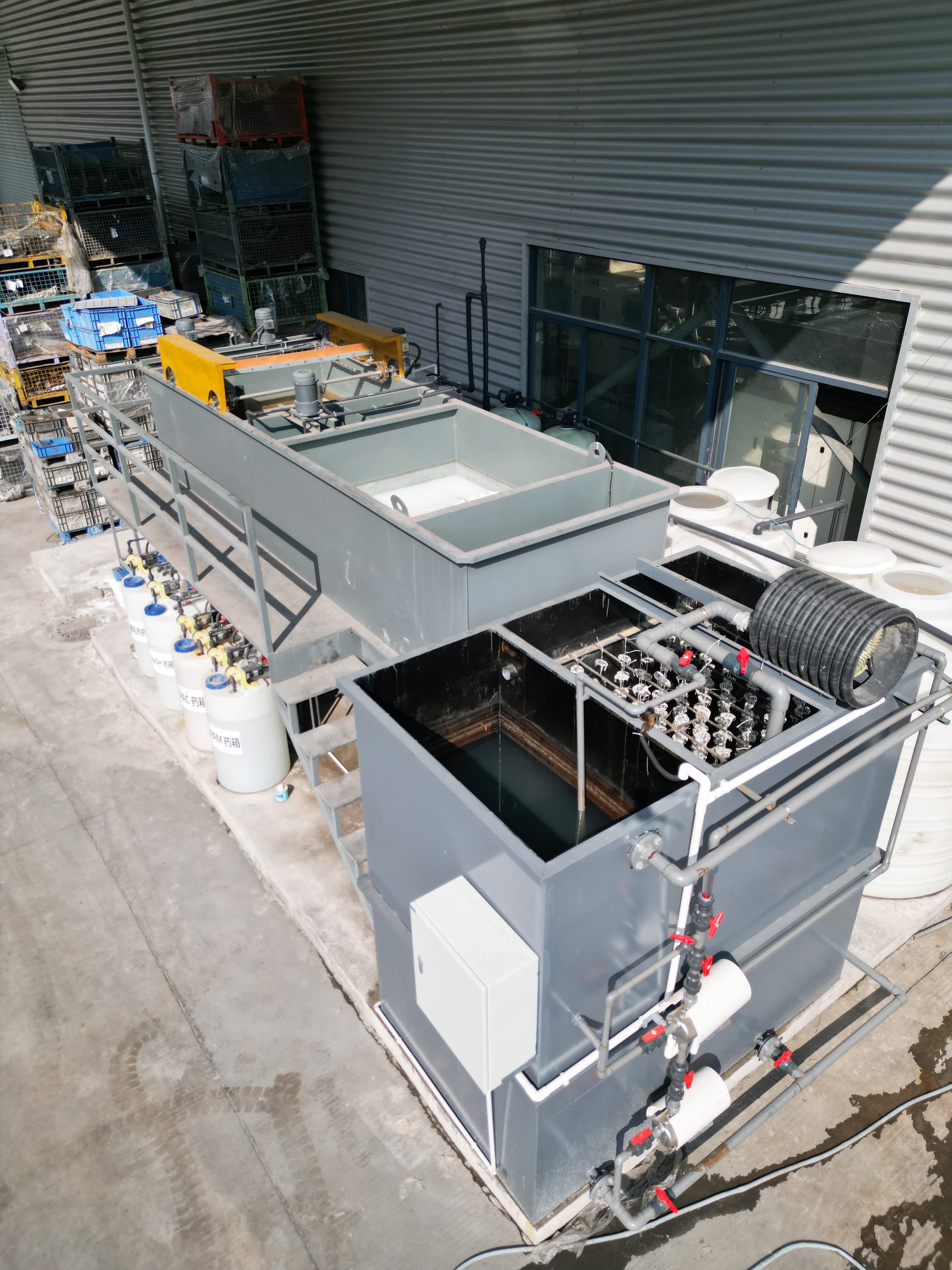
Review Equipment Arrangement and Site Access.
Use these views to discuss equipment arrangement, operating access, piping interfaces and the space available for the treatment system.
Prepare a useful RFQ
Provide the Inputs That Change the Design.
Share what is available now. The missing inputs can then be identified before equipment scope, materials and performance targets are confirmed.
Send Project RequirementsProcess-line and wastewater stream list
Average, peak and batch flow by stream
Metal species and concentrations
pH, COD, oil, phosphate, cyanide or complexing-agent data where relevant
Required discharge or reuse target
Available footprint and operating hours
Sludge classification and disposal route
Buyer FAQ
Questions to Resolve Before Requesting a Final Quote.
Answers remain conditional where water data, local requirements or project standards determine the result.
Why separate electroplating wastewater streams?
Different metals and process chemicals may need different pH or redox conditions. Separation usually gives better control than treating every stream as one average mixture.
Can chemical precipitation remove every dissolved metal?
No. Performance depends on metal species, complexing agents, pH, competing ions and the required limit. Testing may be needed for difficult streams.
What happens to the removed metals?
They become part of a sludge or residual stream that needs conditioning, dewatering, classification and an approved downstream handling route.
Can rinse water be reused?
Potentially, after metals and solids are controlled. Membrane polishing and concentrate management must be evaluated against the intended rinse-water quality.
Plan your industry solution
Turn Your Water Data into a Clear Technical Scope.
Send the stream source, flow, available analysis, treatment objective and site conditions for a project-specific discussion.