Introduction
Metal-processing wastewater can appear straightforward: adjust pH, add chemicals, and separate the solids. In practice, two streams with similar total-metal concentrations may respond differently because of complexing agents, oil, fine particles, or oxidation state. Continuous rinse water also presents a different hydraulic duty from concentrated cleaning batches.
The system therefore represents a project-specific duty, not a fixed machine. The U.S. EPA’s metal-finishing category covers diverse operations and bases requirements on manufacturing processes and discharge conditions. The wider procurement lesson is to connect the treatment route to the actual process, local outlet, and residual-waste responsibilities. See the U.S. EPA Metal Finishing Effluent Guidelines; other jurisdictions may use different limits.
This guide explains how to prepare the design basis, evaluate precipitation and solids handling, and define testing and acceptance without making unsupported performance assumptions.
Start with Wastewater Sources, Not the Final Collection Tank
The most useful starting document in a project review is often a stream table. It lists where each wastewater stream originates, when it is released, what chemicals can enter it, and whether it should remain separate before treatment.
Possible sources include rinse water, bath dumps, equipment cleaning, floor washing, pickling or activation liquids, scrubber blowdown, and filter cleaning waste. The list must reflect the actual factory rather than assumptions based on its industry label.
For each source, record:
- production step and chemical inventory;
- flow, batch volume, and release schedule;
- pH, conductivity, solids, oil, and relevant individual metals;
- chemical form where it changes treatment behavior;
- complexing agents, cleaners, or chelants;
- operating condition and intended discharge or reuse point.
Segregation does not require a separate plant for every drain. It keeps concentrated, incompatible, difficult, or recoverable streams identifiable until their treatment consequences are understood.
Hexavalent chromium is a clear example of why chemical form matters. Where it is genuinely present, reduction to a different oxidation state may be required before conventional precipitation. Complexed metals can also remain soluble at conditions where uncomplexed metal ions would precipitate. The correct response is targeted analysis and bench testing, not adding more equipment by default.
What Water Data Should Be Included in the Design Basis?
Flow must describe time, not only volume
A daily total is insufficient for tank, pump, mixer, and dosing design. Provide average and maximum flow, peak hourly flow, batch volume and duration, shift pattern, and planned expansion. Equalization should follow the release schedule; abnormal water may require separate holding.
Analysis should match the process chemicals
A baseline can include pH, conductivity, dissolved and suspended solids, turbidity, COD or TOC where relevant, oil, and each process-relevant metal. The metal list must follow the actual chemicals and materials used.
Report total and dissolved metals separately where relevant. Attach the original report, sampling point, date, and production condition; one quiet-period grab sample is not a maximum design condition.
The outlet target must be explicit
“Meet the standard” is not a complete requirement. State whether treated water goes to a municipal sewer, an industrial-park plant, a surface-water discharge, another onsite process, or a reuse system. Provide the applicable limit, sampling method, averaging period, and any local pretreatment conditions.
Likewise, “water reuse” is not one specification. Rinsing, cooling-tower makeup, floor washing, and process-water production require different water quality. Name the reuse point before selecting membranes or polishing equipment.
How Chemical Precipitation Removes Dissolved Metals
Chemical precipitation converts dissolved contaminants into solid particles that can be separated from water. Hydroxide precipitation is widely used for metal-bearing wastewater, commonly with an alkali such as lime or sodium hydroxide. The U.S. EPA’s development documents discuss hydroxide precipitation as a common treatment approach and note that jar testing can help establish pH, reagent dose, flocculant selection, and settling behavior. See the EPA Metal Products and Machinery Development Document.
The key limitation is that metals do not share one universal optimum pH. Solubility depends on the metal, oxidation state, temperature, competing ions, complexing agents, and excess alkalinity. Raising pH without control can also create unnecessary chemical consumption, poor floc, or re-dissolution concerns for amphoteric metals.
For this reason, a practical precipitation study should evaluate:
- the actual wastewater or a defensible representative sample;
- pH response and reagent demand;
- oxidation or reduction needs, if confirmed by the chemistry;
- reaction time, coagulant or flocculant demand, and settling behavior;
- supernatant quality, sludge volume, and dewaterability;
- sensitivity to high-load and low-load conditions.
Sulfide precipitation or specialized scavengers may be considered when justified by the chemistry and target, but safety, dose control, residual reagent, solids, and operating competence must be evaluated. Some mixtures require staged treatment rather than one reaction tank. EPA documents describe cases with different precipitation and separation stages; the final route still requires site validation. See the EPA Centralized Waste Treatment Development Document.
Solids Separation Is Part of Metal Removal
Precipitation does not finish the treatment process. It moves dissolved metals into particles. Those particles must then be captured consistently under the expected flow and solids load.
After reaction and flocculation, separation may use clarification, lamella settling, flotation, membrane filtration, or another method. Selection depends on floc behavior, hydraulic loading, oil, footprint, and required clarity.
A buyer should ask the supplier to state the assumed solids and hydraulic loading, how peaks are buffered, where backwash and off-spec water return, and which monitoring point determines whether water proceeds or is diverted.
A clear bench-test beaker is useful evidence, not a full-scale guarantee. Scale-up must account for mixing, reaction time, floc damage, hydraulics, and sludge inventory.
Sludge Dewatering Must Be Designed with the Water Line
Metal treatment transfers contaminants into a sludge stream. The sludge is not a secondary detail: its quantity, composition, handling method, and permitted destination affect operating cost, floor space, labor, and environmental responsibility.
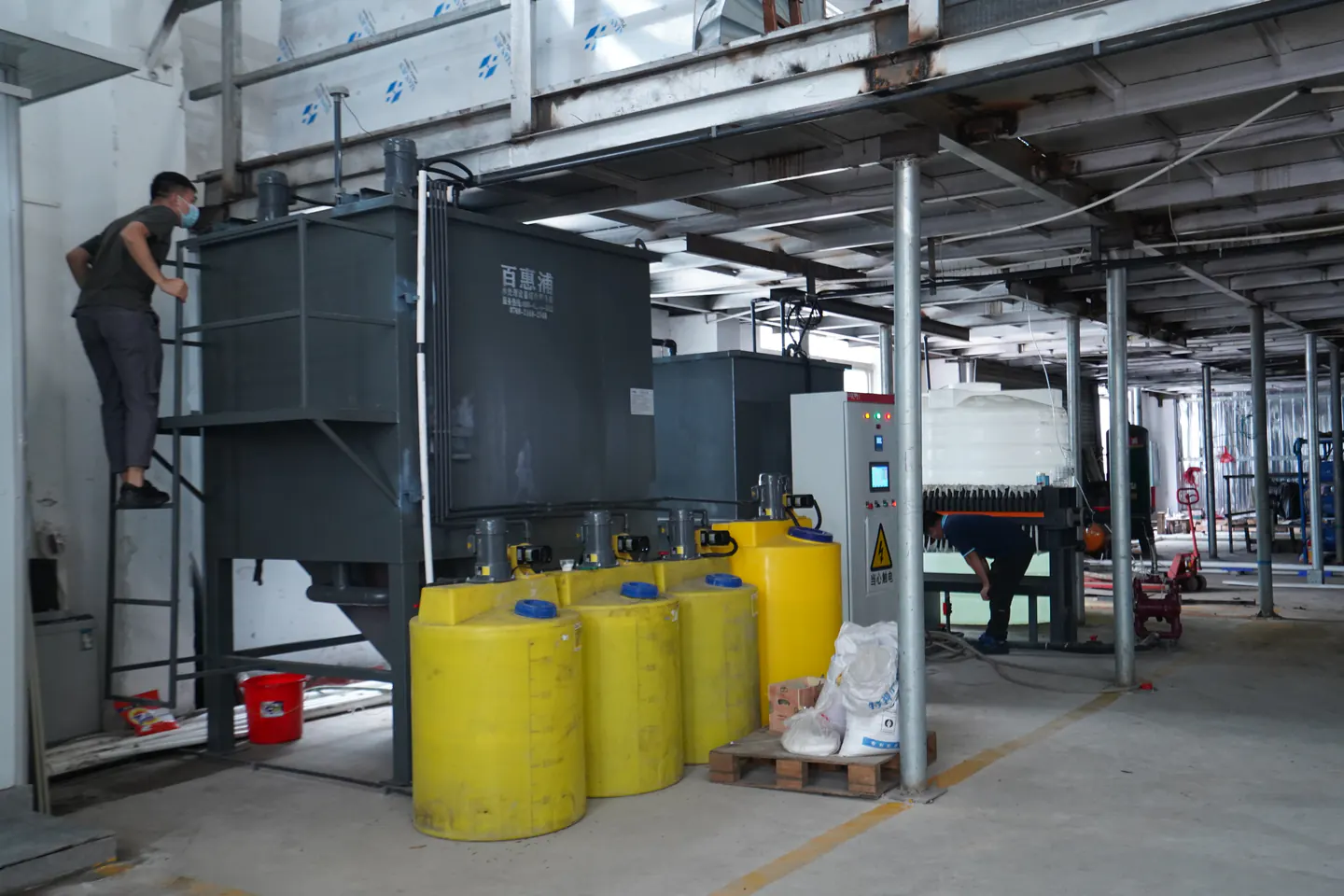
A plate-and-frame filter press can reduce the water content of chemical sludge. Its scope may also require sludge holding, a feed pump, conditioning where justified, filtrate return, wash-water collection, cake storage, and lifting access.
The RFQ should identify the sludge calculation basis, including removed metals, reagent, coagulant, suspended solids, cake moisture, and operating frequency. Exact values generally require representative testing. An undefined cake-moisture assumption can make a filter press appear adequate on paper while creating excessive operating cycles onsite.
Include filtrate, cloth-cleaning water, and floor wash water in the mass balance and define where they return.
Sludge classification and disposal or recovery requirements depend on its composition and local law. A supplier can design handling equipment, but the site owner should confirm the legally permitted destination and required testing with the appropriate local authority.
A Practical Process-Selection Framework
The table below is a discussion framework, not a final process design.
| Confirmed project condition | Buyer question | Possible engineering direction to evaluate |
|---|---|---|
| Relatively stable rinse stream with one dominant, uncomplexed metal | Is one precipitation stage sufficient across the full operating range? | Equalization, controlled pH adjustment, precipitation, flocculation, and solid-liquid separation |
| Multiple metals with different precipitation behavior | Can one pH window meet every residual target? | Staged precipitation, selective segregation, or a defined compromise supported by tests |
| Complexing agents or chelated metals | Does conventional hydroxide treatment leave dissolved residual metal? | Source control, segregated treatment, complex-breaking tests, specialized precipitation, or polishing |
| Confirmed hexavalent chromium stream | Is oxidation-state conversion required before precipitation? | Segregated collection, controlled reduction, verification, then precipitation and separation |
| High suspended solids or oil | Will these loads disturb reaction, settling, or sludge handling? | Source control and appropriate pretreatment before or alongside metal precipitation |
| Very low discharge limit | Is bulk precipitation alone capable of stable compliance? | Optimized precipitation followed by tested polishing, with residuals included in the mass balance |
| Defined water-reuse target | Which dissolved salts and residual contaminants limit reuse? | Clarification and filtration followed by a justified polishing or membrane route and concentrate plan |
| Concentrated intermittent bath dumps | Can the normal system absorb the batch safely and hydraulically? | Separate holding, controlled feed, batch treatment, recovery review, or dedicated pretreatment |
The purpose of this framework is to connect every equipment stage to an identified condition. If a proposal contains a process step that has no corresponding contaminant, operating risk, or outlet requirement, ask why it is included. If a confirmed risk has no corresponding treatment or control step, ask where it is addressed.
What Should Be Checked During Factory Testing?
Factory testing should verify the equipment scope that can genuinely be tested before site wastewater and utilities are available. Depending on the agreed supply boundary, a factory acceptance test may include:
- equipment identity, dimensions, and configuration against approved drawings;
- tank, skid, pipe, valve, pump, mixer, and dosing-system arrangement;
- key materials documentation and component tags;
- electrical-panel inspection, wiring checks, motor rotation, and instrument signals;
- PLC/HMI sequences, alarms, interlocks, and manual/automatic modes;
- clean-water circulation or pressure checks where appropriate;
- documentation, spare parts, packing list, and outstanding-item record.
Clean-water factory testing does not prove metal residuals, sludge production, reagent consumption, or compliance. The supplier and buyer should separate functional checks from site process acceptance in writing.
Shipment inspection should confirm capped openings, protected instruments, identified loose parts, marked lifting points, and packing suitable for the transport route. Reconfirm voltage, documentation language, destination labels, and shipment boundaries before dispatch.
Installation Preparation: Review the Interfaces Before Delivery
Installation problems often occur at the boundary between the treatment equipment and the site. The preparation checklist should cover:
- foundation loads, anchor locations, floor level, and drainage;
- unloading route, lifting equipment, doorway and access dimensions;
- maintenance clearance for pumps, mixers, filter plates, and instruments;
- power supply, earthing, compressed air, service water, and ventilation;
- inlet, outlet, overflow, drain, sludge, and return-pipe interfaces;
- chemical storage, transfer, secondary containment, and operator protection;
- cake removal route and temporary sludge storage;
- laboratory sampling points and basic test capability;
- abnormal-water holding and commissioning-water destination.
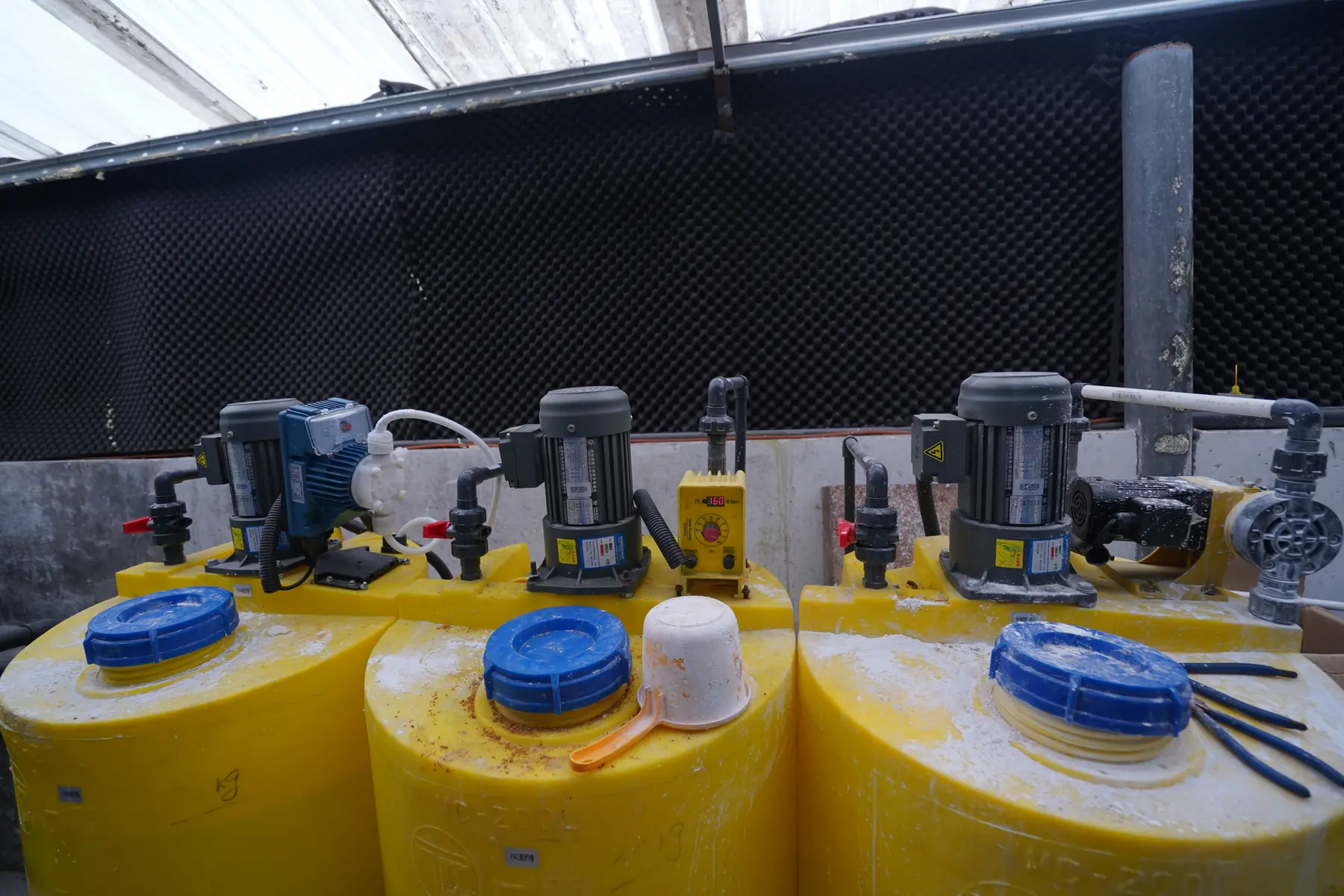
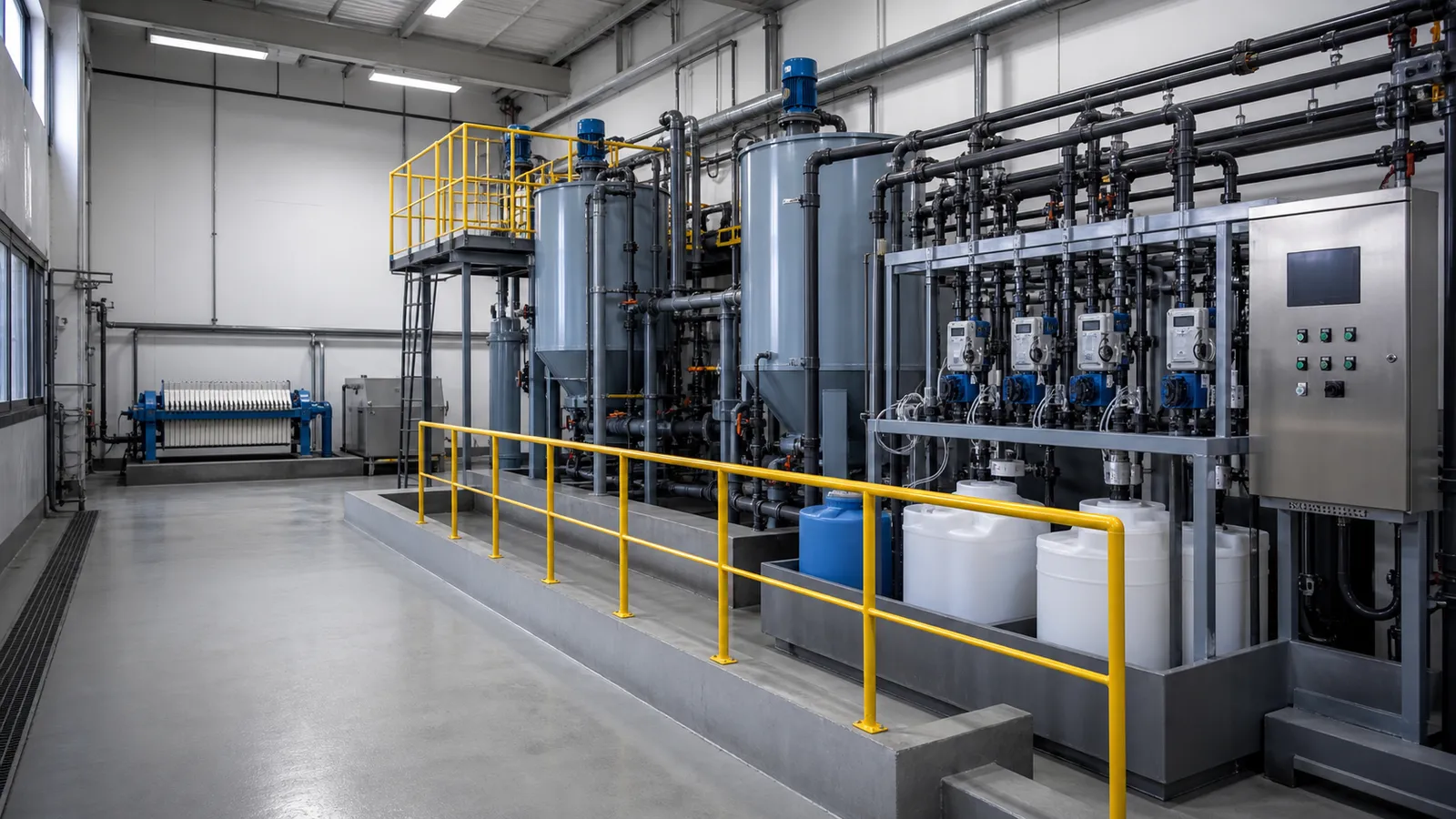
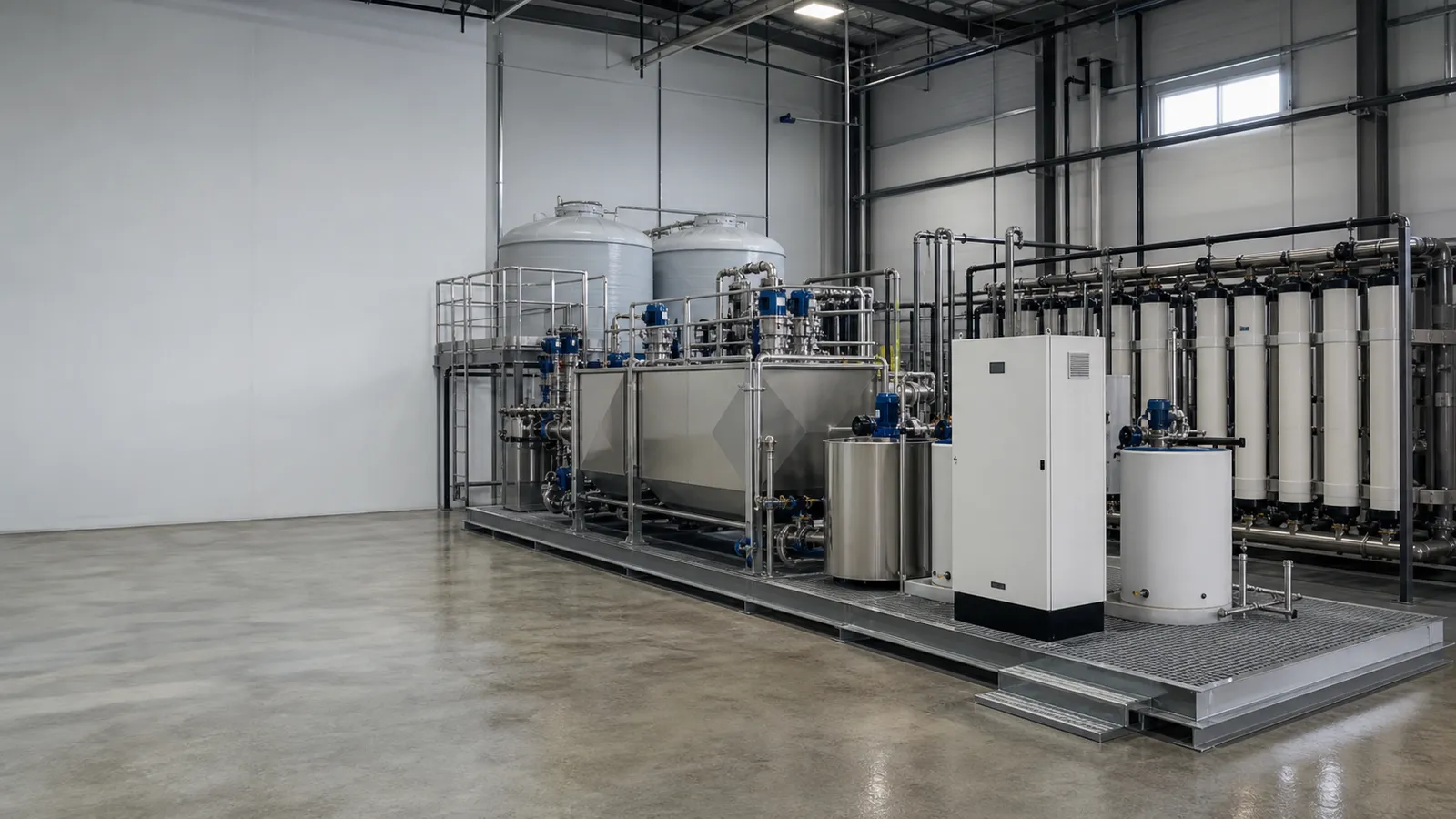
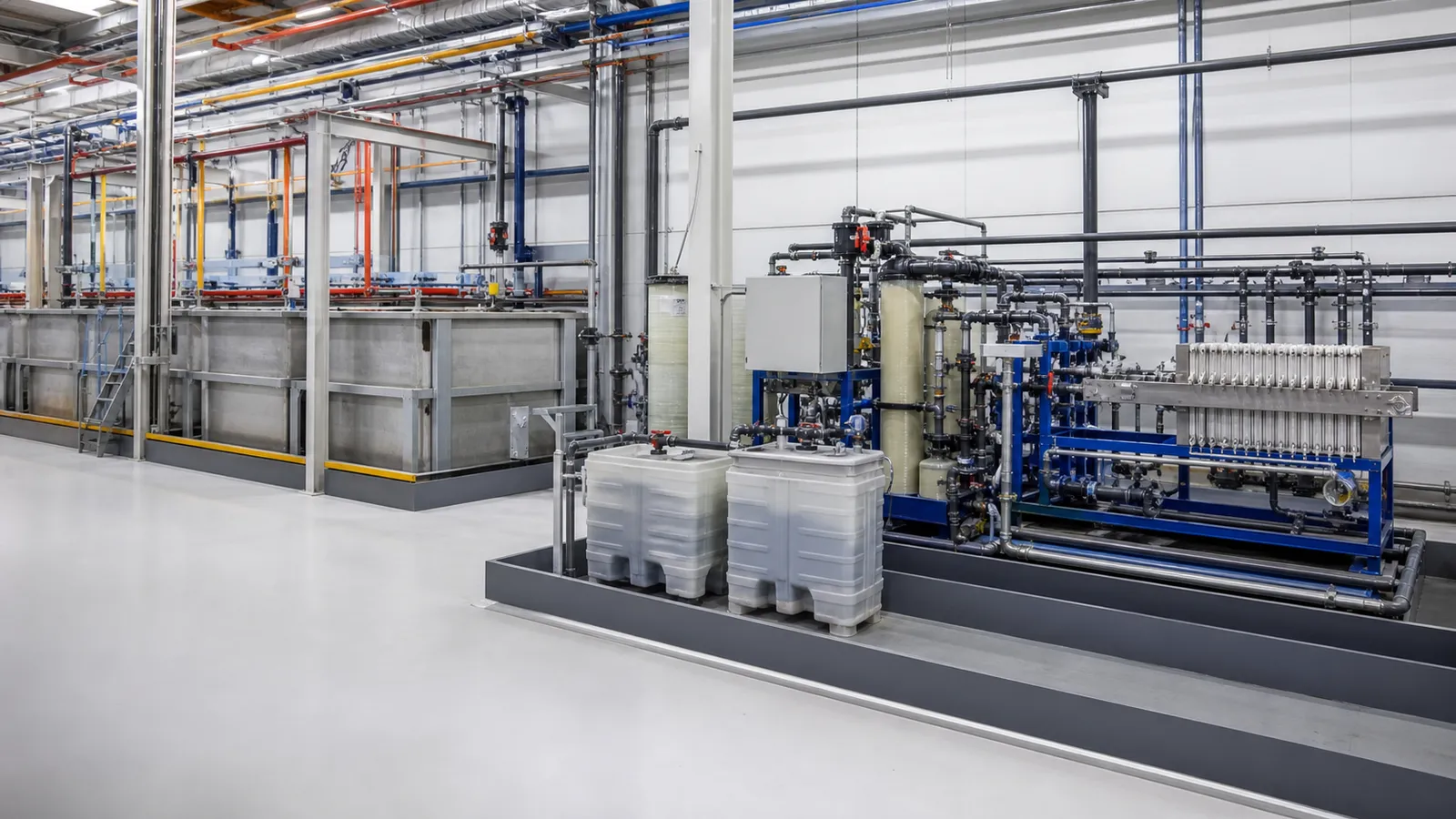
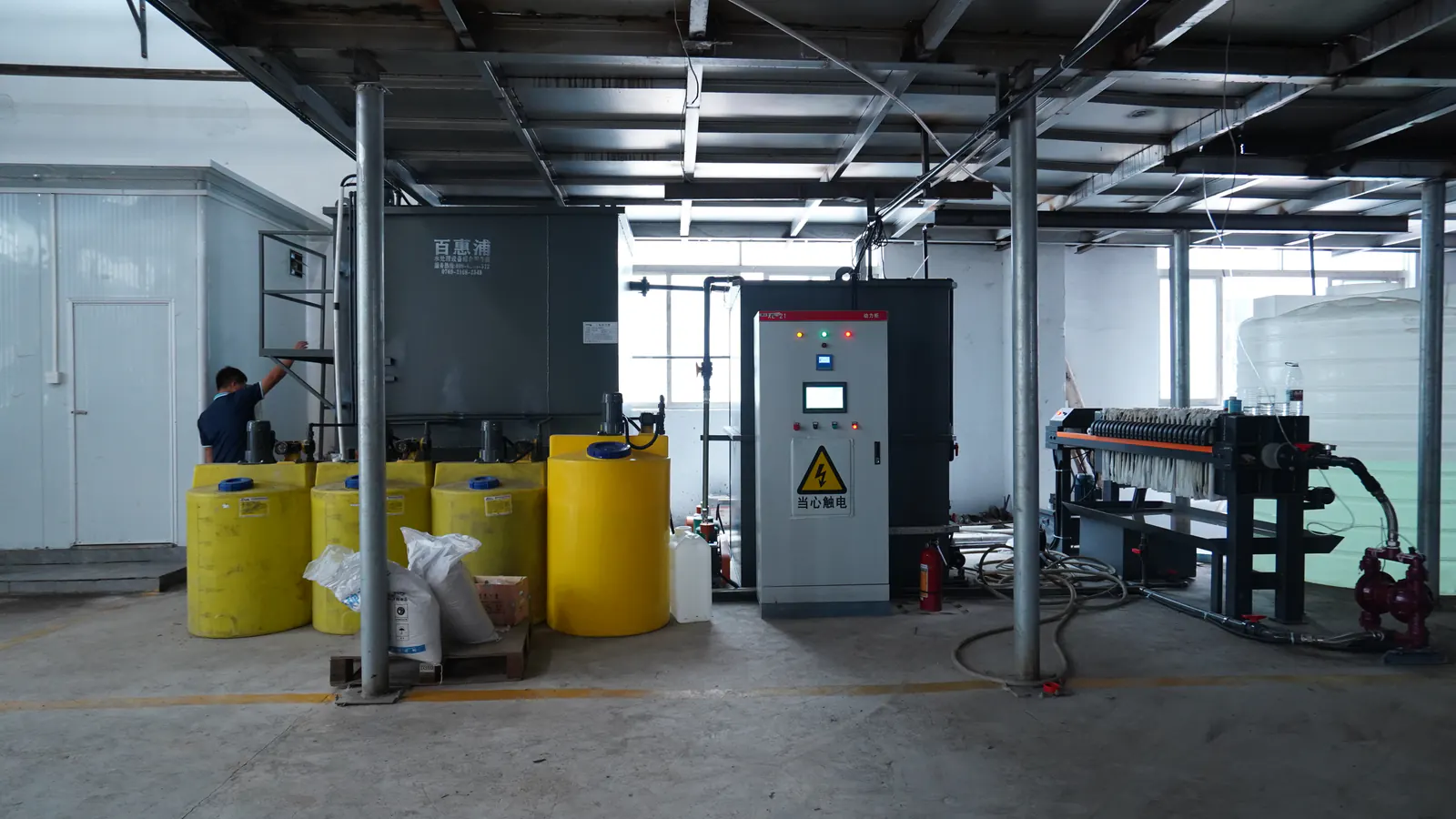
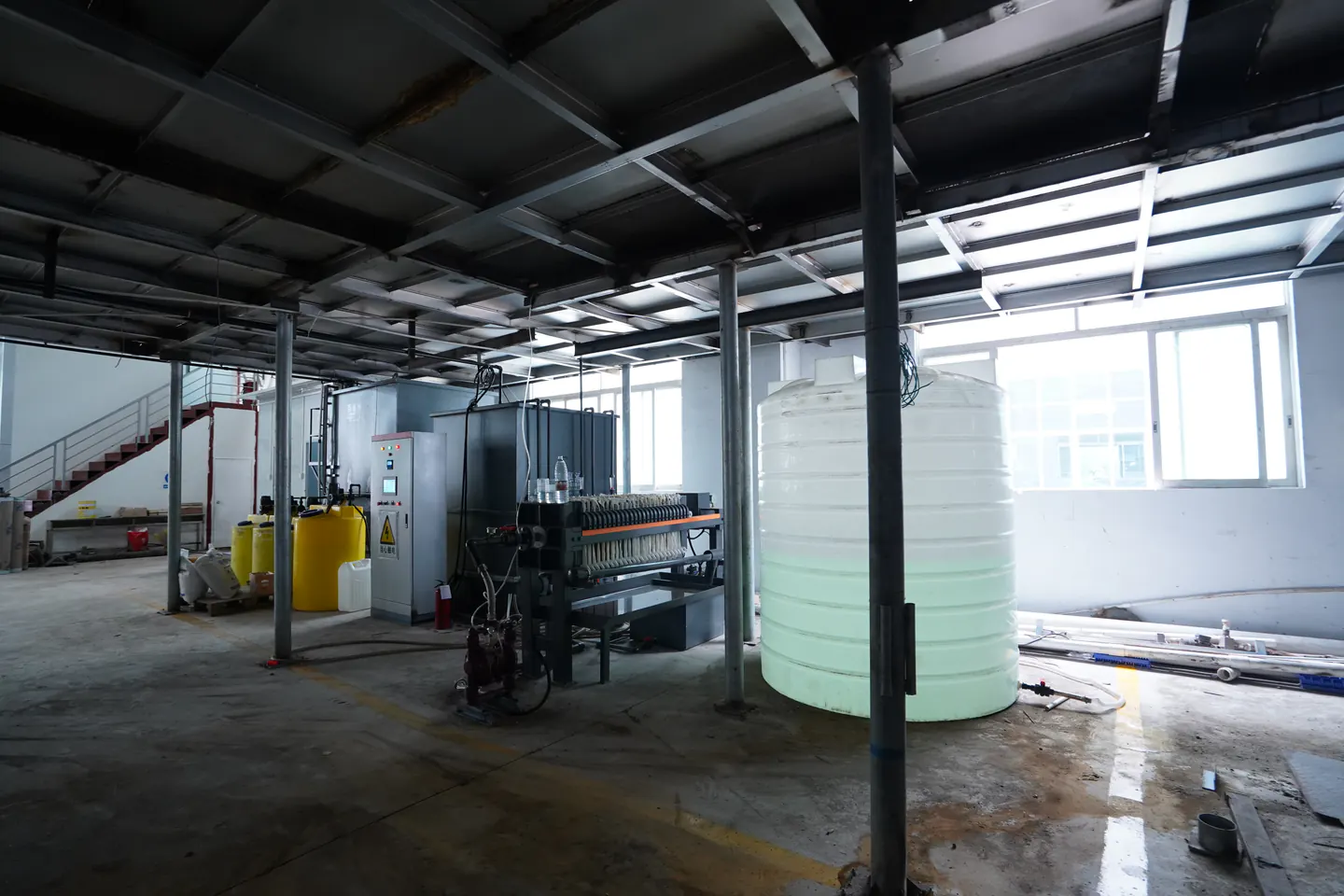
The supplied photographs show why layout review matters. A compact plan must still allow chemical handling, filter-plate operation, pump maintenance, and instrument observation.
How to Define Site Performance Acceptance
A practical acceptance plan separates mechanical completion, wet commissioning, process start-up, and performance testing.
- Mechanical completion verifies installation, piping, electrical work, instrument calibration, lubrication, guards, and safety items.
- Wet commissioning checks flow, level control, pumps, dosing commands, alarms, and automatic sequences with clean water or another agreed safe liquid.
- Process start-up introduces representative wastewater under controlled conditions and establishes the chemical settings, sludge inventory, and operating routine.
- Performance testing evaluates the system within a written influent and flow envelope using agreed sampling points, laboratory methods, operating hours, and treatment targets.
The protocol should state the influent and flow envelope, temperature, chemical quality, sampling method, responsibilities, and response to off-spec influent. Record chemical consumption, sludge condition, filtrate behavior, and polishing residuals where relevant.
RFQ Checklist for a Heavy Metal Wastewater Treatment System
Provide the following information when requesting a technical proposal:
- Company industry and production process relevant to the wastewater.
- Wastewater source list and a simple process-to-drain diagram.
- Average, maximum, and peak flow plus batch timing.
- Original laboratory reports with sample locations and production conditions.
- Chemical inventory, including cleaners, chelants, surfactants, and oxidants that can reach the drains.
- Individual metals and relevant chemical forms, not only a combined “heavy metals” value.
- Suspended solids, oil, conductivity, and organic parameters where relevant.
- Required outlet, local limits, sampling basis, or named reuse application.
- Available footprint, height, access, utility conditions, and civil constraints.
- Sludge storage, transport, disposal, or recovery requirements.
- Required automation, remote signals, documentation language, voltage, and supply boundary.
- Project country, installation schedule, and expectations for factory testing, shipment inspection, commissioning, and site acceptance.
If data are missing, the proposal should label assumptions clearly and state which tests are needed before final design. An assumption is useful when visible; it becomes a project risk when presented as confirmed fact.
Common Procurement Mistakes
- Mixing all drains too early: concentrated or incompatible streams become hidden and may remove targeted-treatment options.
- Providing only total metals: individual metals, oxidation state, dissolved fractions, and complexing chemistry can change the process.
- Selecting equipment before treatability work: tank size cannot compensate for uncertain reaction chemistry or poorly settling solids.
- Ignoring residual streams: sludge, filtrate, backwash, cleaning water, and off-spec water remain in the mass balance.
- Adding RO without a concentrate route: reuse starts with a named water-quality target and a complete salt balance.
- Treating FAT as a discharge guarantee: factory checks verify functional scope; site performance requires representative influent.
FAQ
What is the most common method for removing heavy metals from industrial wastewater?
Chemical precipitation followed by solid-liquid separation is a common approach for many dissolved metals. Hydroxide precipitation is widely used, but the correct pH, reagent, and number of stages depend on the metal species, complexing agents, other ions, and required residual. Testing is necessary before selecting the final route.
Can all heavy metals be removed at the same pH?
Not reliably. Different metals have different solubility behavior, and wastewater constituents can shift that behavior. A single operating pH may be acceptable for some mixtures, while other projects need staged precipitation, segregation, or polishing. Jar testing should examine the real combination of metals and chemicals.
Why should chromium, cyanide-bearing, or chelated streams be reviewed separately?
Only where these streams actually exist, their chemistry and safety requirements can differ from ordinary rinse water. Oxidation-state conversion, controlled destruction, complex-breaking, or dedicated treatment may be required. They should not be blended until compatibility and treatment consequences have been assessed by qualified personnel.
What does a filter press do in a metal wastewater treatment system?
A filter press dewaters the sludge produced by precipitation and clarification. It reduces free water and creates a cake for permitted handling, disposal, or recovery. It does not remove dissolved metals directly from the raw wastewater; upstream chemistry and solids separation create the sludge that the press receives.
Can treated metal wastewater be reused?
Potentially, but reuse must be designed for a named application. After metal removal and solids control, additional filtration, ion exchange, membranes, or other polishing may be needed. The design must also identify concentrate, regeneration waste, cleaning waste, and the response to off-spec water.
What information is needed for an accurate quotation?
Provide the production process, stream map, flow profile, original water analysis, chemical inventory, discharge or reuse requirement, site layout, utilities, sludge route, destination country, and required supply and service boundary. When data are incomplete, request a preliminary concept with explicit assumptions rather than a final performance guarantee.
Conclusion
A dependable heavy metal wastewater treatment system is not selected by choosing the largest equipment package or the longest process diagram. It is built from a clear design basis: keep important streams visible, characterize the actual metals and chemicals, test the precipitation and separation behavior, and account for every water and sludge outlet.
For buyers, the strongest proposal is one that explains why each stage is present, which data are confirmed, what remains to be tested, what factory testing can verify, and what must be proven during site performance testing. This approach makes supplier comparisons clearer and reduces the risk that unresolved chemistry or sludge handling appears only after installation.
Related Buyer Resources
- Metal Finishing & Electroplating Water Treatment Solutions
- Industrial Wastewater Treatment Systems
- Electroplating Wastewater Treatment Process Guide
- Industrial Wastewater Treatment RFQ Checklist