Introduction
Electroplating plants can generate wastewater that looks simple in a single collection pit but is technically diverse upstream. Rinse water, spent bath drag-out, acidic cleaning water, alkaline cleaner, metal-bearing waste, chromium-containing streams, cyanide-containing streams, oil contamination, and intermittent floor wash may enter the same treatment area at different times and concentrations.
This is why an equipment-first approach often causes problems. Asking for “a plating wastewater machine” before mapping the streams can produce a proposal based on averages that do not reflect the most difficult batch, the most concentrated discharge, or the local discharge and sludge-management requirement. A better approach starts with the process line and water data, then defines a treatment route that addresses each practical risk.
The purpose is not to prescribe one universal process. Discharge permits, chemical use, segregation possibilities, influent variability, available footprint, utilities, operator practice, and treated-water destination vary between plants. The route below explains the engineering questions that should be settled before final equipment selection.
Why Electroplating Wastewater Needs a Stream Map
The first deliverable should be a simple map of where water is generated and where it goes. List each plating, cleaning, stripping, rinsing, and finishing step; identify whether discharge is continuous or batch; estimate flow; and attach available laboratory analysis. If a particular stream contains a safety concern, high metal concentration, oxidizing or reducing chemistry, complexing agent, oil, fluoride, or high salinity, make that visible rather than allowing it to disappear inside a blended average.
A stream map helps answer operational questions that a final combined sample cannot answer:
- Can a high-strength stream be collected separately and treated in a controlled batch?
- Are incompatible streams being mixed before they can be managed safely?
- Does a rinse-water flow dominate the daily volume but contain much lower loading than a concentrated side stream?
- Are weekend cleaning, bath dumps, or product changes creating peaks that need equalization capacity?
- Can selected rinse streams be reduced or reused to lower fresh-water demand and treatment volume?
The resulting route should align with the applicable outlet target. Local permit conditions, industrial-park requirements, and the destination of sludge or concentrate must be confirmed by the operating facility. The U.S. EPA’s electroplating effluent-guidelines overview illustrates why treatment planning is tied to the specific industrial activity and discharge route rather than a generic “industrial standard.”
Core Principle: Separate Before You Combine
Segregation is often the most important design decision. It may not eliminate every treatment step, but it can avoid mixing streams that need different reactions or that create unnecessary volume, safety, or sludge burden.
Chromium-bearing wastewater
Chromium-bearing wastewater requires its own process review because the treatment route depends on the chromium form and the agreed operating method. It should not be assumed that a standard neutralization tank is sufficient. The selected route must address safe chemical handling, reaction control, monitoring, and the relationship between upstream collection and downstream metal removal.
Cyanide-bearing wastewater
Cyanide-bearing wastewater requires strict segregation and an approved, site-specific safety and treatment approach. Do not combine it casually with acidic streams. The operating facility should define chemical inventory, collection arrangement, safety procedures, monitoring expectations, and responsible personnel before a treatment package is specified.
Acidic, alkaline, and metal-bearing rinses
Many plating rinse streams can be evaluated for equalization, controlled pH adjustment, precipitation, flocculation, and solids separation. The actual sequence is driven by metals present, concentrations, chelation, flow variability, and the required outlet target. A supplier needs representative analysis, not only a list of metals, to design a meaningful process scope.
Oily or surfactant-rich streams
Oil, emulsifiers, surfactants, or cleaners can change settling behavior and interfere with later treatment. If they are present, identify their source and whether upstream oil separation, batch management, or a dedicated pretreatment step is necessary. Treating all water as if it were a clear metal-bearing rinse may result in inconsistent operation.
A Typical Electroplating Wastewater Treatment Route
The following stages are common engineering building blocks. They are not a universal recipe, and each should be checked against the actual water quality and discharge objective.
1. Collection and equalization
Collection pits or tanks receive water from defined sources. Equalization provides a more stable feed to downstream treatment by smoothing batch releases and short-term changes in flow or concentration. The required volume follows the release pattern, not simply average daily flow. A plant with several concentrated dumps in one shift needs a different buffer from a continuous rinse-water discharge.
Equalization also creates a useful monitoring point. pH, conductivity, level, flow, and other indicators can help operators recognize unusual conditions before they affect downstream treatment. Where streams must remain separate for safety or chemistry, the collection layout should preserve that separation.
2. Dedicated treatment for critical side streams
Chromium-bearing, cyanide-bearing, concentrated bath-related, fluoride-related, or other process-specific streams may require dedicated management before they join a common treatment route. The objective is to control the necessary reactions under appropriate conditions and avoid contaminating a larger volume of lower-strength water.
This stage should be designed with the customer’s environmental, process, and safety teams. It is not appropriate to select chemical recipes from a generic online article. The final design needs the actual chemical species, expected concentration range, batch volume, temperature, pH range, ventilation, containment, monitoring, and safety procedures.
3. Controlled reaction and metals removal
After relevant segregation and pretreatment, metal-bearing wastewater is commonly treated through controlled reaction steps that create separable solids. pH control, chemical dosing, mixing, reaction time, and monitoring are selected around the actual contaminants and operating range. The goal is not merely to add chemicals; it is to create repeatable conditions for downstream solid-liquid separation.
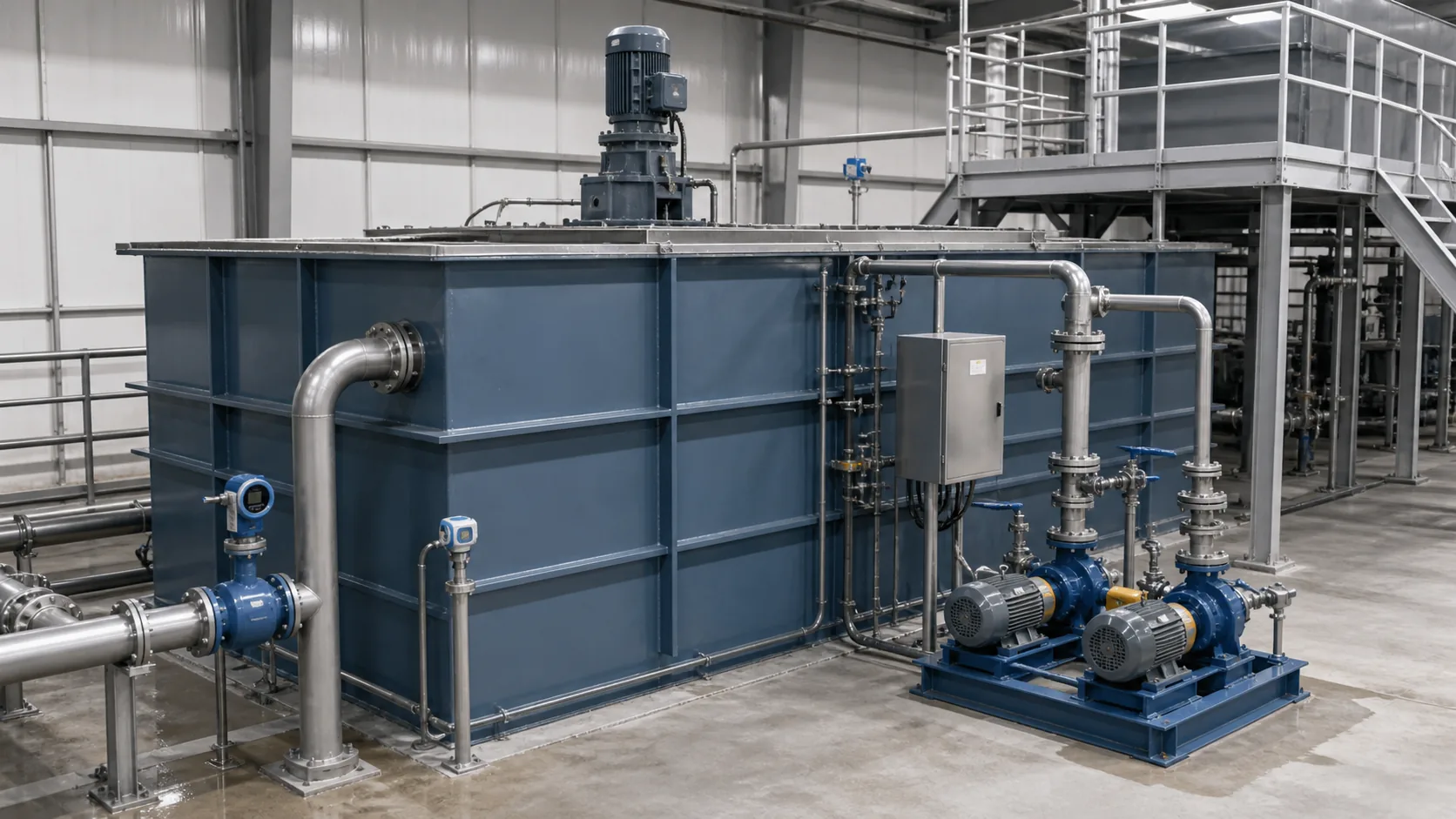
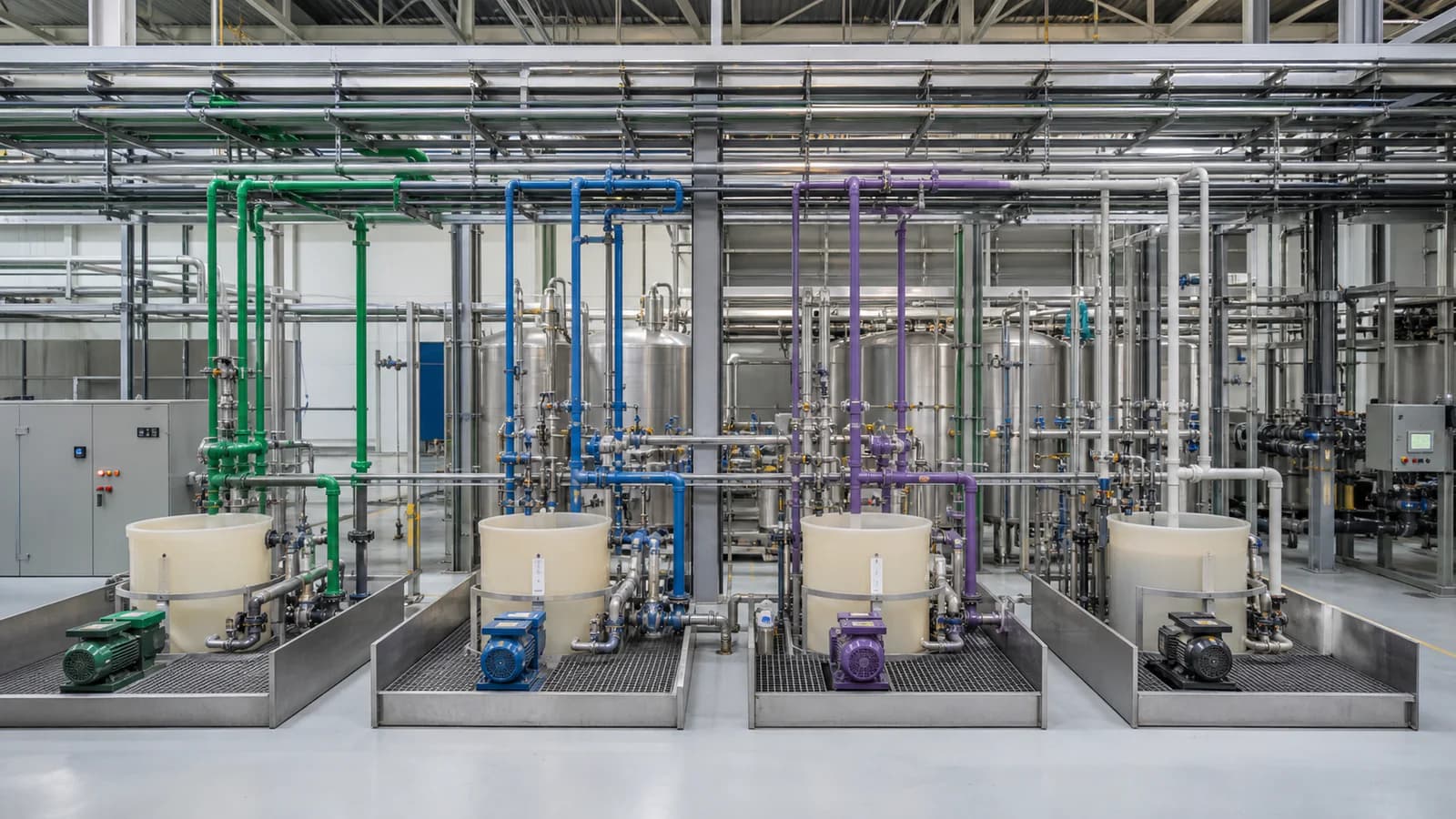
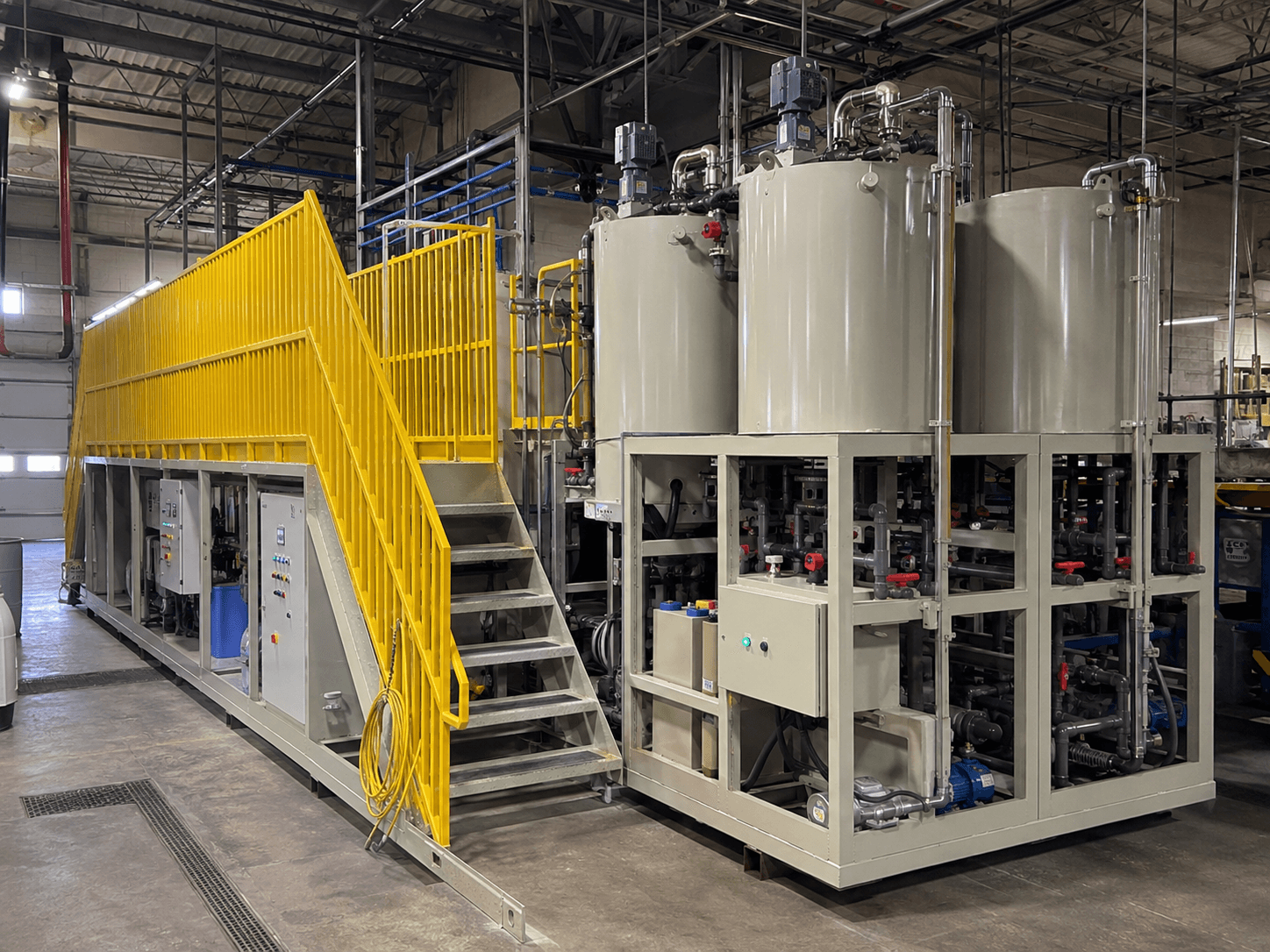
Equipment may include reaction tanks, mixers, dosing skids, pH monitoring, transfer pumps, and automation suited to the site’s staffing and risk profile. The customer should specify whether manual control, automatic sequencing, historical data, remote alarms, or connection to an existing plant system is required.
4. Flocculation and solids separation
Once suspended solids are formed, the process needs a reliable way to separate them from the treated water. Depending on the project, this can involve clarification, settling, filtration, membrane polishing, or another appropriate method. Selection depends on solids characteristics, hydraulic load, space, maintenance expectations, and target water quality.
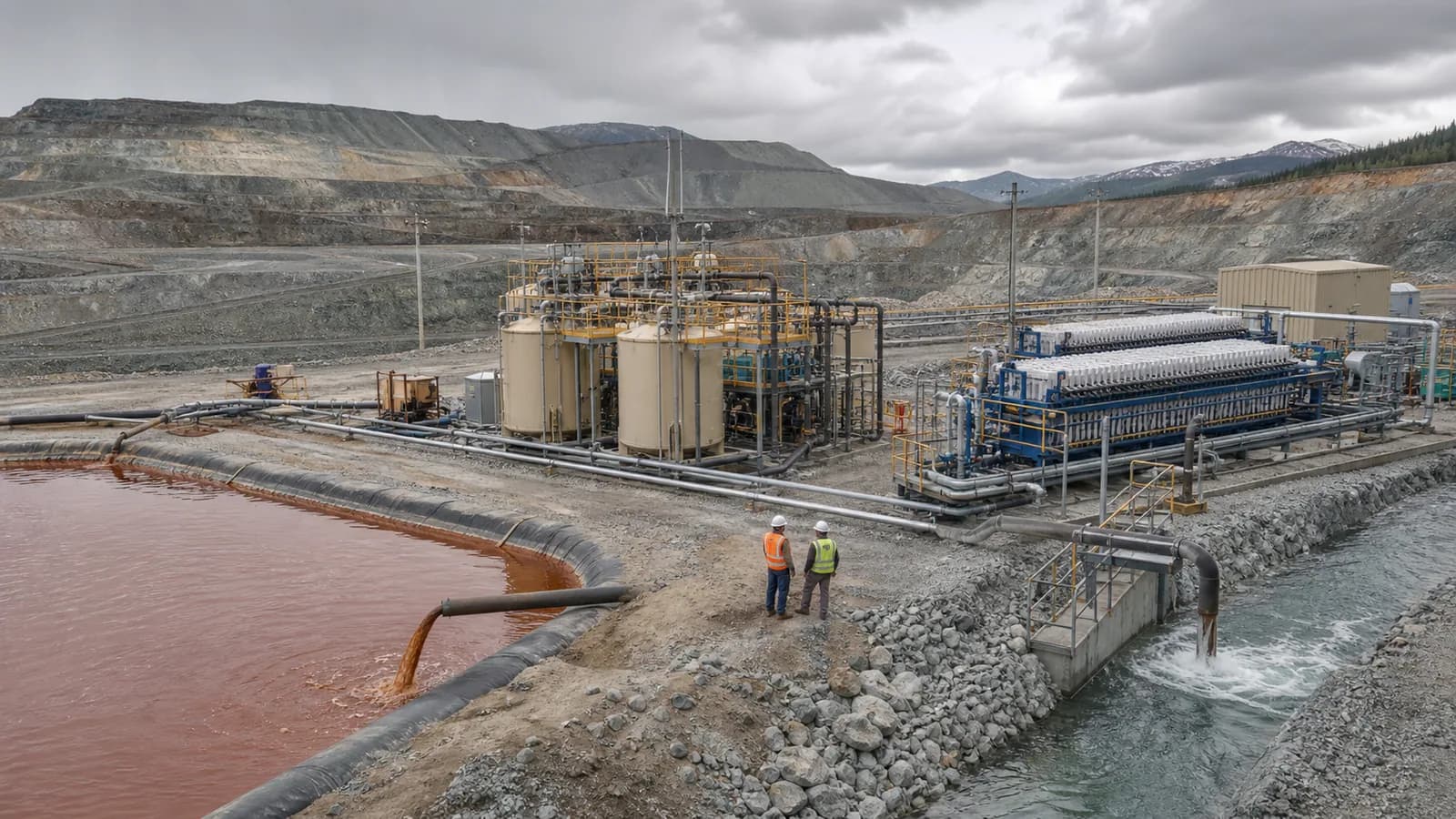
The separated solids are not an afterthought. Sludge volume, storage, thickening, dewatering, transport, and compliant disposal or recovery arrangements must be considered during the original project definition. A treatment system is incomplete if it produces a sludge stream with no practical management plan.
5. Sludge thickening and dewatering
Metal-bearing sludge can materially affect both operating cost and site workflow. The design team should estimate where it will collect, how it will be thickened or dewatered, how often it will be removed, what containers are available, and which responsible contractor or licensed route will manage it.
The most suitable equipment depends on the quantity and properties of sludge, the operating schedule, available labor, and destination requirements. The actual sludge characteristics should be confirmed during operation or pilot evaluation where necessary; they should not be inferred only from a generic process diagram.
Chelated Metals and Other Difficult Conditions
Chelating agents, complexing compounds, proprietary additives, and changing product chemistry can make metal removal less predictable. In these cases, a standard precipitation approach may need additional investigation. Share chemical safety data sheets, process information, bath chemistry, and more than one representative wastewater sample where possible.
Likewise, high salinity, fluoride, ammonia, surfactants, unusual solvents, or strict reuse targets may require a broader treatment train than a conventional clarification system. The design question is not whether a specific technology is fashionable; it is whether the selected route manages the actual contaminant profile, residual streams, operating constraints, and final outlet requirement.
Rinse-Water Reduction and Reuse Planning
Reducing wastewater volume upstream can improve treatment practicality. Counterflow rinsing, drag-out recovery, controlled rinse operation, and selected reuse concepts may reduce fresh-water use and loading. These are plant-process decisions as well as water-treatment decisions, so they work best when production and environmental teams review them together.
Reuse should be defined by end use. Water suitable for a low-risk washdown duty is not automatically suitable for a critical rinse. A reuse project therefore needs a clear destination, target quality, storage and distribution concept, monitoring plan, and contingency when quality is outside the desired range. If a concentrate or reject stream remains, its treatment or disposal route must also be part of the project scope.
Information Needed Before an Engineering Proposal
To prepare a practical electroplating wastewater treatment proposal, provide:
- a process flow or line description showing where each wastewater stream originates;
- average, maximum, peak, and batch flows for each source;
- representative laboratory reports with sample date and sampling method;
- a list of plating chemicals, cleaners, and additives relevant to wastewater;
- the intended discharge, industrial-park, sewer, reuse, or further-treatment destination;
- available footprint, ceiling height, access, drainage, and utility information;
- expected automation, operator, and data-recording requirements; and
- project location, delivery boundary, factory testing, shipment inspection, and installation-preparation expectations.
This information allows the proposal to show assumptions and identify unknowns. It also makes it easier for buyers to compare process scope rather than only comparing the price of tanks and pumps.
Factory Testing, Shipment Inspection, and Installation Preparation
For a custom system, factory testing should confirm the equipment configuration, major controls, available clean-water functions, documents, and packing status before release. Where actual plating wastewater cannot be used at the factory, the test record should state the limitation clearly and identify which process checks will be completed during commissioning.
Shipment inspection should cover the equipment list, loose accessories, instruments, spare parts, labels, crate markings, dimensions, and documents. Before shipment, the site should confirm unloading access, lifting plan, foundation or support requirements, electrical supply, water, drainage, ventilation, chemical storage, and the piping boundaries between supplied equipment and site work.
These steps do not replace good process design. They make the route from factory assembly to site start-up more predictable.
Common Mistakes to Avoid
Designing from one blended sample
A blended sample can hide the high-strength or incompatible stream that drives the treatment problem. Include stream sources and variability whenever possible.
Mixing critical streams before a safety review
Do not rely on downstream equipment to correct an unsafe or chemically unsuitable collection arrangement. Segregation should be considered during the process-layout stage.
Ignoring residuals
Sludge, spent media, concentrate, and cleaning waste need a planned handling route. A liquid-treatment proposal is not complete without it.
Treating reuse as a generic marketing term
Reuse needs a defined destination, target quality, monitoring plan, and response when water is off specification.
Leaving site interfaces until the equipment arrives
Footprint, access, utilities, drainage, ventilation, lifting, and operation space should be confirmed before shipment—not during delivery day.
FAQ
Can all electroplating wastewater be treated in one system?
Some flows can be combined after appropriate review, but not every stream should be mixed at collection. The decision depends on chemistry, safety, concentration, variability, and outlet target. A stream map is the starting point.
What analysis is most important for a preliminary proposal?
Provide pH, flow pattern, conductivity or salinity where relevant, suspended solids, metals of concern, chromium or cyanide status where applicable, oil or surfactant indication, fluoride or ammonia where relevant, and any known proprietary additives. Original laboratory reports and sampling details are more useful than a short summary.
Can treated plating wastewater be reused?
It may be possible for selected end uses, but suitability depends on a defined reuse point and measurable quality criteria. The reuse route must also manage any reject or concentrate stream.
Does equipment selection include sludge disposal?
The treatment system can include collection, thickening, or dewatering equipment where agreed. Final transport and disposal or recovery arrangements depend on local regulations and the operating facility’s approved route.
What should be checked before shipment?
Confirm the final equipment configuration, documents, test records, packing list, loose accessories, shipment dimensions, labels, and site-preparation requirements. Record any open items before release.
Conclusion
Electroplating wastewater treatment becomes more reliable when the project begins with stream separation, representative data, and a clear outlet target. The right process route is not defined by a single equipment name. It connects production chemistry, collection practice, reaction control, solids management, potential reuse, factory testing, shipment inspection, and site operation.