Introduction
Buyers often ask for “a semiconductor wastewater treatment plant” or “a PCB wastewater system” as if the industry name were a complete design basis. It is not. Two electronics facilities can have very different wastewater because their production steps, chemicals, rinse practices, product mix, operating hours and local discharge requirements differ.
A wafer-fabrication facility may generate hydrofluoric-acid rinses, CMP wastewater, mixed acid waste, copper-bearing streams and large volumes of comparatively dilute rinse water. A PCB plant may generate copper, nickel, tin or other metal-bearing wastewater, complexing agents, acidic and alkaline waste, photoresist-related organics, cleaning water and concentrated bath dumps. Assembly, display-panel, solar and electronic-component plants create still other combinations.
The first procurement decision is therefore not whether to buy precipitation, ultrafiltration, reverse osmosis or an evaporator. The first decision is which streams should remain separate, what each stream contains, and which water-quality target applies after treatment.
This guide supports buyers evaluating a Semiconductor, Electronics & PCB water-treatment solution or an industrial wastewater treatment system. It provides a framework for mapping wastewater, selecting process stages, preparing an RFQ, reviewing factory testing and planning installation. It does not prescribe a universal process or guaranteed effluent value. Final equipment, dosing, materials and performance conditions must be confirmed from project data and applicable local requirements.
Why Stream Segregation Usually Comes Before Equipment Selection
The Semiconductor Industry Association describes large-volume manufacturing wastewater streams that may include mixed acids and bases, water-soluble solvents, ultrapure-water rinses, corrosive waste, copper plating waste and CMP waste. It also notes that these streams require segregation and treatment before discharge. That industry-level observation is important for procurement: the collection system is part of the treatment system.
Segregation can provide four practical benefits.
1. It preserves the chemistry needed for removal
Metal precipitation and fluoride precipitation do not necessarily operate best at the same pH or with the same reagent sequence. Complexing agents can keep metals dissolved even when a conventional hydroxide-precipitation calculation suggests they should precipitate. Mixing every stream can turn a controllable reaction into a variable one.
2. It avoids unnecessary treatment of clean water
Relatively clean rinses, cooling water, RO reject or other lower-risk streams may have reuse, recovery or separate-discharge potential. Once mixed with concentrated fluoride, metals or organics, the full combined flow may require more intensive treatment.
3. It reduces shock loads
Concentrated bath dumps, cleaning events and maintenance discharges can be small in average flow but large in pollutant mass. A dedicated collection or controlled-feed strategy can protect the main treatment train from rapid pH, conductivity or contaminant changes.
4. It makes troubleshooting possible
When inlet monitoring and source records identify which production area changed, operators can investigate a treatment upset. A single mixed wastewater line with no source information makes root-cause analysis much harder.
Map the Main Wastewater Families
The following groups are a starting point, not a substitute for a facility survey.
Fluoride-bearing wastewater
Hydrofluoric acid and fluoride-containing chemicals may be used in etching and cleaning. Fluoride-bearing water can require calcium-based precipitation, clarification or flotation, filtration, and—when a lower residual target is required—an additional polishing stage. The actual route depends on fluoride concentration, pH, competing ions, suspended solids, discharge target and sludge behavior.
Metal-bearing wastewater
Copper is prominent in many electronics and PCB operations, but nickel, zinc, tin, lead, chromium or other metals may also be relevant depending on the process. Conventional treatment may use pH adjustment, chemical precipitation, coagulation, flocculation and solids separation. Complexed metals, mixed oxidation states and low final limits can require different reagents, staged treatment or polishing.
CMP wastewater
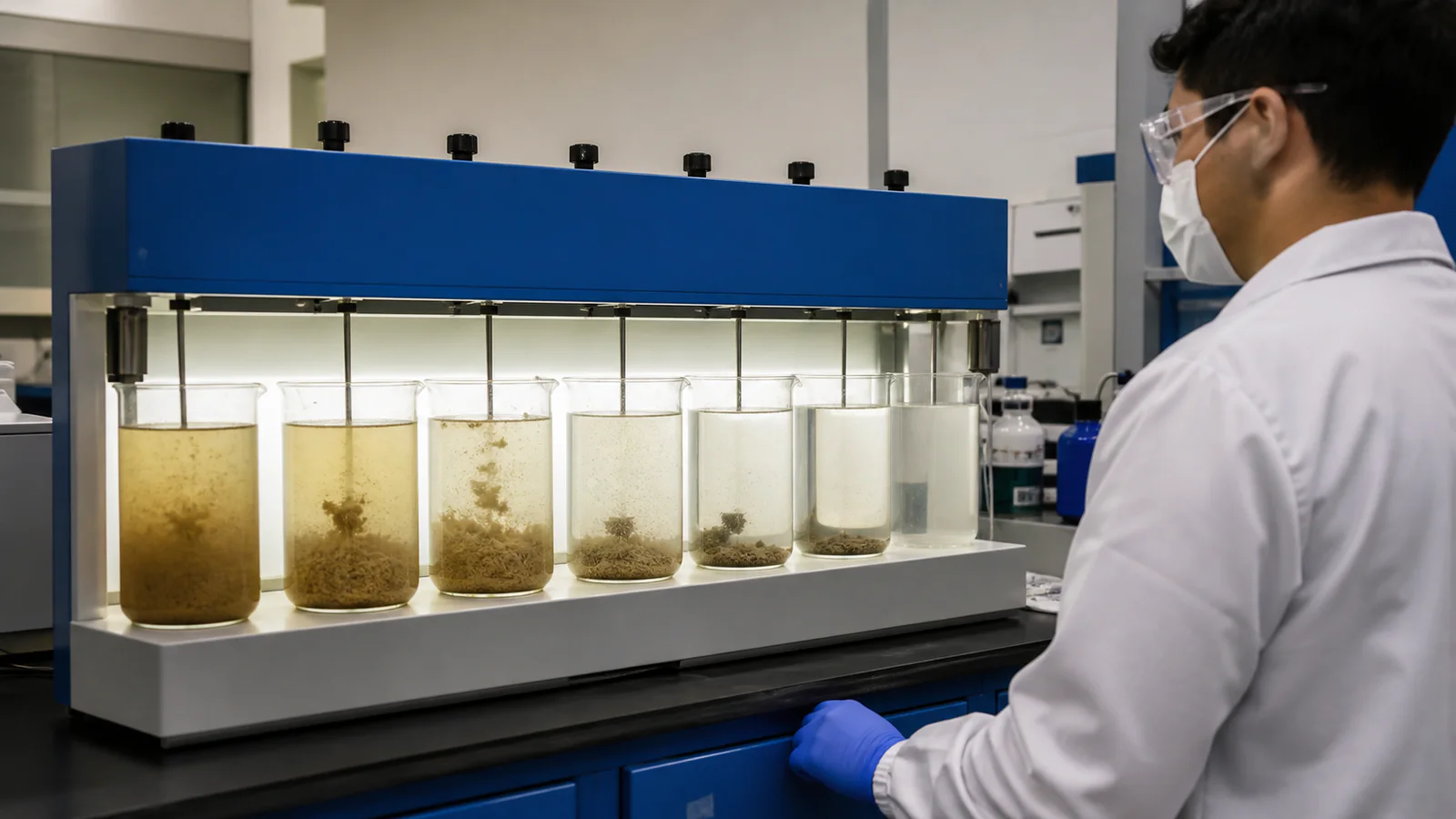
CMP streams may contain fine silica, alumina or other polishing particles together with process chemicals and trace metals. Fine particles can settle poorly and can foul downstream membranes if coagulation, flocculation and solid–liquid separation are not designed around the actual particle behavior. A jar test or pilot test can be more useful than selecting a coagulant from a generic dosage table.
Acidic and alkaline wastewater
Acid and alkali streams may sometimes be equalized for controlled neutralization, but this should be reviewed for heat release, gas formation, precipitation, material compatibility and contaminant interactions. Concentrated dumps should not automatically be sent into a tank designed for dilute rinses.
Organic-bearing wastewater
Photoresist, developer, solvents, cleaners, surfactants and chelating agents can change COD, toxicity, foaming and biological treatability. Some concentrated organic waste may require separate collection or external management. Dilute biodegradable streams may be candidates for biological treatment after confirming inhibition risk and nutrient conditions.
Potentially reusable water
UPW-system reject, final rinses or other lower-contaminant streams may be candidates for cascading, utility reuse or treatment by membranes. Their reuse value depends on source stability, cross-contamination risk, conductivity, silica, organics, particles, microorganisms and the quality required at the destination.
How the Main Treatment Stages Fit Together
Equalization and controlled feed
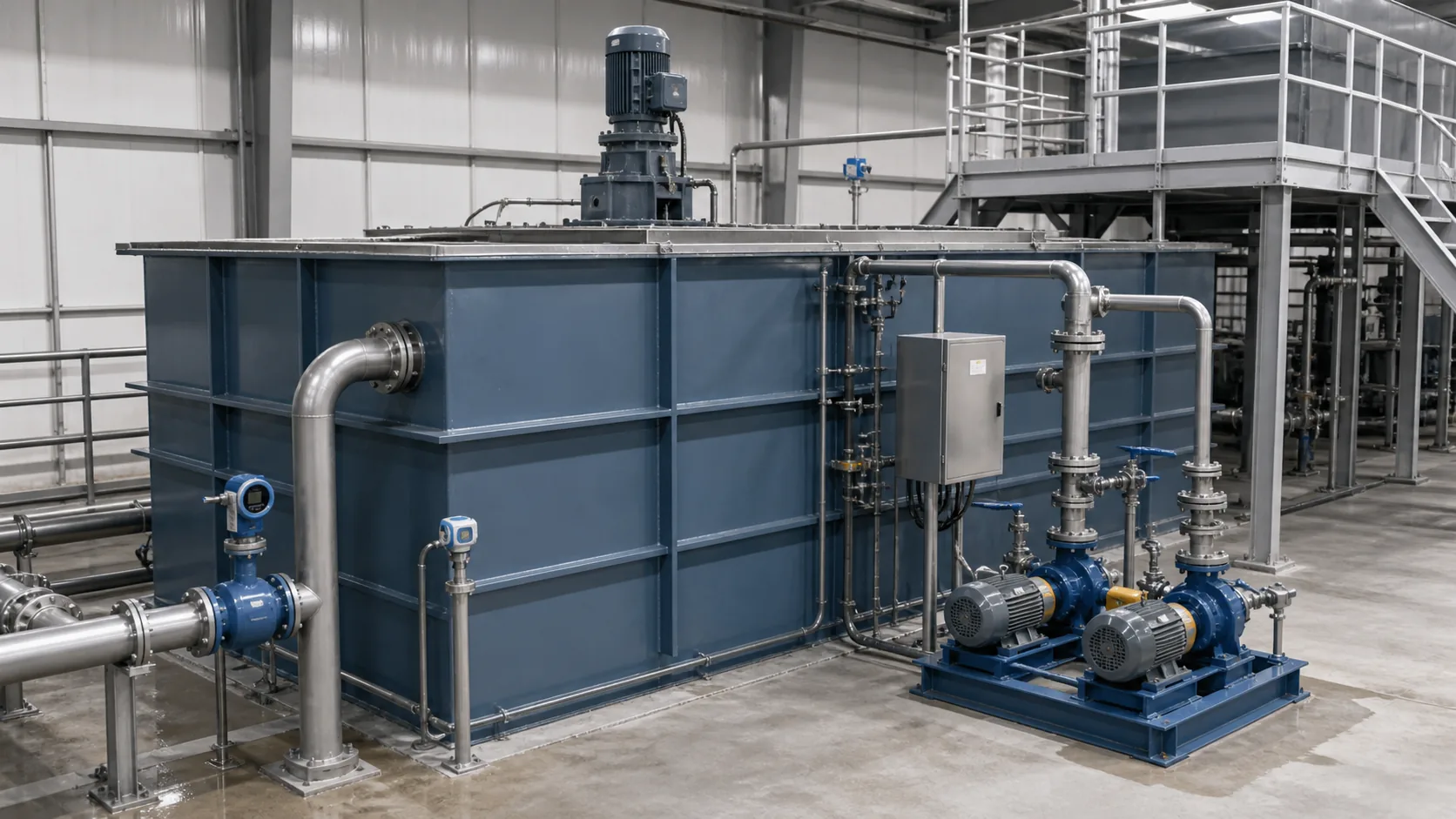
Equalization is intended to reduce hydraulic and chemical variation, but tank volume alone does not make wastewater uniform. Review mixing, retention time, high/low level protection, ventilation, pH monitoring, corrosion resistance, emergency storage and the controlled release of concentrated batches. Separate equalization tanks may be needed for incompatible stream families.
Fluoride precipitation and solids separation
Calcium salts are commonly used to form calcium fluoride, followed by coagulation, flocculation and clarification or flotation. The practical result depends on reaction pH, calcium dose, mixing energy, reaction time, seed solids, other ions and the downstream separation step. Published solubility or a laboratory beaker result should not be treated as a guaranteed full-scale effluent concentration.
If the required fluoride value is below what primary precipitation can reliably achieve, options may include a second precipitation stage, adsorption, ion exchange, membrane separation or another project-specific polishing process. Each creates a different residual, operating cost and pretreatment requirement.
Metal precipitation
Hydroxide precipitation is widely used, but the best pH varies by metal and wastewater chemistry. Raising pH to remove one metal can redissolve an amphoteric metal or create excessive sludge. Sulfide or specialty precipitants may be evaluated for difficult metals, but they introduce chemical-safety, odor, residual and control considerations. Oxidation or reduction may be required before precipitation for specific metal forms.
The buyer should ask for the reaction basis, expected sludge type, chemical-control logic and polishing boundary—not merely “heavy-metal removal included.”
Coagulation, clarification, DAF and filtration
Coagulation destabilizes fine or colloidal material; flocculation builds separable flocs. A clarifier uses settling, while dissolved air flotation uses fine bubbles to float suitable solids. The choice depends on particle density, floc behavior, footprint, hydraulic loading and sludge characteristics. Multimedia filtration, cartridge filtration or ultrafiltration may follow when downstream membranes or reuse targets require better solids control.
Biological treatment
Biological treatment is relevant when a material fraction of the COD is biodegradable and not inhibitory at the proposed loading. It does not replace metals or fluoride treatment. Pretreatment may be necessary to protect biomass from pH shocks, metals, solvents, oxidants, salinity or disinfectants. Respirometry, biodegradability testing or a pilot can reduce uncertainty for a new or variable process.
Membrane treatment and reuse
Ultrafiltration can improve solids separation; reverse osmosis can reduce dissolved salts and many other dissolved constituents. RO does not make contaminants disappear: it creates a permeate and a concentrate. Recovery, scaling, fouling, cleaning, concentrate handling and the reuse-point specification must be assessed together.
For higher-quality reuse, a route may include pretreatment, biological or physical-chemical treatment, UF, RO and polishing. The exact sequence depends on the source and use point. Water intended for rinsing, cooling-tower makeup, scrubber makeup or a high-purity generation train will not share one specification.
Concentration or zero-liquid-discharge stages
Evaporation may be considered for membrane concentrate, high-salinity wastewater or a zero-liquid-discharge objective. It should be evaluated after mass balance, pretreatment, scaling tendency, boiling-point elevation, corrosion, foaming, volatile compounds, condensate quality, energy source and final solids management are understood. ZLD is a complete residual-management strategy, not just an evaporator purchase.
Treatment-Route Comparison for Buyers
| Wastewater problem | Commonly evaluated process role | Key design question | Residual or operating boundary |
|---|---|---|---|
| Fluoride-bearing water | Calcium precipitation, solid–liquid separation, optional polishing | What fluoride range, competing chemistry and final target apply? | Calcium-fluoride sludge, reagent use and polishing media or concentrate |
| Free metal ions | pH control, precipitation, coagulation and separation | Are metals free, complexed or in multiple oxidation states? | Metal-bearing sludge and chemical handling |
| CMP particles | Coagulation/flocculation, clarification/DAF, UF where justified | What are particle size, zeta behavior, silica and metal content? | Chemical sludge and membrane backwash if used |
| Biodegradable organics | Protected biological treatment | Is the stream biodegradable and non-inhibitory at design load? | Waste biomass, aeration and nutrient balance |
| Reuse candidate | Filtration, UF, RO and application-specific polishing | What quality is required at which reuse point? | RO concentrate, cleaning waste and off-spec water |
| High-salinity concentrate | Volume reduction or thermal treatment | What salts, scaling species, energy and solids route apply? | Concentrate, crystals or mixed solids and condensate management |
These are process roles rather than standard packages. A supplier should explain why each stage is present and which input controls its design.
What Data Should Be Collected Before an RFQ?
Stream-level flow information
Provide average flow, peak flow, batch volume, batch frequency, operating hours and production schedule for each important stream. A single daily average can hide a concentrated 20-minute discharge.
Representative analysis
Depending on the stream, useful parameters may include pH, temperature, conductivity or TDS, TSS, turbidity, COD, TOC, fluoride, silica, hardness, alkalinity, sulfate, chloride, ammonia, total nitrogen, phosphorus and relevant metals. Identify dissolved versus total values where this matters. Include sampling point, date, production condition and laboratory method.
Chemical inventory and process source
List process chemicals that can enter wastewater, including cleaners, etchants, plating chemicals, complexing agents, surfactants, oxidants and reducing agents. Safety data sheets help identify ingredients but do not replace wastewater analysis.
Treatment target
State whether the project is for sewer discharge, surface-water discharge, internal reuse, recovery before a high-purity system, volume reduction or ZLD. Provide the applicable limit or reuse specification and the required sampling point. Regulations differ by country and permit.
Site and utility conditions
Include available footprint and height, indoor/outdoor installation, ambient temperature, electrical standard, water, compressed air, steam if relevant, drainage, ventilation, lifting access, chemical-storage rules, automation interface and operator availability.
Existing system performance
For an upgrade, provide a process flow diagram, tank volumes, equipment data, dosing records, sludge production, membrane cleaning history, alarms and influent/effluent trends. Averages alone may conceal the cause of failures.
Jar Testing, Pilot Testing and Design Confidence
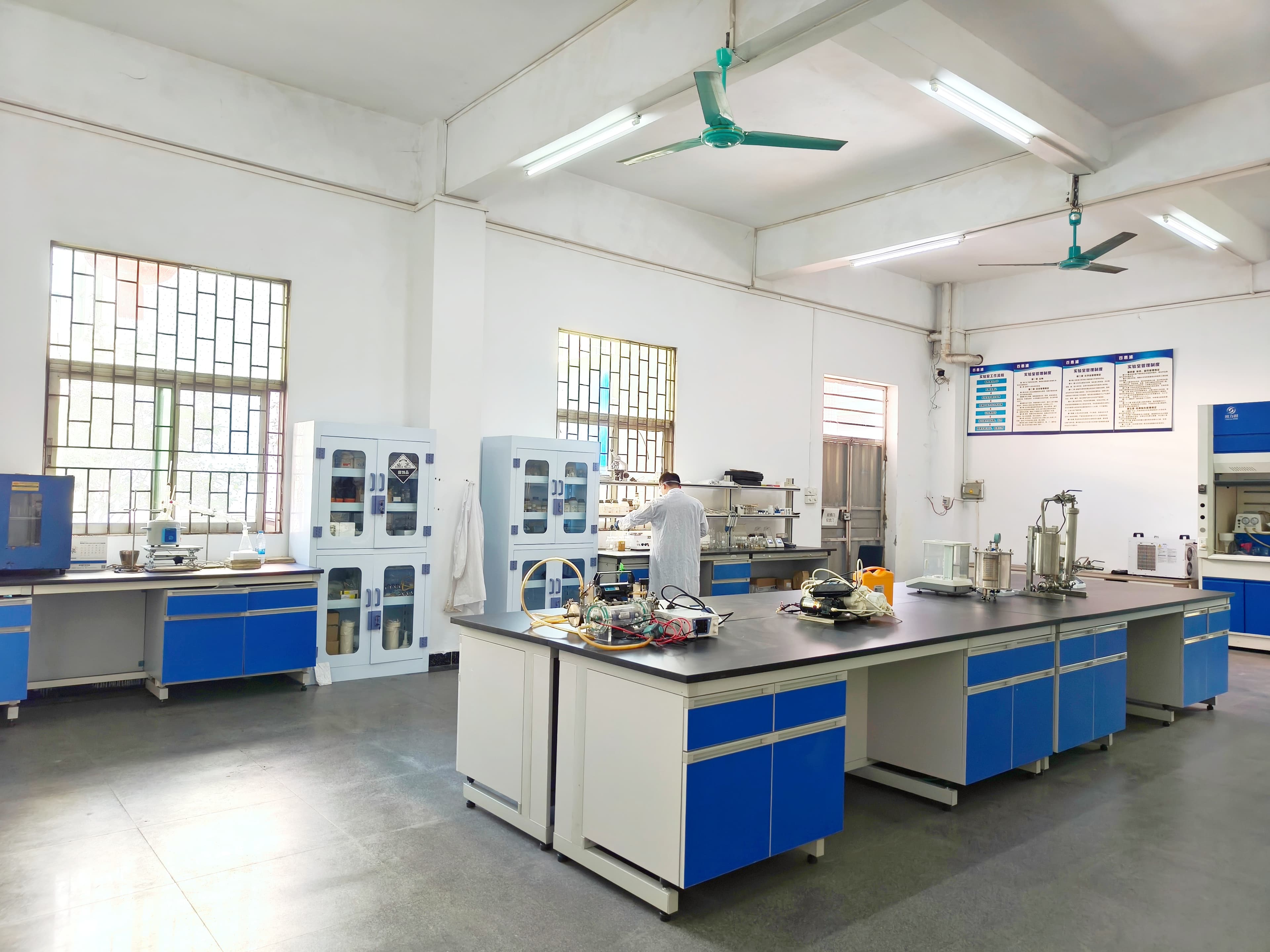
Jar tests can screen precipitation pH, reagent sequence, coagulant or flocculant selection, settling and sludge volume. They are useful for physical-chemical stages but do not reproduce every hydraulic, recycling or long-term condition.
A pilot may be justified when wastewater varies significantly, complexing agents are present, biological inhibition is uncertain, membrane fouling is a major risk, a low polishing target is required, or concentrate behavior is unclear. The pilot protocol should define feed source, duration, operating range, analytical methods and success criteria before testing begins.
Neither a jar test nor a pilot should be presented as a universal guarantee. Its value comes from reducing specific project uncertainties.
Factory Testing and Shipment Inspection
Factory testing should confirm what is practical before shipment:
- equipment tags and major components against the approved list;
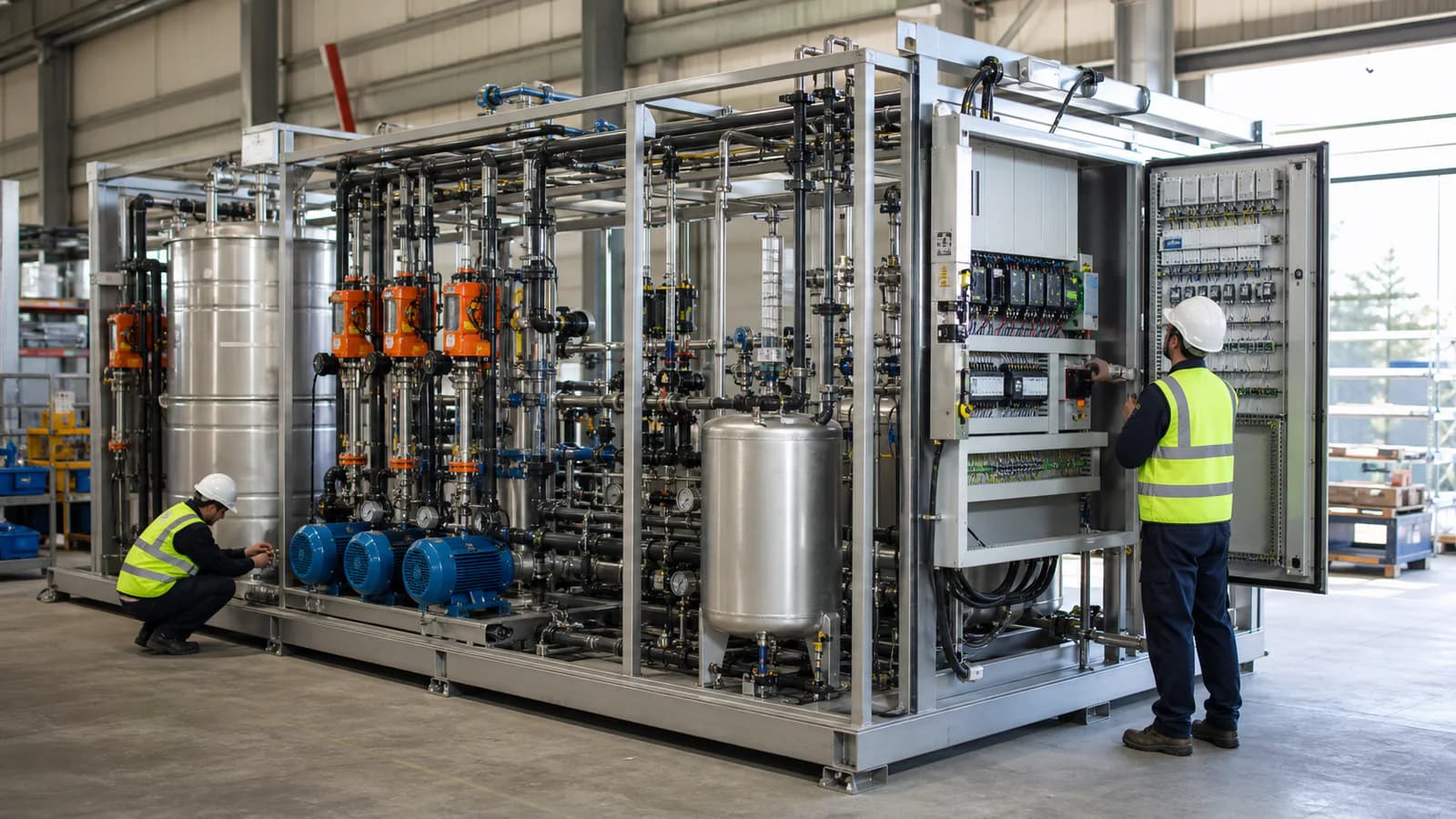
- tank, piping, valve, pump, instrument and control-panel installation;
- appropriate leak or pressure checks;
- pump rotation and clean-water functional operation where applicable;
- alarms, interlocks, permissives and sequence simulation;
- instrument certificates and software backup;
- documentation status, punch list and release criteria.
If factory test water does not represent site wastewater, the FAT cannot prove final fluoride, metal, COD, recovery or sludge performance. Those results belong to an agreed site commissioning or performance test under defined feed conditions.
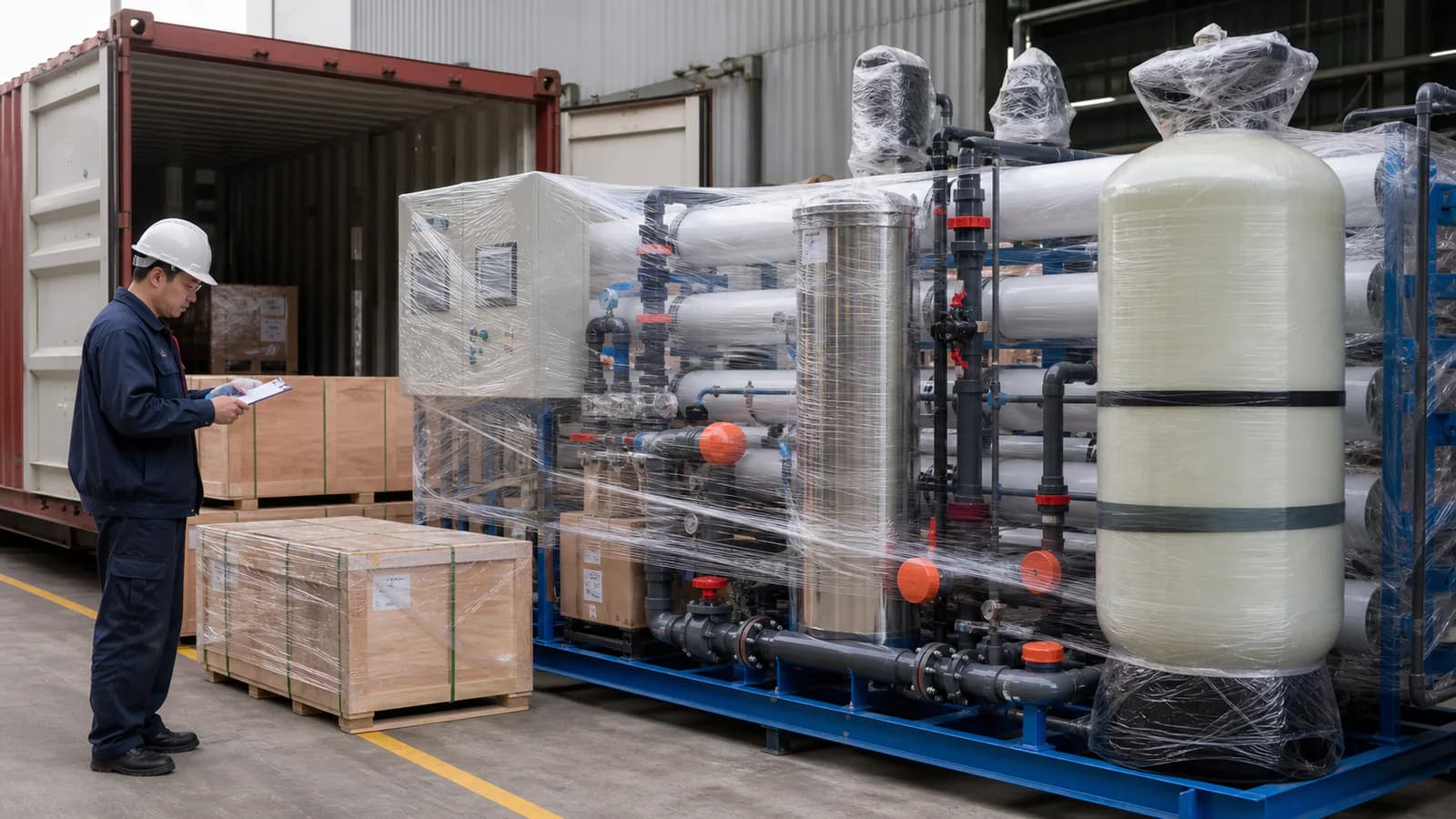
Shipment inspection should review clean and capped connections, corrosion protection, preservation, loose items, spare parts, chemical or membrane storage requirements, lifting points, packing list, dimensions and photographic records. Fragile instruments and internally lined equipment need specific packing attention.
Installation Preparation and Commissioning
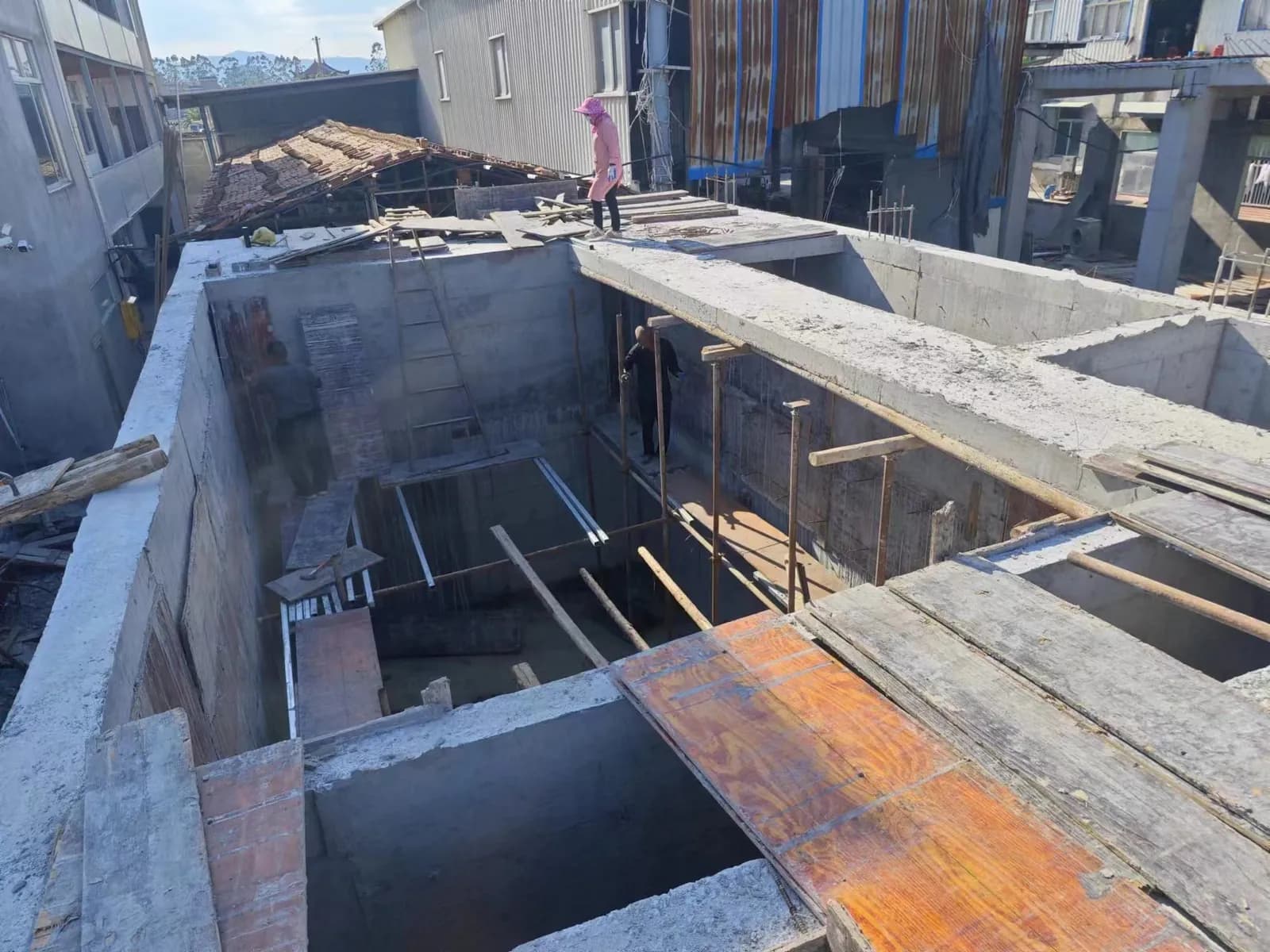
Before delivery, confirm foundations, bunds, access, drains, ventilation, chemical area, utilities, cable interfaces, interconnecting pipework, exhaust connections, sludge route and emergency storage. Confirm that the site can receive the largest module and that maintenance clearances remain after installation.
Commissioning should distinguish mechanical completion, water flushing, instrument calibration, sequence testing, chemical preparation, wet-wastewater introduction, dosage optimization, sludge dewatering, membrane startup, operator training and performance testing. Early operation should include a plan for managing off-spec water while the process is being stabilized.
Common Procurement Mistakes
- Mixing all wastewater before completing a source survey.
- Designing from one composite sample with no production context.
- Specifying only daily flow and omitting peak or batch loads.
- Assuming one pH setpoint removes every metal and fluoride.
- Ignoring chelating agents, solvents, surfactants and oxidants.
- Selecting RO without defining concentrate management.
- Treating a reuse target as “clear water” instead of a parameter list at a stated point.
- Omitting sludge quantity, dewatering and disposal from lifecycle cost.
- Requiring an effluent guarantee without defining influent limits and test methods.
- Treating clean-water FAT results as proof of site treatment performance.
Frequently Asked Questions
Should semiconductor wastewater be combined before treatment?
Not automatically. Fluoride, metals, CMP, organics, concentrated chemicals and relatively clean rinses may need different collection and treatment. Combine streams only after reviewing compatibility, treatment chemistry, variability and reuse value.
How is fluoride removed from semiconductor wastewater?
Calcium-based precipitation followed by solid–liquid separation is commonly evaluated. Final performance depends on feed concentration, competing ions, pH, reaction conditions and separation. Lower targets may require staged treatment or polishing.
Can RO directly treat untreated PCB wastewater?
Usually not as the first step when the water contains metals, colloids, suspended solids, oxidants or scaling species. These can foul or damage membranes. Pretreatment and concentrate management must be defined from the actual wastewater.
Is CMP wastewater the same as fluoride wastewater?
No. CMP wastewater is commonly characterized by fine polishing particles and may contain metals or process chemicals. Fluoride wastewater originates from fluoride-bearing chemicals. They may interact, but should be characterized separately before any decision to mix them.
When is a pilot test needed?
Consider a pilot when composition varies, complexed metals or biological inhibition are uncertain, membrane fouling risk is high, the required target is demanding, or the proposed route depends on assumptions that a jar test cannot resolve.
What should a supplier guarantee?
Guarantees should be tied to an agreed influent envelope, flow, temperature, operating conditions, utilities, chemical quality, sampling point, analytical method and test period. Equipment availability, consumables and buyer responsibilities should also be defined where relevant.
Conclusion
The most important semiconductor and PCB wastewater decision is often made before the treatment skid is selected: define and segregate the streams. Fluoride, metals, CMP solids, organics, concentrated chemical dumps and reuse candidates create different technical risks. A sound route connects each risk to a treatment stage and identifies the residual that stage creates.
Buyers should provide stream-level flows, representative analyses, chemical sources, discharge or reuse targets, site conditions and operating requirements. Suppliers should respond with a mass balance, process rationale, design assumptions, residual-management plan, testing boundary and clear responsibilities. That approach produces a more defensible proposal than selecting equipment from an industry label alone.
Send Your Semiconductor or PCB Wastewater Requirements
Send Baihuipu your wastewater stream list, available analyses, average and peak flows, production schedule, chemical inventory, discharge or reuse target, site utilities and project location. The technical team can review how to structure segregation, pretreatment, solids separation, membrane treatment or concentration for further project discussion. Final configuration and performance conditions remain subject to confirmed project data.
For related preparation steps, review the industrial wastewater RFQ checklist and the guide to jar, bench and pilot testing.