Introduction
Slaughterhouse and meat-processing wastewater can look straightforward because the industry is familiar. In practice, it is one of the applications where a generic “cubic metres per day” quotation can quickly become unreliable.
The wastewater load changes with animal handling, slaughtering, washing, floor cleaning, equipment sanitation, product processing, and shift patterns. Coarse solids, blood, fat, oil and grease, suspended matter, nutrients, detergents, and temperature changes may all influence treatment. A plant that runs continuously creates a different hydraulic profile from a facility that sends large cleaning discharges after production.
For an overseas buyer, the first objective is not to choose a tank or a biological process from a catalogue. It is to define a credible project basis: where the wastewater comes from, when it is generated, what it contains, where the treated water will go, and what the site can support. That basis allows suppliers to develop comparable proposals and helps the buyer identify missing interfaces before civil construction or equipment fabrication begins.
This guide explains how to structure that evaluation without assuming that one process arrangement fits every slaughterhouse.
Why Slaughterhouse Wastewater Needs a Source-by-Source Review
The name of the industry describes the production activity, not the complete wastewater profile. A useful inquiry separates the main sources rather than combining everything into one daily total.
Typical sources may include:
- production-floor washing and equipment cleaning;
- blood-contaminated water and product-contact water;
- lairage or animal-holding-area washdown;
- paunch, manure, hair, feathers, tissue, or other recoverable solids;
- scalding, defeathering, rendering, or processing streams where applicable;
- vehicle and crate washing;
- boiler, cooling, or water-treatment reject streams;
- sanitary sewage, which may be separate from industrial wastewater;
- concentrated chemical or sanitation batches.
Segregation matters because a recoverable by-product or concentrated stream should not automatically be diluted into the common drain. Removing solids and fats close to their source can reduce the duty on pumps, equalization, flotation, biological treatment, and sludge handling. It also makes the wastewater data easier to interpret.
Ask the production team to prepare a simple drainage map. Mark each source, its approximate flow, generation time, visible solids, temperature, and any cleaning chemicals. If two streams require incompatible treatment or safety controls, the map helps keep them separate.
Define the Flow Pattern Before Selecting Equipment
A daily volume is necessary, but it is not a design flow profile. The engineering basis should distinguish:
- average wastewater generated during production;
- short-duration peak flow;
- batch releases from cleaning or tank emptying;
- operating hours and shifts per day;
- production days per week;
- seasonal or product-related changes;
- future capacity that is genuinely planned.
If most wastewater is discharged during cleaning, collection and equalization may need to absorb a large hydraulic event while downstream treatment runs at a steadier rate. If production varies by day, equalization must be reviewed together with retention time, mixing, odor control, and the risk that solids settle or fats accumulate.
Flow data should ideally come from measurements tied to production logs. Where measurements are unavailable, clearly label estimates. A preliminary proposal can use assumptions, but the supplier should state them so they can be confirmed before final design.
Build a Representative Wastewater Characterization Plan
One sample taken at a convenient time may not represent the wastewater that the treatment plant will receive. Sampling should reflect production and cleaning cycles. Depending on the project stage, the buyer and qualified local laboratory may consider:
- pH and temperature;
- chemical oxygen demand and biochemical oxygen demand;
- total suspended solids;
- oil and grease or fats, oils and grease;
- ammonia nitrogen, total nitrogen, and phosphorus where relevant;
- conductivity, salinity, alkalinity, or other site-specific parameters;
- detergents, disinfectants, or chemicals used in sanitation;
- microbiological indicators where required by the outlet route;
- settleable, floatable, and screenable solids.
The exact analysis list should follow the production process, local regulatory framework, and intended discharge or reuse point. Historical results are useful, but the sampling dates, production state, and test methods should remain visible. A maximum, minimum, and typical range is more informative than a single average.
A Practical Treatment-Route Framework
The following stages are common decision points. They are not a fixed process guarantee. Each stage should be selected and sized from confirmed project conditions.
1. Source Control and Dry Cleanup
The most economical load is often the load that does not enter the drain. Production practices may include dry collection of recoverable solids, controlled blood recovery, trays or screens at source, and housekeeping that prevents unnecessary water use.
For the buyer, this is an operational interface. The equipment supplier needs to know what the factory will remove before wastewater reaches the treatment system. If source control is assumed in the proposal but not implemented in operation, downstream loading can be materially different.
2. Screening and Preliminary Solids Removal
Coarse screens, rotary screens, or other preliminary separation equipment may protect pumps and reduce large solids. Selection depends on particle characteristics, required opening, flow pattern, cleaning method, and disposal route.
Buyers should ask how screenings are collected, dewatered if necessary, and moved out of the treatment area. Access for cleaning and safe handling is as important as the screen itself.
3. Equalization and Mixing
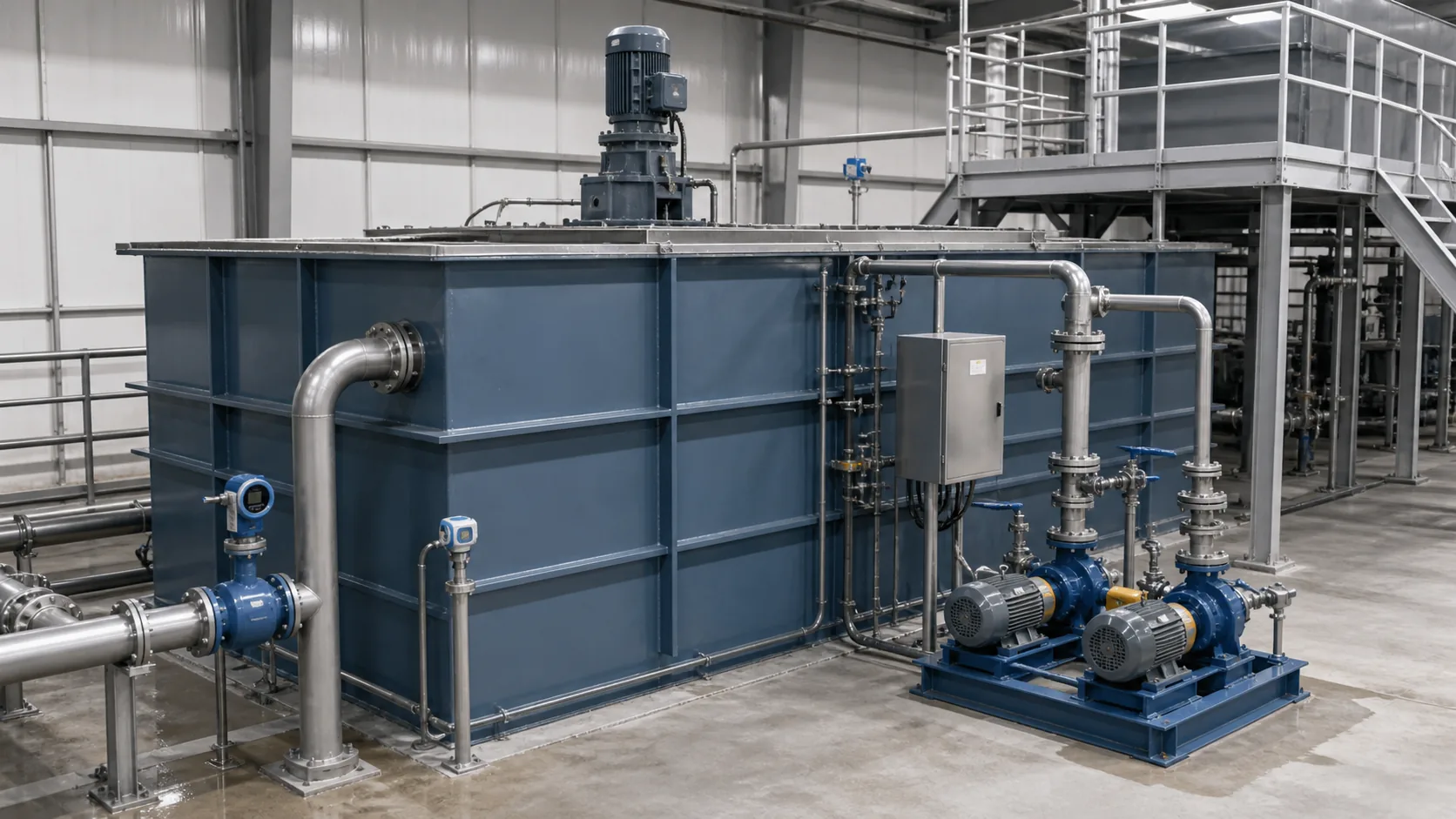
Equalization helps moderate hydraulic and concentration changes before chemical or biological treatment. The tank may require mixing or aeration to limit settling and maintain a more consistent feed. Odor management, foam, cleaning access, level control, and emergency overflow also need review.
Equalization is not simply unused storage volume. Its operating level, pump logic, usable volume, and relationship with peak events should be documented.
4. Fats, Oils, Grease, and Suspended-Solids Removal
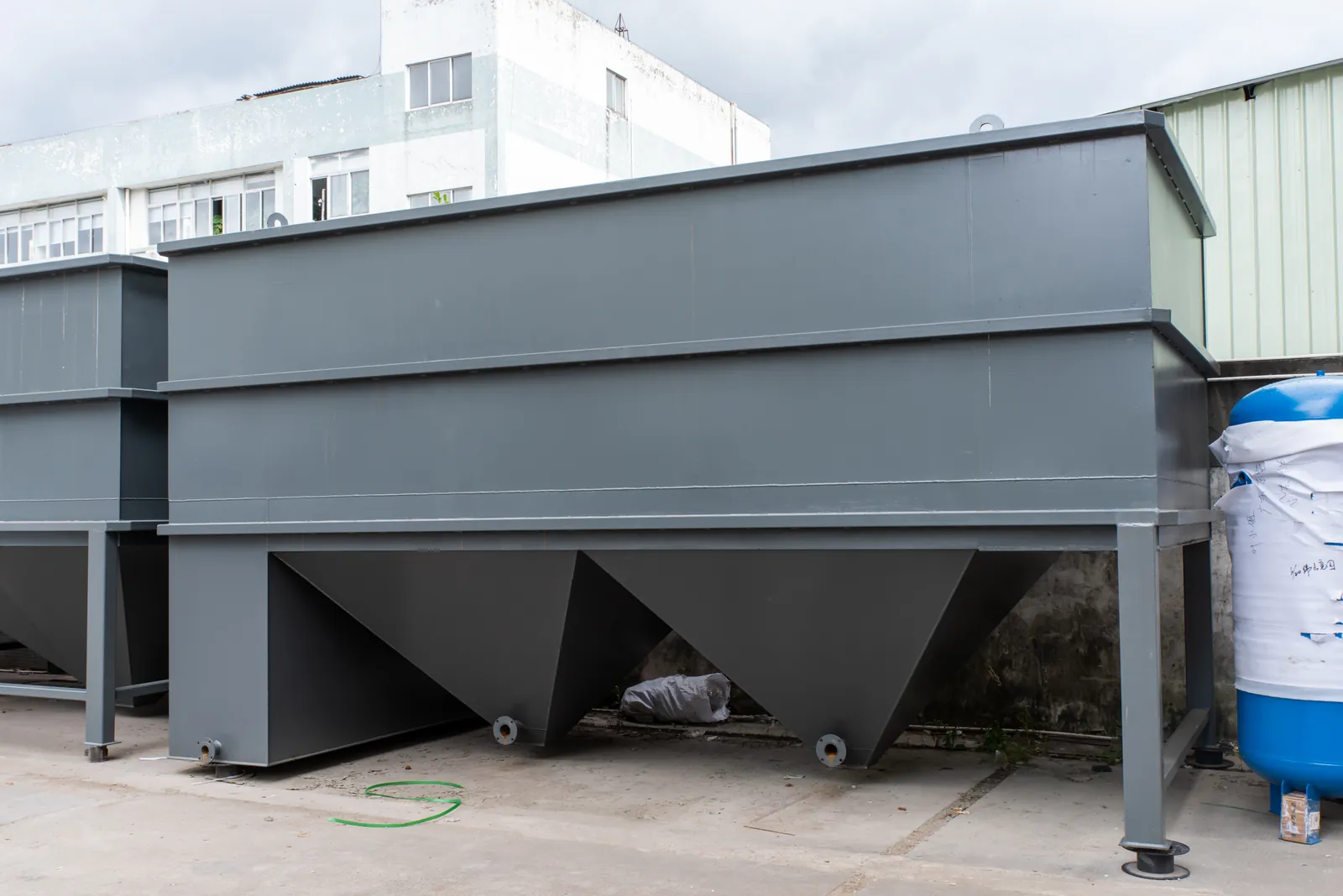
Depending on wastewater characteristics, physical-chemical separation may be used before biological treatment. Dissolved air flotation is often evaluated for wastewater containing suspended solids and fats, oils, and grease. Coagulation or flocculation may be considered when testing and chemistry support it.
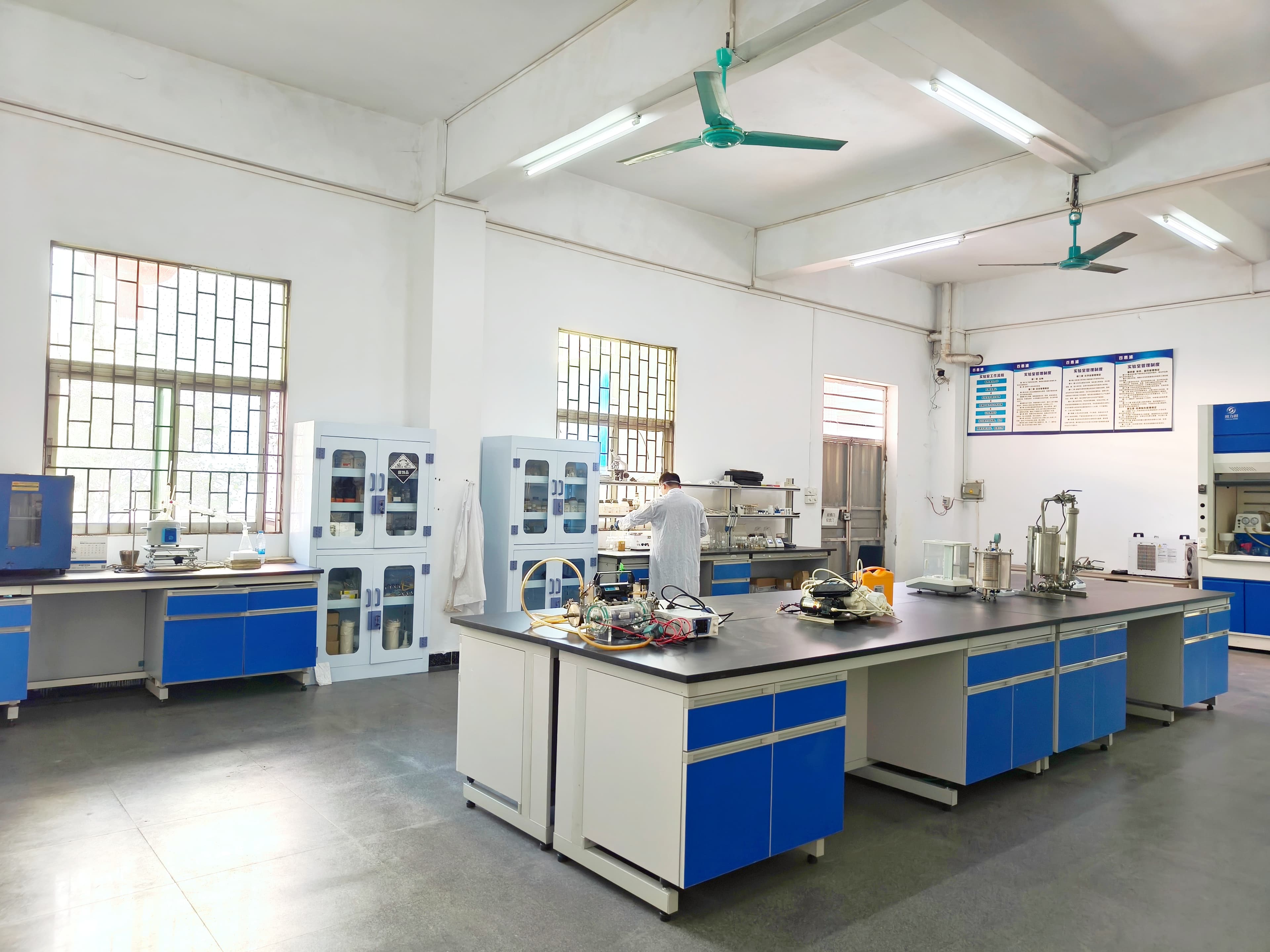
The buyer should request clarity on chemical assumptions, sludge generation, recycle-water requirements, air system scope, control logic, and expected feed conditions. Jar tests or other treatability work may help define a starting point, but site commissioning still needs controlled optimization.
5. Biological Treatment
After appropriate pretreatment, biological processes may be considered for biodegradable organic load and nitrogen treatment where required. The choice between suspended-growth, attached-growth, membrane biological, anaerobic, aerobic, or combined arrangements depends on:
- influent load and variability;
- required effluent target;
- temperature and nutrient balance;
- available footprint and tank depth;
- operator capability;
- sludge-management approach;
- energy and utility constraints;
- tolerance for production interruptions.
No biological technology removes the need for stable feed conditions and operating control. Commissioning requires biomass development, gradual loading, monitoring, and an agreed response to upset conditions.
6. Clarification, Filtration, and Final Polishing
Secondary clarification or membrane separation may follow biological treatment. If the outlet target requires lower suspended solids, color, residual organics, nutrients, or microbiological indicators, additional polishing can be evaluated.
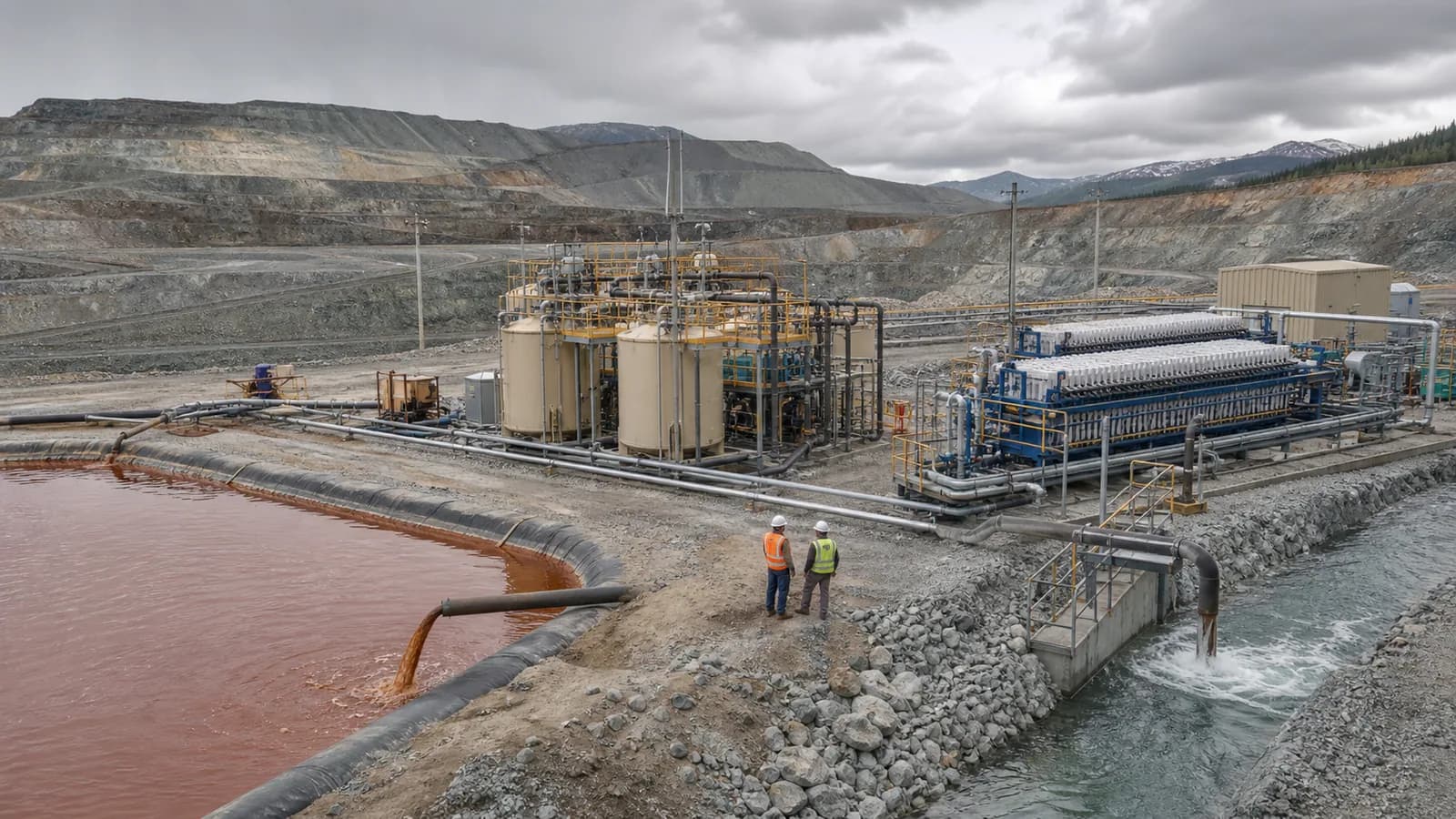
The final step must be tied to a named destination. Direct discharge, sewer discharge, irrigation, cooling-tower makeup, wash water, or another reuse point can each involve different local requirements. “Reusable water” is not a complete specification.
7. Disinfection
Disinfection may be required for certain discharge or reuse routes. The method should be selected from the water quality, contact requirement, residual limits, safety considerations, and local rules. Pretreatment quality matters because suspended solids and residual organics can influence disinfection performance.
Sludge and Residuals Must Be Designed With the Water Line
Screenings, floated solids, chemical sludge, waste biological sludge, and other residuals do not disappear when the treated water meets its target. A complete proposal should identify:
- where each residual is generated;
- expected variability and the basis of any estimate;
- thickening or dewatering scope;
- polymer or chemical preparation scope;
- storage duration;
- drainage returned to the process;
- handling equipment and operator access;
- off-site disposal responsibility.
Disposal acceptance and classification are local matters. The equipment supplier should not promise a route that has not been confirmed with the buyer and relevant local parties.
Odor, Ventilation, and Hygiene Are Project Interfaces
Odor risk is influenced by wastewater age, temperature, stagnant zones, solids accumulation, anaerobic conditions, and housekeeping. Enclosed tanks or rooms may require ventilation and, where justified, odor collection or treatment. Chemical storage and biological areas need safe access and appropriate separation from food-production zones.
The treatment-plant layout should support washdown, drainage, equipment removal, sampling, and routine cleaning. Cross-contamination controls and hygiene zoning remain the responsibility of the complete facility design, not only the treatment skid.
What Buyers Should Confirm in a Supplier Proposal
A useful technical proposal should state more than equipment names. Review whether it includes:
- design flow, peak assumptions, and operating hours;
- influent design values and sampling basis;
- discharge or reuse target and applicable reference supplied by the buyer;
- process description and stream-routing logic;
- equipment list, materials, and major instruments;
- chemical-dosing assumptions;
- sludge and screenings scope;
- power, water, air, drainage, ventilation, and other utilities;
- civil works and installation boundary;
- factory testing and shipment inspection scope;
- commissioning, training, and acceptance boundaries;
- exclusions, buyer-supplied items, and open technical questions.
This makes proposals easier to compare. A lower-priced offer may exclude civil works, interconnecting pipework, sludge dewatering, instruments, freight, or site commissioning that another supplier includes.
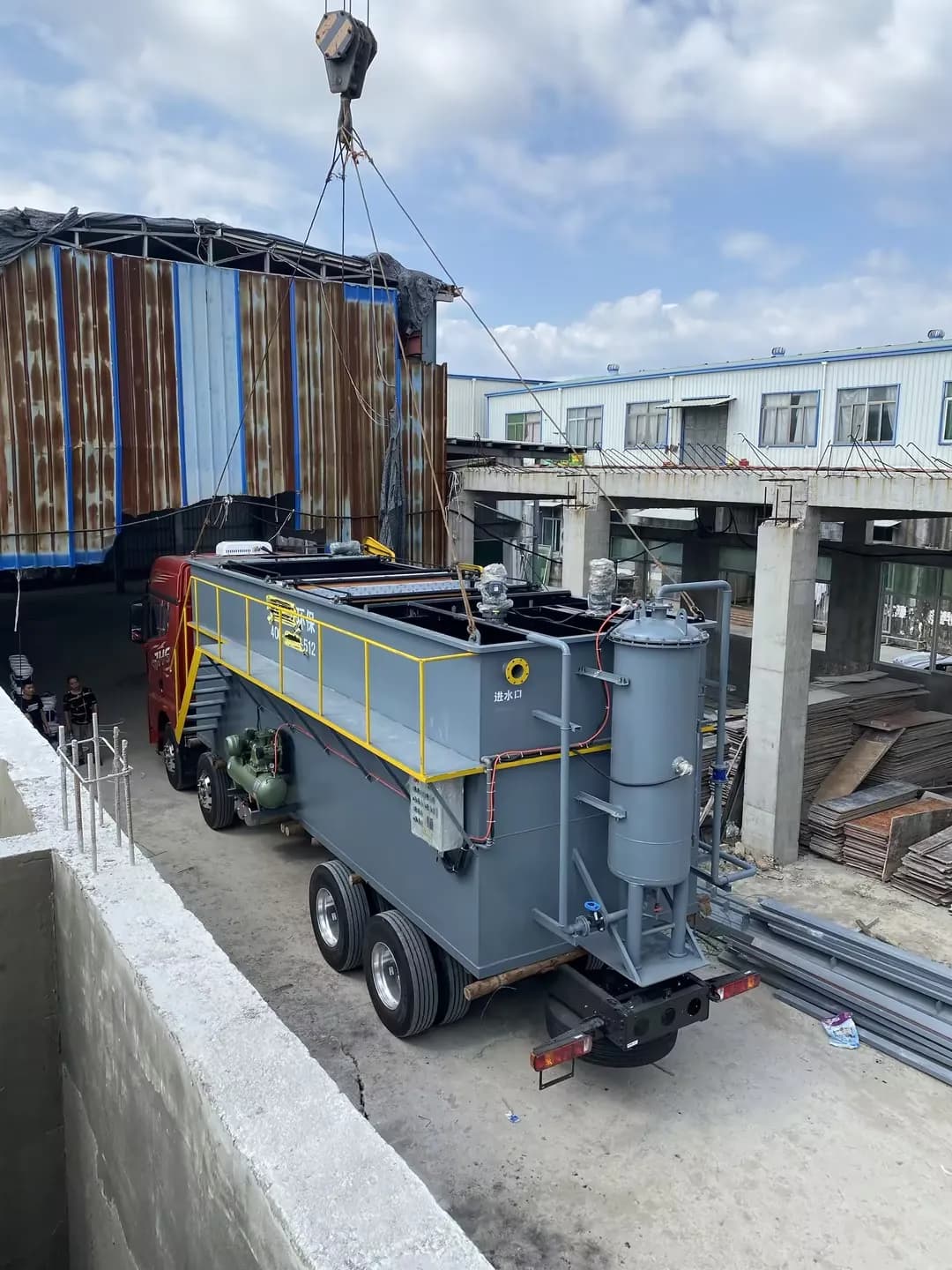
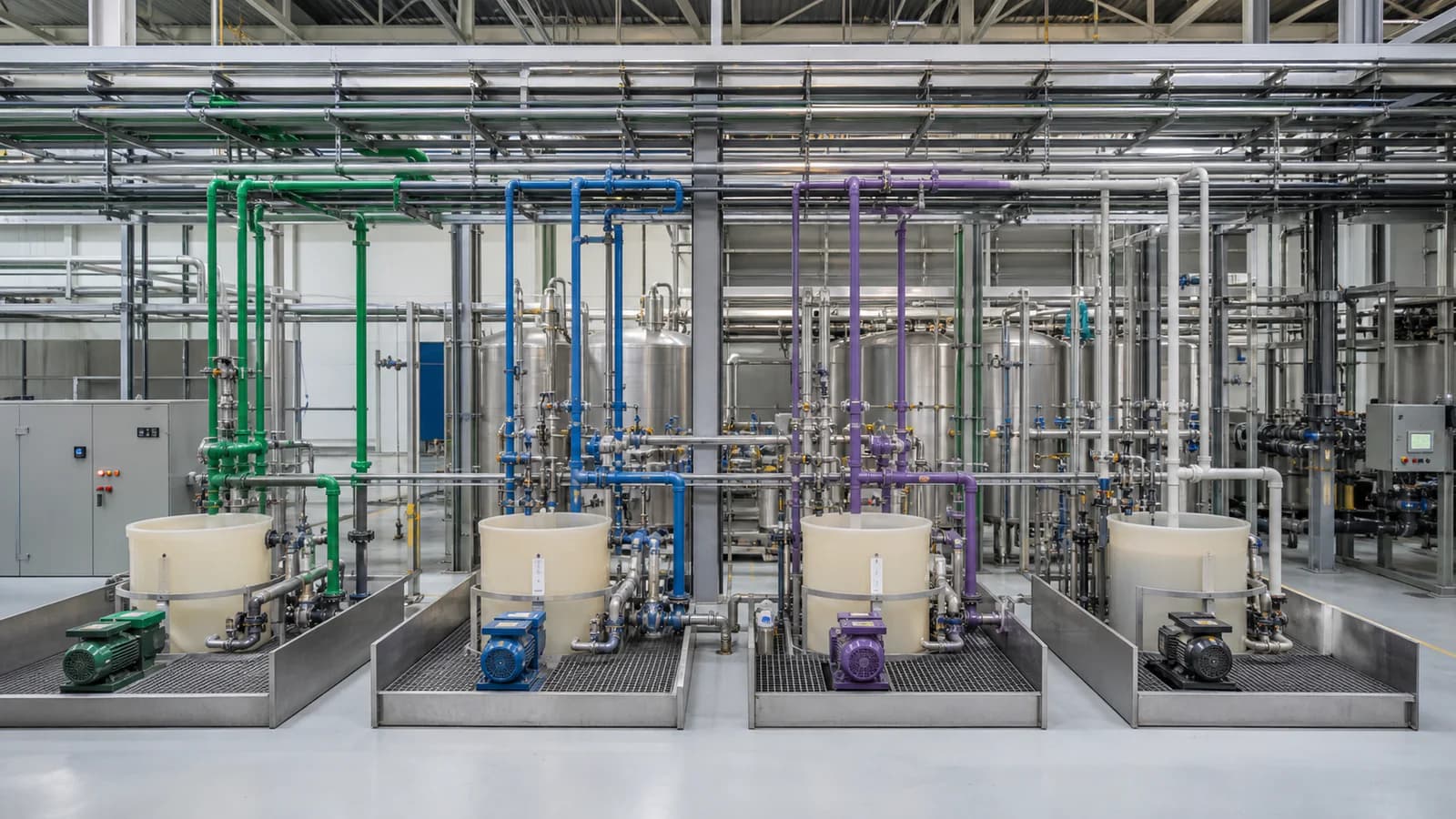
Factory Testing and Shipment Inspection
Factory testing cannot reproduce every site condition or prove final biological performance before real wastewater is available. It can, however, verify the manufactured scope against approved documents.
Depending on equipment configuration, factory and shipment checks may cover:
- major dimensions and equipment arrangement;
- tank, frame, pipework, valve, and instrument identification;
- control-panel power-up and interface review;
- pump or motor rotation where suitable;
- dry or clean-water functional checks where agreed;
- alarms, interlocks, and manual/automatic logic available for testing;
- loose accessories, spare parts, labels, and documents;
- packing, lifting points, and shipment release records.
Open items should be recorded rather than hidden. The buyer and supplier should distinguish factory acceptance from site acceptance and final process commissioning.
Installation Preparation for an International Project
Before shipment, confirm the site interface package. It may include general arrangement drawings, foundation loads, anchor requirements, connection points, cable and I/O schedules, equipment weights, lifting plans, utility data, and storage instructions.
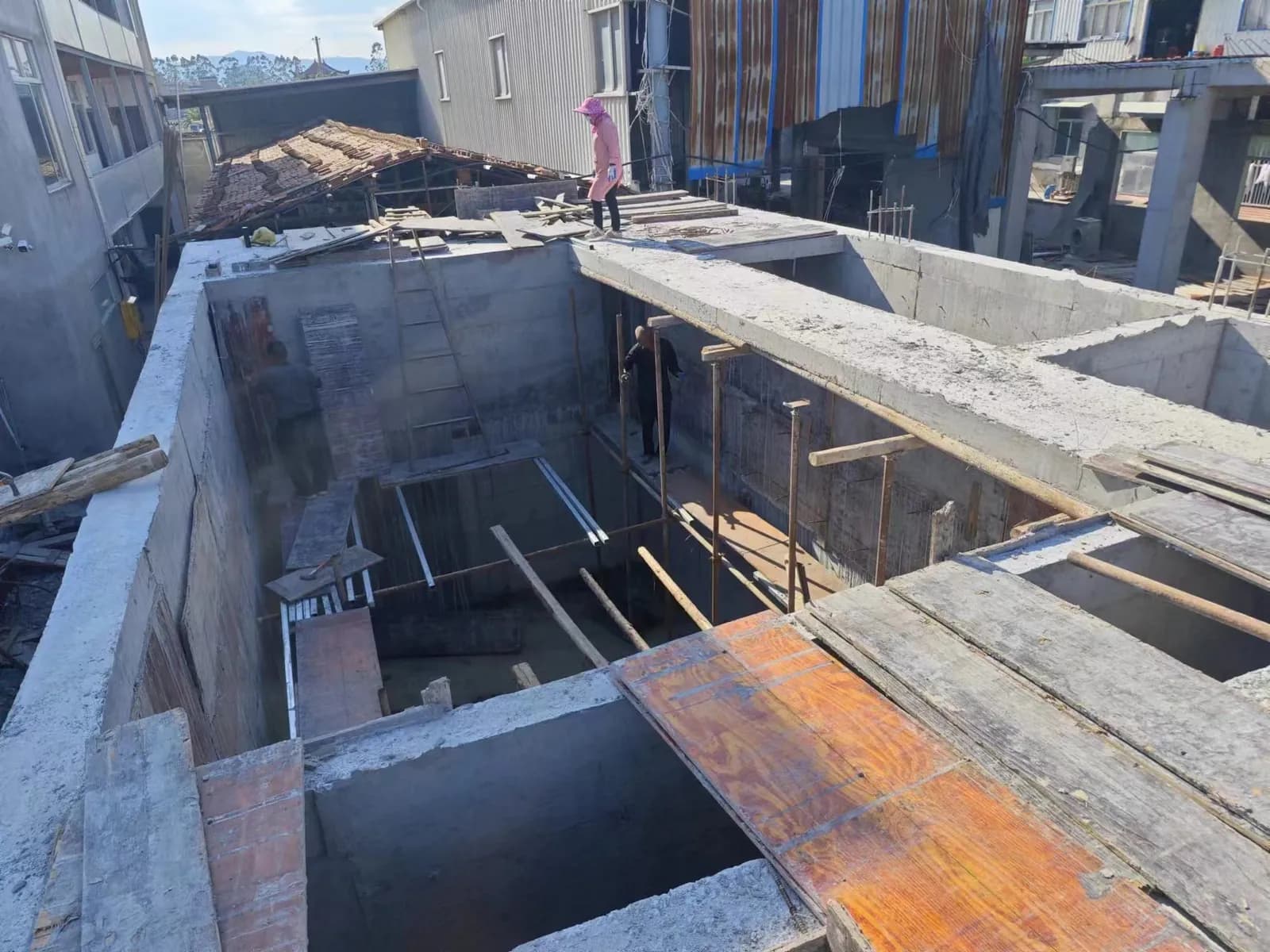
At the site, check access dimensions, crane reach, floor levels, drainage, ventilation, electrical supply, water supply, chemical storage, sludge-removal access, and the route for large equipment. A project can lose weeks if a tank arrives before the access opening, foundation, or utility interface is ready.
FAQ
What is the best process for slaughterhouse wastewater treatment?
There is no universal best process. The route should be selected from the wastewater sources, flow pattern, analysis, required outlet, site constraints, sludge plan, and operating capability. Screening, equalization, physical-chemical separation, and biological treatment are common decision stages, but the final combination must be project-specific.
Is dissolved air flotation always required?
No. DAF is often evaluated where suspended solids and fats, oils, and grease need separation, but its suitability and chemical program depend on representative wastewater and treatment objectives. Testing can help define the design basis.
Can treated slaughterhouse wastewater be reused?
Potentially, but the reuse application must be named first. Water for irrigation, cooling, cleaning, or another purpose can require different treatment and local approvals. A reuse claim should not be made without a confirmed end-use specification.
What information is needed for a quotation?
Provide the production process, wastewater-source list, daily and peak flow, operating schedule, representative analysis, site conditions, outlet target, preferred installation boundary, and any local standard or customer specification.
How should variable cleaning discharges be handled?
Document each batch volume, frequency, duration, and chemistry. The design may use segregation, controlled release, equalization, or dedicated pretreatment depending on compatibility and treatment risk.
Can factory testing prove the final effluent quality?
Factory testing can verify manufactured equipment and agreed functions, but final effluent performance depends on real influent, site installation, commissioning, operating conditions, and the agreed acceptance method.
Conclusion
A dependable slaughterhouse wastewater project begins with production and wastewater facts, not a preselected equipment package. Source control, flow equalization, preliminary separation, biological treatment, residuals handling, odor management, and the final outlet route must work as one system.
Buyers can improve proposal quality by preparing representative analysis, a time-based flow profile, a drainage map, the site interface, and a clear discharge or reuse target. Suppliers can then state assumptions, exclusions, testing scope, and commissioning boundaries in a form that supports a genuine technical comparison.
Send Your Requirements
If you are planning wastewater treatment for a slaughterhouse or meat-processing facility, send Baihuipu your available water analysis, flow pattern, production schedule, site layout, and treatment objective. Our team can review the information and identify the technical questions needed before a project-specific proposal is prepared.