Introduction
Chromium-bearing wastewater can be generated by chrome plating, chromium anodizing, chromate conversion coating, chromic acid etching, passivation and related metal-finishing operations. Buyers often describe all of this water simply as “chrome wastewater.” That description is not enough to select a process.
Chromium can be present in different oxidation states, principally hexavalent chromium, Cr(VI), and trivalent chromium, Cr(III). Those forms behave differently. Conventional hydroxide precipitation can remove many dissolved trivalent metals after suitable pH adjustment, but hexavalent chromium generally must first be reduced to the trivalent form. The U.S. EPA’s metal-finishing guidance describes stream segregation, chromium reduction, common-metals precipitation and sludge dewatering as distinct treatment functions. See the EPA Metal Finishing Effluent Guidelines and the related development document.
This guide explains how to turn that chemistry into a defensible system specification. It does not provide a universal reagent recipe or discharge guarantee. Those decisions depend on the actual wastewater, local regulation, analytical method and tested operating envelope.
Why Cr(VI) Cannot Be Treated Like an Ordinary Dissolved Metal
In water, Cr(VI) commonly exists as soluble chromate or dichromate species. Raising the pH does not simply convert those species into an easily settled chromium hydroxide. The practical treatment objective is therefore sequential:
- convert Cr(VI) to Cr(III) through a controlled reduction reaction;
- adjust conditions so Cr(III) forms an insoluble solid;
- enlarge and separate the solid particles;
- dewater, store and manage the chromium-bearing sludge;
- verify the treated water using the required analytical method.
The distinction matters commercially. A supplier who sizes only a neutralization tank and clarifier may omit the dedicated reaction volume, reducing-chemical system, instrumentation and safeguards needed for the Cr(VI) step. Conversely, a project may be unnecessarily complicated if the chromium stream can be reduced in a controlled batch before joining compatible common-metals water.
Start with Source Mapping and Segregation
A reliable design begins upstream of the wastewater plant. Prepare a stream table for every chromium-related bath, drag-out, rinse, scrubber, laboratory drain, floor-wash point and maintenance discharge.
For each stream, document:
- the production operation and bath chemistry;
- whether chromium is expected as Cr(VI), Cr(III) or both;
- normal rinse flow and concentrated batch-dump volume;
- pH, temperature and release schedule;
- other metals, cyanide, cleaners, surfactants or complexing agents;
- the sampling point and production condition represented by each analysis;
- whether recovery, separate batch treatment or combined treatment is intended.
Segregation does not always mean installing a complete independent plant. It means preventing incompatible water from being mixed before its treatment consequence is understood. The EPA’s electroplating and metal-finishing pretreatment guidance notes that segregated treatment allows chromium reduction, cyanide destruction, oil removal and common-metals removal to be performed in the appropriate sequence.
Keep cyanide-bearing water away from acidic chromium treatment
Cyanide-bearing wastewater requires its own safety and treatment assessment. Acidifying a cyanide-containing stream can create an acute gas hazard. It should never be routed into an acidic Cr(VI) reduction tank merely because both streams come from a plating area.
Keep oxidizing and reducing demands visible
Strong oxidants, peroxide-containing cleaners or other reactive chemicals may consume reducing reagent or alter ORP behavior. Concentrated bath dumps can also overwhelm a continuous system designed around dilute rinse water. Separate holding or controlled metering may be more reliable than releasing the whole batch into a common equalization tank.
What Water Data Are Needed Before Process Selection?
At minimum, the design review should distinguish total chromium, Cr(VI) and—where useful—dissolved chromium. A total-chromium result cannot show whether the reduction step has succeeded. A Cr(VI) result alone cannot define the total solids and sludge load after treatment.
The analytical package may include:
- total chromium and hexavalent chromium;
- total and dissolved metals relevant to the process;
- pH, conductivity, TDS and suspended solids;
- cyanide where used or potentially present;
- COD or TOC when cleaners, dyes or organics may affect treatment;
- iron, sulfite or other constituents related to the proposed chemistry;
- flow profile, batch frequency and peak hourly load;
- actual discharge or reuse limits and required test methods.
Samples should represent normal operation, high-load periods and concentrated releases. Record preservation, holding time and laboratory method. Chromium speciation can change if the sample is handled incorrectly, so analytical planning should be agreed with a qualified laboratory rather than improvised after the equipment is ordered.
A Practical Cr(VI) Treatment Sequence
1. Controlled collection or equalization
The chromium stream is collected in a compatible tank sized around its release pattern. Mixing should keep the tank representative without creating unnecessary spray or aerosol. Level control, high-level protection, bunding, drainage and material compatibility belong in the equipment scope.
Equalization smooths the feed, but it does not correct an unsuitable mixture. Abnormal water needs a defined hold-and-review procedure. The design basis should state which streams are permitted in the chromium tank and which are excluded.
2. Acidic reduction of Cr(VI) to Cr(III)
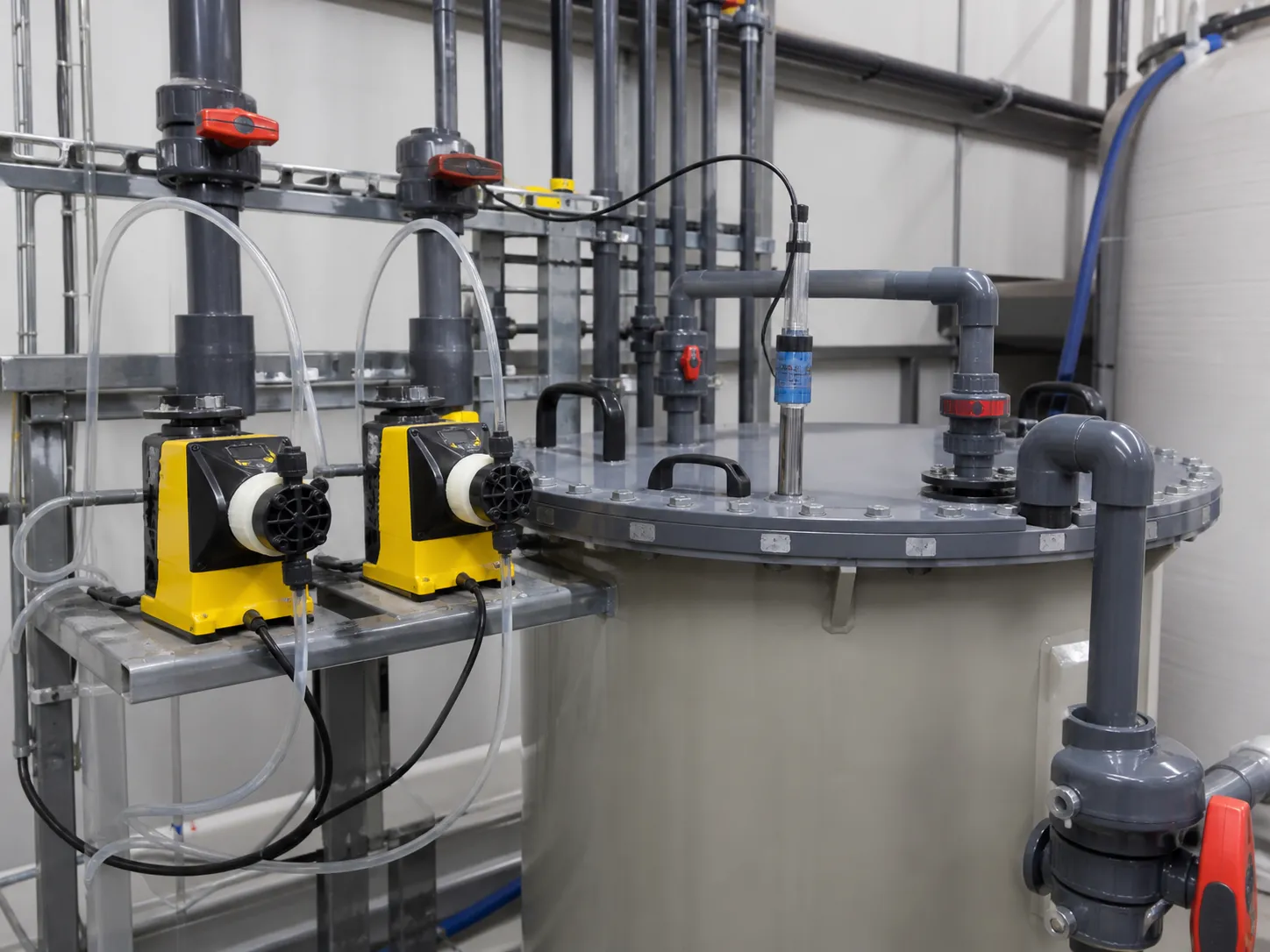
Common reducing approaches can include sulfur-based reagents such as sodium metabisulfite or bisulfite, ferrous salts or other project-specific chemistry. Selection depends on feed composition, safety, residuals, availability and sludge implications.
Many chemical-reduction systems operate in an acidic range because the reaction is more favorable there. EPA technical material describes Cr(VI) reduction followed by neutralization and precipitation, but it should not be converted into one universal pH setpoint. The correct control window must be established for the selected reagent and representative water.
The system may use pH and ORP instruments as operating controls. ORP is useful for indicating the reduction environment, but it is not a substitute for laboratory Cr(VI) analysis. Sensor location, mixing, calibration, coating, chemical lag and interfering species can affect the reading.
The reaction tank should provide:
- controlled reagent addition rather than unrestricted manual pouring;
- sufficient mixing and contact time under the tested conditions;
- pH and ORP measurement with accessible calibration points;
- alarms or interlocks for abnormal pH, level or dosing status;
- ventilation and chemical-handling provisions appropriate to the reagent;
- a sampling point after the reaction stage.
3. Neutralization and Cr(III) precipitation
After reduction is confirmed, the water is adjusted into a range where trivalent chromium can precipitate. Lime, sodium hydroxide or another alkali may be evaluated. The choice changes chemical storage, mixing, scale formation, sludge volume, settling behavior and operating cost.
The optimum precipitation range is not determined by chromium alone. Nickel, zinc, copper, aluminum and other metals may be present, and amphoteric behavior can make excessive pH counterproductive. Bench testing should compare residual metals across a controlled pH series rather than assume that “more caustic” always improves performance.
4. Coagulation, flocculation and solids separation
Precipitated chromium hydroxide must be converted into particles that the selected separator can remove. Coagulant and polymer tests should consider mixing intensity, aging, floc strength, settling rate, carryover and sludge dewaterability.
Possible separators include conventional or lamella clarification, dissolved-air flotation in a suitable matrix, and filtration as a polishing step. A separator cannot capture chromium that remains dissolved because reduction or precipitation was incomplete.
5. Sludge thickening and dewatering
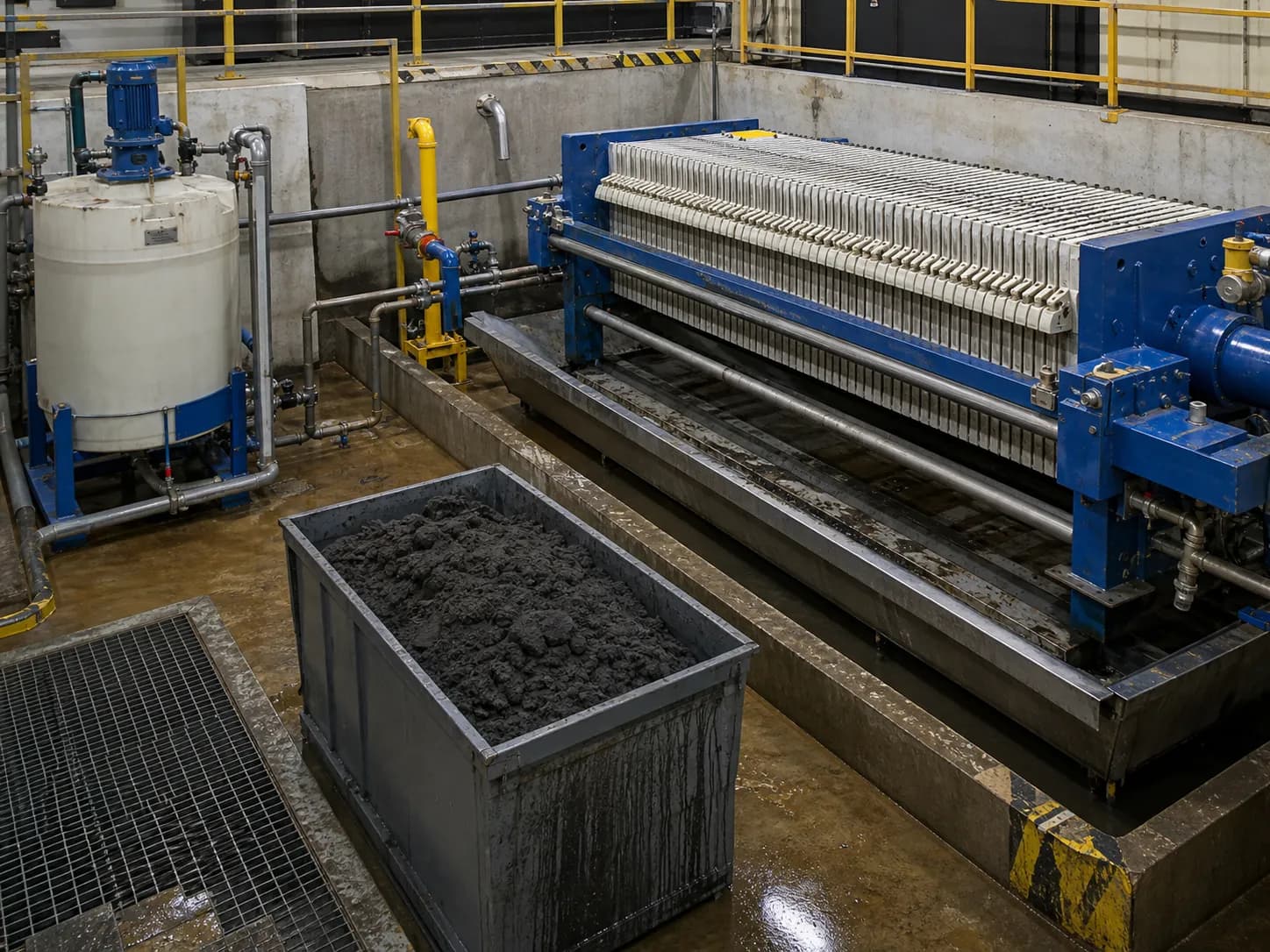
Chromium removal transfers the contaminant into solids. The RFQ should define sludge collection, thickening, filter-press or other dewatering duty, filtrate return, cake storage and the customer’s disposal boundary.
Reagent choice influences sludge quantity. Iron-based reduction can add iron solids; lime can add mineral solids; excessive polymer can change cake behavior. A jar test that records only clear supernatant is therefore incomplete. Measure or estimate sludge volume and test dewaterability before sizing the press.
6. Polishing when the verified target requires it
Filtration, adsorption, ion exchange or membrane treatment may be evaluated if the confirmed residual target, reuse duty or variability requires polishing. These steps should be designed from the post-precipitation water, not raw chromium wastewater.
Ion exchange capacity can be reduced by competing ions and suspended solids. Membranes produce a concentrate that still requires management. A polishing stage should never be used to hide unstable upstream reduction and precipitation.
How Bench Testing Should Be Structured
A useful treatability program should test a range rather than one attractive beaker. Depending on the project, it can compare:
- reducing reagents and dose-response behavior;
- reduction pH and reaction time;
- ORP response against laboratory Cr(VI) results;
- precipitation pH and residual total/dissolved metals;
- coagulant and flocculant combinations;
- settling rate, clarified-water turbidity and filtered-metal results;
- sludge volume, thickening and filterability;
- low-load, normal-load and high-load samples;
- the effect of known oxidants, cleaners or bath additives.
Record the sample source, production condition, date, reagent identity, dose, sequence, mixing time, settling time and analytical method. A photograph can document floc formation and clarity, but the acceptance evidence is the measured chemistry.
Equipment and Instrumentation Buyers Should Specify
A complete RFQ can separate process requirements from equipment preferences. It should state:
- design and peak flow, batch volume and operating hours;
- wastewater sources permitted in each collection tank;
- tank material and chemical-compatibility basis;
- mixer duty and required reaction time;
- reducing and neutralizing chemical systems;
- pH and ORP instruments, calibration access and alarms;
- automatic, manual and maintenance operating modes;
- clarification or filtration design basis;
- sludge tank, dewatering equipment and filtrate path;
- ventilation, bunding, eyewash and local safety interfaces;
- PLC signals, remote interface and data-recording expectations;
- spare parts, manuals, labels and destination-language requirements.
Material selection should follow the actual reagent concentration, temperature and exposure. “Stainless steel everywhere” is not a safe default for acidic or chloride-bearing service, and a generic plastic specification may omit structural, UV or temperature constraints.
Factory Testing, Shipment Inspection and Site Acceptance
Factory testing can confirm equipment identity, dimensions, mixers, pumps, valves, dosing skids, instruments, control-panel functions, alarms and simulated sequences within the agreed scope. Clean-water testing can identify leaks and control faults, but it cannot demonstrate Cr(VI) removal without representative wastewater and chemicals.
Shipment inspection should verify protected instruments, capped pipe openings, labeled loose parts, packing lists and packing suitable for the route. Installation preparation should define foundations, drainage, ventilation, power, water, compressed air where required, chemical unloading and safe maintenance clearance.
Performance acceptance should state:
- the influent flow and composition envelope;
- required chemical quality and operating sequence;
- sampling locations and sample type;
- laboratory method and responsible laboratory;
- stabilization period and number of test samples;
- parameters including Cr(VI), total chromium and any relevant co-metals;
- responsibilities when the feed falls outside the design basis.
Common Specification Mistakes
- Treating total chromium as Cr(VI): the system needs oxidation-state information.
- Relying on pH adjustment alone: Cr(VI) normally requires reduction before hydroxide precipitation.
- Combining cyanide and acidic chromium water: this creates a serious safety risk.
- Using ORP as the final compliance test: ORP controls the process; analytical testing verifies the result.
- Ignoring concentrated bath dumps: one batch can dominate reaction volume and chemical demand.
- Specifying only a clarifier: dissolved chromium chemistry must be completed before separation.
- Leaving sludge outside the price: dewatering, storage and disposal affect both equipment and lifecycle cost.
- Promising one residual value for any influent: acceptance must be tied to a written feed and operating envelope.
FAQ
Can Cr(VI) be removed by simply raising the pH?
Not reliably. Hexavalent chromium is normally reduced to trivalent chromium first. The Cr(III) can then be precipitated and separated under controlled conditions.
Which reducing chemical is best for chromium wastewater?
There is no universal best reagent. Metabisulfite or bisulfite, ferrous salts and other approaches can be evaluated according to feed chemistry, safety, cost, residuals and sludge. Representative testing is required.
Is ORP control enough to prove complete Cr(VI) reduction?
No. ORP can provide useful process feedback, but laboratory Cr(VI) analysis is needed for verification. Instruments must also be calibrated and maintained for the actual wastewater.
Should chromium wastewater be treated separately?
The Cr(VI) stream should remain identifiable until reduction is complete. It may join compatible common-metals water later, but the combination point should follow the tested process route.
Can treated chromium wastewater be reused?
Possibly, if the reuse point and full water-quality requirement are defined. Low chromium alone does not establish suitability; TDS, hardness, sulfate, chloride, organics and microbiological requirements may still govern.
Does a clear treated sample prove compliance?
No. Clear water can still contain dissolved chromium. Acceptance requires the specified analytical results from agreed sampling points.
Conclusion
Hexavalent chromium wastewater treatment is a controlled chemical-conversion and solids-management task. The process begins with source mapping and segregation, not with a generic equipment list. Reduction converts Cr(VI) to Cr(III); precipitation and flocculation create separable solids; clarification, filtration and dewatering manage those solids; analytical testing verifies the result.
For buyers, the most important protection is a written design basis. It should connect wastewater sources, analytical data, reaction conditions, equipment duty, safety interfaces, sludge responsibility and performance acceptance. That approach is more reliable than choosing a tank volume or reagent dose from an unrelated project.
Get a Project-Specific Treatment Review
Send your chromium-process description, representative Cr(VI) and total-chromium analyses, flow and batch profile, accompanying chemicals, discharge or reuse target, site constraints and destination country. Baihuipu can review the inputs required for bench testing and a project-specific industrial wastewater treatment proposal.
Related resources: