Introduction
Cooling towers reject heat by evaporating water. As water evaporates, dissolved minerals remain in the circulating system and become more concentrated. A controlled portion of circulating water is discharged as blowdown to limit scaling, corrosion, fouling and other water-quality risks.
This makes blowdown both a loss and a control mechanism. Discharging too much wastes water, chemicals and pumping energy. Discharging too little can damage heat-transfer surfaces or destabilize the cooling-water programme. A treatment project should therefore begin with tower operation and the water balance, not with an automatic decision to install reverse osmosis or an evaporator.
The U.S. Department of Energy identifies cycles of concentration as a key cooling-tower efficiency measure. Increasing cycles can reduce makeup and blowdown, but the practical limit depends on makeup quality, tower chemistry, corrosion and scaling control. Treatment is one tool within that operating strategy.
This guide helps plant owners, utility engineers, EPC contractors and procurement teams compare operational optimization, pretreatment, RO reuse, concentrate management and ZLD. It supports the Power Generation & Energy water-treatment solution, industrial water-reuse systems and wastewater evaporators.
First Calculate the Cooling-Tower Water Balance
A useful simplified water balance is:
Makeup = evaporation + blowdown + drift + other losses
Cycles of concentration (CoC) can be approximated from the ratio of a conservative dissolved constituent in circulating or blowdown water to the same constituent in makeup water. Conductivity is often used operationally, but it should be checked against the chemistry and treatment programme.
When drift and other losses are small, a simplified relationship is:
Blowdown ≈ evaporation ÷ (CoC − 1)
This explains why increasing low cycles can produce a large initial reduction in blowdown, while each additional increase gives a smaller incremental saving. The calculation does not determine whether higher cycles are chemically safe.
Collect operating data before equipment selection
- tower recirculation rate and heat load;
- measured makeup, blowdown and conductivity;
- current and target cycles of concentration;
- seasonal evaporation and operating hours;
- makeup-water sources and analyses;
- circulating-water control limits;
- treatment chemical programme;
- heat-exchanger materials and temperature conditions;
- existing side-stream filtration;
- uncontrolled losses, leaks and overflow;
- blowdown destination and applicable limits.
If measured makeup does not reconcile with evaporation, blowdown and drift, investigate leaks, basin overflow, manual drains and meter accuracy before sizing a recovery plant.
Decide Whether to Reduce Blowdown Before Treating It
There are three different projects that are often confused:
- improve makeup-water quality so the tower can run at higher cycles;
- improve circulating-water solids control and operating discipline;
- treat existing blowdown for reuse or concentrate reduction.
The lowest-complexity option should be evaluated first. A conductivity controller, functioning meters and an optimized chemical programme may reduce unnecessary discharge. Side-stream filtration can remove suspended solids and help control fouling, although DOE notes that filtration does not replace the chemical treatment programme.
Alternative low-mineral makeup sources, such as suitable condensate or treated reuse water, may improve the water balance. Their microbiological, corrosion and chemical compatibility must be reviewed before use.
If the tower is already operating near its safe chemistry limit, or if discharge requirements still control the project, blowdown treatment becomes the next decision.
Characterize Blowdown as a Concentrated Process Water
Blowdown chemistry reflects makeup water multiplied by tower concentration, plus treatment chemicals, airborne solids, process contamination and biological activity. A single TDS value is not enough for process selection.
Important parameters
| Parameter | Why it matters |
|---|---|
| pH and alkalinity | Carbonate scaling, corrosion, softening and membrane chemistry |
| Calcium and magnesium | Hardness scaling and softening demand |
| Silica | Membrane and evaporator recovery constraint |
| Sulfate and chloride | Scaling, corrosion, osmotic pressure and concentrate chemistry |
| TDS and conductivity | Overall dissolved load and concentration duty |
| TSS and turbidity | Filtration and membrane fouling |
| Iron, manganese and metals | Deposition, membrane fouling and discharge control |
| TOC, COD and oil | Organic fouling, biological activity and pretreatment |
| Phosphate, polymers and inhibitors | Precipitation, membrane compatibility and residuals |
| Oxidizing and non-oxidizing biocides | Membrane compatibility, biology and discharge requirements |
| Microbiological indicators | Biofouling and storage considerations |
Sample both makeup and blowdown under documented operating conditions. Record current cycles, chemical dosing, season, tower load, conductivity setpoint and any process upset. If blowdown quality changes with production or seasonal dust, define a range rather than one design value.
Define the Reuse Destination
“Reuse the blowdown” is not a complete target. Treated water may return as cooling-tower makeup, feed another utility, support washdown or enter a higher-quality polishing system. Each destination has different quality and reliability requirements.
For return to cooling-tower makeup, review how treated water changes the makeup chemistry and achievable cycles. Low-hardness RO permeate may be valuable, but blending, alkalinity and corrosion control remain part of tower operation.
For boiler or high-purity use, a separate product-water specification, distribution and polishing basis is required. Do not infer suitability from low conductivity alone.
The target should state flow, quality at a defined point, reliability, storage, blending and what happens when the recovery system is offline. An operating tower cannot always wait for a treatment plant, so bypass, storage or alternative makeup must be planned.
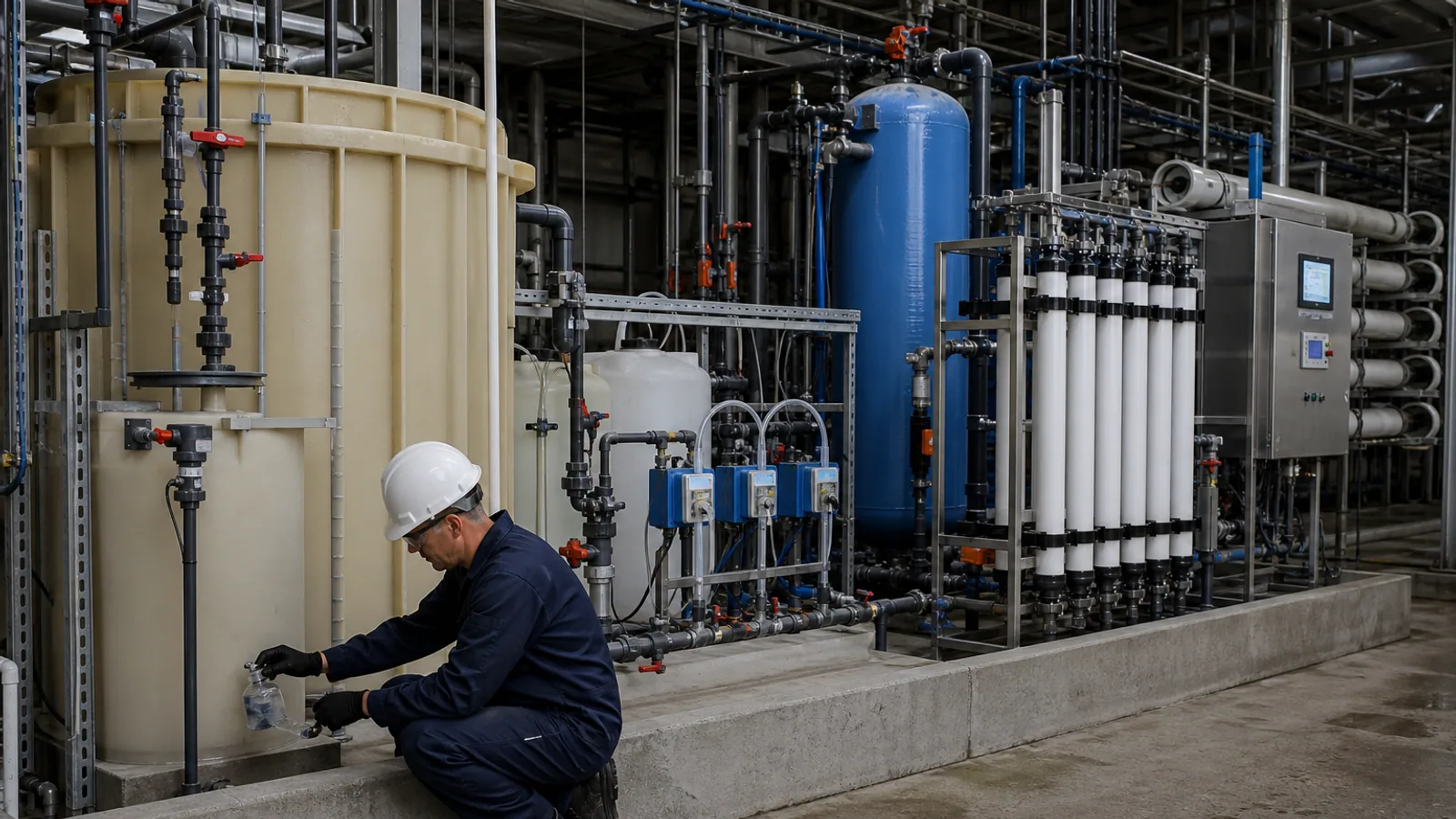
Pretreatment Before Reverse Osmosis
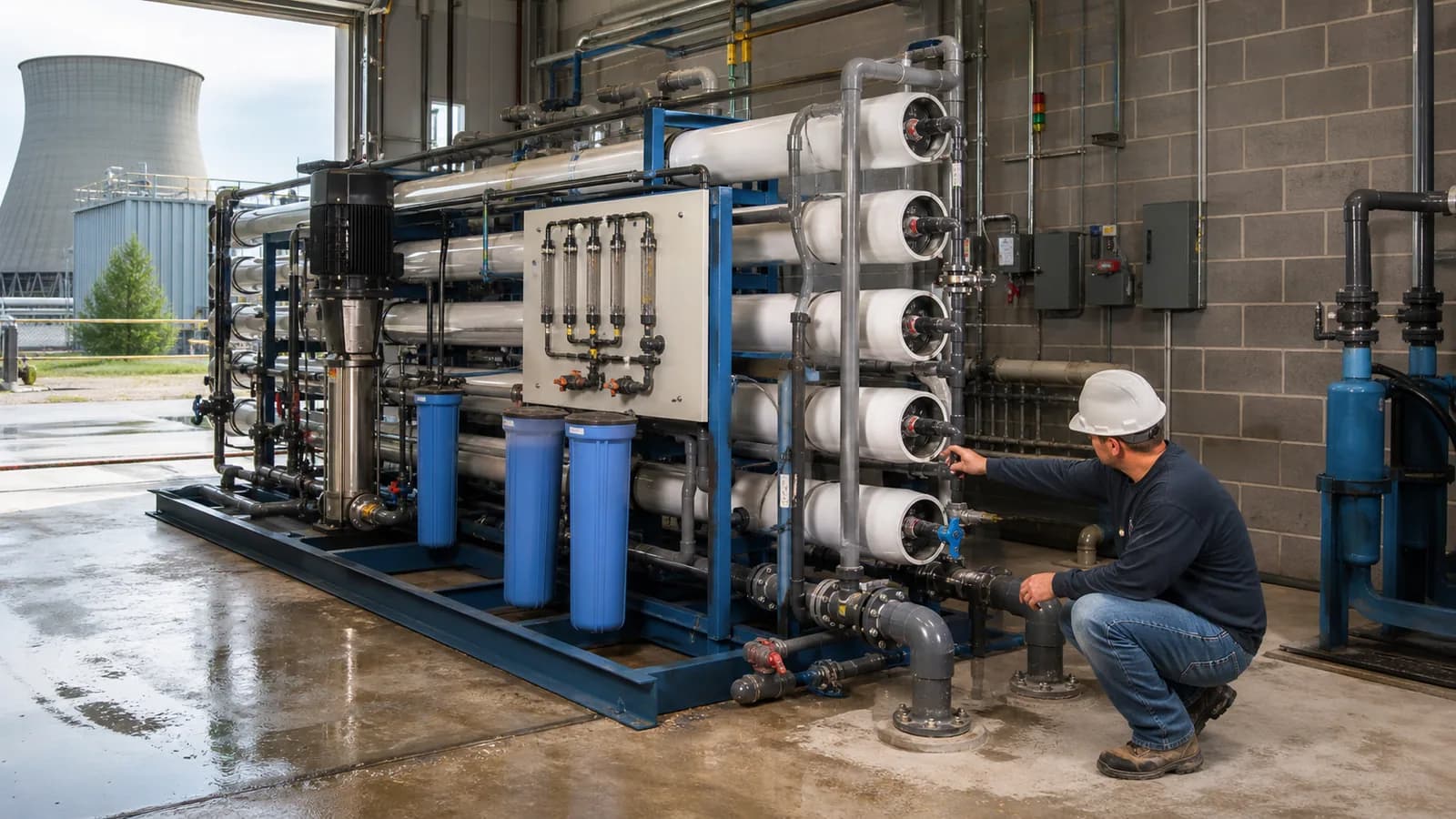
RO is frequently considered because it separates dissolved salts and produces a reusable permeate. Its feasibility depends on pretreatment and concentrate management.
Possible pretreatment roles
- equalization to stabilize flow and chemistry;
- oxidation or dechlorination as required by membrane compatibility;
- coagulation, clarification or filtration for suspended solids;
- softening for calcium, magnesium and selected scaling risks;
- silica-control strategy;
- activated carbon or biological treatment for organics where justified;
- ultrafiltration for stable particulate control;
- cartridge filtration and final chemical conditioning.
The treatment chemical programme matters. Some phosphates, polymers, dispersants and biocides can interfere with precipitation, media or membranes. The cooling-water chemical supplier and recovery-system designer should review compatibility together.
Softening may use lime, soda ash or another process selected from the actual chemistry. It creates sludge and may require recarbonation or pH adjustment. Ion exchange can be considered for specific hardness-control duties, but regeneration waste and resin fouling must be included.
Ultrafiltration can protect RO from suspended solids but does not remove dissolved hardness, silica or salts. A low turbidity value after UF does not prove that RO scaling risk is controlled.
How to Evaluate RO Recovery
RO recovery is the permeate flow divided by feed flow. A higher recovery reduces concentrate volume but increases the concentration of rejected salts near the membrane surface.
Do not set recovery from a competitor’s brochure or a generic range. Model the actual ionic analysis, temperature, pH, antiscalant strategy, membrane array, flux and concentrate saturation. Verify whether the limiting constituent is calcium carbonate, calcium sulfate, silica, another salt, organics or pressure.
The buyer should request:
- feed, permeate and concentrate flow;
- ion-by-ion mass balance;
- membrane model and array;
- design flux and temperature basis;
- operating and maximum pressure;
- pretreatment assumptions;
- scaling indices or saturation review;
- cleaning triggers and chemicals;
- expected replacement basis;
- permeate blending and storage;
- concentrate route.
RO permeate quality can vary with temperature, pressure, membrane age and feed composition. Performance conditions should be stated as an envelope, not one ideal number.
What to Do With RO Concentrate
Concentrate is not a minor waste stream simply because its flow is lower. It contains most of the rejected salts and may also contain treatment chemicals and residual organics.
Possible routes include:
- permitted discharge;
- blending with another approved stream;
- use in a compatible lower-quality application;
- further membrane concentration;
- chemical softening followed by additional recovery;
- evaporation or crystallization;
- another site-specific disposal route.
Each route needs a mass balance and regulatory review. Returning concentrate to the cooling tower can create a salt recycle loop unless there is a defined outlet. Sending it to an existing wastewater plant may exceed that plant’s TDS, sulfate or hydraulic capacity.
The industrial water-reuse feasibility guide and discharge, reuse or ZLD decision framework help structure this decision.
When Evaporation or ZLD Enters the Comparison
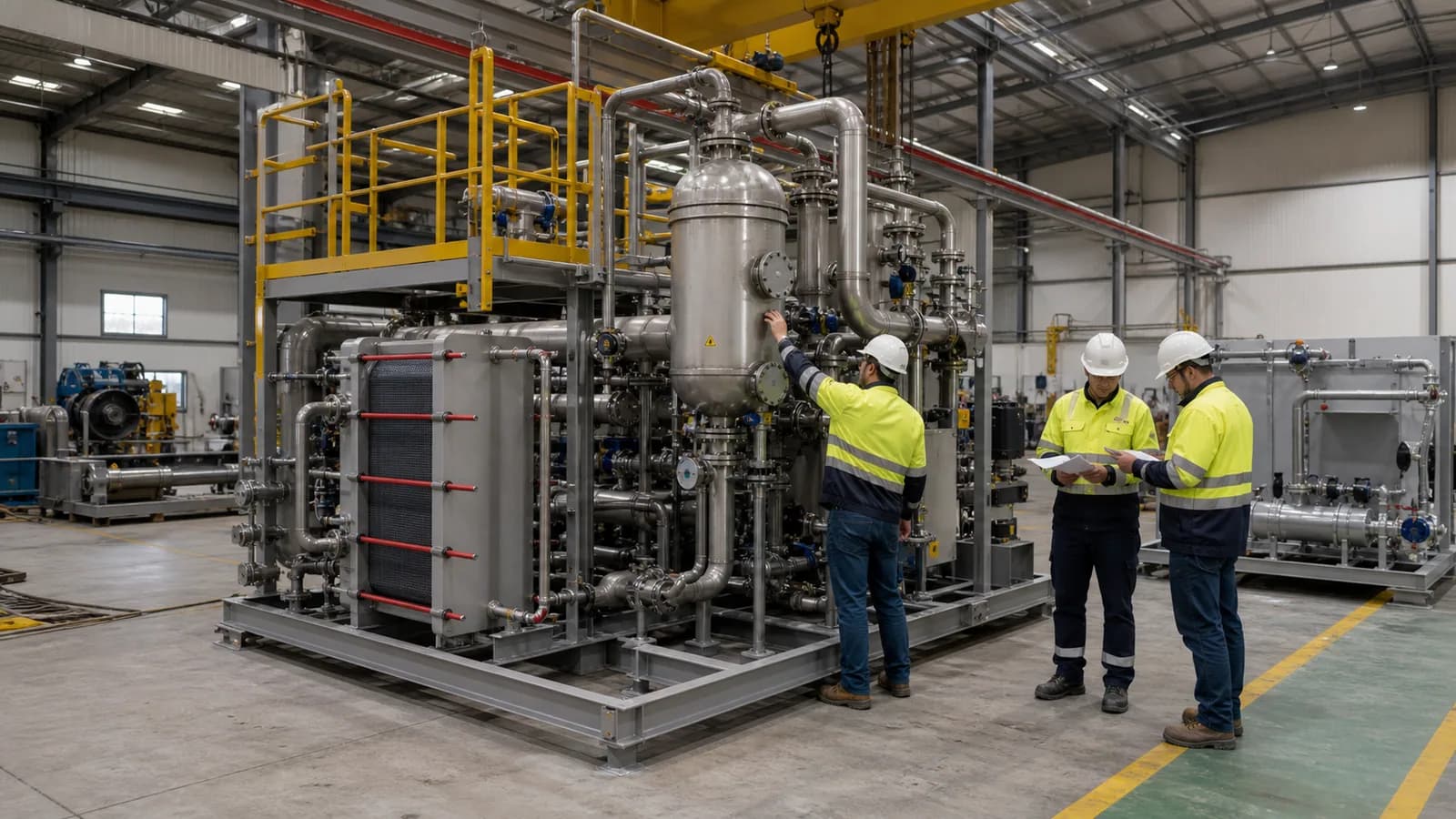
Thermal treatment is considered when liquid concentrate cannot be discharged, when the site has a ZLD objective, or when high recovery justifies the additional complexity. A complete ZLD route normally includes pretreatment, water recovery, brine concentration and final solids or residual management.
Evaporator selection depends on:
- concentrate chemistry and variability;
- scaling and crystallization tendency;
- organics, foaming and volatile compounds;
- target concentration or solids condition;
- steam, electricity, cooling water and heat availability;
- corrosion-resistant materials;
- cleaning and access;
- condensate quality and reuse destination;
- final salt, slurry or mixed-residual route.
Mechanical vapor recompression, multi-effect evaporation, forced circulation and other configurations have different utility and service requirements. The wastewater evaporator selection guide explains those differences.
ZLD should not be marketed as “no waste.” It replaces liquid discharge with recovered water plus solids, sludge, concentrate, cleaning waste and emissions or venting duties that must be managed.
Compare Four Practical Project Routes
| Project route | When to evaluate it | Main limitation to resolve |
|---|---|---|
| Operational optimization | Current cycles are low or blowdown control is poor | Safe chemistry limit and verified metering |
| Side-stream filtration or makeup improvement | Suspended solids or makeup quality limits cycles | Does not automatically solve dissolved-salt discharge |
| Pretreatment + RO reuse | A defined reuse sink exists and concentrate has an outlet | Scaling, fouling and concentrate management |
| RO + thermal concentration/ZLD | Concentrate discharge is restricted or very high recovery is required | Energy, materials, cleaning and final solids route |
These routes can be staged. A plant may first correct blowdown control, then pilot pretreatment and RO, and only add thermal concentration if the concentrate route requires it.
Testing and Pilot Work
Bench testing can evaluate softening, coagulation, filtration, adsorption or biological pretreatment. Membrane pilot work can investigate flux, pressure, rejection, cleaning and concentrate behaviour across actual operating conditions.
Testing should include the treatment chemicals present in real blowdown. A synthetic salt solution may be useful for one question but will not reproduce polymer, oil, dust or biofouling behaviour.
Pilot objectives should be measurable:
- confirm a pretreatment outlet range;
- establish softening dose and sludge production;
- compare membrane flux and cleaning frequency;
- identify the recovery-limiting constituent;
- generate concentrate for evaporation or residual tests;
- verify treated-water compatibility with the reuse destination.
Document which seasonal and operating conditions were tested. A successful pilot at one cycle of concentration does not prove performance at a higher, untested cycle.
Factory Testing and Shipment Inspection
Factory testing should verify the equipment scope and control sequence. For a pretreatment and RO package, inspect tanks, pumps, dosing systems, filters, membranes, instruments, valves, MCC/PLC, alarms, interlocks and documentation. Clean-water testing can confirm leaks, rotation and sequences but cannot prove blowdown recovery or permeate quality against untested feed.
For evaporator equipment, FAT should review dimensions, materials, welding or fabrication records as applicable, pumps, heat-exchange surfaces, instruments, control logic, vacuum or pressure functions where included, and maintenance access.
Shipment inspection should confirm membrane preservation, capped connections, protected instruments, transport bracing, loose items, lifting points, packing lists and container loading. Long storage or extreme transport temperatures may require additional preservation.
Installation and Commissioning Preparation
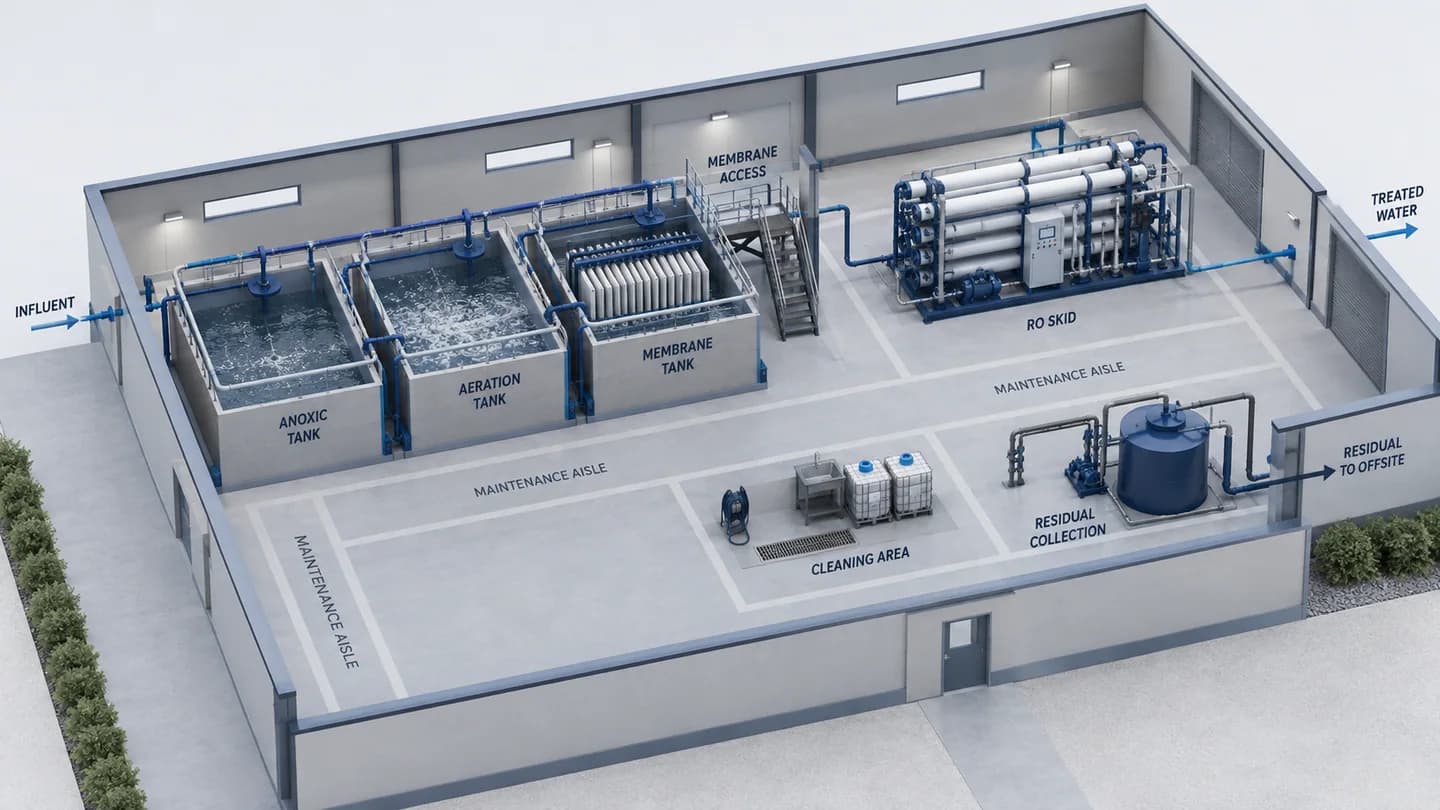
Prepare foundations, drainage, chemical storage, unloading access, lifting, maintenance clearances, power, compressed air, service water and communications. Confirm where softening sludge, filter backwash, membrane cleaning waste and concentrate will go from the first day of commissioning.
Commissioning requires coordination with tower operation. Define whether the recovery plant starts on real blowdown, stored water or prepared test water. Establish sampling methods, instrument calibration, permeate destination, concentrate outlet and the tower’s backup operating mode.
Performance acceptance should reference the agreed feed range, temperature, recovery, operating pressure, permeate sampling point, chemical use and pretreatment outlet. Allow adequate operating time to assess stable behaviour rather than accepting only a short clean-water run.
Cooling Tower Blowdown RFQ Checklist
Provide:
- Cooling-tower type, duty and operating schedule.
- Makeup, blowdown and recirculation flows.
- Current cycles and conductivity setpoints.
- Makeup, circulating-water and blowdown analyses.
- Seasonal temperature and chemistry ranges.
- Cooling-water treatment chemicals and dosing rates.
- Side-stream filtration and existing treatment.
- Heat-exchanger materials and cooling-water limits.
- Blowdown discharge limits and current route.
- Named reuse destination and required quality.
- Target recovery and plant availability.
- Concentrate, sludge and cleaning-waste routes.
- Plot, foundations, indoor/outdoor conditions and access.
- Electricity, steam, cooling water, air and chemicals.
- Factory testing, shipment, installation and commissioning scope.
FAQ
Should a plant treat blowdown or improve makeup water first?
Evaluate both. If poor makeup quality limits cycles, improved makeup treatment may reduce blowdown at the source. If the tower is already optimized and a reuse sink exists, blowdown treatment may recover more water. Compare the complete water balance and concentrate route.
What limits cooling tower cycles of concentration?
Makeup chemistry, scale formation, corrosion, suspended solids, biological control, treatment chemicals and equipment materials can all set the limit. Higher cycles should be established with the cooling-water specialist and verified operating data.
Can cooling tower blowdown go directly to RO?
Sometimes low-fouling water may need limited pretreatment, but many projects require solids control, chemical compatibility review, softening, organics control or dechlorination. Use the full analysis and membrane model rather than assuming direct feed.
What RO recovery is realistic for blowdown?
There is no universal recovery. The limit depends on the ionic balance, temperature, pH, silica, hardness, sulfate, organics, pretreatment, membrane array and concentrate outlet. Request a documented mass balance and scaling review.
Is ZLD always better than RO reuse?
No. ZLD can address a restricted concentrate outlet and achieve higher overall recovery, but it adds energy, materials, cleaning and solids-management duties. If RO concentrate can be responsibly managed, a reuse system may be simpler.
Can treated blowdown be returned to the cooling tower?
Yes, if the permeate or treated water is compatible with tower operation and the blending strategy is defined. Review alkalinity, corrosion control, treatment chemicals, storage and backup operation—not only conductivity.
Conclusion
Cooling tower blowdown treatment starts with operating data. Reconcile the water balance, verify cycles of concentration and correct uncontrolled losses. Then define the blowdown chemistry, reuse destination and concentrate outlet.
Operational optimization, side-stream filtration, makeup improvement, RO reuse and thermal ZLD solve different problems. The best project may use one of them or a staged combination. A defensible proposal states the chemistry limits, mass balance, residuals, testing basis, factory scope and commissioning conditions rather than promising a standard recovery percentage.
Send Your Cooling Tower Blowdown Requirements
Share the tower duty, measured makeup and blowdown flows, current cycles, makeup and blowdown analyses, treatment chemical programme, reuse target, concentrate route, available utilities and site layout. Baihuipu can identify the missing information needed before comparing pretreatment, RO reuse and thermal concentration routes.
CTA: Request a Blowdown Recovery Review
Technical reference notes
- U.S. Department of Energy: Best Management Practice #10 — Cooling Tower Management
- U.S. Department of Energy: Cooling Water Efficiency Opportunities for Federal Data Centers
- U.S. Department of Energy: Side Stream Filtration for Cooling Towers
- Lawrence Berkeley National Laboratory: Zero Liquid Discharge and Water Reuse in Recirculating Cooling Towers