Introduction
Industrial wastewater projects are often described with one broad instruction: “reduce discharge” or “reuse the water.” Those goals are useful, but they do not yet define a treatment route.
For some plants, a compliant discharge objective is the most practical starting point. For others, a defined reuse point can justify additional polishing and monitoring. In more constrained situations, concentration and zero liquid discharge (ZLD) may be reviewed as part of a broader residuals-management strategy. Each route has different assumptions, interfaces, and risks.
The most productive question is not “Which equipment is best?” It is: What must happen to each water stream and every residual after treatment? This guide provides a practical decision framework for buyers, plant teams, and EPC partners preparing an industrial wastewater project.
Define the End Point Before Selecting Equipment
Start by naming the intended end point for treated water. Common categories include:
- discharge to an agreed receiving route;
- reuse for a named non-critical process or utility use;
- reuse after additional polishing for a more demanding point of use;
- concentration of a difficult stream before off-site or further handling;
- a ZLD route in which recovered water and final residuals are both considered.
The end point should be expressed as a project requirement, not a generic marketing outcome. It may include a water-quality target, a monitoring approach, an operating boundary, and the organization responsible for the next stage. Local permits, customer standards, and receiving-party requirements must be confirmed by the project owner and relevant specialists.
Without a named end point, it is easy to specify equipment that addresses one part of the wastewater problem while leaving the actual destination unresolved.
Step 1: Map Wastewater Streams Before Combining Them
One factory can generate several different wastewater streams: process water, rinses, cleaning wastewater, utility blowdown, oily water, concentrate, or occasional batches. Their treatment requirements may not be the same.
A stream map should record:
- source process and operating schedule;
- average, peak, and batch flow;
- available analysis and expected variability;
- temperature, pH, salts, oils, solids, metals, organics, or other known concerns;
- whether the stream can be segregated, reused, equalized, or treated separately;
- the intended destination after treatment.
This map does not prescribe a process. It makes sure that engineering decisions are based on actual streams rather than one blended description that may hide critical conditions.
Step 2: Understand the Three Project Objectives
Discharge-focused treatment
A discharge-focused project is designed around the quality required at the agreed discharge boundary. The appropriate route depends on the contaminants, variability, receiving route, and local requirements. Treatment may still generate sludge, concentrate, spent media, or other residuals that need a defined management path.
Discharge can be a sensible objective when the receiving route is established, the treatment target is clear, and the project does not require recovered water for a specific internal use. It should not be treated as “simpler” by default: difficult chemistry, batch variability, or strict limits can still require a carefully controlled treatment train.
Water-reuse-focused treatment
Water reuse begins with the intended reuse point. Cooling make-up, washing, floor cleaning, process support, and higher-purity uses can have very different requirements. A reuse project should define the target quality at the point where water will actually be used—not only at the outlet of a treatment skid.
The route may need additional storage, distribution, monitoring, polishing, or controls beyond a discharge-focused system. It also needs a plan for off-spec water, maintenance periods, and any remaining concentrate or sludge. Reuse should be evaluated as an operating system, not just as a treatment claim.
Zero liquid discharge (ZLD)
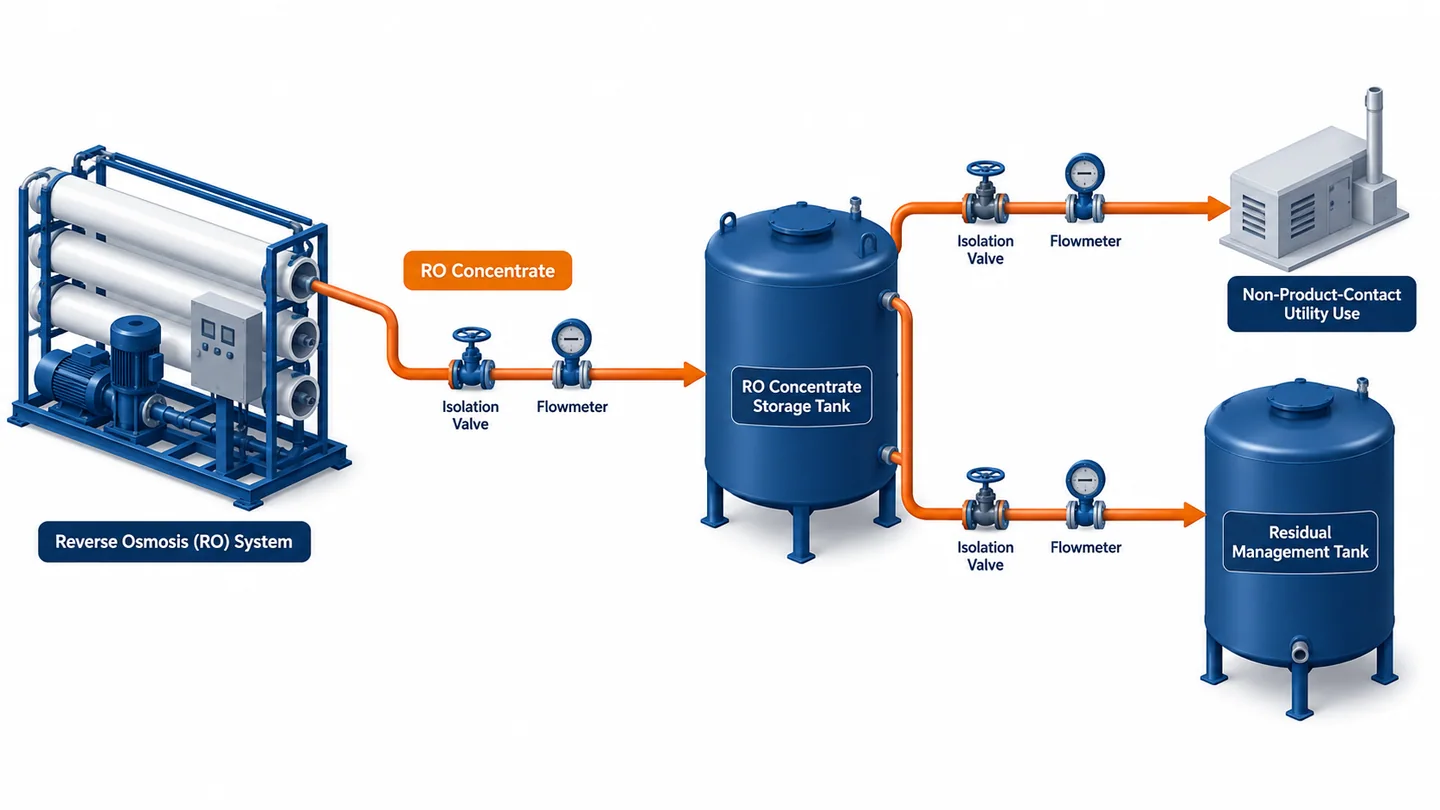
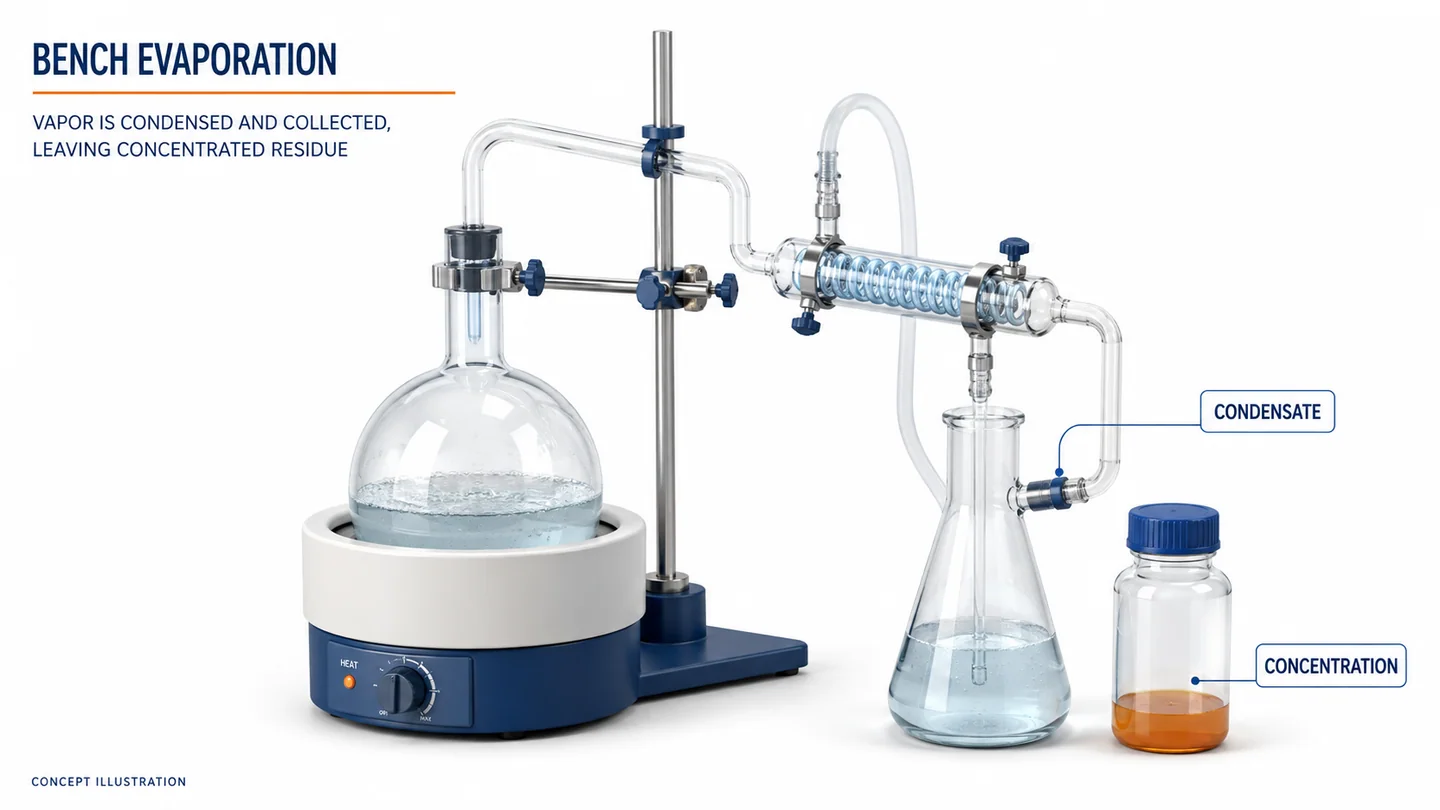
ZLD is a project objective in which the treatment route addresses both water recovery and the final handling of concentrated residuals. An evaporator can be part of a ZLD route, but an evaporator alone does not automatically define the whole system.
Before considering ZLD, clarify the stream composition, salt and organics profile, scaling or foaming risk, target recovery, available electrical power or steam, condensate destination, and final solids or concentrate route. The operating and residuals-management scope must be visible alongside the equipment scope.
Step 3: Compare Options on the Same Decision Criteria
The following questions help compare discharge, reuse, and ZLD without reducing the decision to one headline claim:
| Decision criterion | Discharge | Water reuse | ZLD |
|---|---|---|---|
| Primary objective | Meet an agreed discharge boundary | Supply water to a named reuse point | Recover water while managing final residuals |
| Most important starting input | Receiving requirement and wastewater analysis | Reuse-point quality and demand profile | Brine chemistry, utilities, recovery target, and residuals route |
| Typical additional project questions | Sludge and discharge-monitoring responsibilities | Storage, distribution, monitoring, and off-spec handling | Energy, scaling, concentrate/solids handling, and operating complexity |
| Common scope risk | Assuming the outlet route is already resolved | Treating “reuse” as one universal quality target | Treating one thermal unit as the complete residuals solution |
This table is a planning aid, not a process guarantee. A final selection needs project-specific water data, operating requirements, site interfaces, and confirmed scope.
Step 4: Make Residuals Visible Early
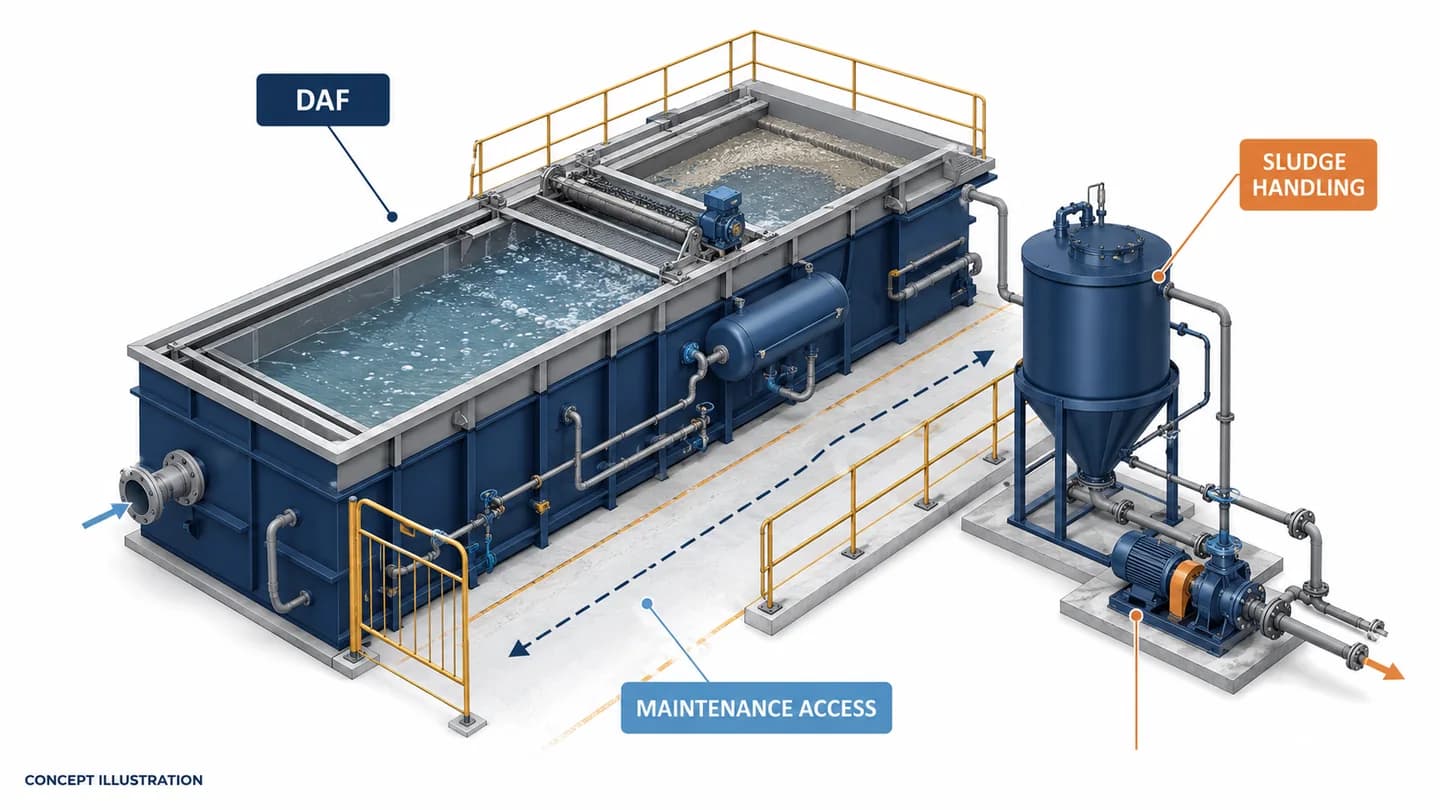
Every treatment route produces decisions beyond treated water. Depending on the process, these may include sludge, spent chemicals, backwash water, concentrate, off-spec water, or crystallized solids.
Buyers should ask early:
- What residual streams are expected within the proposed scope?
- Who is responsible for collection, storage, classification, transport, or onward handling?
- Which residuals remain on site, and which require a third-party route?
- What information is needed to assess compatibility, safety, or disposal responsibility?
Leaving these questions until equipment delivery creates avoidable uncertainty. A responsible proposal should identify the assumed residuals boundary even when final downstream arrangements are managed by the customer or another contractor.
Step 5: Check the Site and Utility Boundary
The treatment objective must fit the available site. A route can be technically possible yet unsuitable if space, drainage, power, steam, cooling, ventilation, lifting access, or operator support have not been considered.
For reuse and ZLD projects, utility availability may be especially important. The project team should define what is available, what is reliable, and what is outside the supplier’s scope. For international delivery, the same conversation should include shipping format, local installation responsibility, commissioning interfaces, and document requirements.
Common Decision Errors
Starting with a preferred technology
Selecting an RO, MBR, evaporator, or ZLD label before defining the water destination can narrow the discussion too early. Technologies should be reviewed against the treatment objective and the stream characteristics they are expected to handle.
Treating all wastewater as one stream
Blending can make some collection systems simpler, but it can also increase treatment complexity or obscure safety and compatibility concerns. Review segregation before the final process boundary is fixed.
Calling a discharge-quality outlet “reuse-ready” without a reuse point
Water that is acceptable for one destination may not be suitable for another. Reuse should always name the intended use, required quality, storage and distribution conditions, and response to off-spec water.
Assuming ZLD eliminates all downstream responsibility
ZLD changes the treatment and recovery route; it does not remove the need to define residuals management, utilities, maintenance, and operating responsibilities.
Information to Prepare Before an Engineering Review
For a focused preliminary discussion, prepare:
- a simple stream map and production schedule;
- water analyses, sampling dates, and known variability;
- average, peak, and batch flow information;
- current and intended destination for each stream;
- defined reuse point, if reuse is being considered;
- available utilities and installation constraints;
- known requirements for sludge, concentrate, or solids handling;
- required documents, factory testing, delivery, and commissioning expectations.
If an item is unknown, identify it as an open point. A transparent list of open questions is more useful than an assumed treatment target.
Frequently Asked Questions
Is water reuse always better than discharge?
Not necessarily. Reuse should be evaluated against a defined reuse point, required quality, operating demand, monitoring needs, site conditions, and residuals route. In some projects, a discharge-focused objective may be more appropriate.
Does an evaporator automatically provide ZLD?
No. An evaporator may be one part of a concentration or ZLD route. The full project also needs a plan for pretreatment, condensate destination, utilities, concentrate or solids, and operating responsibility.
Can one factory use different objectives for different streams?
Potentially, yes. A project may manage streams differently when their quality, quantity, reuse potential, or treatment risk differs. Stream segregation and the final route should be confirmed by the engineering review.
What data is needed before evaluating ZLD?
Start with representative water analysis, flow and variability, concentration target, scaling or foaming concerns, available power or steam, condensate destination, and the intended route for final residuals.
Can a supplier decide the discharge requirement for us?
The project owner should confirm the applicable discharge or reuse requirement with the responsible local parties and specialists. A supplier can use the confirmed target as an engineering input, but should not replace the owner’s regulatory determination.
Conclusion
Discharge, water reuse, and ZLD should be considered as different project objectives with different treatment boundaries. The best starting point is a clear stream map, a named water destination, realistic flow and water-quality data, and an explicit residuals and utilities boundary.
When those inputs are visible, the technical discussion can move from a generic equipment request to a practical project route. This improves the quality of supplier proposals and makes it easier to compare process scope, testing, delivery, installation, and long-term operating responsibilities.