Industrial process-water production where dissolved solids must be reduced from a defined feed-water source
Industrial water treatment · Project-specific configuration
Industrial Reverse Osmosis (RO) Systems
Reverse-osmosis systems configured around real feed-water conditions, required product-water quality, recovery objectives, and concentrate management.
Direct answer: Baihuipu configures industrial reverse osmosis systems for process water, boiler make-up, and reuse-water polishing around the confirmed feed-water analysis, required product-water quality, recovery objective, concentrate route, and operating conditions. Pretreatment and final polishing are selected only where the project data supports them.
Configuration starts with water data, the treatment target, and site conditions.
Not sure which system you need? Ask About System Selection →
01
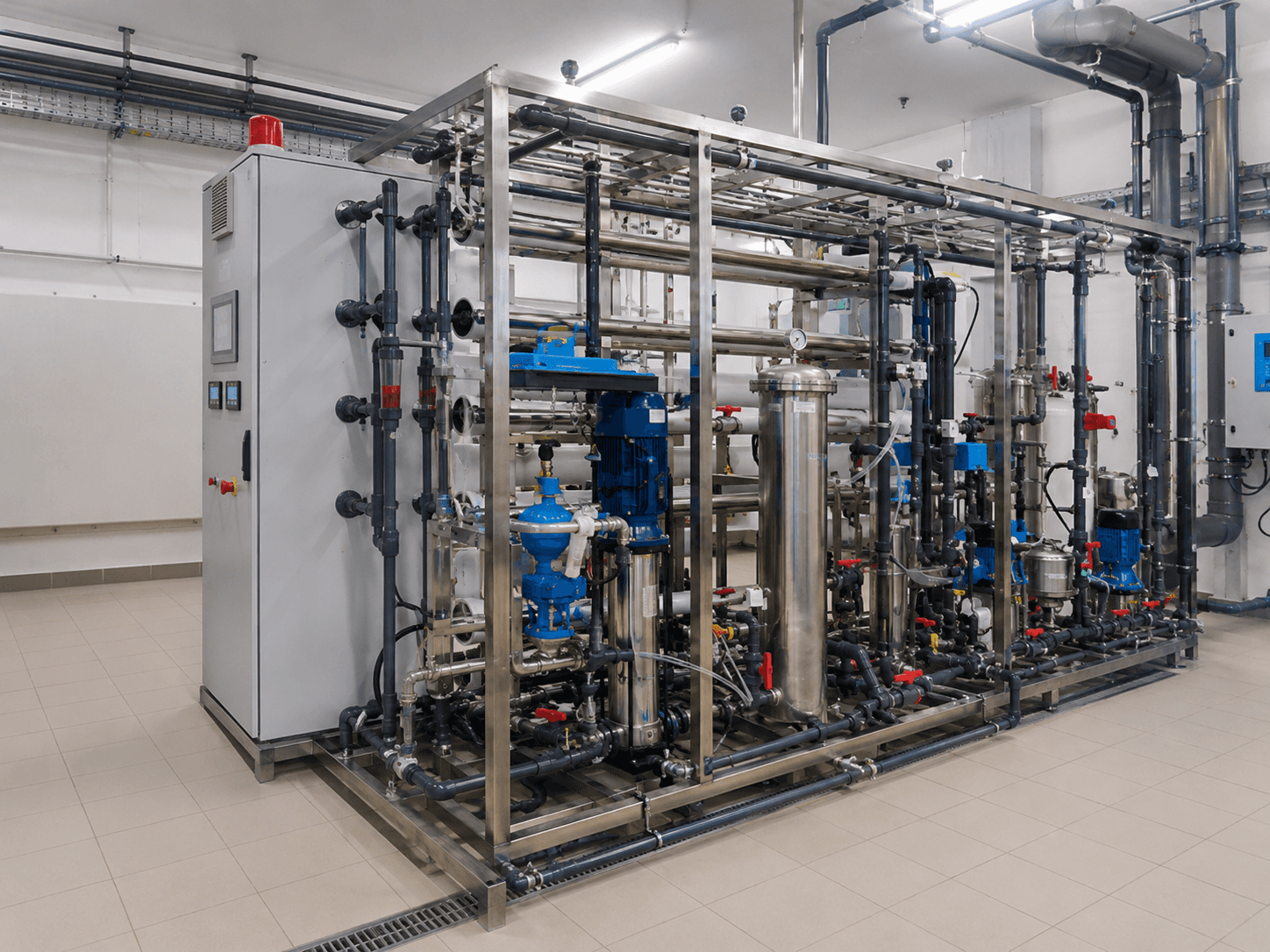
Desalting starts with feed-water evidencePretreatment, RO arrangement, recovery, storage, and any polishing stage follow the confirmed water and point-of-use target.
Buyer fit
When This System Should Be Evaluated.
Use these application boundaries as a screening guide. Final suitability still requires representative water data and an agreed treatment objective.
Boiler make-up, utility water, manufacturing process water, or reuse-water polishing with a confirmed quality target
Projects requiring RO as the primary desalting stage without automatically assuming EDI or ultrapure-water polishing
Facilities able to define feed-water quality, demand profile, concentrate management, utilities, and point-of-use requirements
System value
Industrial RO Without Assuming an Ultrapure-Water Scope.
Industrial RO is configured as a practical desalting stage for process water, boiler make-up, utility duties, or reuse-water polishing. Additional purification stages are included only when the required water quality calls for them.
Defined water-quality target
Configure desalting around the product-water requirement at the actual point of use.
Pretreatment matched to risk
Address fouling, scaling, oxidation, solids, and biological risks from the feed water instead of applying a fixed sequence.
Concentrate-aware design
Include recovery and the concentrate route in the project water balance before equipment scope is confirmed.
Selection basis
What Defines the Right Configuration.
Capacity, materials, utilities, automation, and guaranteed performance are confirmed against these project inputs—not assumed from a generic model.
| Decision input | What the technical review needs |
|---|---|
| Feed-water basis | Source, full ion analysis, turbidity or SDI where available, organics, iron or manganese, hardness, silica, temperature, and variation |
| Required water at use point | Required product-water parameters, flow, peak demand, storage, distribution, and measurement location |
| Recovery and concentrate route | Recovery objective, concentrate composition, discharge or further-treatment path, and applicable operating constraints |
| Operating and delivery scope | Operating schedule, utilities, cleaning strategy, monitoring, redundancy, footprint, destination country, and supply boundaries |
Typical treatment route
From Feed-Water Analysis to a Practical RO Scope.
The RO system route is selected after the incoming water, target quality, demand profile, and concentrate constraints are visible.
Feed-water review
Confirm source, ion analysis, solids or SDI, hardness, silica, oxidants, organics, temperature, and variation.
Pretreatment selection
Control the specific fouling, scaling, oxidation, or solids risks that matter for the chosen membranes and recovery target.
RO desalting
Configure pumps, membranes, instrumentation, flushing, cleaning interfaces, and product-water transfer for the agreed duty.
Product and concentrate management
Confirm storage, distribution, monitoring, point-of-use quality, and the concentrate treatment or discharge route.
Relevant project context
Selected Anonymous Project Records.
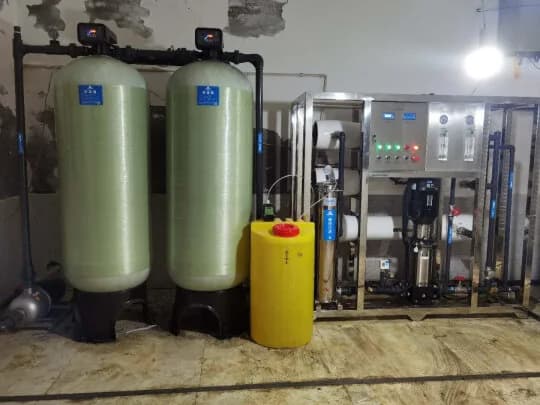
These records help buyers understand comparable water types and scales. They are not a promise that another project will use the same process or achieve the same result.
Pure-water production
Pretreatment, two-pass RO, EDI, and a final demineralization stage are recorded in the project data.
Pure-water production
Two production capacities are recorded for the project; final equipment arrangement remains project-specific.
Integrated plant water-management scope
An ultrapure-water package was recorded as one part of a wider plant water-management project.
Continue your evaluation
Related Buyer Guides and Applications.
Use these linked resources to confirm the next technical question before defining a project-specific equipment scope.
Prepare a useful RFQ
Send the Data That Changes the Design.
A quotation becomes more reliable when the design basis and project boundaries are visible from the start.
Send Your RequirementsFull feed-water analysis and source description
Required product-water parameters and measurement point
Normal and peak flow, operating schedule, and demand profile
Pretreatment history or known fouling, scaling, oxidation, and biological risks
Recovery target and concentrate route
Storage, distribution, utilities, footprint, monitoring, redundancy, and supply boundaries
Buyer FAQ
Questions to Resolve Before Selection.
These answers define the decision process without turning project-specific values into universal specifications.
What is the difference between an industrial RO system and an ultrapure-water system?
Industrial RO is typically the main desalting stage for defined process-water, boiler, utility, or reuse-polishing duties. An ultrapure-water system may add second-pass RO, EDI, deionization, final polishing, and tighter point-of-use controls when the required water quality calls for them.
What pretreatment is needed before industrial RO?
Pretreatment is selected from the actual feed-water risks. It may include screening, clarification, media filtration, ultrafiltration, softening, dechlorination, antiscalant dosing, pH adjustment, and cartridge filtration, but no single sequence fits every feed water.
How should RO concentrate be managed?
The concentrate flow and composition should be included in the project water balance. Its discharge, reuse, further treatment, evaporation, or other lawful route must be defined before the system scope is finalized.
What information is needed for an industrial RO quotation?
Provide a representative feed-water analysis, required product-water quality, flow profile, operating schedule, recovery objective, concentrate route, site utilities, and the needed supply and installation boundaries.
Are recovery and product-water quality fixed catalogue values?
No. Both are defined from the feed-water analysis, membranes, pretreatment, temperature, operating profile, concentrate constraints, and approved project design basis.
Company context
Engineering and Manufacturing in Dongguan.
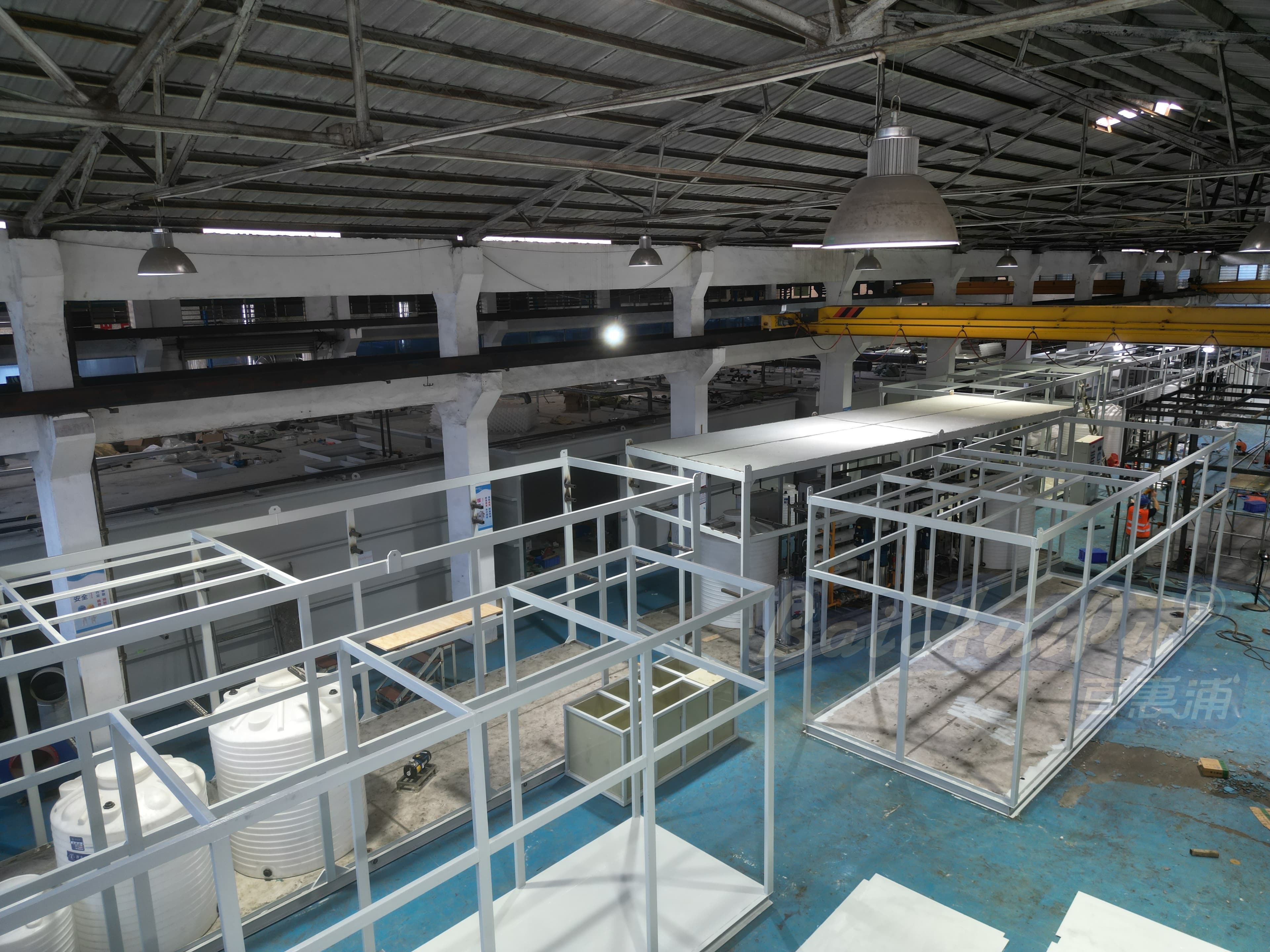
Guangdong Baihuipu Environmental and Energy Conservation Development Co., Ltd. was established in 2007 and integrates R&D, manufacturing, and sales.
- 150+ employees and 50 technical professionals
- Factory workshops and a wastewater laboratory shown in company materials
- Project references across multiple international markets
Discuss your requirement
Turn Your Project Data into a Clear Technical Scope.
Send your feed-water analysis, required product-water quality, flow profile, and concentrate route for an industrial RO system review.