Introduction
Overseas buyers often see skid-mounted and containerized water treatment systems described as if they are interchangeable. They are related modular approaches, but they solve different project constraints.
Both can reduce on-site fabrication, improve factory assembly coordination, and simplify equipment packaging. The key question is not which product name sounds more complete. It is which format provides the clearest route from factory assembly and shipment inspection to unloading, utility connection, commissioning, and long-term maintenance.
What Is a Skid-Mounted Water Treatment System?
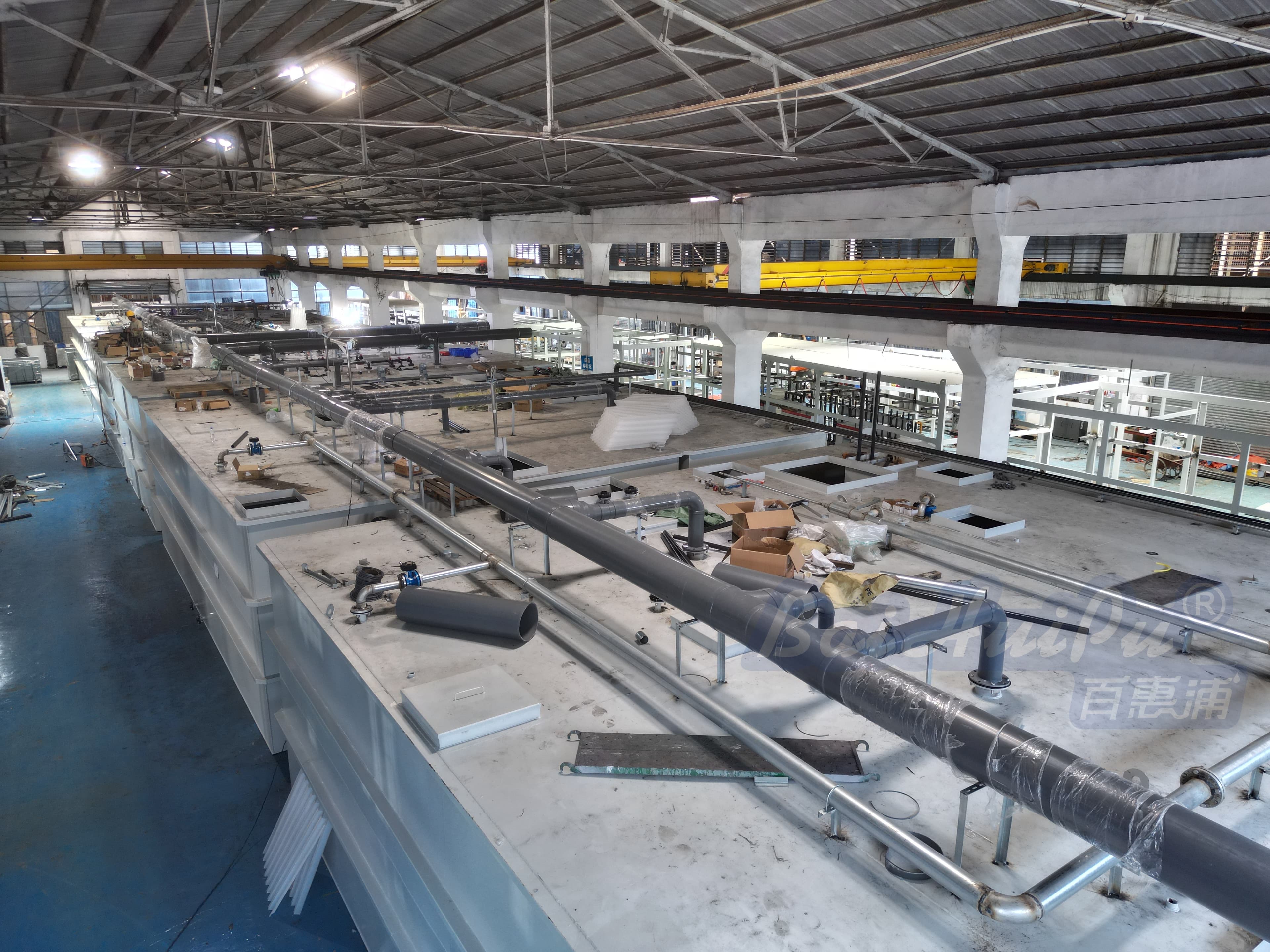
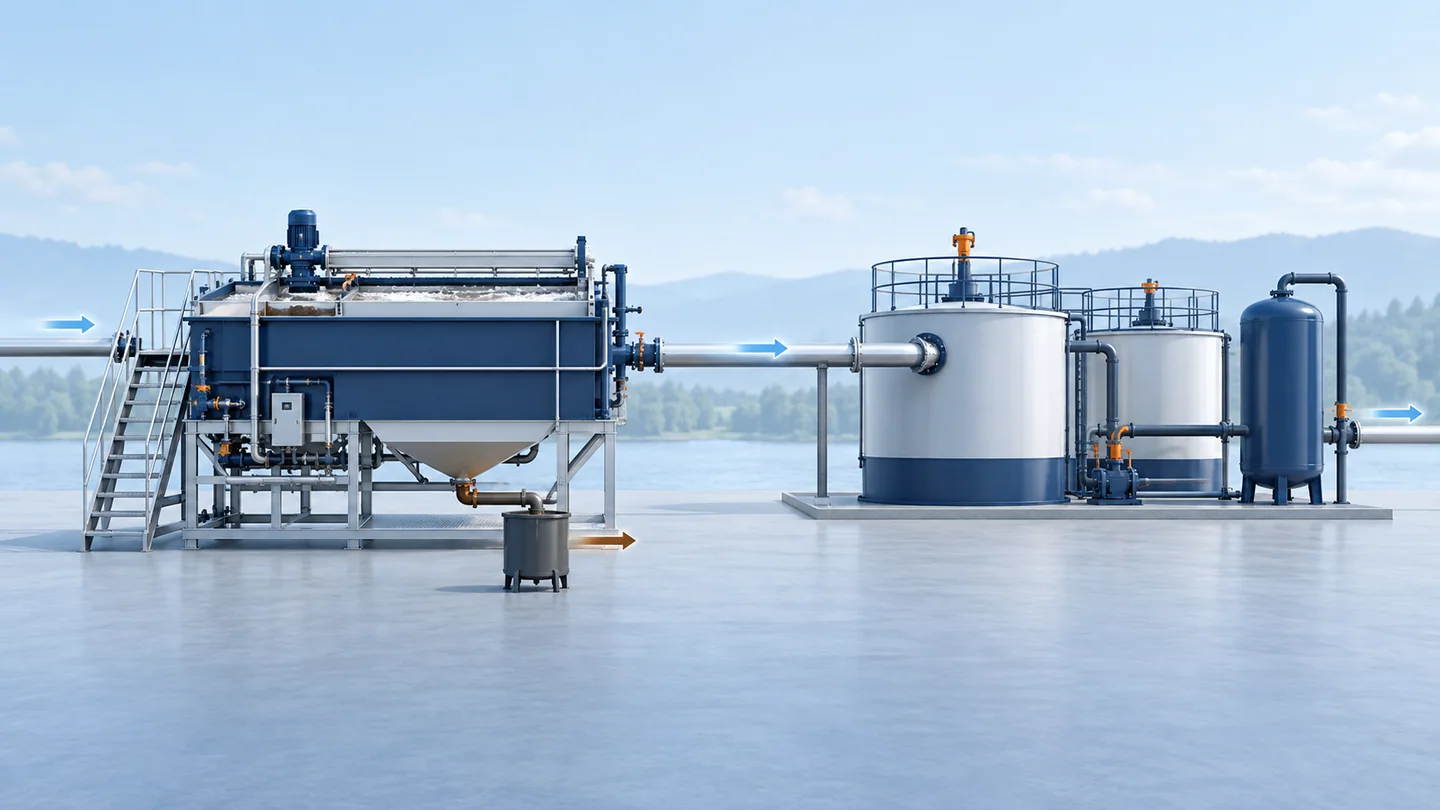
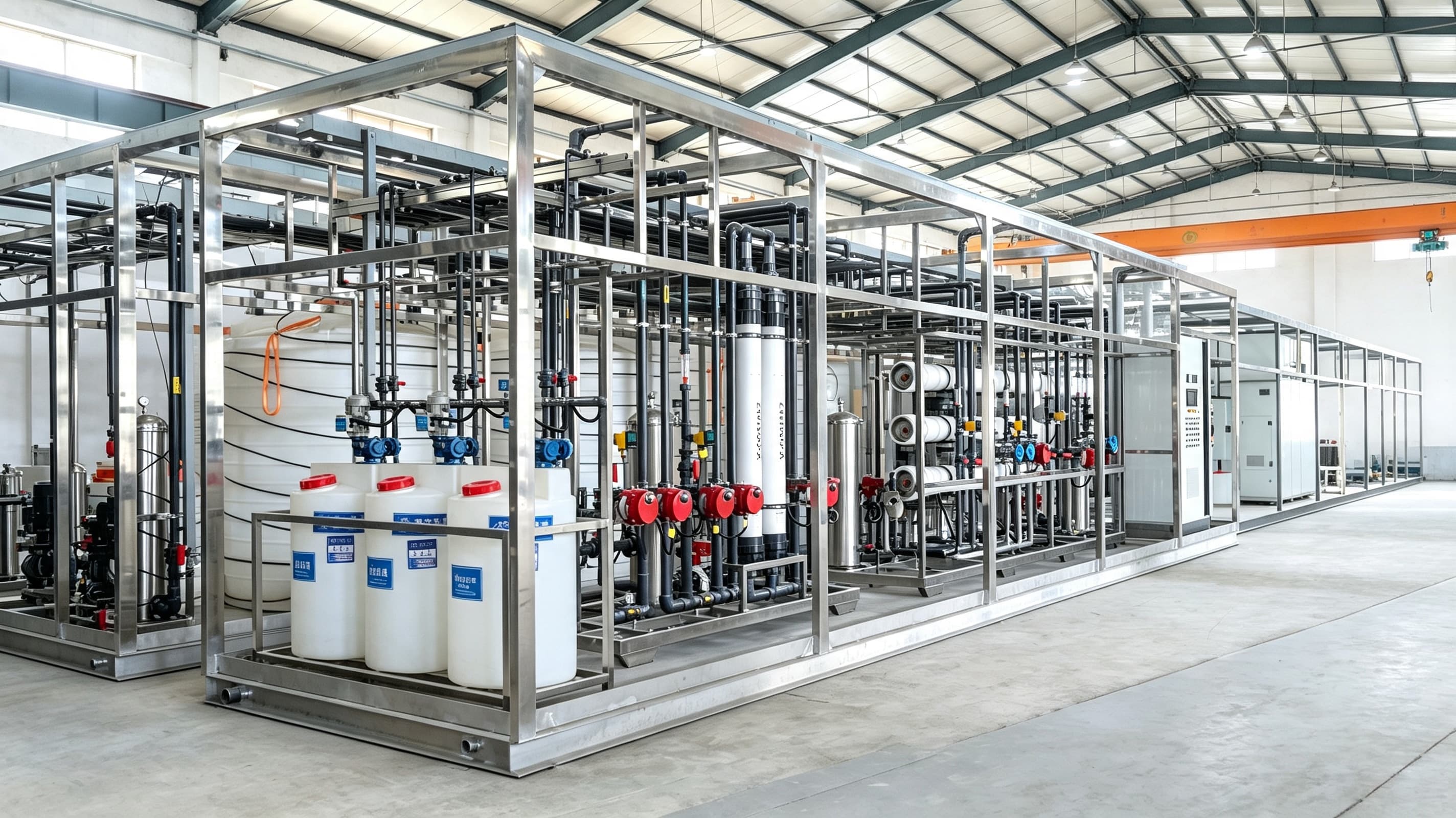
A skid-mounted package groups pumps, filters, vessels, membrane housings, dosing equipment, piping, valves, instrumentation, and controls on a common structural base. It may be installed inside a plant room, under a site-provided shelter, outdoors with suitable protection, or within a larger customer-built enclosure.
Tanks may be mounted on the skid, installed beside it, or supplied as separate modules. This arrangement is often useful when a project needs custom dimensions, good maintenance access, integration into an existing building, or a process package that is too large for one container.
Baihuipu's supplied company brochure documents skid-mounted configurations for wastewater treatment, pure-water, and evaporation equipment. The final package format should still be confirmed against each project's transport and site conditions.
What Is a Containerized Water Treatment System?
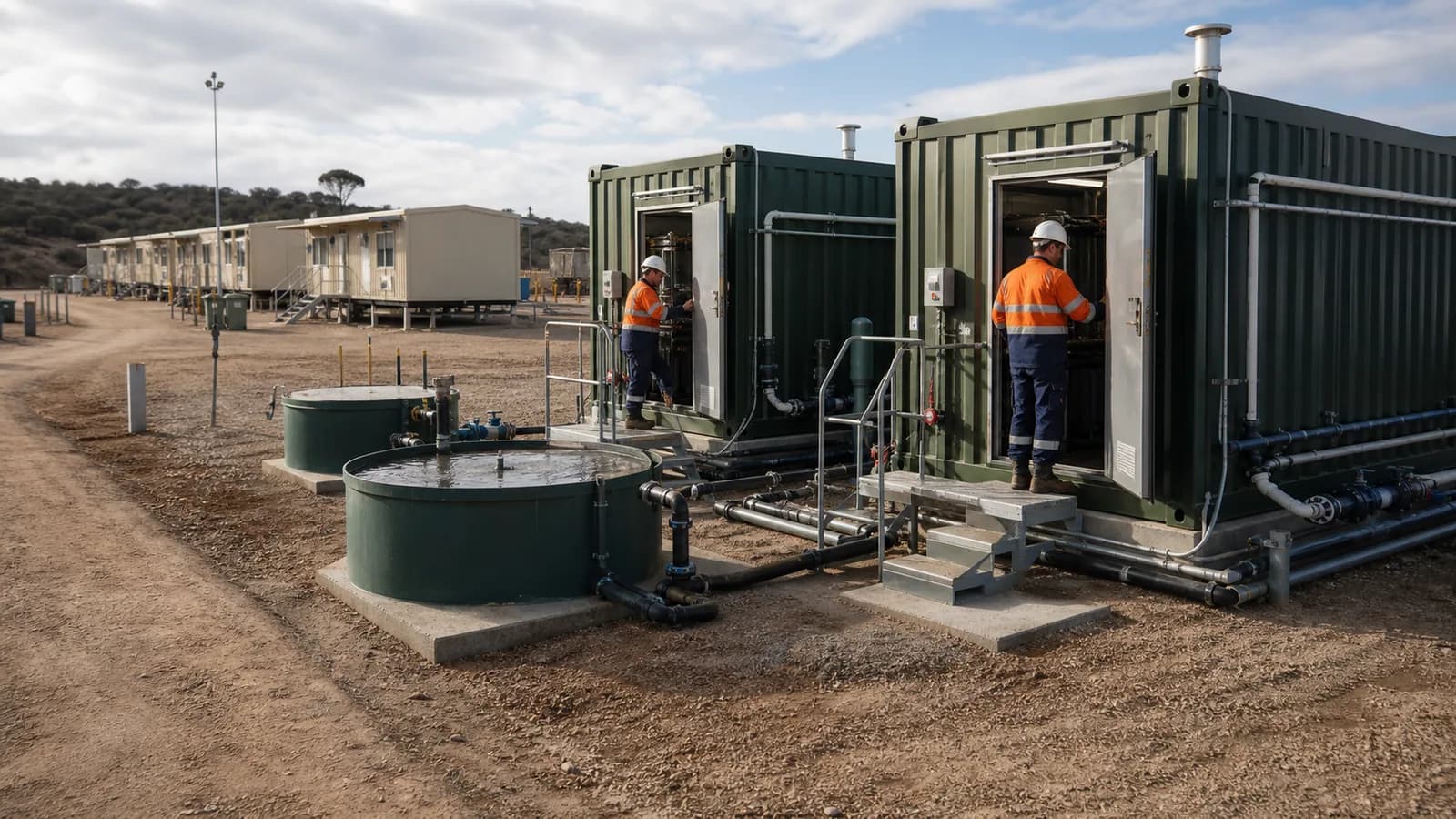
A containerized system places equipment inside, or integrates it with, a shipping-container-based enclosure. The container can provide transport protection and may serve as the equipment room at the final site.
This format can be useful when a project needs an enclosed package, weather protection, controlled access, a standardized shipping envelope, or relocation potential. It does not eliminate site work. The customer still needs a suitable foundation, lifting plan, power supply, incoming water, drainage, ventilation, chemical-storage planning, and outlet connections.
Key Differences
| Decision area | Skid-mounted system | Containerized system |
|---|---|---|
| Enclosure | Usually site-provided or separately designed | Enclosure is usually integrated with the package |
| Layout flexibility | High; can fit plant-specific dimensions | Limited by container dimensions and access points |
| Transport protection | Requires appropriate export packing | Container provides additional enclosure protection |
| Maintenance access | Can be planned around the equipment | Must be designed within doors, aisles, and container clearance |
| Site work | May need a plant room or outdoor shelter | May reduce enclosure work but still needs foundation and utilities |
| Relocation | Depends on module size and connections | Often suitable when relocation is a clear project requirement |
Five Questions That Decide the Right Format
1. What is the treatment process?
A compact filtration or RO system may fit comfortably in a container. A wastewater treatment plant with equalization, chemical storage, clarification, sludge handling, or large evaporation equipment may require multiple skids, separate tanks, site piping, or a hybrid arrangement.
Do not choose an enclosure before reviewing the process flow, tank volume, pipe routing, operator access, and maintenance needs.
2. What is the shipping route?
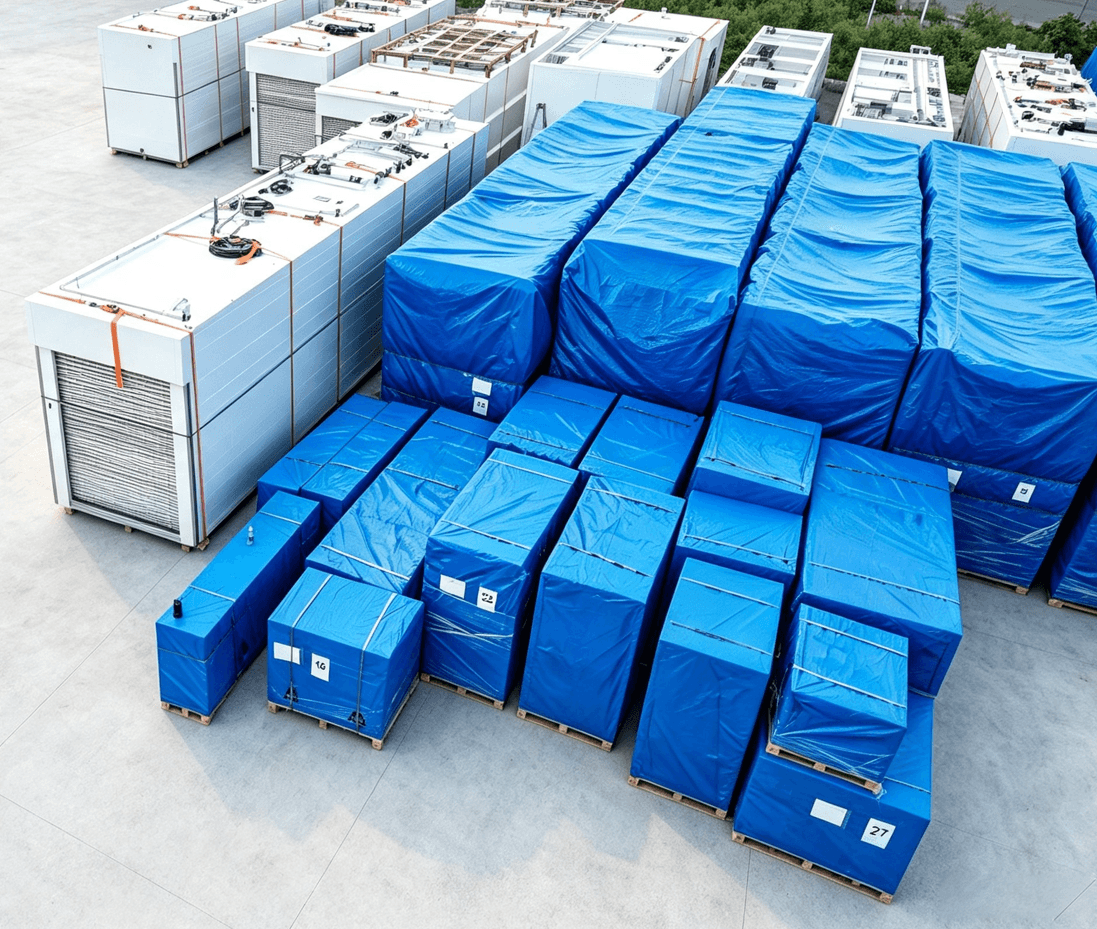
Confirm the port, inland road route, maximum module dimensions, lifting equipment at destination, transport restrictions, export packing requirement, corrosion protection, and documentation needed for import. A compact factory layout is not practical if the package cannot safely move from the port to the final site.
3. What is the installation environment?
Consider whether the system is installed indoors, outdoors, in a hot and humid climate, a cold climate, a corrosive environment, a remote site, or beside an operating production line.
Containerized packages may require ventilation, lighting, drainage, HVAC, electrical protection, and safe maintenance access. Outdoor skids may require weather protection, insulation, heat tracing, or a suitable shelter depending on local conditions.
4. Who will operate and maintain the system?
A compact package is not automatically easy to maintain. Operators require safe access to pumps, filters, membranes, valves, dosing points, electrical panels, sample points, and instruments. Layout drawings should show panel clearance, door swing, service aisles, removal paths for major components, chemical-handling space, and drains.
5. What does the site scope include?
Clarify whether the supplier provides only treatment equipment, or also tanks, container or enclosure, internal lighting and ventilation, field piping, electrical cabling, civil foundation, installation supervision, commissioning, and training.
Two quotations described as "containerized" can include very different boundaries. Scope definition is especially important in international projects.
A Recommended International Project Workflow
Confirm the technical basis
Define influent water data, flow, treatment target, utilities, installation environment, destination country, and documentation needs. For wastewater projects, also confirm whether the result is discharge, reuse, concentration, or a combined route.
Review the preliminary layout
Ask for a general arrangement showing equipment location, module dimensions and weight, connection points, operator access, maintenance clearances, lifting points, and the electrical panel position. Check it against the real site, access route, and utility locations.
Freeze interfaces before fabrication
Confirm incoming power, piping connections, drains, vents, chemical storage, foundation arrangement, and battery limits before fabrication begins. Unresolved interfaces are a common source of delays after shipment.
Conduct factory testing and shipment inspection
A factory acceptance plan may include configuration checks, control-sequence verification, alarm and instrument checks, clean-water functional testing when appropriate, drawings, manuals, and packing review. A shipment inspection should verify the approved equipment, accessories, spare parts, documentation, export packing, transport dimensions, and lifting preparation.
Prepare the site before delivery
Confirm unloading equipment, foundation readiness, utilities, drainage, site access, and storage conditions. For a containerized package, establish the final orientation before it is connected. For a skid package, confirm whether it will be lifted as one module or several.
FAQ
Is a skid-mounted system the same as a containerized system?
No. A skid-mounted system is equipment assembled on a structural base. A containerized system uses a container-based enclosure. A container may contain one or more skids, but not every skid is containerized.
Which format is better for export?
Neither format is automatically better. Containerized packages can provide a protected, enclosed transport format, while skid packages can offer greater layout flexibility. The best choice depends on process, route, dimensions, and installation conditions.
Can a containerized system be installed outdoors?
Yes, if its design addresses climate, ventilation, drainage, electrical protection, corrosion protection, and service access. These conditions should be confirmed before fabrication.
What should be checked before shipment?
Confirm the FAT scope, equipment list, approved drawings, shipping dimensions, weight, lifting points, packing list, manuals, spare parts, export packing, and destination-site readiness.
Conclusion
Skid-mounted and containerized systems are both practical modular delivery methods. The best choice is determined by the actual process, shipping route, site constraints, and maintenance requirements. A well-prepared project makes the technical basis, physical layout, factory testing plan, shipment inspection, and installation interfaces clear before manufacturing begins.