- Plant owners and facility teams
- Engineering and technical teams
- EPC contractors and project integrators
- Procurement teams evaluating treatment scope
Centralized industrial wastewater & reuse
Industrial Park & Centralized Wastewater Treatment Solutions
Centralized industrial wastewater treatment, water-reuse and residuals-management planning for industrial parks and multi-tenant manufacturing sites with variable contributing streams.
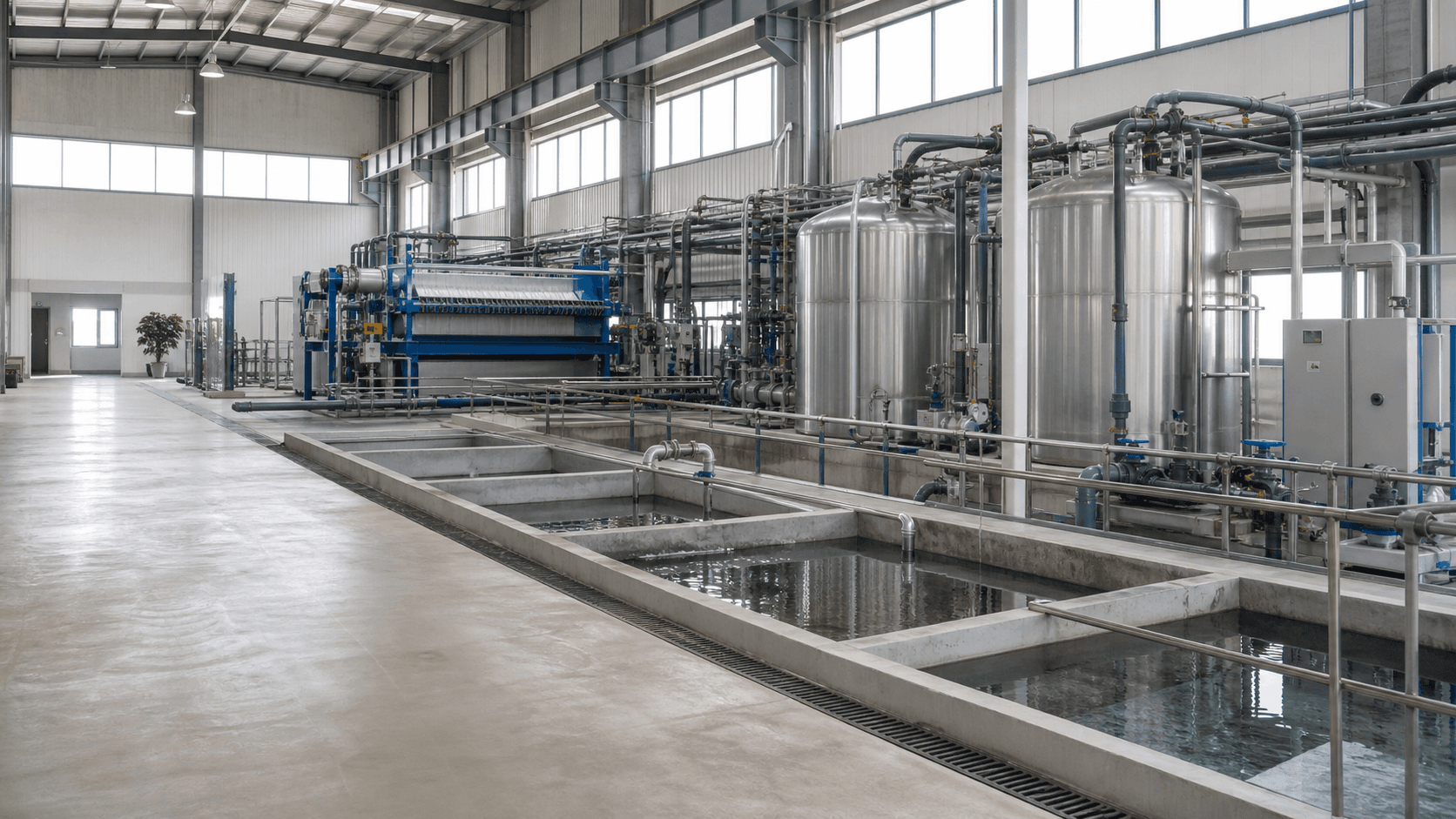
Direct answer
What Usually Defines the Treatment Route?
Centralized industrial wastewater treatment begins with an influent-control strategy, not a single average analysis. Different tenants, production schedules and chemical inventories can create incompatible or intermittent wastewater. The treatment system, monitoring points, emergency holding, sludge route and reuse objective should be defined around the actual park acceptance rules and contributing streams.
- Park location, industries and project stage
- Tenant process list and wastewater-source inventory
- Influent analyses, including normal and high-load conditions
- Multi-tenant source control
- Centralized treatment
- Reuse and residuals planning
- Industrial Wastewater Treatment Systems
- Industrial Water Reuse Systems
- Wastewater Evaporators
Confirm equipment, materials, capacity and performance targets from representative water data, site conditions and the agreed project scope.
Applications covered
Where This Industry Solution Applies.
Use the closest application as a starting point. The treatment route still depends on the actual water source and project target.
Manufacturing Industrial Parks
Confirm the wastewater sources, flow profile, water analysis and required treatment target for this application.
Electroplating Clusters
Confirm the wastewater sources, flow profile, water analysis and required treatment target for this application.
Chemical Industry Parks
Confirm the wastewater sources, flow profile, water analysis and required treatment target for this application.
Textile and Dyeing Parks
Confirm the wastewater sources, flow profile, water analysis and required treatment target for this application.
New-Energy Manufacturing Parks
Confirm the wastewater sources, flow profile, water analysis and required treatment target for this application.
Shared Utility and Reuse Facilities
Confirm the wastewater sources, flow profile, water analysis and required treatment target for this application.
Buyer-critical conditions
Issues to Resolve Before Equipment Selection.
These conditions influence process reliability, operating workload, footprint and the treatment boundary.
Contributors can change the influent
A central plant may receive wastewater from different tenants, shifts and production campaigns, so source acceptance and monitoring are part of the treatment design.
Difficult streams should not be hidden
High-strength, oily, saline, metal-bearing or inhibitory streams may require tenant pretreatment, controlled discharge windows or dedicated handling.
Reuse and residuals are site-wide decisions
Treated-water reuse, concentrate, sludge and emergency storage must be coordinated with the park utility network and approved downstream routes.
Water streams & treatment direction
Do Not Design from an Industry Label Alone.
Map the source, contaminants and treatment objective of each important stream before combining flows.
| Water stream | What must be checked | Possible treatment direction |
|---|---|---|
| Tenant industrial wastewater | Industry, process chemistry, volume, release schedule and acceptance limits | Source control, tenant pretreatment requirements and controlled acceptance |
| High-strength or intermittent discharge | Batch volume, contaminants, compatibility and shock-load risk | Separate holding, controlled feed, dedicated pretreatment or rejection according to park rules |
| Oily, metal-bearing or saline wastewater | Oil form, metals, salts, pH and treatment compatibility | Targeted pretreatment before central biological, physicochemical or reuse stages |
| Storm water and utility drainage | Potential contamination, seasonal peaks and separation from process wastewater | Separate collection and treatment only where contamination is confirmed |
| Central reuse water | Named end use, water-quality target, distribution, storage and return-water control | Polishing and monitoring selected for the defined utility or process reuse duty |
Request a process review
Send the Water Source, Flow and Treatment Target.
Available analysis, stream list and site conditions help identify the questions that must be resolved before the treatment route is selected.
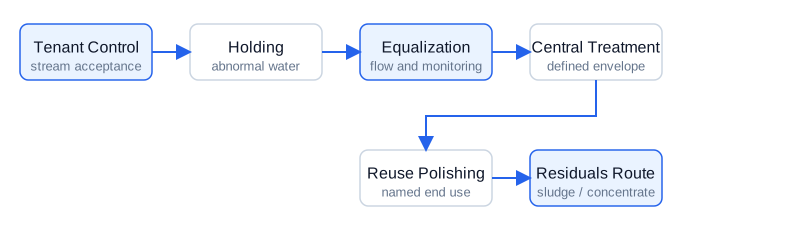
Typical process route
Define tenant acceptance, treatment boundaries and abnormal-water control
This reference sequence shows the decisions that connect source control with centralized treatment. The final route depends on contributing industries, verified influent envelope, discharge or reuse target and residuals plan.
Equipment options
Evaluate Each Module Against a Defined Treatment Job.
Match every equipment stage to the actual water, operating conditions, required outlet quality and residuals route.
Influent monitoring and acceptance
Evaluation focusDefine sampling points, parameter checks, diversion rules and responsibilities before water reaches the central plant.
Equalization and emergency holding
Evaluation focusBuffer expected flow variation and isolate abnormal wastewater without destabilizing the main treatment line.
Targeted pretreatment
Evaluation focusApply source-specific treatment for oils, metals, salts, pH extremes or inhibitory compounds where justified.
Central physicochemical and biological treatment
Evaluation focusSelect treatment modules from the verified composite influent and discharge target, not the park name alone.
Reuse polishing and distribution
Evaluation focusConfigure final treatment, storage and monitoring for a defined park reuse-water application.
Sludge and concentrate management
Evaluation focusCoordinate residuals collection, dewatering, storage, transport and permitted destinations at park scale.
Selection framework
Match the Process to the Condition That Drives the Design.
Compare each project condition against water analysis, operating requirements and the treatment target before selecting the process route.
| Project condition | Evaluate | Possible direction |
|---|---|---|
| Multiple tenant industries | Tenant process list, chemical inventory, flow and discharge schedule | Influent acceptance rules, source monitoring and compatible treatment groups |
| Frequent abnormal-water events | Holding capacity, notification process, diversion logic and disposal route | Emergency storage and controlled treatment after assessment |
| Central water reuse | Reuse demand, quality target, distribution network and concentrate route | Polishing and storage designed around the named reuse service |
| High-salinity or difficult residual | Mass balance, treatment compatibility, utility availability and downstream route | Separate concentration or disposal evaluation rather than dilution into the main line |
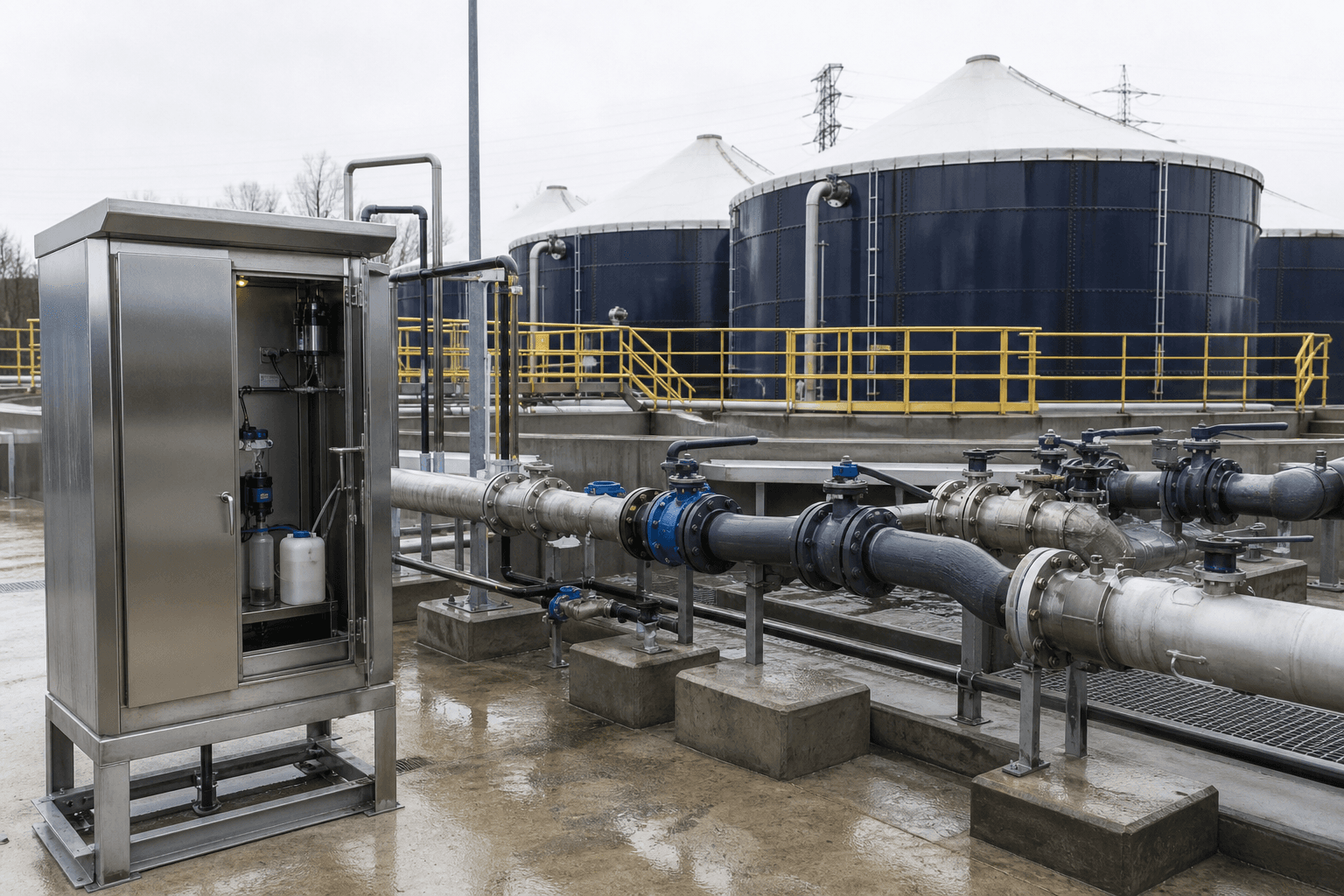
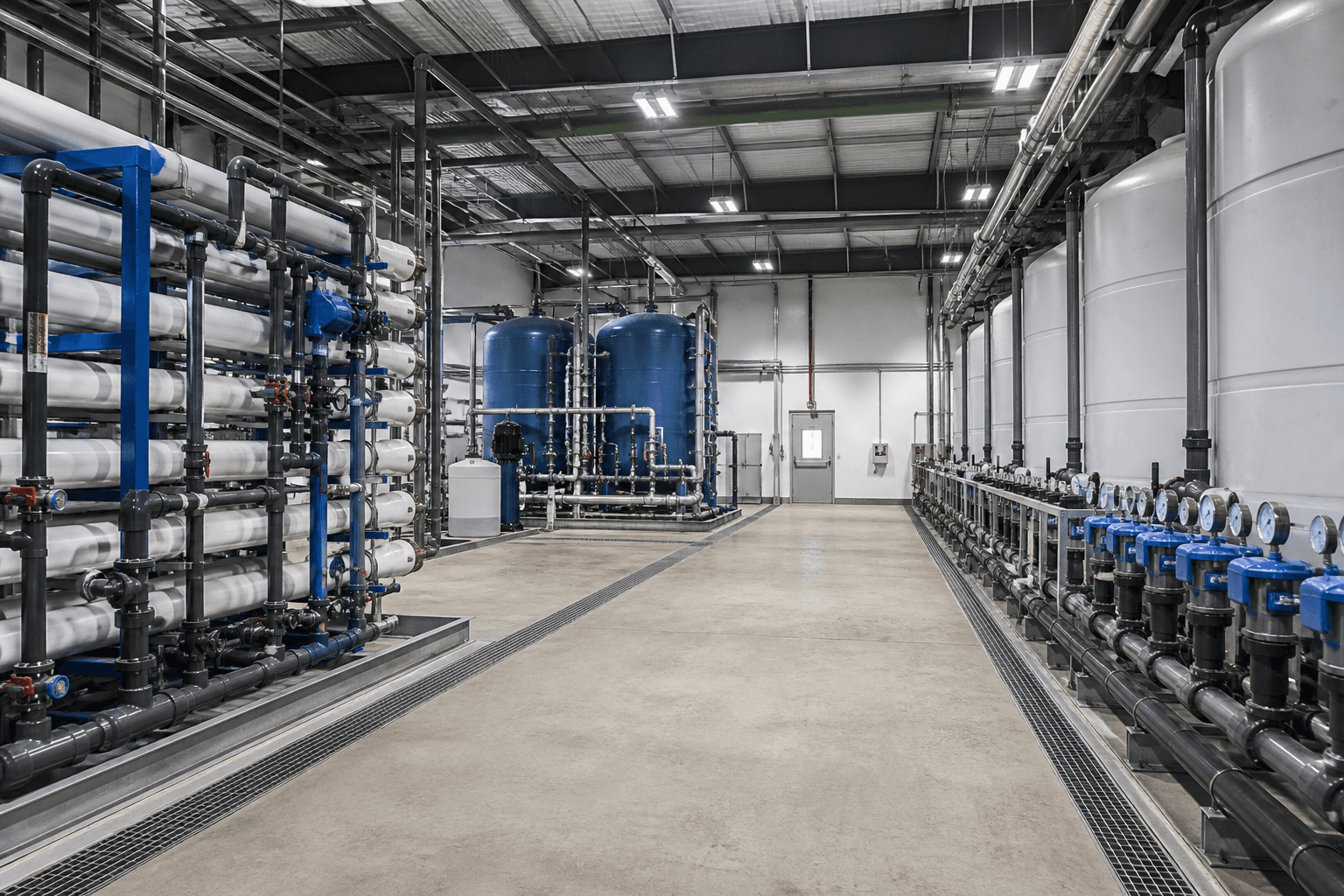
Equipment and layout
Review Equipment Arrangement and Site Access.
Use these views to discuss equipment arrangement, operating access, piping interfaces and the space available for the treatment system.
Prepare a useful RFQ
Provide the Inputs That Change the Design.
Share what is available now. The missing inputs can then be identified before equipment scope, materials and performance targets are confirmed.
Send Project RequirementsPark location, industries and project stage
Tenant process list and wastewater-source inventory
Influent analyses, including normal and high-load conditions
Average, peak and batch flow by contributor
Existing acceptance rules, monitoring points and operator responsibilities
Required discharge or reuse target
Available footprint, civil works, utilities and expansion plan
Sludge, concentrate and emergency-water handling routes
Buyer FAQ
Questions to Resolve Before Requesting a Final Quote.
Answers remain conditional where water data, local requirements or project standards determine the result.
Why is an average influent analysis not enough for an industrial park plant?
Averages can hide short-duration high loads and incompatible streams. Treatment reliability depends on the contributor list, release schedule, maximum conditions, source controls and emergency holding strategy.
Should every tenant discharge directly to the central treatment plant?
Not necessarily. Some streams may need onsite pretreatment, separate collection, controlled discharge or a dedicated route before they are compatible with central treatment.
Can centralized treated water be reused across an industrial park?
It may be possible for a defined utility or process use, but the reuse quality, storage, distribution, monitoring and residuals route must be planned around that named use and applicable requirements.
What should be defined before equipment selection?
Confirm the contributing industries, influent envelope, treatment and reuse targets, abnormal-water controls, residuals plan, site interfaces, responsibilities and future expansion assumptions.
Plan your industry solution
Turn Your Water Data into a Clear Technical Scope.
Send the stream source, flow, available analysis, treatment objective and site conditions for a project-specific discussion.