- Plant owners and facility teams
- Engineering and technical teams
- EPC contractors and project integrators
- Procurement teams evaluating treatment scope
Color, COD, salt & water reuse
Textile & Dyeing Wastewater Treatment Solutions
Industrial wastewater treatment and reuse planning for textile preparation, dyeing, washing and finishing operations with variable color, COD, salts, temperature and production loads.
Direct answer
What Usually Defines the Treatment Route?
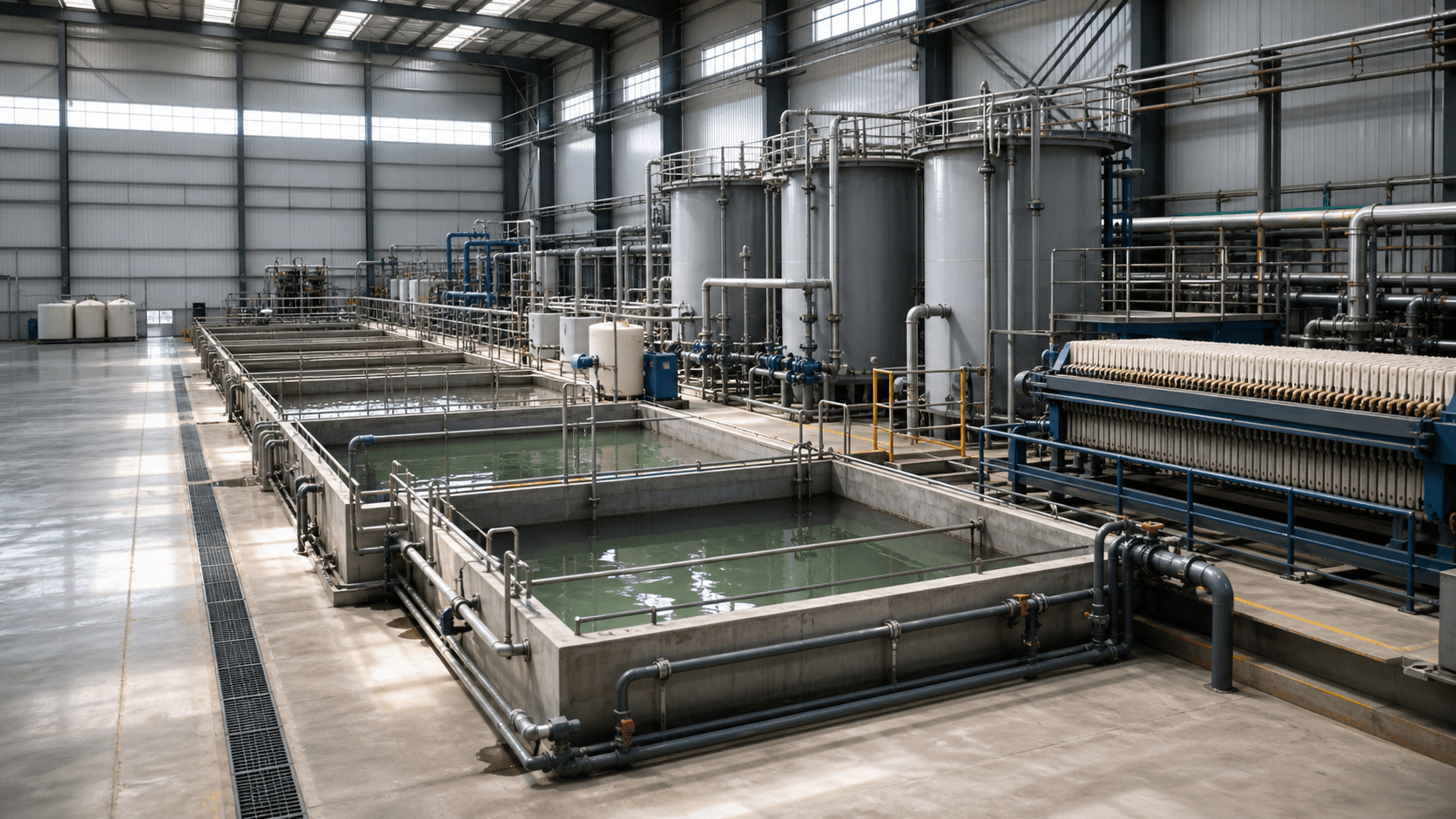
Textile and dyeing wastewater is rarely one uniform stream. Dyeing, washing, printing, finishing and cleaning operations can differ in color, COD, salts, surfactants, temperature and release pattern. A reliable treatment route starts by separating the source streams and defining whether the final objective is discharge, utility reuse or a more demanding reuse point.
- Textile process and source-stream list
- Original wastewater analyses from representative production
- Average, peak and batch discharge flow
- Color and COD control
- Variable saline streams
- Reuse evaluation
- Industrial Wastewater Treatment Systems
- Industrial Water Reuse Systems
- Wastewater Evaporators
Confirm equipment, materials, capacity and performance targets from representative water data, site conditions and the agreed project scope.
Applications covered
Where This Industry Solution Applies.
Use the closest application as a starting point. The treatment route still depends on the actual water source and project target.
Textile Preparation
Confirm the wastewater sources, flow profile, water analysis and required treatment target for this application.
Fabric Dyeing
Confirm the wastewater sources, flow profile, water analysis and required treatment target for this application.
Yarn Dyeing
Confirm the wastewater sources, flow profile, water analysis and required treatment target for this application.
Garment Washing
Confirm the wastewater sources, flow profile, water analysis and required treatment target for this application.
Textile Printing
Confirm the wastewater sources, flow profile, water analysis and required treatment target for this application.
Finishing Operations
Confirm the wastewater sources, flow profile, water analysis and required treatment target for this application.
Buyer-critical conditions
Issues to Resolve Before Equipment Selection.
These conditions influence process reliability, operating workload, footprint and the treatment boundary.
Color and organic load vary by production
Dyes, auxiliaries, surfactants and cleaning cycles can change both visible color and treatability from one batch or shade to another.
Salts affect reuse decisions
High conductivity and dissolved salts may remain after color and solids control, which can limit direct reuse or require additional polishing.
Sludge and concentrate require a route
Coagulation sludge, membrane concentrate, cleaning waste and off-spec batches should be included in the overall water and residuals balance.
Water streams & treatment direction
Do Not Design from an Industry Label Alone.
Map the source, contaminants and treatment objective of each important stream before combining flows.
| Water stream | What must be checked | Possible treatment direction |
|---|---|---|
| Dyeing and washing wastewater | Color, COD, conductivity, pH, temperature, dyes and auxiliaries | Segregation, equalization and treatment selected from representative samples |
| Printing and finishing water | Pigments, binders, solvents where used, suspended solids and cleaning chemicals | Source-specific pretreatment before compatible combination |
| High-salinity streams | TDS, chloride, sulfate, temperature and the final reuse objective | Recovery and membrane feasibility review after bulk pollutant removal |
| Cleaning and changeover wastewater | Batch volumes, surfactants and compatibility with biological or physicochemical treatment | Controlled feed, holding or separate pretreatment where needed |
| Treated-water reuse stream | Named reuse point, required quality, storage and distribution risks | Polishing, monitoring and return-water controls based on the actual reuse duty |
Request a process review
Send the Water Source, Flow and Treatment Target.
Available analysis, stream list and site conditions help identify the questions that must be resolved before the treatment route is selected.
Typical process route
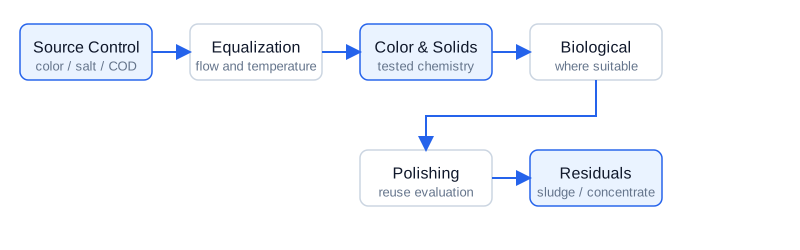
Control source variation before selecting color removal and reuse stages
The process sequence is a discussion tool. Actual chemical treatment, biological treatment, membrane recovery and concentrate management depend on the measured wastewater and final water objective.
Equipment options
Evaluate Each Module Against a Defined Treatment Job.
Match every equipment stage to the actual water, operating conditions, required outlet quality and residuals route.
Equalization and cooling
Evaluation focusBuffer changeovers, batch release and temperature variations before downstream treatment.
Coagulation and clarification
Evaluation focusEvaluate color, colloids and solids removal with representative jar testing and sludge review.
Biological treatment
Evaluation focusAssess biodegradability, inhibitors, load variation and operating requirements before selecting a biological stage.
Advanced polishing
Evaluation focusConsider oxidation, adsorption or membrane stages only against a defined residual color, COD or reuse requirement.
Membrane reuse
Evaluation focusReview recovery, scaling, cleaning, concentrate and water-quality stability for the intended reuse point.
Sludge and concentrate handling
Evaluation focusDefine collection, dewatering, storage and permitted downstream routes for treatment residuals.
Selection framework
Match the Process to the Condition That Drives the Design.
Compare each project condition against water analysis, operating requirements and the treatment target before selecting the process route.
| Project condition | Evaluate | Possible direction |
|---|---|---|
| Variable batch dyeing water | Production schedule, pH, temperature, color, COD and conductivity variation | Segregation and equalization before selected treatment stages |
| High residual color | Dye chemistry, particles, dissolved color and target quality | Tested coagulation, biological treatment or polishing sequence |
| Reuse requirement | Named reuse duty, TDS tolerance, microbiological needs and concentrate route | Filtration and membrane or other polishing evaluation |
| High-salinity residual | Salt balance, recovery target, utilities and disposal route | Concentration or ZLD feasibility study where justified |
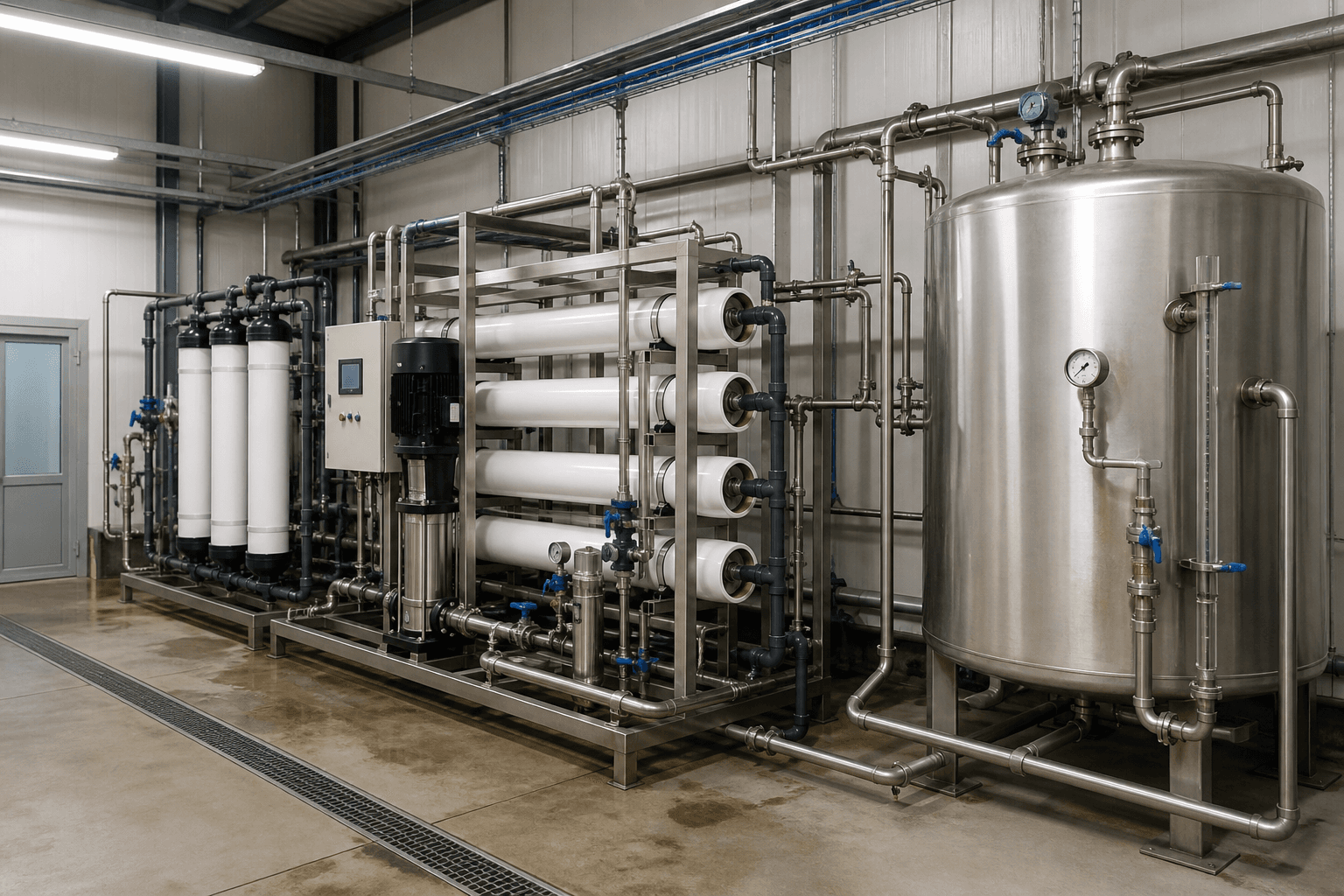
Equipment and layout
Review Equipment Arrangement and Site Access.
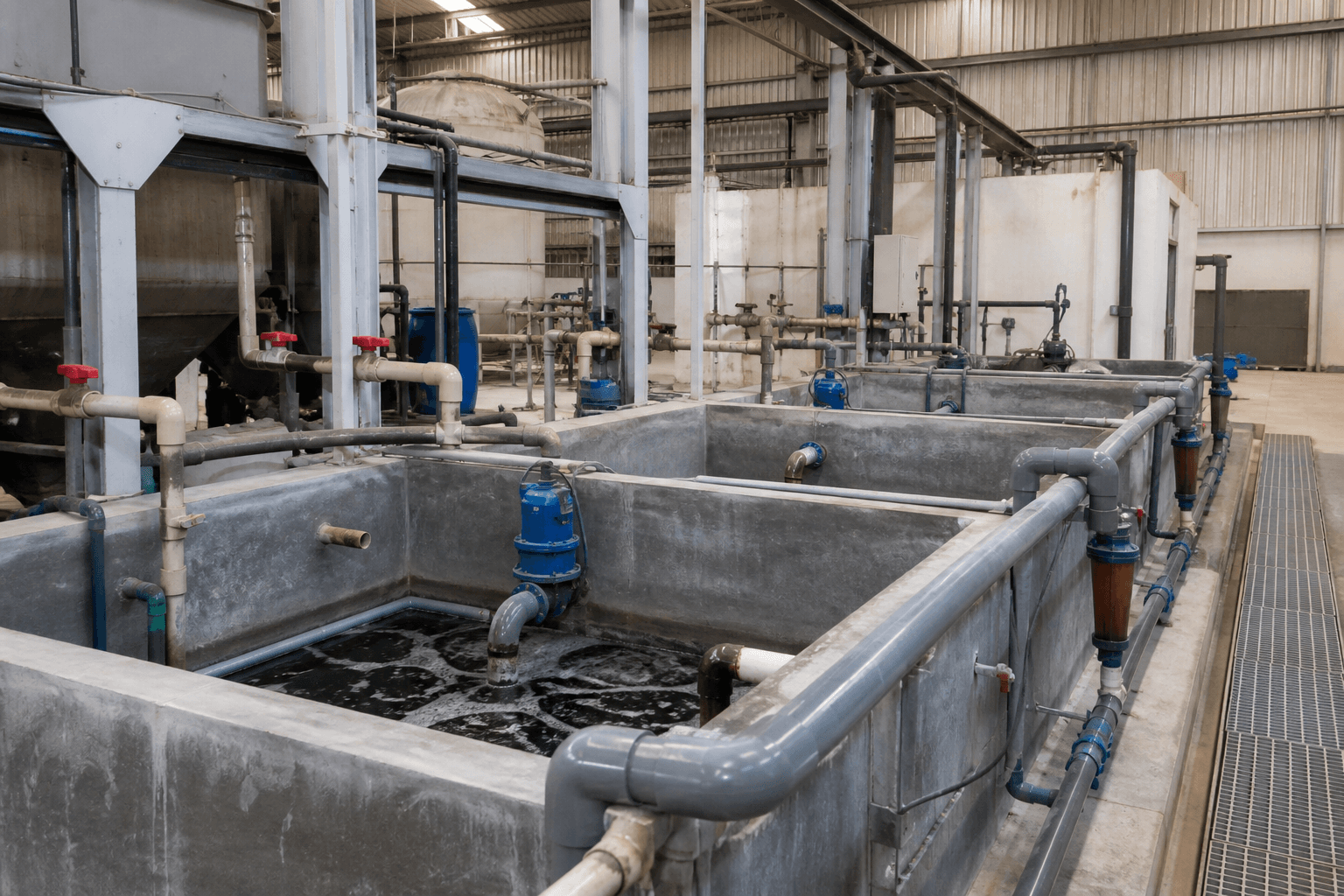
Use these views to discuss equipment arrangement, operating access, piping interfaces and the space available for the treatment system.
Prepare a useful RFQ
Provide the Inputs That Change the Design.
Share what is available now. The missing inputs can then be identified before equipment scope, materials and performance targets are confirmed.
Send Project RequirementsTextile process and source-stream list
Original wastewater analyses from representative production
Average, peak and batch discharge flow
Color, COD, BOD where relevant, TDS, pH, temperature and suspended solids
Dyes, auxiliaries, detergents and cleaning chemicals
Required discharge or named reuse target
Footprint, utilities, operating schedule and residuals route
Buyer FAQ
Questions to Resolve Before Requesting a Final Quote.
Answers remain conditional where water data, local requirements or project standards determine the result.
Why is textile dyeing wastewater difficult to treat consistently?
Water quality can change with fiber, dye class, shade, washing steps, auxiliaries and batch timing. A design based on one sample or one average COD value may not represent the operating range.
Can color removal alone make textile wastewater suitable for reuse?
Not necessarily. Reuse also depends on dissolved salts, remaining organics, microbiological requirements, the intended reuse point and the concentrate or cleaning-waste route.
Should high-salinity streams be mixed with all other textile wastewater?
Not automatically. Their salt load can affect biological treatment and later reuse options. Keep them identifiable until a treatment and mass-balance review is complete.
What tests are useful before choosing the process?
Representative sampling across production conditions, jar testing where chemical treatment is considered, biodegradability review where relevant and reuse-focused testing for the actual target are useful starting points.
Plan your industry solution
Turn Your Water Data into a Clear Technical Scope.
Send the stream source, flow, available analysis, treatment objective and site conditions for a project-specific discussion.