Introduction
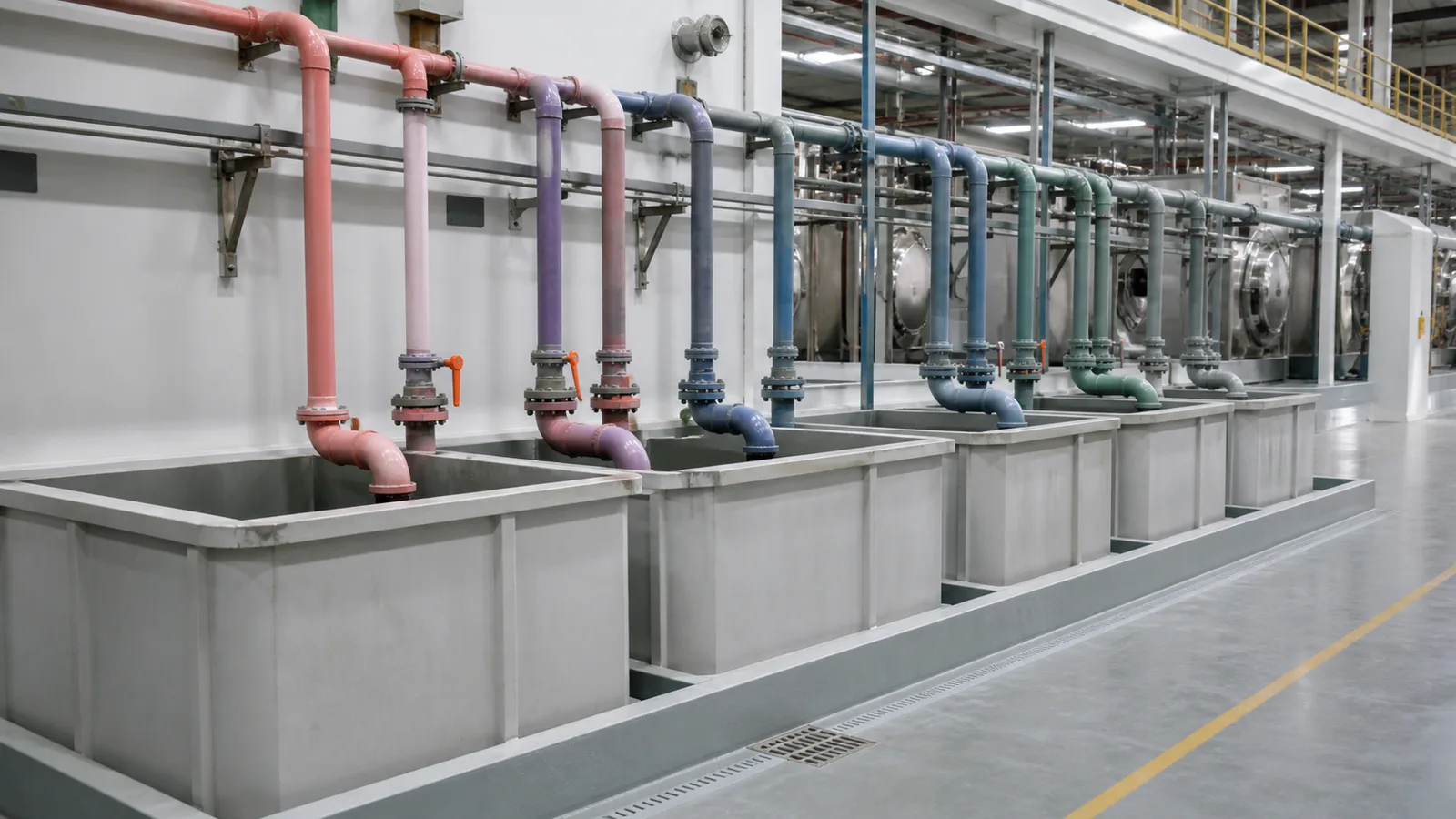
Textile dyeing wastewater is often described as one stream with high color and COD. That description is too simple for process selection. Scouring, bleaching, mercerizing, dyeing, printing, washing and finishing can generate streams with different pH, temperature, biodegradability, color, salinity and chemical composition. A reliable treatment route begins by identifying those differences.
Why Textile Wastewater Is Difficult to Generalize
Textile mills can process cotton, polyester, nylon, wool, blends or technical fabrics. They may use reactive, disperse, acid, direct, vat, sulfur or pigment systems. The wastewater from a reactive cotton dye bath is not interchangeable with a low-strength final rinse or a printing-paste cleanup stream.
The European Commission’s BAT reference document for the textile industry treats washing, bleaching, mercerizing, dyeing and other operations as distinct sources and emphasizes integrated pollution prevention and treatment. This supports a practical buyer principle: reduce or recover concentrated loads where possible before sizing the end-of-pipe plant.
Common wastewater sources may include:
- preparation and scouring baths;
- bleaching wastewater;
- mercerizing or alkaline streams;
- dye baths and first rinses;
- subsequent wash-off and final rinses;
- printing-paste and screen-cleaning water;
- finishing and coating cleanup;
- floor wash and maintenance water;
- cooling water or condensate;
- water-treatment backwash and membrane concentrate.
The actual list should come from the production line, not a generic textile diagram.
What Data Should Be Collected Before an RFQ?
Production and hydraulic data
State fabric type, process sequence, machine type, batch size, shades, working days and cleaning schedule. Provide average daily flow, peak hourly flow, individual batch volume, discharge duration and temperature.
Batch timing can be as important as daily volume. A plant may discharge a hot alkaline bath over one hour and low-strength rinses during the rest of the shift. Designing only from cubic metres per day can undersize cooling, mixing, pH control or reaction capacity.
Representative water analysis
Depending on the process, the analysis may include pH, temperature, conductivity or TDS, color, COD, BOD, TOC, TSS, alkalinity, hardness, chloride, sulfate, sulfide, oil and grease, surfactants, nitrogen, phosphorus and relevant metals. Ask the laboratory to identify the color method and units.
Test source streams separately before relying on a mixed equalization sample. Include normal shades, dark shades, cleaning events and other high-load conditions. The wastewater can change with recipes and product mix.
Chemical inventory
List dyes, salts, alkalis, acids, reducing or oxidizing agents, surfactants, sizing agents, softeners, fixing agents and cleaning products. Safety data sheets help identify substances that may inhibit biology, resist oxidation, foul membranes or affect sludge classification.
Final destination
Define whether the objective is sewer discharge, surface-water discharge, partial reuse, process reuse or minimum/zero liquid discharge. For reuse, specify the destination: washing, cooling, boiler pretreatment, dye-bath preparation or another use. Each destination has different limits for color, hardness, conductivity, silica, organics and microbiological quality.
Build the Treatment Route by Process Role
1. Reduce load and separate useful streams
The cheapest pollutant to treat is often the one that does not enter the wastewater plant. Review counter-current rinsing, bath reuse, low-liquor-ratio equipment, recipe control, chemical substitution, clean condensate recovery and separation of relatively clean cooling water.
Concentrated dye baths, first rinses or specialty streams may deserve separate collection. This can support targeted oxidation, recovery or controlled blending. It can also prevent one intermittent stream from determining the size and chemical consumption of the entire plant.
2. Screening, cooling and equalization
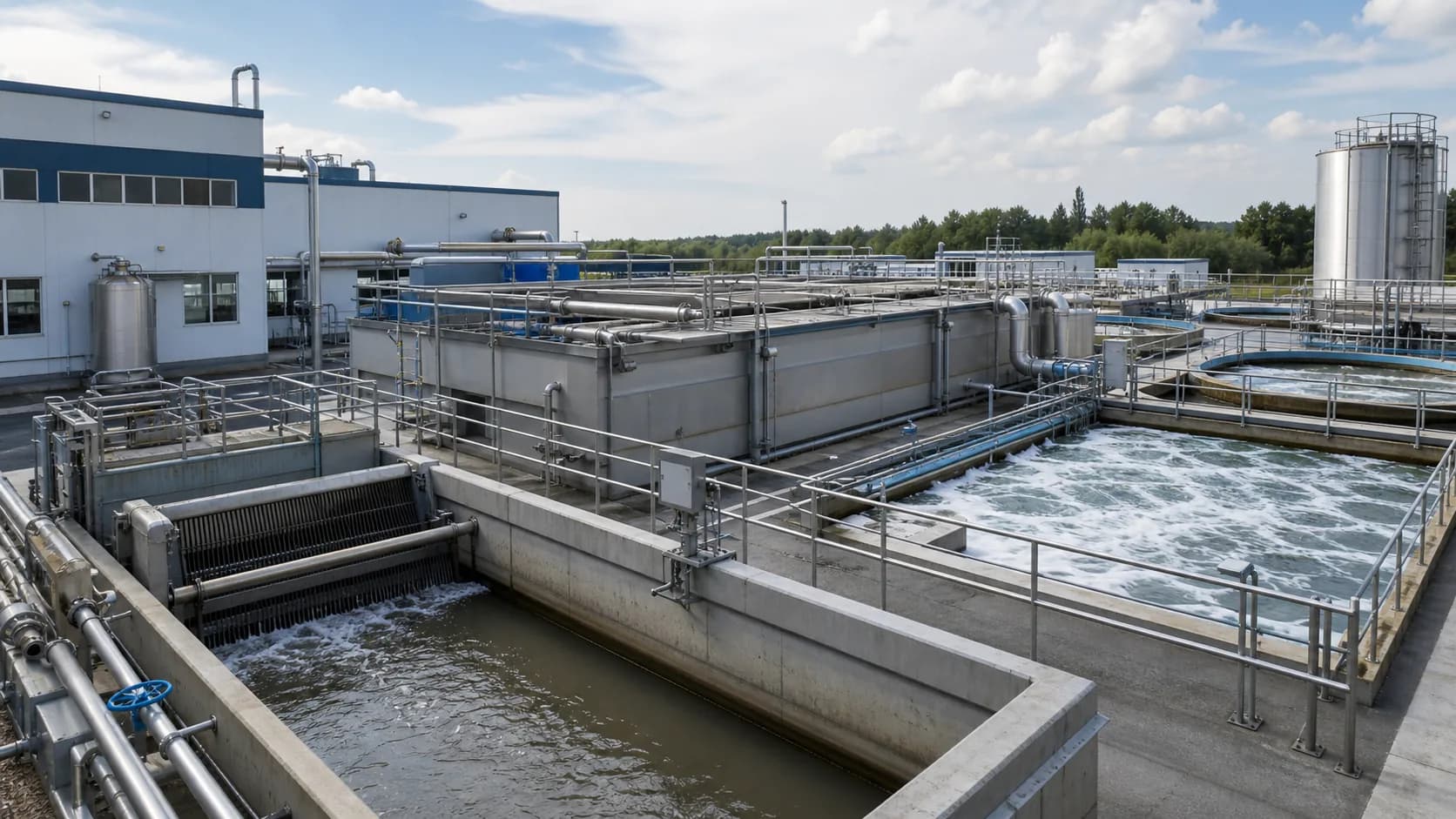
Screens remove fibers, lint and debris that can block pumps and foul downstream units. Cooling may be required before biological or membrane stages. Equalization stabilizes flow, pH, temperature, color and organic load, but it needs adequate mixing and retention for the real batch schedule.
Equalization does not make refractory color biodegradable or remove dissolved salts. It only creates a more controllable feed.
3. pH control and physical-chemical treatment
Coagulation and flocculation can remove suspended solids, colloids and a portion of color or COD, depending on dye chemistry. Sedimentation, lamella clarification or dissolved air flotation may separate the formed solids.
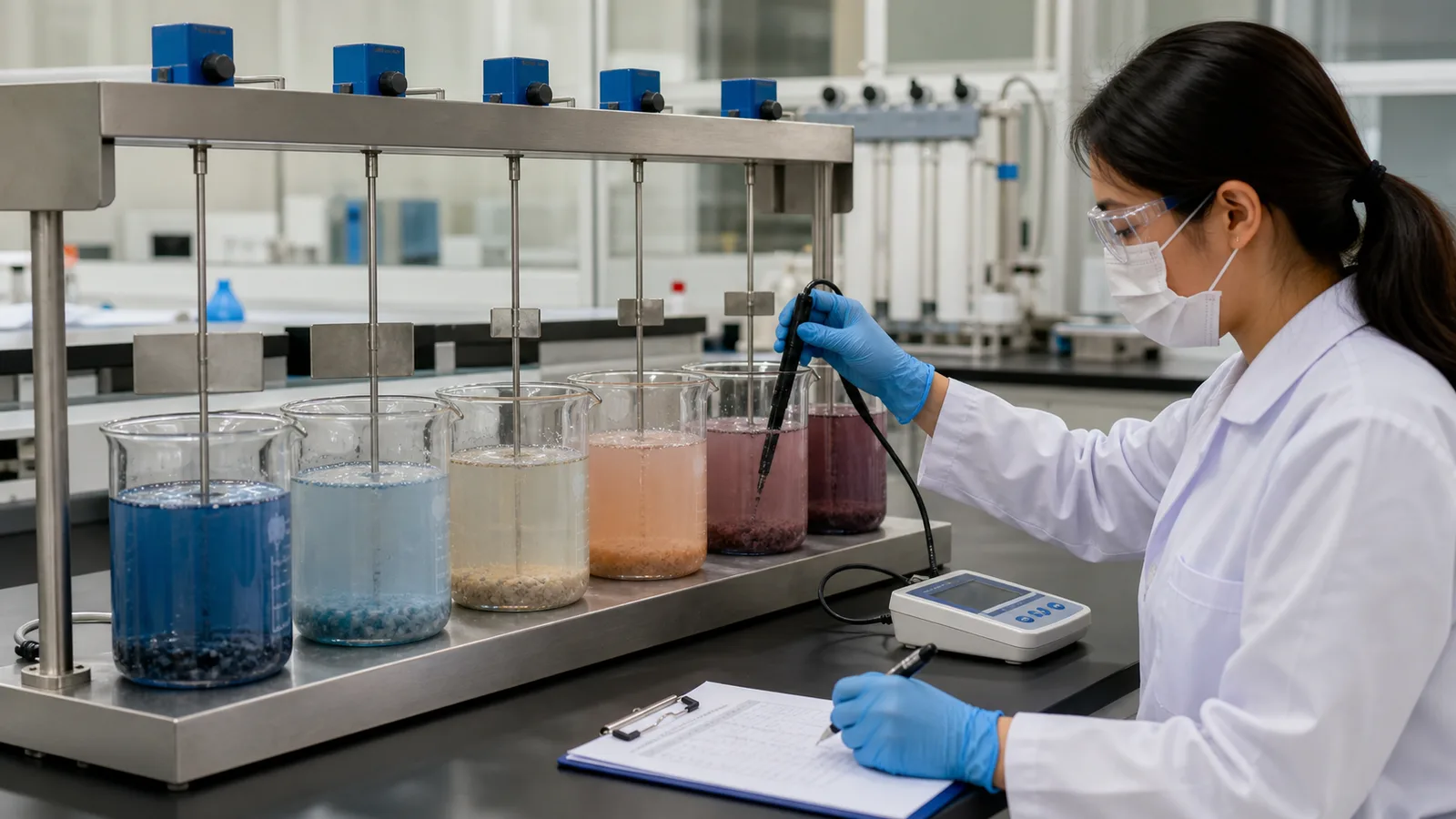
Jar testing should compare coagulants, pH, dose, floc quality, settling or flotation response and sludge volume. A treatment that achieves good color removal but produces excessive difficult-to-dewater sludge may not be the best overall option.
Electrocoagulation can also be evaluated for selected textile streams. It is not a universal chemical-free solution: electrode consumption, power, passivation, sludge and actual water chemistry remain part of the operating cost.
4. Biological treatment for biodegradable load
Aerobic, anaerobic or combined biological treatment can reduce biodegradable organic matter. Selection depends on strength, temperature, salinity, nutrient balance, toxicity, variability, space and operator capability.
High BOD/COD and a stable strong stream may justify evaluation of anaerobic pretreatment followed by aerobic polishing. Aerobic activated sludge, SBR, MBBR or MBR may suit other conditions. No biological label guarantees color or dissolved-salt removal.
Use biodegradability testing and inhibition assessment. Some dyes and auxiliaries are poorly biodegradable, while shock salt, pH, oxidants or toxic compounds can reduce biomass performance. A stable equalization strategy and controlled feed may be more important than selecting a fashionable reactor.
5. Color and refractory-COD polishing
Residual color or refractory organics may require activated carbon, ozone, Fenton chemistry, another advanced oxidation process or a tailored combination. The objective should be explicit: color reduction, COD polishing, toxicity reduction, biodegradability improvement or membrane protection.
Oxidant demand must be measured on representative water. Scavenging substances can consume chemicals without achieving the intended result. Oxidation can also change downstream biological behavior and residual chemistry, so tests should evaluate the full process sequence.
6. Membranes for reuse
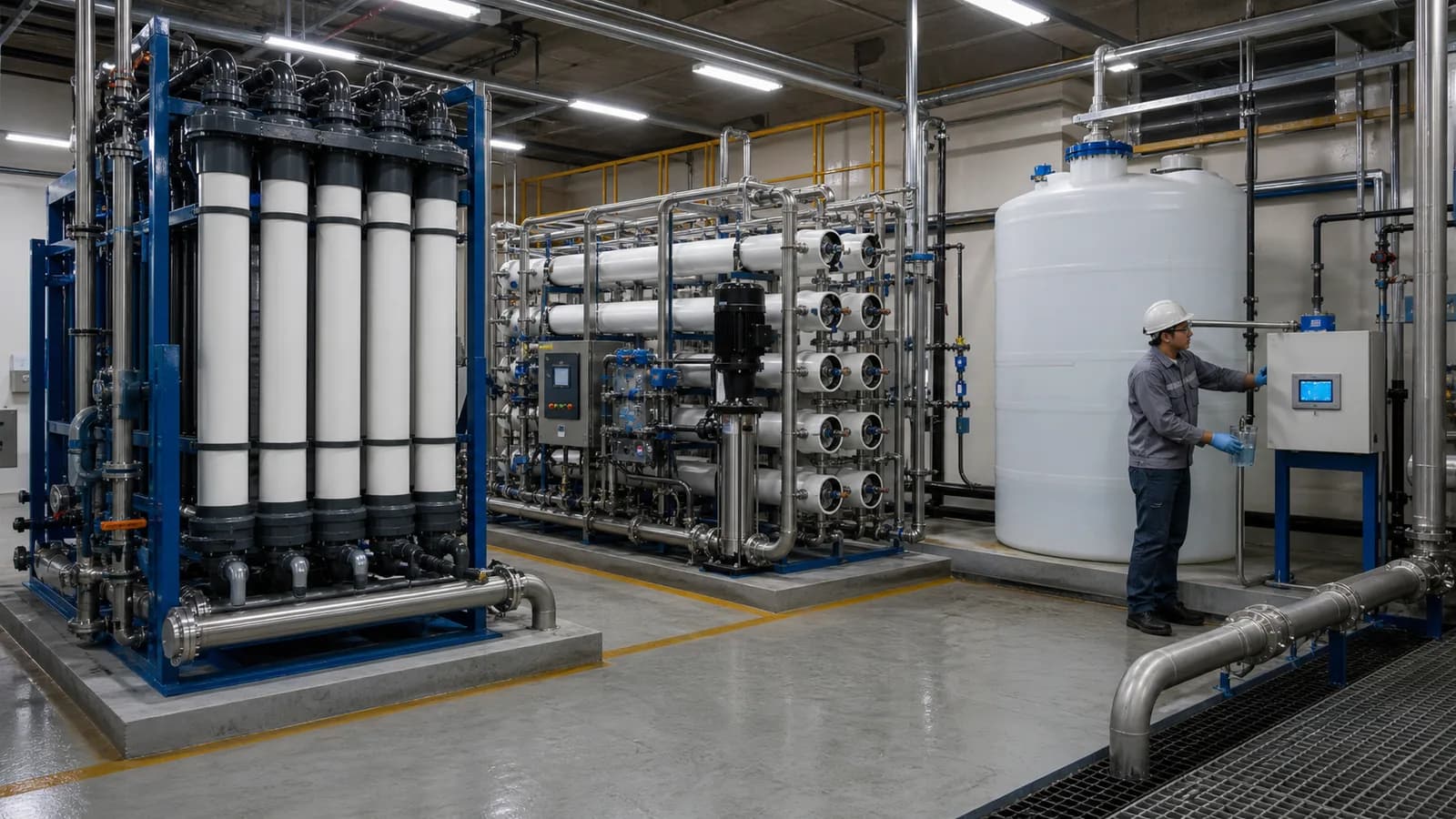
Ultrafiltration can reduce suspended solids and protect downstream membranes. Nanofiltration may separate certain dyes and multivalent ions while allowing more monovalent salt passage, depending on membrane and conditions. Reverse osmosis can produce lower-TDS water but creates a more concentrated reject stream.
Membrane selection should consider:
- feed temperature and pH;
- color and dissolved organics;
- hardness, silica and scaling ions;
- salinity and osmotic pressure;
- suspended solids and colloids;
- oxidants and cleaning chemicals;
- target recovery and concentrate route;
- required permeate quality for the reuse point.
The European Commission has documented textile reuse examples using carbon filtration and desalination or selected-stream membrane treatment. These are examples, not universal recovery guarantees. Site feasibility depends on water chemistry, product requirements and residual management.
7. Brine concentration and ZLD
When RO concentrate cannot be discharged or reused, further membrane concentration, evaporation or crystallization may be considered. Before thermal treatment, remove substances that cause scaling, foaming, corrosion, volatile carryover or poor condensate quality.
Salt recovered from a mixed textile concentrate is not automatically a saleable product. Dye mixtures, organics and inorganic contaminants can limit reuse. Characterization and a defined destination are required.
Can Textile Wastewater Be Reused in Dyeing?
Reuse feasibility starts with the product, not the treatment plant. White and pale shades may have tighter color and ion tolerances than dark shades. Different fibers and dye classes respond differently to hardness, salt, residual surfactants and organics.
A sensible validation plan compares treated water with current process water through laboratory dyeing or controlled production trials. Evaluate shade difference, color strength, wash fastness, fabric quality, chemical demand and accumulation over repeated cycles.
Published studies and demonstration projects show that textile water reuse can be technically feasible, including membrane and electrocoagulation-based routes. They also show why buyers should not copy a recovery percentage from another mill. Conductivity, oxidizable pollutants, temperature and product-quality requirements materially affect performance and economics.
A Decision Table for Common Technologies
| Process role | Best evaluated for | Important limitations |
|---|---|---|
| Screening/equalization | Fibers, batch peaks, temperature and pH stabilization | Does not remove dissolved color, COD or salt |
| Coagulation/flocculation | Colloids, TSS and treatable color | Chemical consumption and sludge production |
| Anaerobic treatment | Stable, strong biodegradable load | Start-up, inhibition, temperature and polishing needs |
| Aerobic/SBR/MBBR | Biodegradable COD and selected nutrients | Aeration, sludge control and salinity/toxicity limits |
| MBR | Biological treatment with membrane solids separation | Fine screening, energy, cleaning and membrane replacement |
| AOP/ozone/carbon | Selected color and refractory-organic polishing | Reagent/media demand; does not remove all salts |
| NF/RO | Dissolved-solids control and reuse polishing | Fouling, scaling, pressure and concentrate management |
| Evaporation/crystallization | Brine volume reduction and ZLD routes | Energy, scaling, corrosion and final solids management |
Technologies are frequently complementary. The comparison should focus on what each stage accomplishes in the proposed sequence.
Treatability Testing That Reduces Procurement Risk
Jar tests
Compare coagulation, flocculation, pH, settling, flotation and sludge. Record treated color and COD together with chemical dose and solids volume.
Biological tests
Assess biodegradability, nutrient requirement, inhibition and expected loading. If salinity or recipe changes are significant, evaluate acclimation and shock conditions.
Oxidation tests
Measure dose-response, reaction time, residual oxidant, COD/color change and downstream effects. A clear-looking sample is not sufficient evidence of stable treatment.
Membrane tests
Review pretreatment, flux, rejection, recovery, pressure, fouling, cleaning and concentrate chemistry. Where reuse affects product quality, include dyeing trials.
Evaporation tests
Evaluate scaling, foaming, viscosity, boiling behavior, corrosion risk, condensate quality and residual properties. Real concentrate is more useful than a synthetic salt solution.
Factory Testing and International Delivery
At the factory, verify equipment tags, wetted materials, tank and skid dimensions, pumps, valves, instruments, control logic, alarms, interlocks, clean-water functions and documents. Confirm chemical dosing ranges and calibration provisions.
Factory testing with clean water verifies mechanical and control functions; it does not prove removal of color, COD or salt from the customer’s wastewater. Process acceptance requires agreed conditions and representative site water.
Shipment inspection should cover preservation, capped connections, loose parts, lifting points, membrane storage, spares, packing lists and export packaging. Textile systems often contain multiple chemical and biological units, so equipment tags and connection drawings must match the shipment sequence.
Installation preparation should confirm foundations, drainage, ventilation, access, chemical storage, sludge handling, utility water, power, air, heat or cooling, and the route for off-spec wastewater during start-up.
Commissioning and Acceptance for a Variable Dyeing Plant
Commissioning should not begin with the most difficult production recipe. First complete mechanical and clean-water tests, calibrate instruments and establish safe chemical dosing. Then introduce representative wastewater under controlled conditions while operators record flow, temperature, pH, color, COD and conductivity by source and treatment stage.
Biological systems need a realistic acclimation period. A short test immediately after seeding cannot demonstrate stable removal. Likewise, membrane acceptance should follow stable pretreatment; otherwise early fouling may reflect start-up solids and chemistry rather than the intended operating condition.
Define an influent envelope for performance testing: flow, temperature, pH, conductivity, COD, color and other process-specific parameters. Agree on sampling points, methods and frequency. Textile color results are method-dependent, so buyer and supplier should use the same analytical basis.
If reuse is part of the contract, include both water analysis and an agreed production validation. A permeate that meets conductivity and color targets may still require a controlled dyeing trial before it is accepted for sensitive shades. Establish how off-spec permeate is diverted and how recovered water is blended during start-up.
Acceptance should also record chemical use, energy, sludge, membrane concentrate, cleaning frequency and operator workload. These values help confirm whether the installed route is practical, not merely whether one outlet sample passes.
Common Buyer Mistakes
- Using one composite sample without understanding batch sources.
- Selecting treatment from color alone while ignoring salt and biodegradability.
- Assuming biological treatment removes dissolved salts.
- Assuming RO solves wastewater without a concentrate route.
- Comparing chemical dose but not sludge volume or dewaterability.
- Promising reuse without a product-quality trial.
- Treating every dye class and shade as equivalent.
- Omitting hot cleaning batches and peak pH conditions.
- Specifying ZLD without characterizing final salts.
- Accepting clean-water FAT as wastewater-performance proof.
FAQ
What is the most effective textile dyeing wastewater treatment process?
There is no single most effective process. A typical evaluation may combine source reduction, screening, equalization, physical-chemical treatment, biological treatment, color polishing and membranes. The necessary stages depend on dye chemistry, COD biodegradability, salinity and the final destination.
Can biological treatment remove textile color?
It may reduce color associated with biodegradable compounds, but many dyes are refractory. Residual color may require physical-chemical treatment, adsorption or oxidation. Testing is necessary.
Does reverse osmosis remove color and salt?
RO can reject many dissolved substances and produce low-color, lower-TDS permeate, subject to membrane selection and pretreatment. It also creates concentrate containing rejected color, salts and organics.
Is nanofiltration better than reverse osmosis for salt recovery?
NF may offer selective separation for certain dye/salt systems, but performance depends on dye class, ion composition, concentration, membrane and required product quality. Pilot testing should verify whether recovered permeate or concentrate can be reused.
How should reuse water be approved?
Define a water specification for the intended process and conduct controlled dyeing trials. Monitor shade difference, fastness, fabric quality and accumulation through repeated cycles.
What information should be sent to a supplier?
Send the process flow, fibers and dye classes, chemical inventory, batch schedule, wastewater source map, laboratory analyses, flow data, discharge/reuse target, utilities, space and project country.
Conclusion
Textile wastewater treatment should be designed around recipes, source streams and product-quality requirements. Color, COD and salt behave differently, so no single treatment step should be expected to solve all three.
The most credible proposal links each unit operation to a defined contaminant or operational risk, includes sludge and concentrate in the mass balance, and separates factory equipment checks from site process acceptance. For reuse, the final proof is not only a permeate analysis; it is whether the water performs reliably in its intended textile process.
CTA
Need a textile wastewater treatment or reuse review? Send Baihuipu your production steps, dye and chemical list, wastewater sources, representative analysis, average and peak flow, reuse or discharge target and site conditions. The team can identify which information is still missing before comparing a practical treatment route.