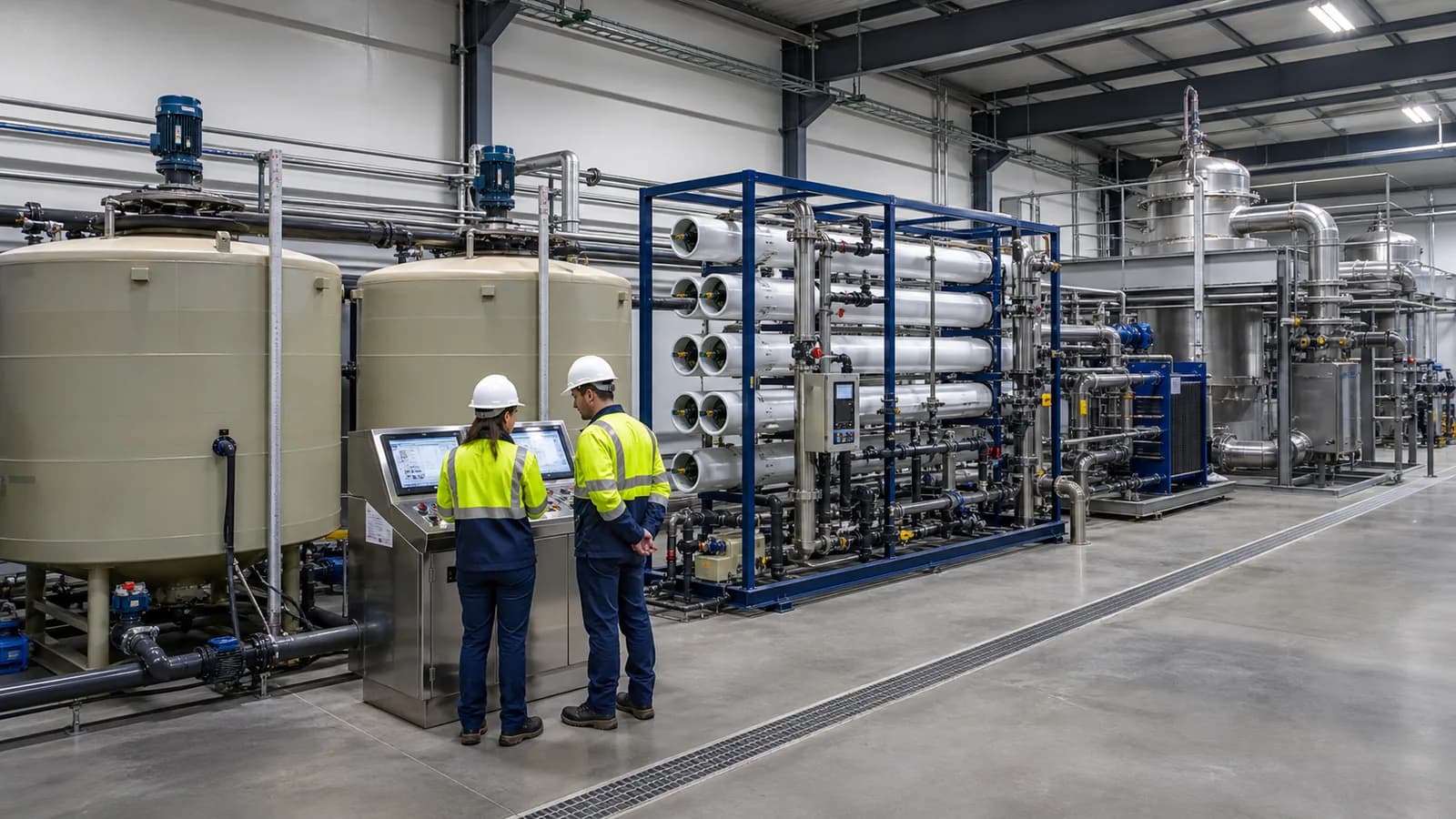
Introduction
High-salinity industrial wastewater is not defined by one universal TDS value and cannot be treated by selecting an evaporator from flow alone. The practical limit of reverse osmosis depends on osmotic pressure, scaling saturation, organics, temperature, membrane pressure, recovery and concentrate disposal. Thermal treatment can accept more concentrated feeds, but energy, corrosion, scaling, foaming and residual solids become central design issues.
What “High Salinity” Means for a Project
TDS and conductivity indicate the amount of dissolved material, but they do not describe how that material behaves. Two waters with the same TDS can have different scaling, corrosion, osmotic pressure and solids characteristics because their ionic composition is different.
Important questions include:
- Which ions dominate: sodium, calcium, magnesium, chloride, sulfate, bicarbonate, silica, fluoride or others?
- Are metals, organics, oil, surfactants, ammonia or volatile compounds present?
- Is the stream acidic, alkaline or temperature-sensitive?
- Does composition change by batch, campaign or cleaning event?
- Can any concentrated chemical or salt stream be recovered before dilution?
- Is the target discharge, reuse, volume reduction, minimum liquid discharge or ZLD?
A supplier should not use “high TDS” as a substitute for this analysis.
Common Sources of High-Salinity Wastewater
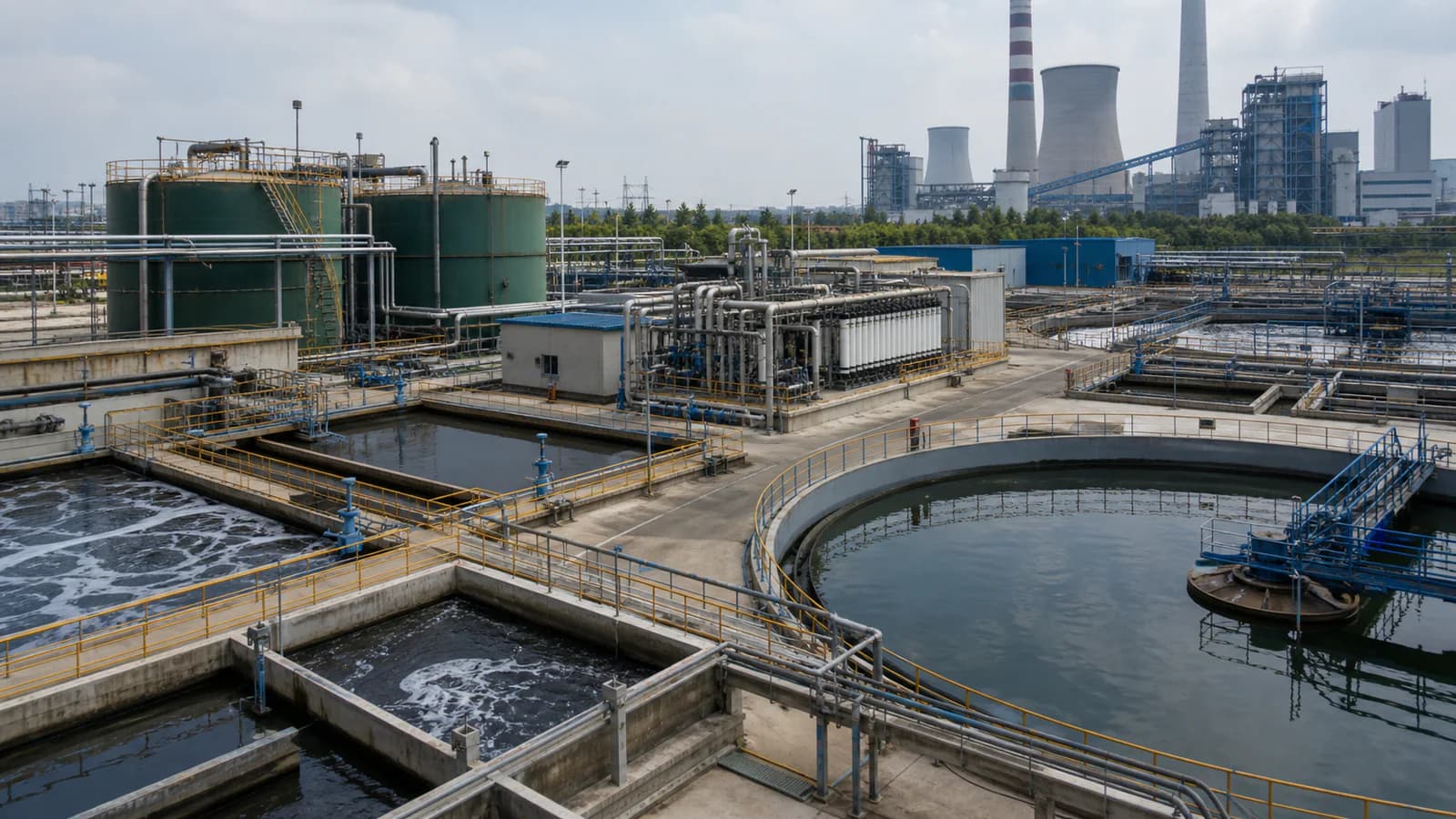
High-salinity streams can arise from chemical production, battery and electronics manufacturing, textile dyeing, metal finishing, mining, power generation, food processing, desalination, ion-exchange regeneration and existing membrane systems.
Examples include:
- RO or nanofiltration concentrate;
- ion-exchange regenerant;
- cooling tower or boiler blowdown;
- acidic or alkaline process waste;
- high-salt dye baths;
- scrubber blowdown;
- mother liquor and wash water;
- pickling or surface-treatment wastewater;
- FGD wastewater;
- landfill leachate concentrate.
These streams should not automatically be combined. A relatively clean salt solution may be easier to recover or concentrate than a mixed stream containing oil, hardness, silica and refractory COD.
The Minimum Data Set for Process Selection
Flow and operating pattern
Provide average, peak and minimum flow; batch volume and duration; operating hours; temperature; and expected future changes. Thermal systems are sensitive to actual feed volume, while batch peaks can determine tank and pretreatment size.
Full ionic analysis
Include conductivity, TDS, pH, alkalinity and major cations and anions. Calcium, magnesium, barium, strontium, silica, sulfate, carbonate, fluoride and phosphate can be important for scaling calculations. Chloride and temperature strongly influence material selection.
Organics and suspended material
Analyze COD, TOC, BOD where relevant, TSS, turbidity, oil and grease, surfactants and identified organics. Volatile organics or ammonia can pass into evaporator condensate and may require upstream control or condensate polishing.
Target and residual route
Specify treated-water quality, reuse point, permitted liquid discharge and final residual route. Confirm whether sludge, brine or salt can be disposed of locally and under what classification. ZLD is incomplete without this answer.
First Principle: Reduce Volume Before Concentrating It
Every cubic metre sent to high-pressure membrane or thermal treatment carries capital and operating cost. Review the factory water balance before sizing equipment.
Potential measures include:
- separating clean cooling or condensate streams;
- using counter-current rinsing;
- recovering product or bath solution at source;
- keeping strong and weak streams separate;
- preventing stormwater or utility water from entering process drains;
- optimizing existing RO recovery without exceeding scaling limits;
- reusing lower-strength water before it becomes mixed wastewater.
Source reduction does not eliminate the need for treatment, but it can change a thermal project from the full wastewater flow to only the final concentrate.
Step 1: Pretreatment to Protect Downstream Recovery
Pretreatment should target the contaminants that limit the next concentration stage.
Suspended solids and colloids
Clarification, filtration, ultrafiltration or another separation step may be used depending on solids characteristics. Fine membrane systems need a stable low-fouling feed, not only a low average TSS result.
Hardness and scale-forming ions
Chemical softening, precipitation, ion exchange, selective membranes or controlled pH can reduce scale risk. The correct route depends on ions, recovery target and sludge implications.
Antiscalant is a design tool, not permission to ignore saturation. Ask for the projection assumptions, concentration factor, temperature and cleaning plan.
Metals
Metals may precipitate as pH and concentration change. Remove them where required before membranes or evaporation, and account for the resulting sludge.
Organics, oil and surfactants
These substances can foul membranes, foam in evaporators, contaminate condensate and affect crystallization. Physical-chemical treatment, biological treatment, oxidation, adsorption, separation or recovery may be evaluated according to the compounds present.
Silica and difficult salts
Silica and sparingly soluble salts often determine achievable recovery. Laboratory tests and process modelling should cover both average and worst-case composition.
Step 2: Decide Whether Reverse Osmosis Is Appropriate
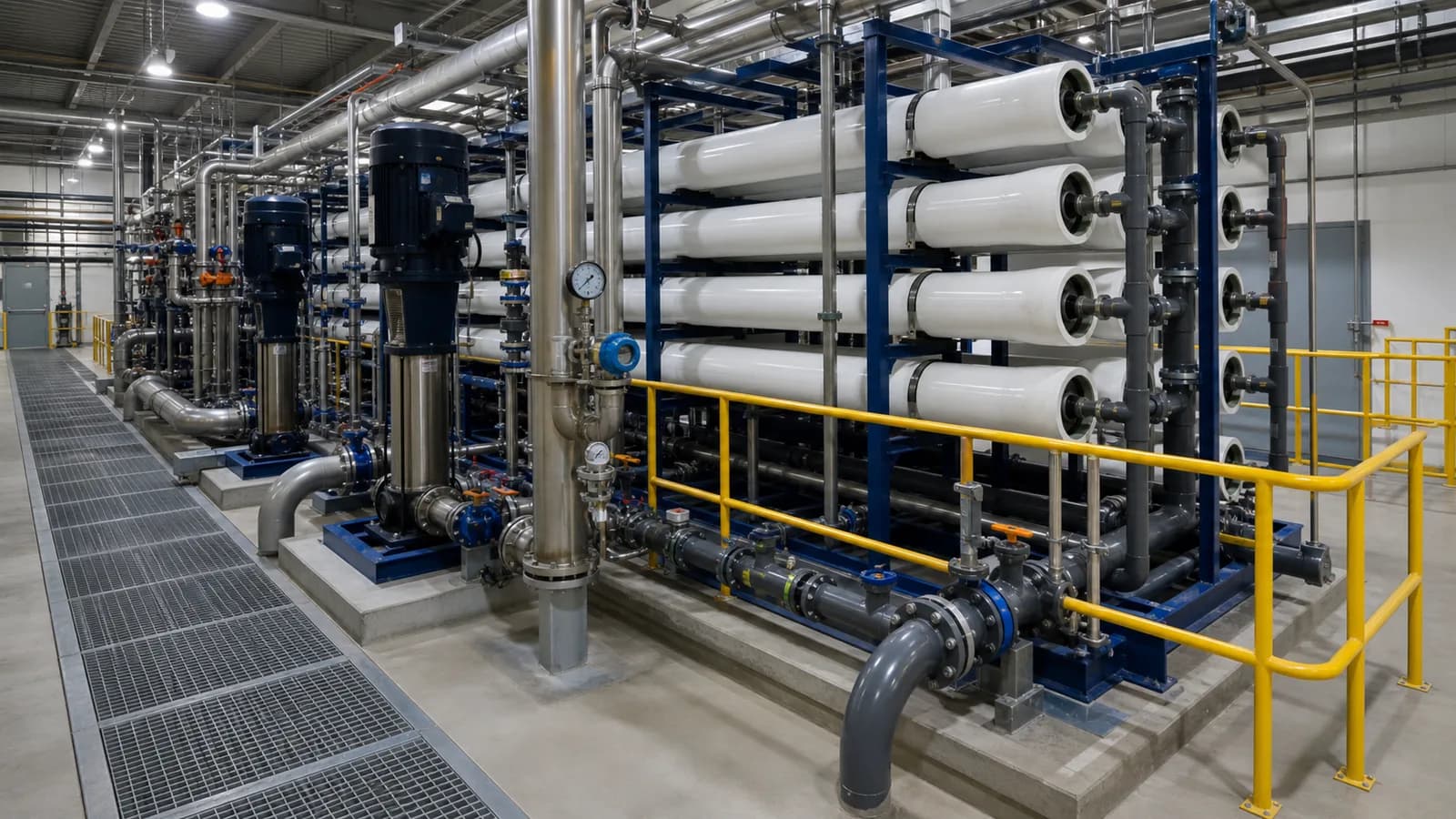
RO uses pressure to overcome osmotic pressure and produce permeate while retaining much of the dissolved material. It is often more energy-efficient than evaporating the same water volume, so it may be used before thermal concentration when feed conditions allow.
RO is worth evaluating when
- osmotic pressure is within the selected membrane and equipment range;
- pretreatment can control fouling and scaling;
- the required permeate quality is achievable;
- acceptable recovery can be reached;
- membrane cleaning and replacement are practical;
- concentrate has a defined next step.
RO becomes less attractive when
- feed or concentrate osmotic pressure approaches practical pressure limits;
- scale saturation restricts recovery;
- organics, oil or biological growth cause unstable fouling;
- temperature or chemistry exceeds membrane compatibility;
- required recovery leaves an unmanageable concentrate;
- frequent cleaning or short membrane life undermines operating cost.
There is no universal TDS number at which “RO stops.” A vendor should show an ionic projection, pressure and recovery estimate, not only a membrane brand and nominal capacity.
Standard RO versus staged high-recovery concepts
Multiple passes, concentrate staging, pH adjustment, softening, nanofiltration or other high-recovery configurations may extend membrane concentration. Each additional stage changes scaling, cleaning, chemical consumption and controls. The correct comparison is total water recovery and residual cost, not the recovery percentage printed for one array.
Step 3: Membrane Concentration Beyond Conventional RO
Nanofiltration can separate multivalent and monovalent ions to reduce scaling or support salt fractionation in selected applications. Electrodialysis, electrodialysis reversal, high-pressure RO, osmotically assisted RO or membrane distillation may be evaluated for particular waters.
These are not interchangeable technologies. Their feasibility depends on ionic composition, organics, target concentration, energy source, membrane compatibility and commercial operating evidence at the required scale.
For procurement, ask:
- What feed envelope is guaranteed?
- What pretreatment is assumed?
- What recovery and concentration are expected at worst-case temperature?
- What fouling or scaling indices control operation?
- What cleaning frequency and chemicals are assumed?
- What happens during off-spec feed?
- Where does the remaining concentrate go?
Pilot testing is valuable when the process depends on high recovery near a scaling or pressure boundary.
Step 4: When Evaporation Becomes the Practical Next Stage
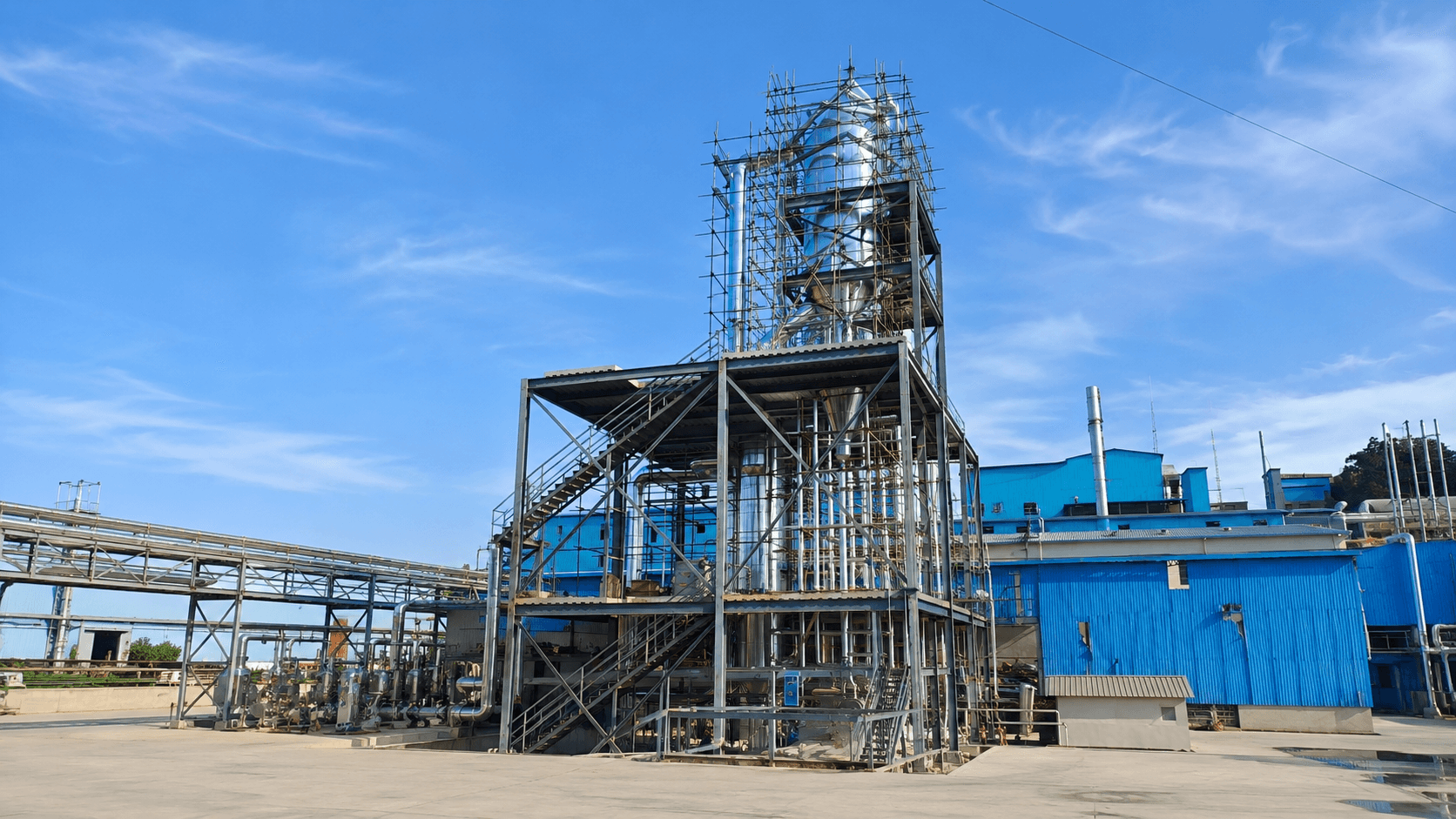
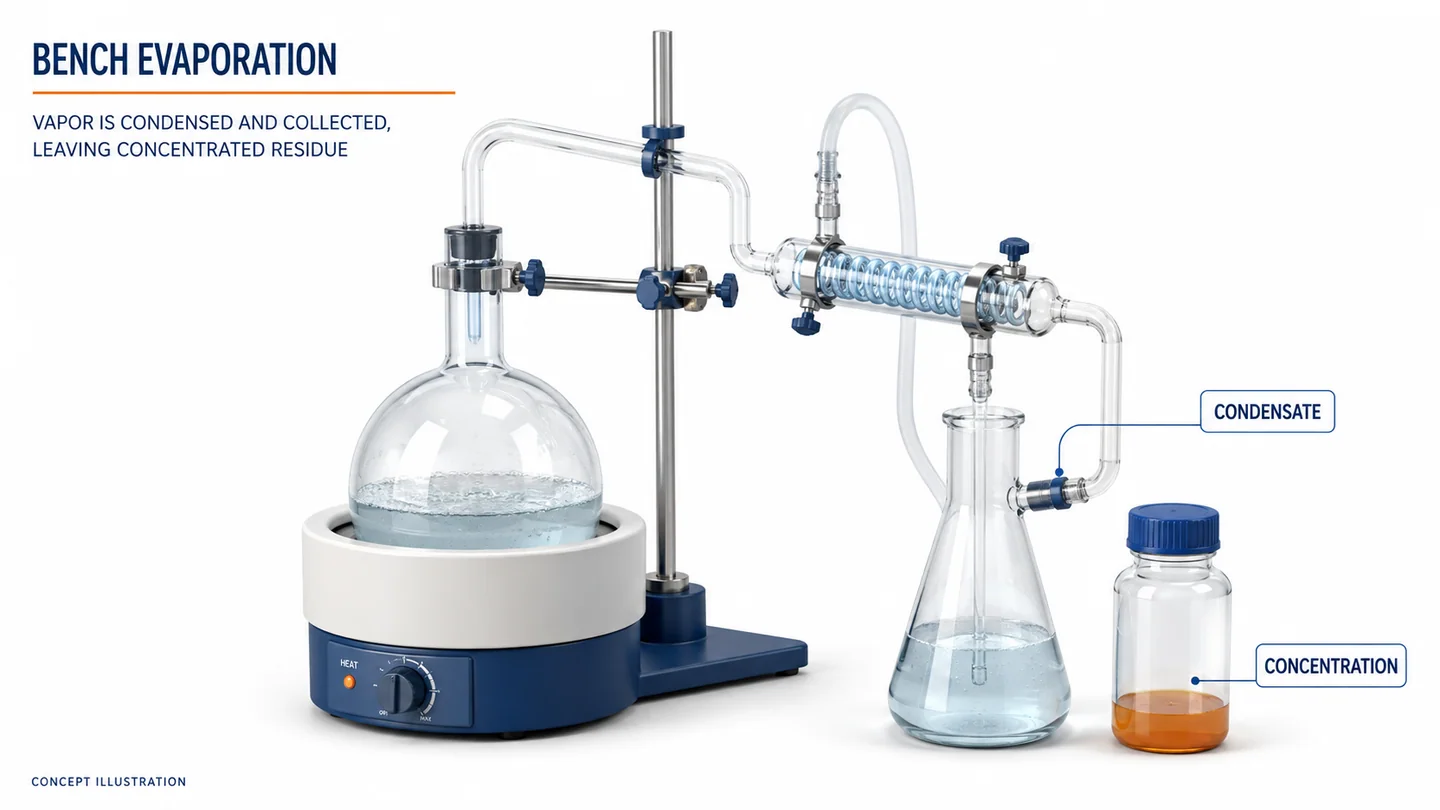
Evaporation separates water as vapor and leaves a more concentrated liquid or solids. It can treat streams beyond the practical salinity range of conventional RO, but thermal energy and heat-transfer stability matter.
Reasons to consider evaporation
- no acceptable liquid concentrate discharge exists;
- the concentrate volume is already minimized;
- water recovery justifies the energy and capital;
- the residual can be managed;
- available steam, electricity or waste heat supports the selected process;
- membranes cannot reach the required concentration reliably.
Feed issues that must be tested
Scaling can reduce heat transfer. Organics and surfactants can foam. Chlorides and temperature affect corrosion. Volatile compounds and ammonia can enter condensate. High solids or viscosity can impair circulation. Boiling-point elevation changes energy and capacity calculations.
An evaporator proposal should therefore include feed envelope, concentration target, expected boiling-point elevation, heat source, specific utility basis, circulation philosophy, cleaning strategy, wetted materials, condensate expectation and residual discharge method.
MEE, MVR and Forced Circulation: Different Decisions
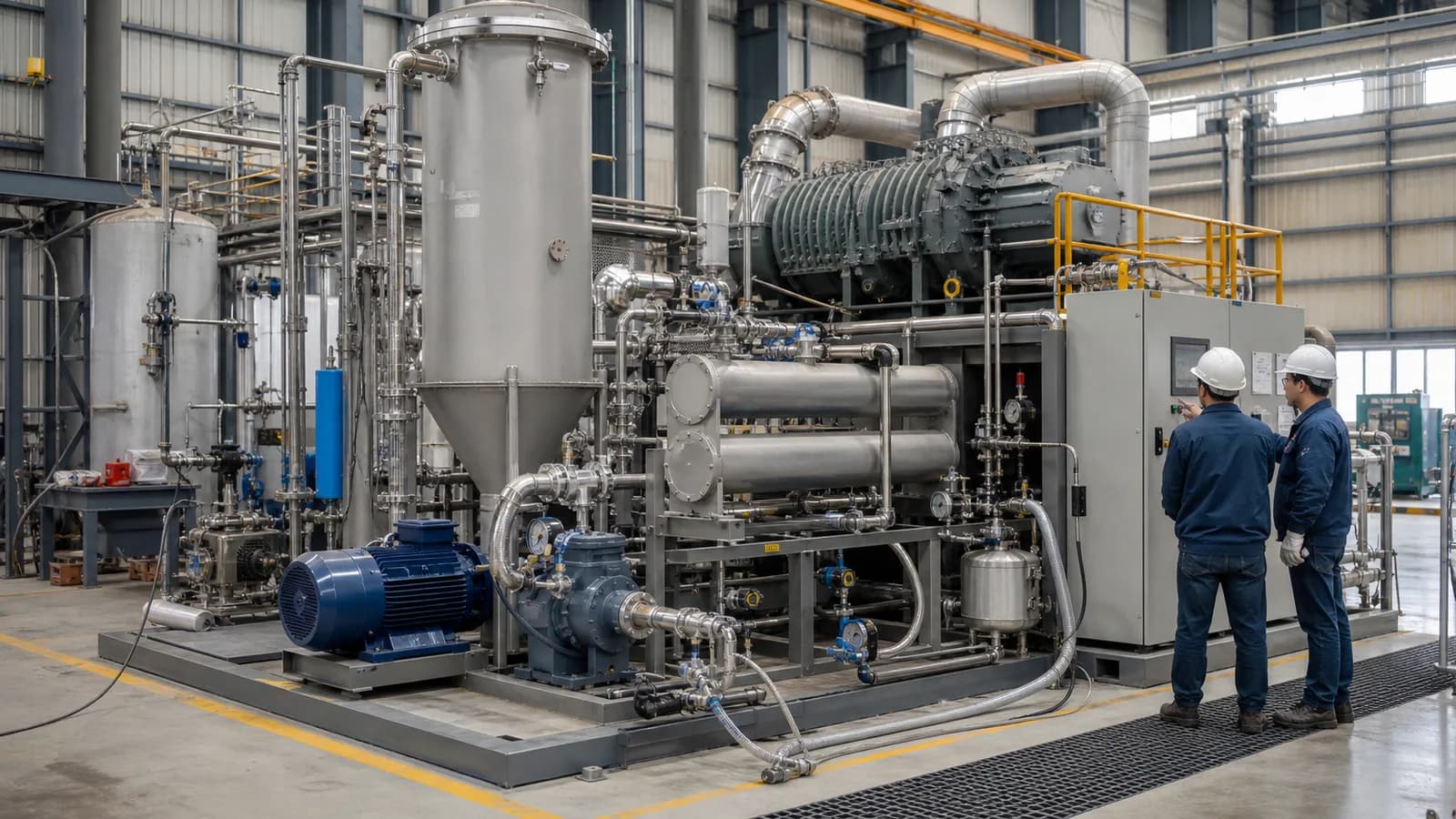
Multiple-effect evaporation reuses vapor energy across effects and commonly relies on an external steam source. Mechanical vapor recompression compresses vapor and reuses it as heating steam, typically shifting more demand to electricity. Forced circulation moves liquid rapidly through an external heater and can help manage crystallizing or fouling duties.
These descriptions do not determine the best configuration. Selection depends on capacity, steam and electricity price, heat source, boiling-point elevation, fouling, crystallization behavior, turndown, operator capability and maintenance.
A supplier should compare utilities and cleaning under the same feed and concentration basis. Quoting one “energy-saving” number without that basis is not meaningful.
Step 5: Crystallization and Final Residuals
If ZLD requires solids, a crystallizer, dryer, filter press or other solids-separation stage may follow evaporation. The resulting material may contain mixed salts, organics, metals and treatment chemicals.
Do not assume it is a commercial salt. Confirm composition, purity, moisture, leachability where required, handling characteristics, packaging, storage and the permitted destination. If sale or reuse is proposed, require a real off-take route and product specification.
Mother liquor, wash water and equipment-cleaning waste must remain inside the mass balance. Small recurring liquid streams can prevent a system from being truly zero liquid discharge.
Water and Salt Mass Balance
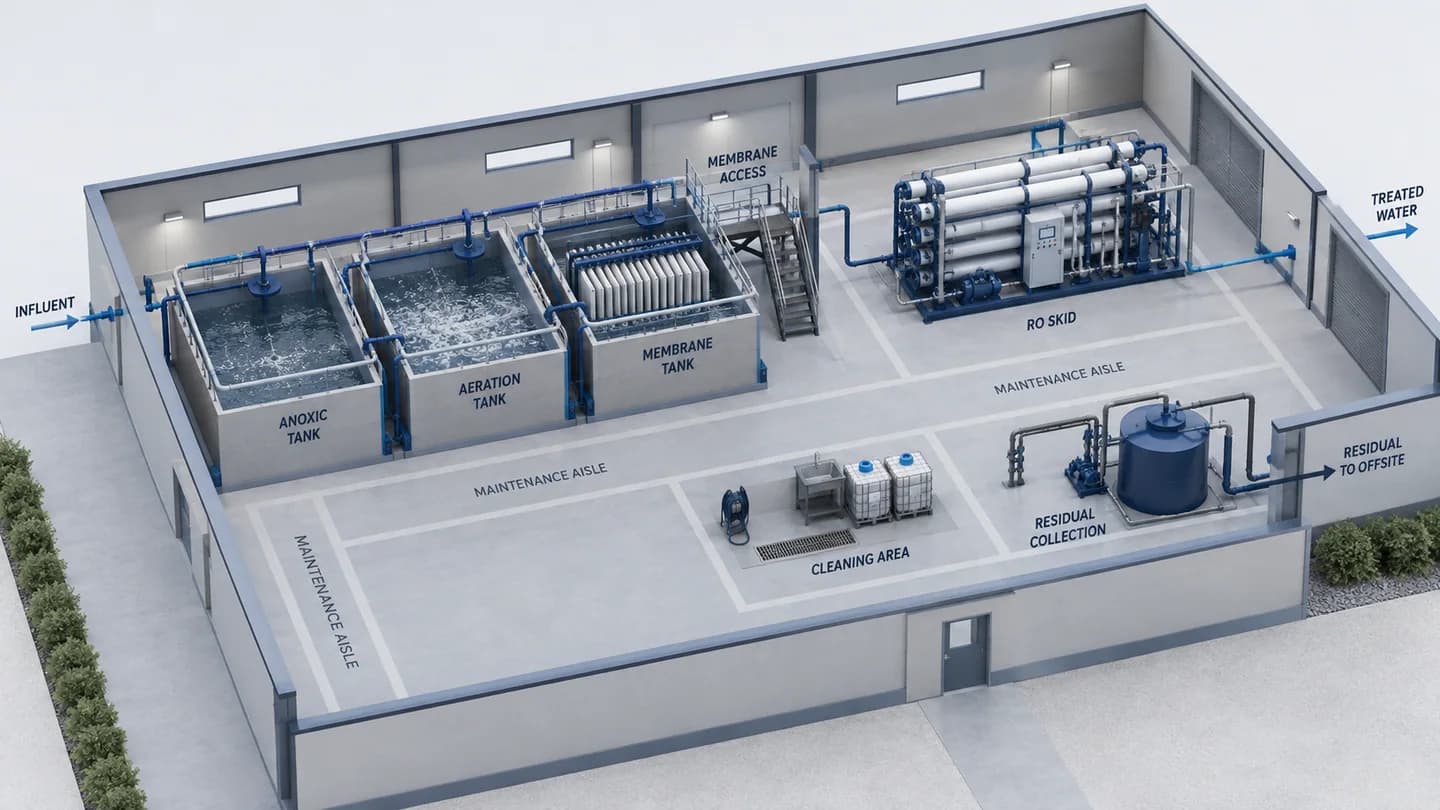
A clear proposal should show:
- feed flow and composition;
- pretreatment sludge and backwash;
- membrane permeate and concentrate;
- evaporation distillate and concentrate;
- crystallizer solids and mother liquor;
- cleaning and off-spec streams;
- recovered water destination;
- all discharge or disposal points.
Use realistic availability and cleaning time, not only nameplate hourly capacity. The balance should close for water and key dissolved constituents.
Materials of Construction
High salinity becomes more aggressive as temperature and concentration increase. Review materials for tanks, piping, pumps, heat exchangers, evaporator bodies, demisters, seals and instruments.
Chloride level alone is not sufficient. Consider pH, oxidants, reducing conditions, temperature, crevices, velocity, solids abrasion and cleaning chemicals. Where uncertainty is significant, corrosion testing or specialist material review may be justified.
Treatability Testing and Pilot Work
Membrane test objectives
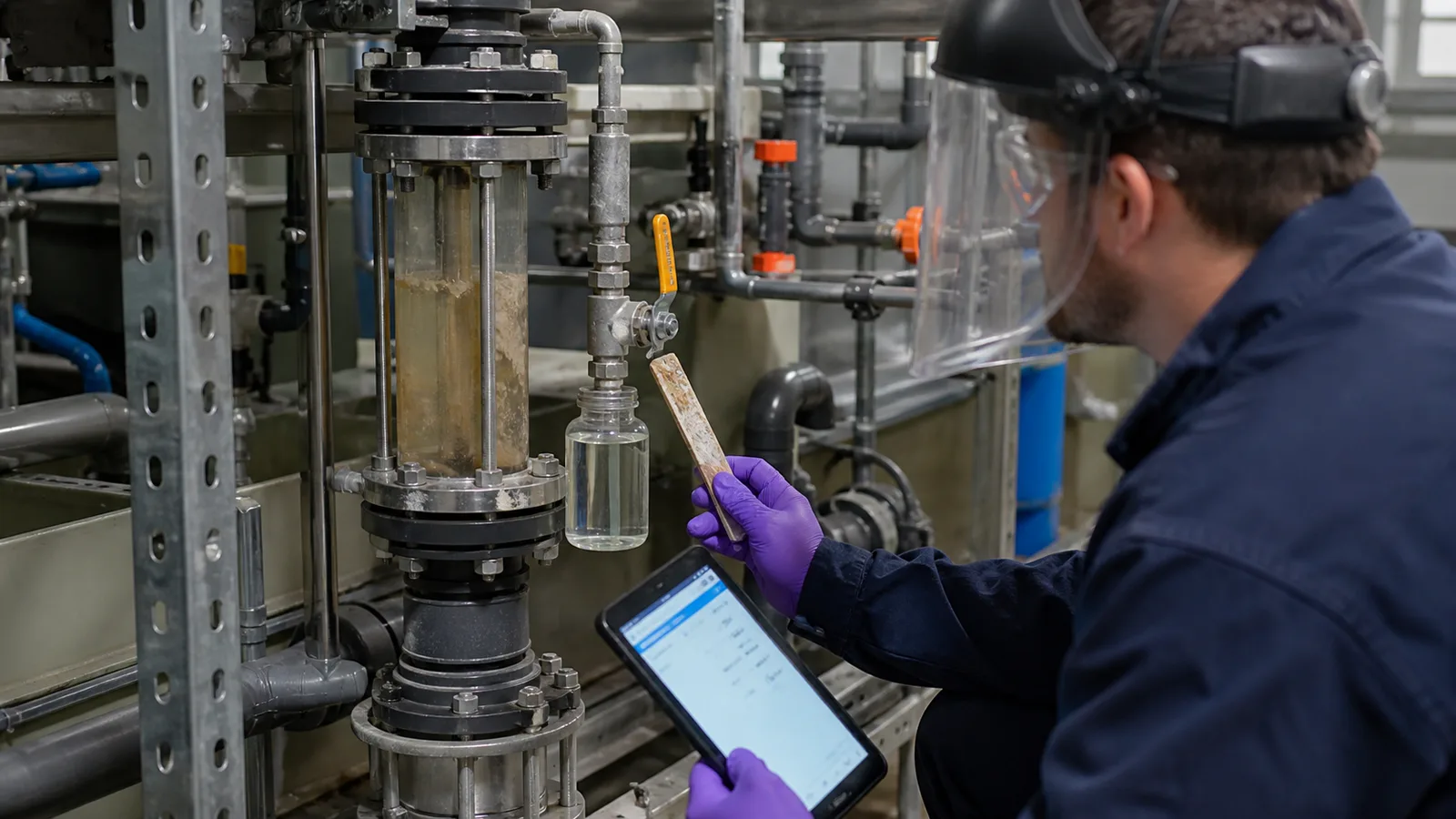
Measure flux, rejection, pressure, recovery, scaling onset, fouling, cleaning response and concentrate quality. Use pretreated real water and include seasonal or batch variation.
Evaporation test objectives
Measure concentration behavior, scaling, foaming, viscosity, boiling-point elevation, condensate COD/ammonia/conductivity, solids morphology and cleaning response. Test the actual concentrate expected after upstream membranes when possible.
Crystallization and dewatering objectives
Evaluate crystal growth, filtration, cake moisture, mother-liquor retention and solids handling. A dry-looking laboratory sample does not automatically represent continuous operation.
Testing does not replace engineering, but it reduces uncertainty in the design basis and acceptance criteria.
Factory Testing, Shipment Inspection and Site Preparation
Factory testing can verify equipment fabrication, identification, dimensions, materials records, pumps, valves, instruments, controls, alarms, interlocks, vacuum or pressure functions where appropriate and clean-water circulation. A thermal system may also require checks of compressors, heat exchangers, separators and safety devices.
Factory testing cannot prove long-term scaling, membrane fouling, condensate quality or salt characteristics without representative process feed. These belong in agreed site performance tests.
Shipment inspection should verify preservation, dry or wet storage requirements, capped connections, lifting points, loose components, insulation protection, packing lists, spares and export packaging.
Before installation, confirm foundations, drainage, ventilation, lifting, service access, steam or electrical capacity, cooling, clean water, compressed air, chemical storage, condensate routing, residual storage and emergency containment. High-salinity systems need room for cleaning and removal of scaled or worn components.
How to Compare Total Cost
Capital cost alone can favor an underspecified system. Compare:
- electricity, steam, cooling water and clean water;
- chemicals and antiscalant;
- membrane and consumable replacement;
- cleaning frequency and downtime;
- sludge, brine and salt disposal;
- operator and laboratory workload;
- spare parts and international service;
- recovery value of water or product;
- cost of off-spec operation and backup disposal.
Ask suppliers to state the feed, recovery, concentration and annual operating hours behind their utility estimate.
Common Procurement Mistakes
- Selecting an evaporator from flow and TDS only.
- Using conductivity without a full ionic analysis.
- Assuming a universal maximum TDS for RO.
- Maximizing membrane recovery without checking scale saturation.
- Treating antiscalant as a substitute for pretreatment.
- Ignoring volatile contaminants in evaporator condensate.
- Calling mixed residual solids a saleable salt.
- Leaving mother liquor and cleaning waste outside the ZLD balance.
- Comparing MVR and MEE with different feed or concentration assumptions.
- Using clean-water FAT as proof of long-term process performance.
FAQ
At what TDS does reverse osmosis stop working?
There is no single cutoff. Practical feasibility depends on osmotic pressure, membrane pressure limits, temperature, scaling, fouling, recovery and required permeate quality. A full analysis and projection are required.
Is evaporation always required for ZLD?
Most conventional ZLD routes use thermal concentration and solids handling, but the required configuration depends on the feed, recovery target and residual route. Source reduction and membranes can reduce the thermal load.
What pretreatment is needed before an evaporator?
It depends on scale-forming ions, suspended solids, organics, oil, surfactants, metals, ammonia and volatile compounds. Softening, clarification, filtration, oxidation, biological treatment or other steps may be evaluated.
Can evaporator condensate be reused directly?
Not automatically. Volatile compounds, ammonia, entrainment and corrosion products can affect condensate. Analyze it against the intended reuse specification and add polishing where required.
Is MVR always more energy-efficient than MEE?
MVR can reduce external steam demand but uses electricity and depends on vapor-compressor performance and boiling-point elevation. MEE may be attractive where steam conditions are favorable. Compare both on the same design basis.
What information belongs in a high-salinity wastewater RFQ?
Provide source map, full ionic and organic analysis, flow variation, temperature, existing pretreatment, required recovery, water destination, residual-disposal route, utility prices and availability, site conditions and project location.
Conclusion
High-salinity wastewater treatment is a staged concentration and residual-management problem. The strongest projects minimize unnecessary volume, remove the specific contaminants that limit recovery, use membranes within a defensible operating envelope and reserve thermal treatment for the stream that actually requires it.
Every proposal should include a water and salt balance, realistic utility basis, materials review, cleaning strategy and final residual route. That information is more valuable than a technology label or an unsupported recovery percentage.
CTA
Comparing RO, membrane concentration and evaporation for a high-salinity stream? Send Baihuipu your source description, full water analysis, average and peak flow, temperature, target recovery, reuse or discharge requirement, residual constraints, available utilities and destination country. The technical team can identify missing inputs before a process comparison is prepared.