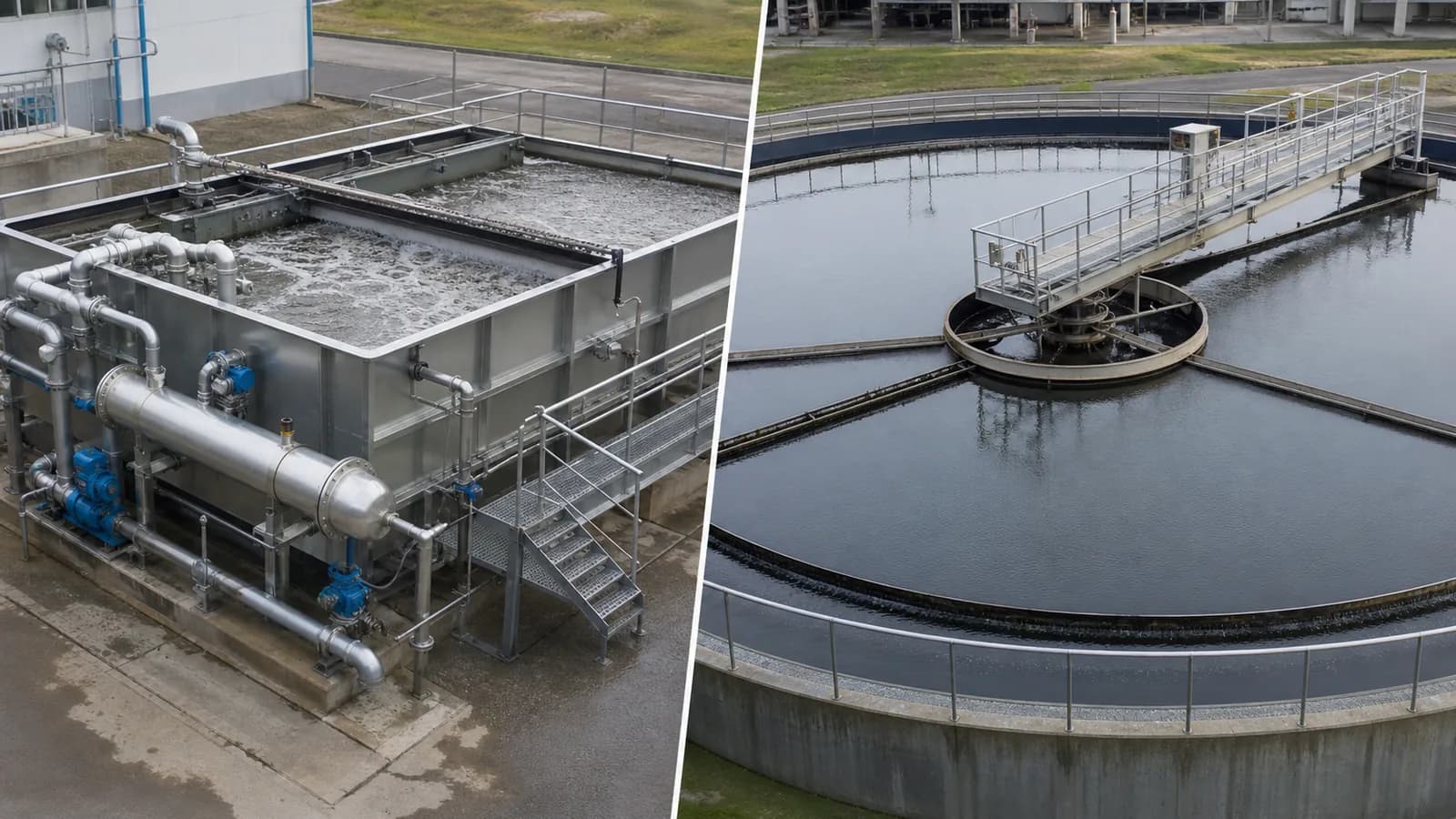
Introduction
Choose dissolved air flotation when the target contaminants are light, slow-settling, close to water density, or associated with oil and grease, and when coagulation and flocculation can create particles that bubbles will lift. Choose a gravity clarifier when the solids form dense, settleable flocs and the site can provide the surface area, hydraulic stability, and sludge-withdrawal conditions needed for sedimentation.
That direct answer is useful for shortlisting, but it is not enough to design a system. Industrial wastewater changes with production schedule, cleaning, chemical use, temperature, product losses, and equalization. The correct separator depends on particle behavior after any required pH adjustment, emulsion breaking, coagulation, and flocculation—not only on a laboratory TSS number.
DAF and clarification are separation steps. Neither should be presented as a universal solution for dissolved salts, dissolved organics, ammonia, or all forms of color. Their role must be defined within the complete process train and checked against the downstream biological, membrane, reuse, or discharge objective.
The Direct Answer
Shortlist DAF when:
- fats, oils, grease, fibers, algae, light flocs, or low-density suspended matter are important targets;
- gravity settling is slow or inconsistent;
- the wastewater can be conditioned into strong, floatable flocs;
- a compact clarification footprint is valuable; and
- the plant can support recycle pressurization, air dissolution, skimming, and chemical control.
Shortlist a gravity clarifier when:
- the solids or precipitated flocs are measurably settleable;
- hydraulic and solids loading can be kept within a stable operating window;
- floor area is available;
- sludge can be withdrawn before it compacts, floats, or becomes septic; and
- a simpler gravity-based separation stage fits the process.
If the wastewater contains both free oil and dense mineral solids, pretreatment or staged separation may be more reliable than forcing one unit to handle every contaminant.
What DAF Actually Does
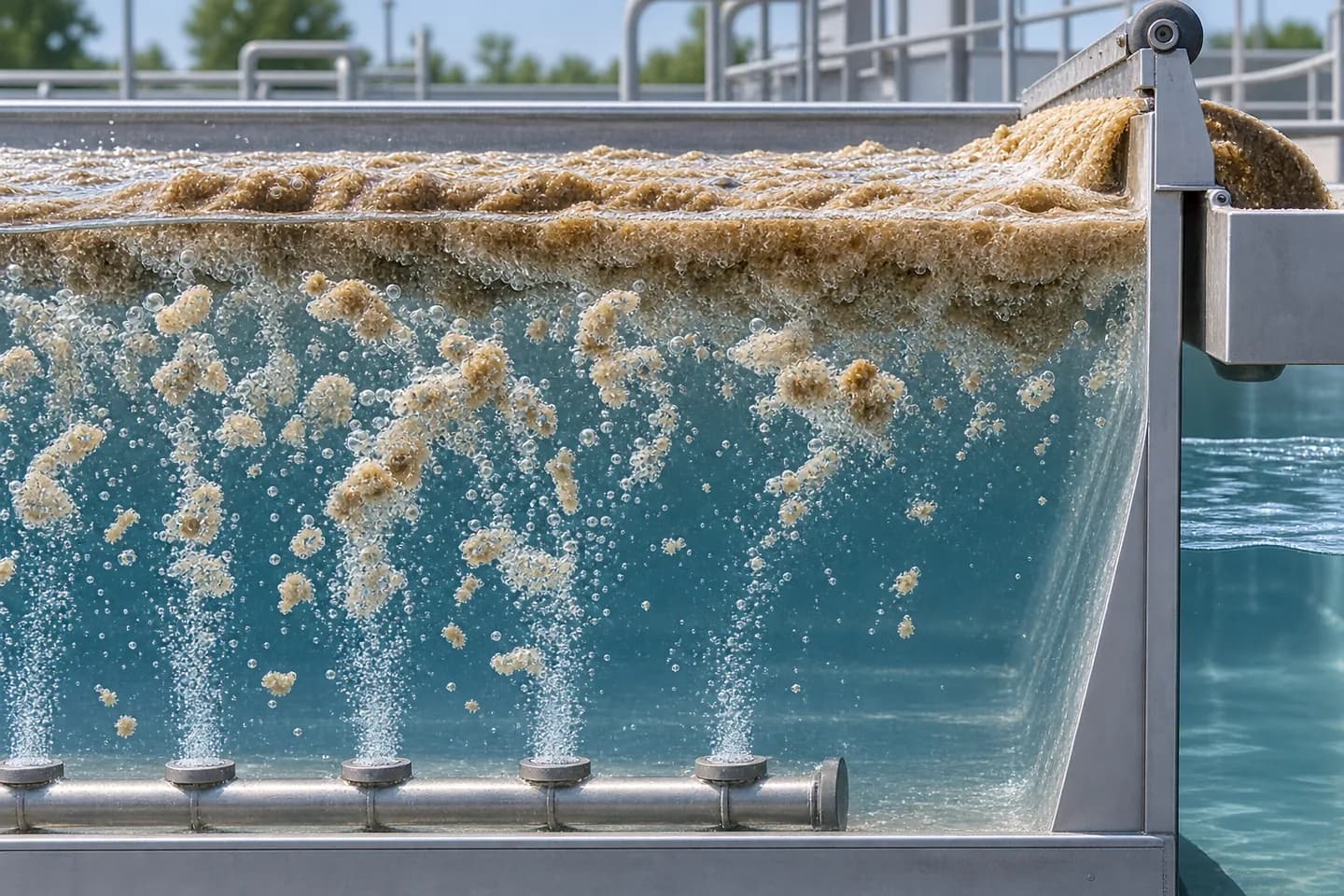
A dissolved air flotation system dissolves air into water under pressure and then releases the pressurized stream into a flotation zone. As pressure falls, fine bubbles form. These bubbles attach to, become trapped in, or otherwise interact with conditioned particles, reducing the effective density of the bubble-particle aggregate so it rises. A surface skimmer removes the floated solids.
The US EPA describes DAF as applicable to suspended solids and dispersed oil, including situations where oil-wet solids are difficult to separate by gravity. The mechanism is sensitive to surface chemistry: emulsion breaking, coagulant selection, floc strength, recycle conditions, mixing, and bubble-particle contact can all change the result.
A DAF package commonly includes:
- inlet distribution and flotation zone;
- recycle pump and air-dissolution system;
- pressure-release devices;
- coagulation and flocculation equipment where required;
- surface skimmer and floated-sludge hopper;
- bottom solids removal for settleable material;
- instruments, controls, platforms, drainage, and access.
The last item matters. Some industrial streams carry both floating and settling solids. A DAF unit that is not designed to remove bottom deposits can accumulate grit or dense precipitate.
What a Gravity Clarifier Actually Does
A gravity clarifier reduces water velocity and provides area and depth for particles to settle. In chemically assisted clarification, upstream mixing creates larger, denser flocs. Settled solids collect in a hopper or along the floor and are removed by gravity, pumps, scrapers, or another withdrawal mechanism. Clarified water leaves through launders or weirs.
Clarification performance depends on more than detention time. Inlet energy, short-circuiting, surface overflow conditions, solids loading, floc properties, sludge blanket management, weir distribution, temperature, and flow peaks all affect separation. A large tank can still perform poorly if the feed is not distributed or conditioned correctly.
Clarifiers are often a good fit for dense inorganic precipitates and other solids that demonstrate reliable settling. They can be operationally straightforward, but they require enough plan area and a sludge-removal strategy suited to the solids. Some sludge compacts rapidly; other sludge produces gas or becomes buoyant if held too long.
DAF vs Clarifier: Buyer Comparison
| Decision factor | Dissolved air flotation | Gravity clarifier |
|---|---|---|
| Separation direction | Solids rise to the surface with bubbles | Solids settle to the bottom under gravity |
| Strong screening fit | Light particles, fats/oils/grease, fibers, algae, slow-settling flocs | Dense, settleable particles and precipitated flocs |
| Pretreatment dependency | Often requires emulsion breaking, coagulation and flocculation | Often requires pH adjustment, coagulation and flocculation for fine particles |
| Hydraulic equipment | Recycle/pressurization and air-release system | Inlet distribution, settling zone, sludge collection |
| Sludge form | Floated sludge removed from surface; bottom solids may also need handling | Settled sludge removed from hopper or floor |
| Footprint tendency | Can be compact for suitable flotation duties | Often requires more surface area for the same flow, subject to design basis |
| Main operating sensitivities | Floc strength, recycle ratio, pressure, bubble formation, skimming | Flow distribution, settling behavior, sludge blanket, weirs, short-circuiting |
| Best proof method | Bench conditioning plus flotation simulation or pilot test | Jar testing plus settling-column or pilot clarification test |
These are qualitative tendencies. Equipment dimensions and guaranteed results must come from the agreed flow envelope, loading criteria, sample testing, and supplier design.
Determine Whether the Solids Want to Float or Settle
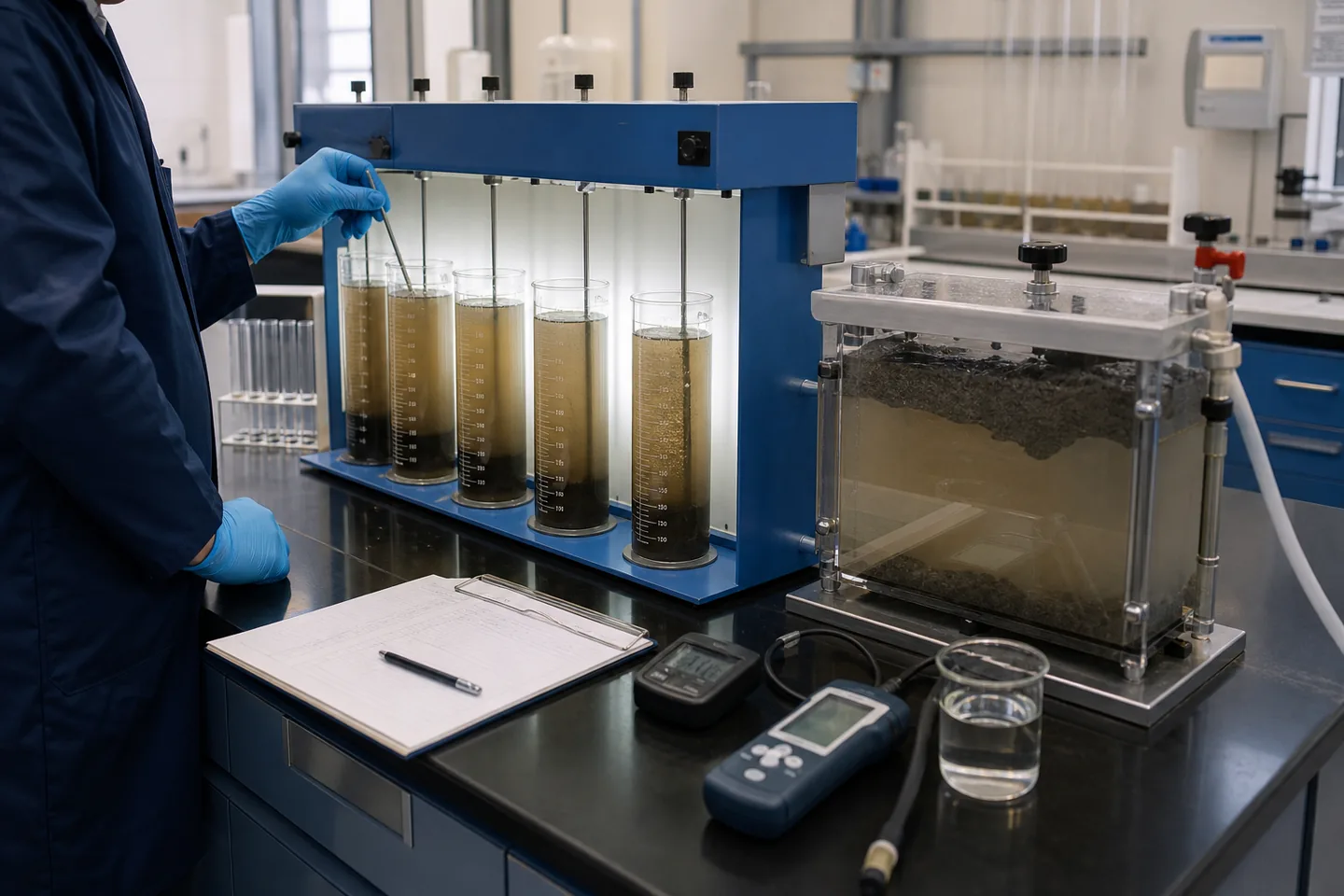
The most valuable early test is an observation of particle behavior under realistic chemistry.
Settling Indicators
After pH adjustment and any proposed coagulation/flocculation, observe:
- how quickly a distinct interface develops;
- whether flocs remain intact or shear apart;
- clarified-water turbidity over time;
- sludge volume and compaction;
- whether settled solids later rise because of gas or entrained oil;
- the effect of temperature and sample age.
A clear upper layer and a stable, compacting sludge zone support gravity clarification as a candidate. Slow settling, diffuse pin floc, or persistent oil can point away from a clarifier, but chemical optimization should be reviewed before the technology is rejected.
Flotation Indicators
For DAF, assess whether conditioned particles interact with fine bubbles and produce a removable surface layer. Observe:
- rise rate and surface coverage;
- clarity below the floated layer;
- strength and skimmability of the float;
- free oil versus emulsified oil behavior;
- bottom deposition of dense particles;
- sensitivity to coagulant, polymer, pH, mixing, and recycle conditions.
A simple jar test without representative bubble conditions cannot fully establish DAF performance. It is useful for chemical screening but should not be mistaken for a complete flotation test.
Data Required Before Selection
Hydraulic Profile
Provide normal, minimum, peak, and cleaning flows, along with the duration of peaks. State whether equalization is installed and how its level and mixing are controlled. A separator selected for an average flow can fail during a short but severe washdown event.
Suspended and Settleable Solids
Report TSS as a range and connect samples to production conditions. Where relevant, include particle-size observations, settleable-solids tests, and sludge-volume behavior. TSS alone does not indicate density, surface properties, or separability.
Oil and Grease
Identify whether oil is free, dispersed, or emulsified. Explain which cleaners, surfactants, coolants, or process chemicals are present. Free oil removal upstream may reduce chemical demand; stable emulsions may require chemical or process changes before either DAF or clarification performs well.
pH and Precipitation Chemistry
For metal-bearing or chemically precipitated wastewater, define the pH range, target species, reagent sequence, reaction time, and expected competing ions. A separator cannot compensate for incomplete precipitation or poor floc formation.
Temperature and Variability
Temperature changes viscosity, gas solubility, biological activity, and reaction behavior. Cleaning cycles or product changeovers may also alter the surface chemistry that controls flotation. Include seasonal and production-cycle ranges.
Downstream Requirement
Clarify whether the separator protects a biological reactor, membrane, media filter, RO system, discharge point, or reuse process. The acceptable effluent is defined by the next step. For example, controlling oil before biological treatment is a different duty from polishing low suspended solids before a membrane.
Industry Scenarios
Food and Beverage Wastewater
Food processing streams can contain fats, oils, grease, proteins, fibers, and suspended product. DAF is often shortlisted because many of these materials float or can be chemically conditioned into floatable flocs. However, rapidly changing pH and cleaning chemicals can destabilize the process. Equalization, screening, pH control, and a test-based chemical program remain essential.
The separated load should be included in the sludge plan. A DAF that removes more organic solids may reduce downstream biological load, but it also creates a concentrated float that must be stored and dewatered without odor or overflow.
Metal Finishing and Electroplating Wastewater
After reduction, oxidation, pH adjustment, precipitation, and flocculation, metal hydroxide solids may settle well enough for a clarifier. In other cases, low-density flocs, oil from machining, or space constraints make DAF worth testing. Do not select by industry label alone. The actual precipitation chemistry and solids behavior decide.
Segregation is also important. Concentrated chelated, cyanide-bearing, chromium-bearing, oily, or acidic streams may need dedicated pretreatment before they enter a combined clarification stage.
Oily Industrial Wastewater
DAF can be appropriate for dispersed oil and oil-associated solids after free oil and stable emulsions are addressed. The EPA’s industrial wastewater guidance notes the use of DAF for suspended solids and dispersed oils, but performance is tied to emulsion-breaking and surface chemistry. A supplier should not treat “oil and grease” as one uniform contaminant.
Mineral or Dense Inorganic Solids
Gravity clarification is often a logical candidate where particles or precipitates are dense and settle consistently. Grit or sand should normally be managed so it does not overload scrapers, hoppers, or pumps. If a DAF is selected for other contaminants in the same stream, bottom-solids removal still requires explicit design.
Chemical Conditioning Can Change the Answer
Coagulants neutralize or destabilize fine particles; polymers help form larger flocs. But more chemical is not automatically better. Excessive coagulant can increase sludge mass, alter pH, add dissolved load, or restabilize particles. Excess polymer can create sticky sludge, interfere with downstream processes, or increase operating cost.
Test the sequence as well as the dose:
- adjust pH or break emulsions where necessary;
- apply rapid mixing for coagulant dispersion;
- provide controlled, lower-shear flocculation;
- expose the formed floc to representative settling or flotation conditions;
- measure both clarified water and produced sludge.
Record doses by active chemical per unit of wastewater or dry solids, not only as pump percentages. State whether chemical use is an initial test value, a design allowance, or an operating guarantee.
Evaluate the Residuals, Not Only the Clear Water
DAF float and clarifier underflow have different concentration and handling behavior. The best separator may be the one that produces a residual compatible with storage, pumping, dewatering, transport, or recovery—not simply the clearest beaker after five minutes.
Review:
- expected sludge volume and solids concentration;
- frequency and control of removal;
- hopper, scraper, skimmer, and pump suitability;
- polymer carryover;
- odor and biological degradation;
- downstream thickening or dewatering;
- return liquor from sludge processing;
- containment for overflow and washdown.
If the disposal route has a solids, moisture, or contaminant acceptance rule, include it in the selection basis.
Build a Process Train, Not an Isolated Separator
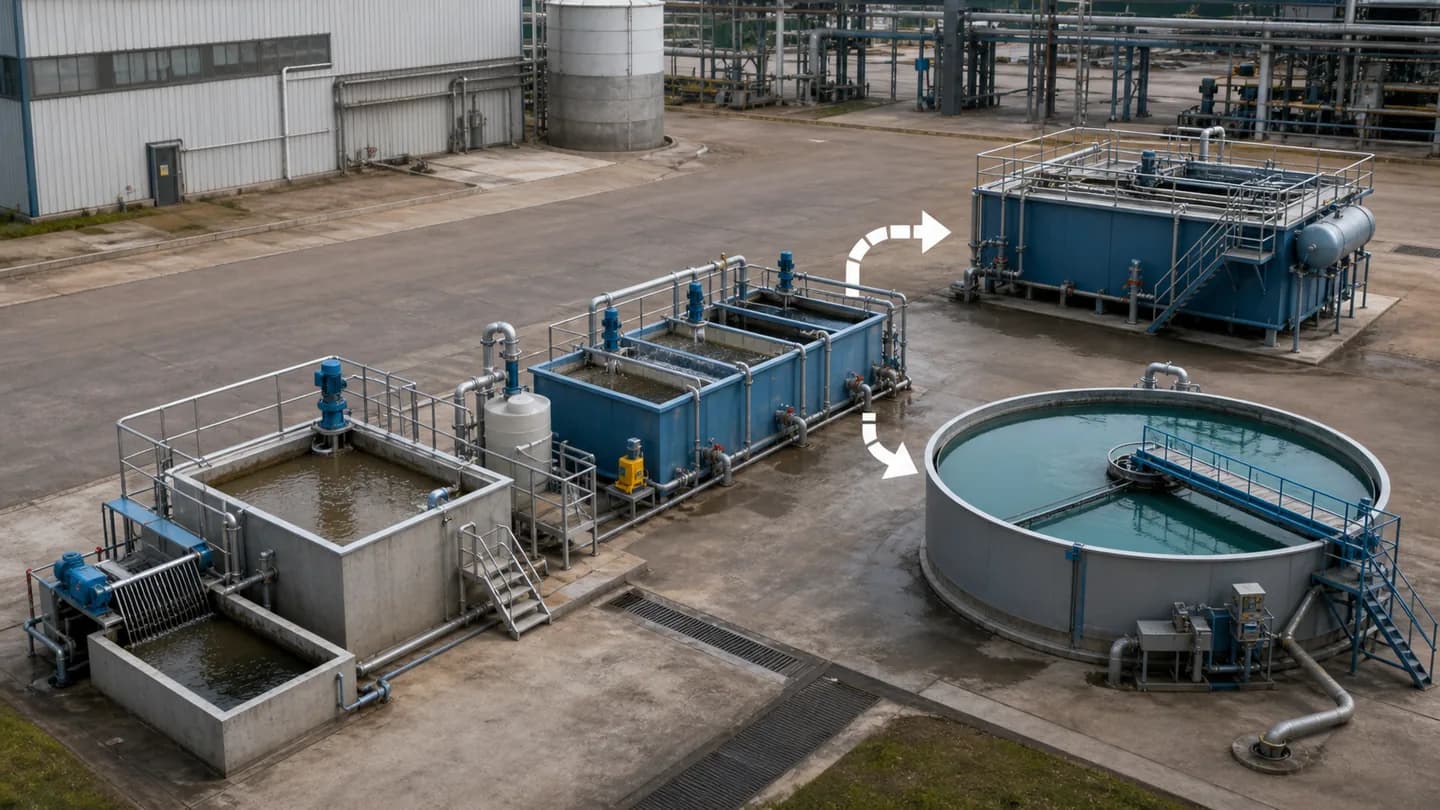
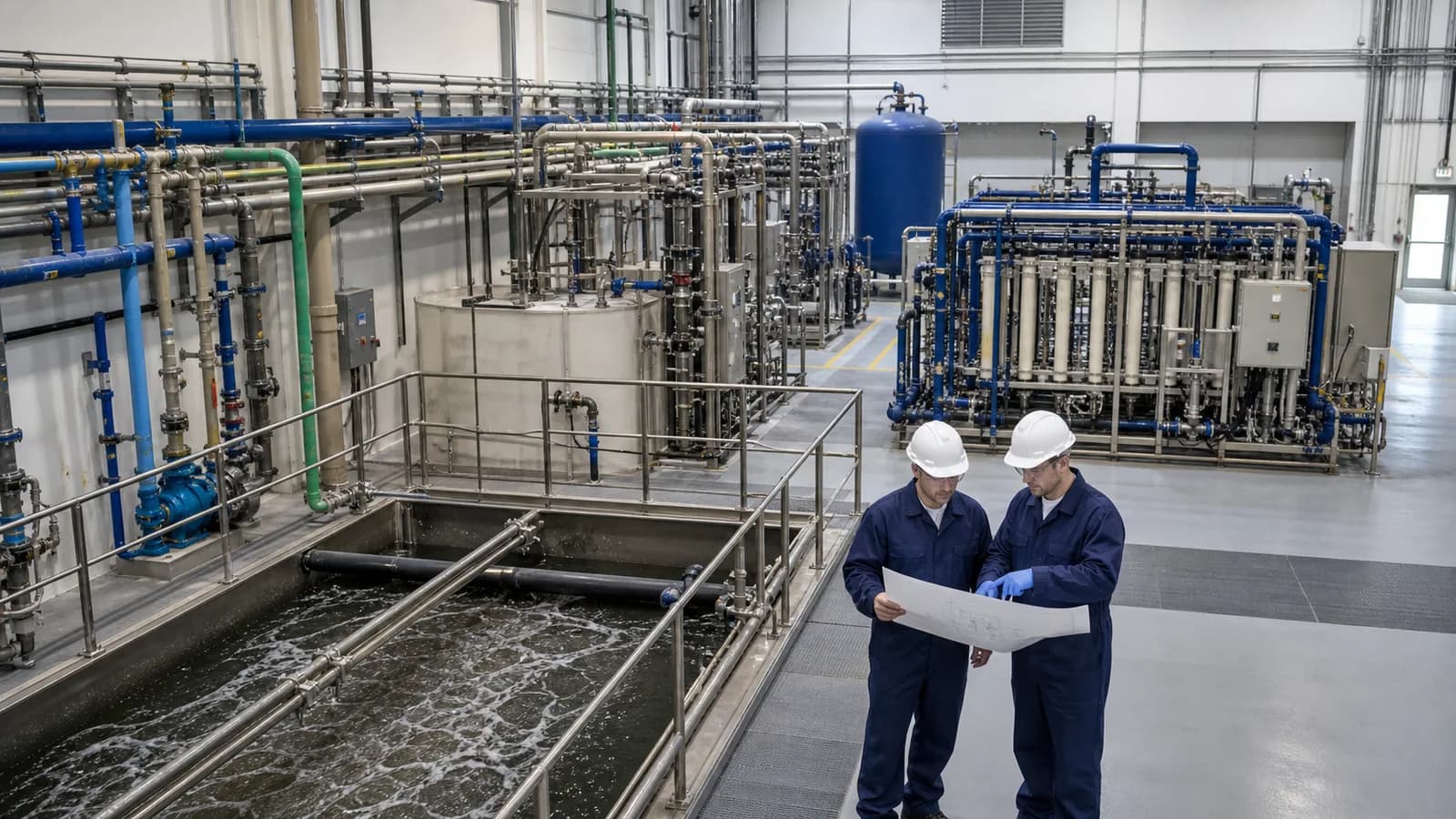
A common industrial arrangement may include screening, equalization, reaction, coagulation, flocculation, DAF or clarification, downstream treatment, and sludge handling. Not every project needs every step. Define chemical systems, recycle equipment, sludge removal, drainage, instruments, controls, pipe elevations, and pump duties at the separator’s battery limits so the package fits the hydraulic profile.
Testing and Proposal Review
Use Representative Samples
Collect across normal production, cleaning, product change, and known upset conditions. Note sample age and temperature. Oil emulsions and biological wastewater can change during storage, so testing old samples without qualification may mislead the design.
Compare Both Routes on the Same Basis
Where the choice remains open, compare DAF and settling with the same feed samples, chemical dose basis, water-quality methods, and target. Measure residual turbidity or TSS where practical, sludge volume, chemical consumption, and operational stability. Record qualitative observations but do not replace measurements with photographs.
Define What the Supplier Must State
The proposal should separate:
- buyer-provided measurements;
- supplier assumptions;
- bench or pilot results;
- calculated design values;
- estimated operating values; and
- guaranteed acceptance criteria.
This separation makes proposals easier to compare and reduces later disagreement.
Mid-article CTA
Review Your Separation Test Plan Send your flow profile, TSS, oil and grease information, pH range, production schedule, current chemical program, and downstream target. Baihuipu can identify whether settling, flotation, or additional testing should be evaluated. Send Your Requirements
Factory Testing, Shipment Inspection, and Site Preparation
Factory acceptance can verify tank and skid workmanship, pump and motor rotation, skimmer or scraper movement, valve sequences, instrumentation, alarms, emergency stops, control logic, leakage checks with water where appropriate, and documentation. It cannot prove separation performance on the buyer’s wastewater unless a representative feed and agreed test method are used.
Shipment inspection should confirm loose chemical equipment, recycle components, pressure vessels where applicable, skimmer parts, instruments, access platforms, pipe labels, spare parts, preservation, and packing. Any component removed for transport should have a reinstallation record.
Site preparation should confirm foundation and loads, incoming pipe elevations, drainage, overflow containment, ventilation, chemical storage, wash water, electrical supply, operator access, lifting clearance, and the route for removing floated or settled sludge. On mobile layouts or containerized installations, the same engineering requirements remain; only the available space becomes tighter.
Common Mistakes
Selecting from Equipment Appearance
A compact DAF still needs recycle, air dissolution, chemicals, sludge storage, platforms, and maintenance access. A mechanically simpler clarifier still depends on distribution, hydraulic stability, floc quality, sludge-blanket control, and withdrawal. Compare the complete process and layout rather than the visible tank.
Treating Dissolved COD as Suspended Solids
DAF and clarification remove separable particles and associated contaminants. Dissolved organic matter may pass through unless it is chemically converted, adsorbed, biologically treated, oxidized, or separated in another step. Test filtered and unfiltered parameters when this distinction matters.
Forgetting Startup and Cleaning Wastewater
The most difficult water may occur during changeover or cleaning rather than steady production. If it reaches the separator as a short peak, average-day data can produce an undersized or unstable system.
FAQ
Is DAF better than a clarifier for oily wastewater?
DAF is often better suited to dispersed oil and oil-associated light solids, especially after free-oil removal and emulsion breaking. It is not automatically effective on every emulsion. Surfactants, temperature, pH, chemical conditioning, and bubble-particle interaction should be tested.
Can DAF remove dissolved oil or dissolved COD?
DAF removes floatable droplets, particles, and contaminants attached to those solids. Truly dissolved material is not removed simply because a DAF is installed. The process may need emulsion breaking, coagulation, biological treatment, adsorption, oxidation, or membranes depending on the target.
When is a clarifier more appropriate?
A clarifier is a strong candidate when the solids form dense, stable flocs that settle consistently, adequate surface area is available, and sludge withdrawal can prevent accumulation or flotation. Confirm this with representative settling tests and hydraulic design.
Does a DAF always need chemicals?
Not in every duty, but many industrial applications need pH control, coagulant, polymer, or emulsion-breaking steps to form floatable flocs. Chemical selection and dosing should be based on testing rather than copied from another plant.
Can one unit remove both floating and settling solids?
Some DAF designs include bottom-solids removal, and clarifiers can have surface-scum systems. Nevertheless, a stream with major quantities of both may require pretreatment or staged separation. Define each solids fraction and its removal path.
What data should be included in a DAF or clarifier RFQ?
Include normal and peak flows, operating schedule, equalization, TSS, oil and grease characterization, pH, temperature, relevant COD fractions, chemicals, settling or flotation tests, required effluent, downstream process, sludge route, utilities, and site constraints.
Conclusion
DAF and gravity clarification are not competing versions of the same tank. They use opposite separation directions and suit different particle behavior. DAF is generally favored for light, slow-settling, oily, or floatable solids; clarification is generally favored for dense, reliably settleable flocs. Chemistry, flow variation, residuals handling, and downstream requirements can change that first choice.
The safest procurement route is to define the water and production envelope, test both particle conditioning and separation behavior, evaluate the complete residuals balance, and require the proposal to distinguish measurements, assumptions, estimates, and guarantees. That produces a system selected for the actual application rather than for a generic industry label.
Final CTA
Request a Solids-Separation Review Share your water analysis, flow profile, oil and solids characteristics, treatment target, site limits, and available samples. Baihuipu can help structure the technical inputs needed for a DAF or clarification proposal. Get a Quote