Introduction
“Pharmaceutical wastewater” is an industry label, not a single water type. A formulation plant, fermentation facility, bulk-drug manufacturer, antibiotic plant and biotechnology site can generate completely different wastewater. Even within one factory, the effluent may change with product campaigns, cleaning sequences, synthesis stages, solvent recovery and batch scheduling.
This variability is why a standard catalogue treatment plant is a weak starting point. A combined wastewater sample may show one COD value while hiding concentrated mother liquor, solvent-bearing wash water, biodegradable utility streams and a short inhibitory cleaning discharge. If those streams are mixed too early, the final treatment system may become larger, less stable and harder to operate.
The World Health Organization’s 2024 guidance on antibiotic manufacturing wastewater also reinforces an important point: controlling conventional parameters alone may not address the environmental significance of antibiotic residues. The buyer must define which compounds and outlet requirements actually apply to the project rather than assuming that COD removal proves removal of every active ingredient.
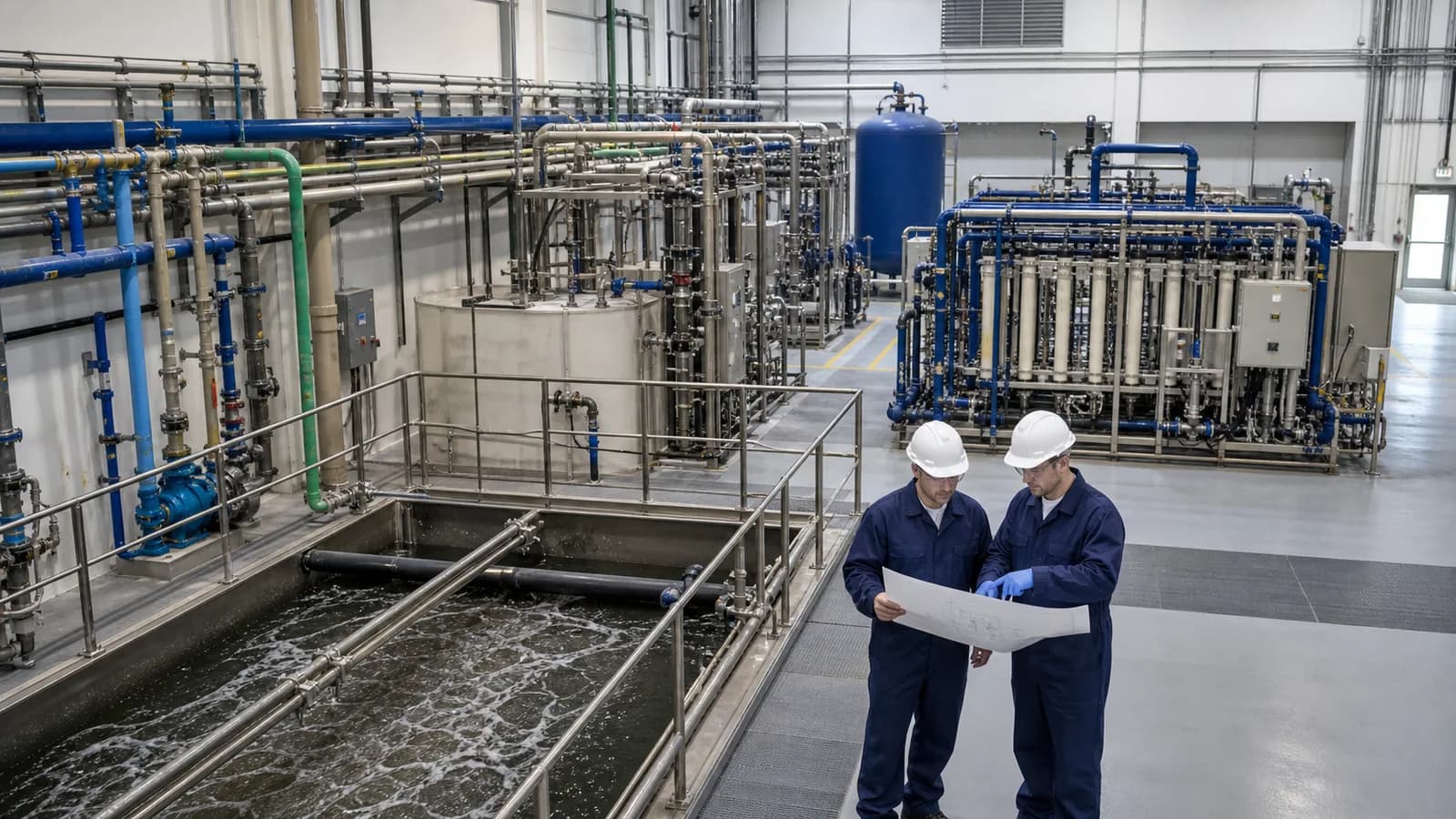
This guide explains how buyers can map pharmaceutical wastewater, compare biological treatment, advanced oxidation and membrane polishing, prepare testing, and translate customer requirements into a defensible equipment scope. It supports evaluation of a Pharmaceutical & Biotechnology water-treatment solution and a project-specific industrial wastewater treatment system.
Start With Wastewater Segregation
The most valuable design decision may happen before any treatment equipment is selected. Wastewater streams should be mapped from their production source to their final collection point.
Typical stream families
| Stream family | What the buyer should identify | Why segregation may matter |
|---|---|---|
| High-strength process waste | Product, intermediates, COD, solvent, salt, toxicity and batch volume | A small volume may carry a large fraction of the total contaminant load |
| Solvent-bearing water | Solvent identity, concentration, flash point, volatility and recovery route | Safety, air handling and recovery may be more important than biological treatment |
| API- or antibiotic-bearing water | Named compounds, campaign schedule, analytical method and outlet requirement | Conventional COD or BOD does not demonstrate compound-specific removal |
| Fermentation or biodegradable streams | BOD/COD relationship, nutrients, temperature and inhibition | These streams may be suitable for biological treatment after confirmation |
| Acidic and alkaline cleaning water | pH range, chemical identity, volume and discharge timing | Controlled neutralization and equalization may be required |
| Saline streams | Conductivity, TDS, chloride, sulfate and specific salts | Salinity can inhibit biology and constrain membrane recovery |
| Utility and relatively clean water | Cooling, boiler, condensate, final rinse and uncontaminated drainage | Cleaner streams may be reused or managed separately instead of loading the ETP |
Segregation does not mean that every pipe needs a separate treatment plant. It means that streams are combined only after their compatibility and treatment role are understood. Concentrated wastes may require recovery, off-site management or dedicated pretreatment. Lower-strength biodegradable streams may feed a biological system under controlled conditions. Relatively clean streams may bypass high-strength treatment entirely.
Define the Treatment Target Before Comparing Technologies
The same wastewater can require different process trains depending on where the treated water will go. The buyer should identify the compliance or reuse point, sampling method, averaging period and responsible party.
Possible project objectives include:
- pretreatment before discharge to an industrial park or municipal system;
- direct discharge under a local permit;
- non-product-contact utility reuse;
- recovery of selected process water after additional polishing;
- concentrate reduction before final residual management;
- control of named active ingredients or antibiotic residues;
- reduction of toxicity or biological inhibition before a downstream plant.
Do not use a generic statement such as “meet international standards.” Limits are jurisdiction- and outlet-specific. If the buyer has not yet received final limits, the proposal should identify them as pending inputs rather than inventing values.
Build a Representative Design Envelope
A single grab sample can be useful, but it rarely describes a campaign-based pharmaceutical plant. Sampling should cover the credible operating envelope.
Record the product or process campaign, sampling point, production state, batch timing, cleaning step, flow and any upstream chemical addition. Composite sampling may represent an average stream, while grab sampling can capture short concentrated or inhibitory discharges. Some volatile, unstable or reactive parameters require specific preservation and prompt analysis.
The design basis should include both concentration and mass load. A high concentration in a very small batch and a moderate concentration in a continuous stream have different hydraulic and process implications. At minimum, define average flow, peak flow, batch volumes, discharge duration, operating days, downtime and the sequence in which batches reach equalization.
Useful analytical categories may include:
- pH, temperature, conductivity, TDS and alkalinity;
- COD, BOD, TOC and biodegradability indicators;
- TSS, oil, emulsions and colour where relevant;
- ammonia, total nitrogen and phosphorus;
- chloride, sulfate, hardness and silica for membrane or concentration routes;
- identified solvents, APIs, antibiotics or priority compounds;
- toxicity or respiration inhibition where biological treatment is considered;
- metals or catalysts where used in the process.
The list must be tailored to the manufacturing route. Safety data sheets and raw-material lists help identify questions but do not replace wastewater sampling.
What Physical-Chemical Pretreatment Can Do
Physical-chemical treatment may protect downstream biology, membranes or oxidation stages. Its role must be defined contaminant by contaminant.
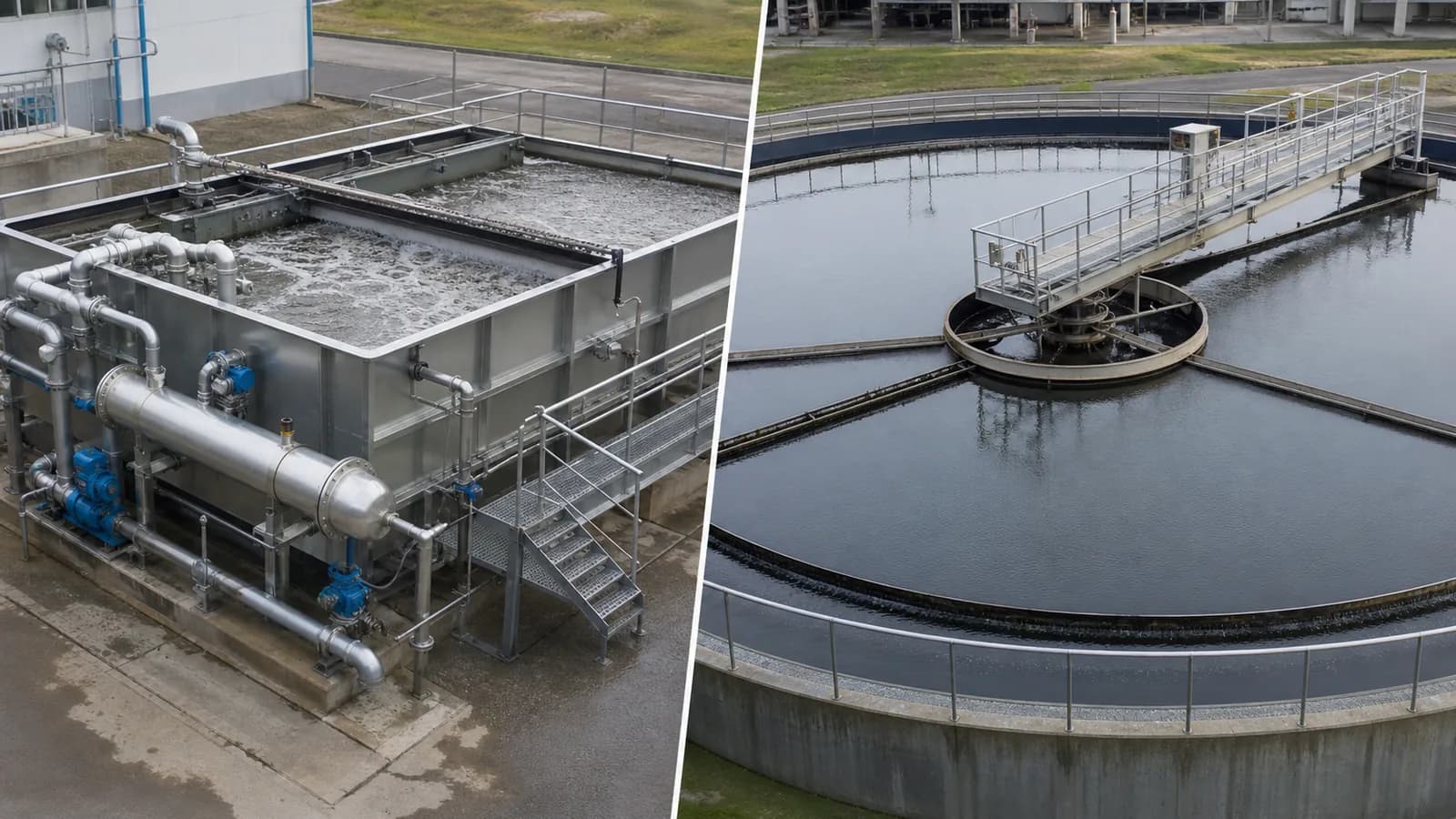
Screening and settling remove gross solids. Oil separation or dissolved air flotation may be relevant when free or conditioned oils and suspended solids are present. Coagulation and flocculation can reduce colloids, colour fractions or suspended material, but performance depends on wastewater chemistry and the selected endpoint. Neutralization controls pH but can generate heat, dissolved salts and precipitated solids.
Chemical precipitation may remove metals or selected inorganic constituents. It does not remove all dissolved organic compounds. Adsorption can target some residual organics, but media capacity, competition, replacement frequency and spent-media management must be defined.
For solvent-bearing streams, treatment selection must begin with solvent identity, concentration, recoverability and safety. Stripping, distillation, recovery or segregated disposal may be more appropriate than sending a concentrated solvent batch into equalization. Explosion protection, ventilation and off-gas management are separate design responsibilities that should be stated explicitly.
When Biological Treatment Fits
Biological treatment is useful when a meaningful fraction of the organic load is biodegradable and the wastewater does not inhibit the biomass at the proposed loading. It may include anaerobic treatment for suitable high-strength biodegradable streams, followed by aerobic treatment for further organic removal and nutrient control.
Questions to answer before selecting biology
- Is the COD biodegradable, slowly biodegradable or largely refractory?
- Do solvents, antibiotics, disinfectants, high salinity or pH shocks inhibit the biomass?
- Are nitrogen and phosphorus available in a suitable relationship for biological growth?
- Does the batch schedule create long periods of starvation or sudden load?
- Is nitrification or denitrification required?
- What sludge yield, wasting and dewatering route will be used?
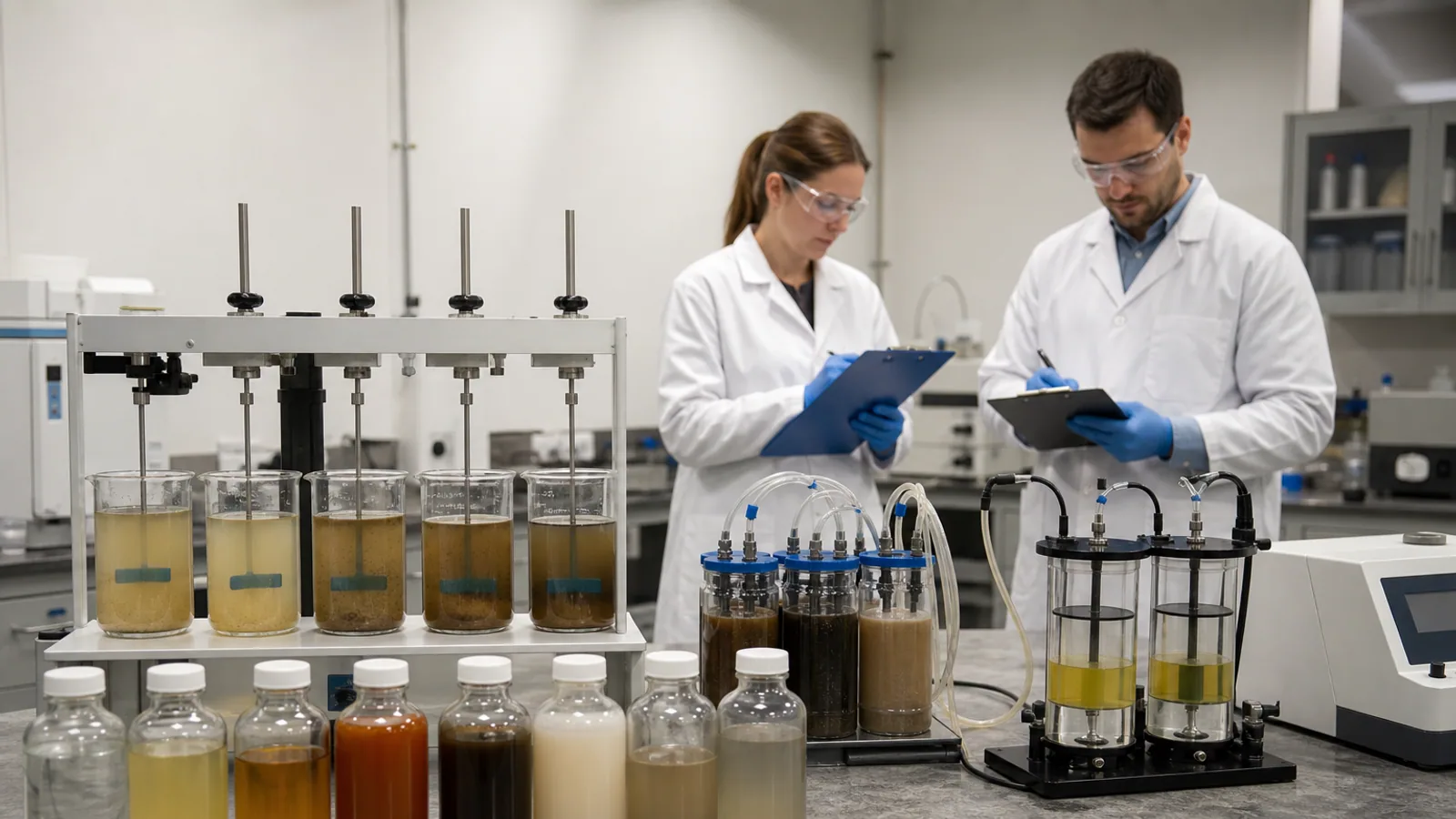
Bench biodegradability testing, respirometry and pilot work can help answer these questions. Testing should use representative water and should document temperature, pH, acclimation, nutrient addition, loading and analytical methods.
Biological COD removal must not be treated as proof that every API or antibiotic has been removed. Compound-specific analysis or another justified indicator is necessary where those substances form part of the project target.
MBR Is a Separation Configuration, Not a Universal Cure
A membrane bioreactor combines biological treatment with membrane solids separation. It can retain biomass, support a compact layout and produce effluent with low suspended solids when correctly designed and operated.
However, an MBR does not make a non-biodegradable compound biodegradable. It does not remove dissolved salts, and its membranes can be affected by oils, polymers, solvents, precipitates and poor pretreatment. The buyer should review membrane flux basis, temperature range, cleaning method, aeration, redundancy, lifting access, sludge characteristics and replacement strategy.
MBR may be appropriate when biological treatment is already justified and a compact solids-separation step or stable low-TSS effluent is valuable. It should be compared with conventional activated sludge, MBBR, SBR or other biological configurations on the complete project basis—not selected from one headline parameter.
Where Advanced Oxidation Fits
Advanced oxidation processes generate reactive species to transform selected organic compounds. Depending on the application, options may involve ozone, peroxide, ultraviolet energy, Fenton-type chemistry or other combinations.
AOP can be evaluated as:
- pretreatment to improve biodegradability or reduce inhibition;
- polishing after biological treatment;
- treatment for a defined residual compound or colour fraction;
- part of a multi-barrier reuse train.
The buyer should not specify “AOP” without defining the target. Oxidant demand, UV transmittance, scavenging by carbonate or other constituents, pH, reaction time, energy, chemical storage and transformation products all influence feasibility. A reduction in one analytical parameter does not automatically confirm safe or complete mineralization.
Bench testing should compare untreated and treated samples using the parameters that control the project. If AOP is used before biology, evaluate whether biodegradability improves and whether residual oxidant affects the downstream biomass. If used as final polishing, confirm the sampling point and residual oxidant control.
Adsorption, Membranes and Reuse Polishing
Activated carbon or other adsorption media can reduce selected organics, but capacity must be established with the actual water matrix. Competing COD, colour and other compounds can consume media before the target compound is controlled.
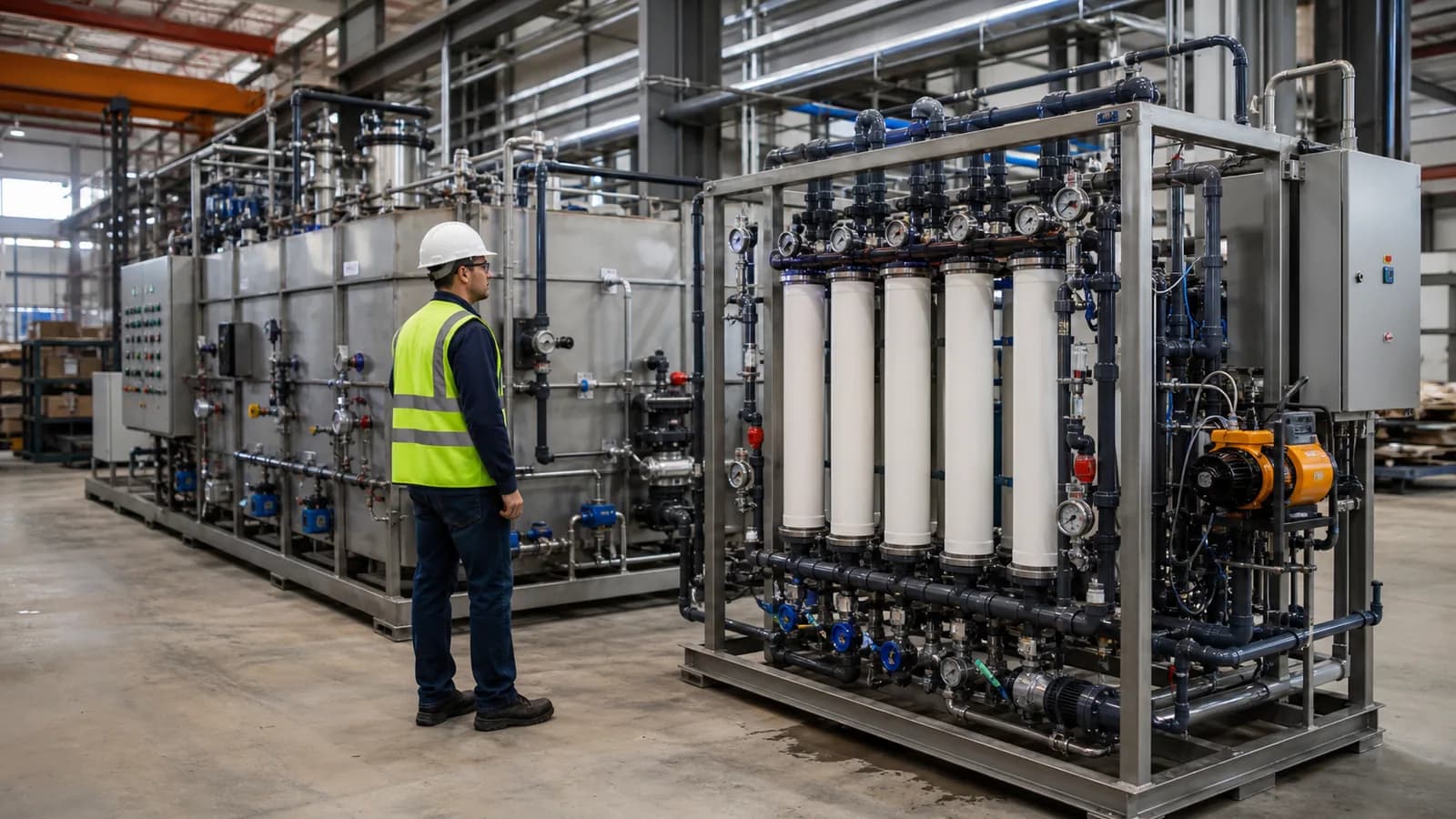
Ultrafiltration removes suspended and colloidal material but not most dissolved salts or small dissolved organics. Nanofiltration and reverse osmosis can separate dissolved constituents and support water reuse, yet they create a concentrate stream containing the rejected load. Recovery depends on salts, hardness, silica, organics, pressure, temperature, fouling risk and concentrate management.
For a reuse project, begin with the named end use. Utility reuse, cleaning preparation or another non-product-contact application may have different requirements. Pharmaceutical process-water or regulated product-contact applications require a separate quality, validation and hygienic-design basis that should not be inferred from a wastewater-reuse article.
If concentrate requires volume reduction, review the wastewater evaporator selection guide and the broader discharge, reuse or ZLD decision framework.
Residuals Are Part of the Treatment System
Every removal stage creates another output: screenings, sludge, spent carbon, regeneration waste, membrane concentrate, recovered solvent, evaporator concentrate or salts. The proposal should quantify or at least define how each residual will be measured, stored, transferred and managed.
Pharmaceutical residuals may require special review because they can contain active compounds, solvents, catalysts or hazardous constituents. The equipment supplier should not invent a disposal classification. The owner, qualified consultant and local authority must confirm characterization and disposal requirements.
Sludge dewatering tests can help estimate cake behaviour and filtrate recycle. Returning all filtrate to the front of the plant can recycle dissolved contaminants, so the internal load must be included in the mass balance.
Treatability Testing and Performance Boundaries
Testing should be designed around a decision. A jar test may screen coagulation or precipitation. Biodegradability and respirometry tests can investigate biological suitability. Adsorption tests can compare media capacity. Oxidation tests can examine dose and reaction conditions. Membrane tests can investigate flux, rejection and pretreatment, but short tests do not prove long-term fouling performance.
The jar, bench and pilot testing guide explains what each test can and cannot establish.
Record the sample identity, analytical methods, test conditions, results and limitations. The final proposal should state which performance values are based on confirmed data, which are design assumptions and which require commissioning verification.
Factory Testing, Shipment Inspection and Installation Preparation
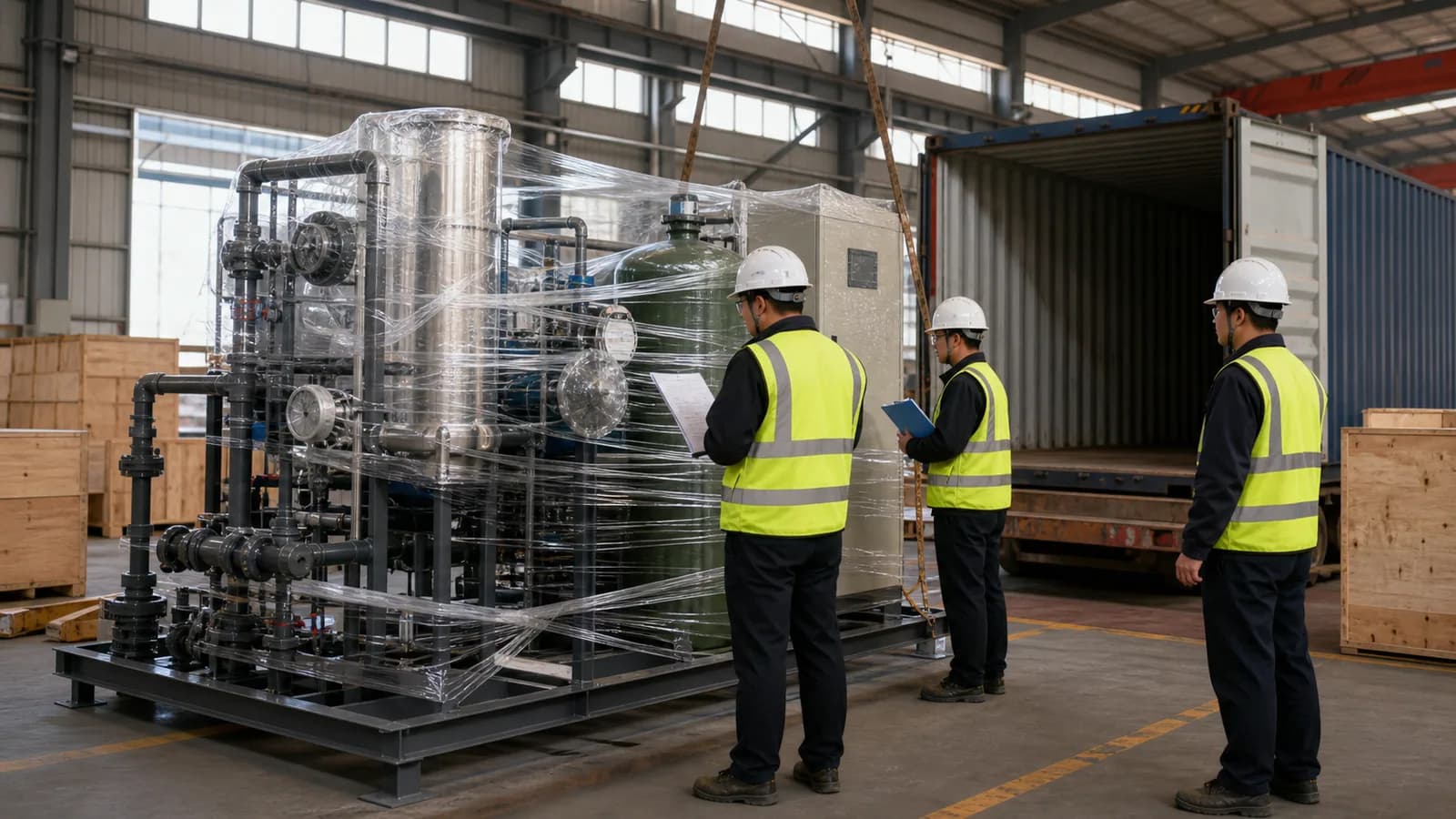
Factory testing should verify the supplied equipment rather than simulate unconfirmed pharmaceutical effluent performance with clean water. A practical FAT can check equipment tags, materials, dimensions, pumps, mixers, instruments, control logic, alarms, interlocks, leak-free clean-water circulation where possible, documentation and open items.
Shipment inspection should confirm protected instruments, capped connections, loose components, packing lists, lifting points and preservation for transport. Chemical storage systems, hazardous-area requirements and site piping are frequently project-specific; the supply boundary must identify who provides and certifies them.
Installation preparation should cover foundations, drainage, ventilation, utilities, access, lifting, maintenance clearances, chemical unloading, laboratory capability, sludge handling and emergency containment. Confirm whether commissioning uses clean water, prepared test water or real production wastewater, and define the acceptance period and operator responsibilities.
Pharmaceutical Wastewater RFQ Checklist
Provide the following information before requesting a final technical proposal:
- Facility type and manufacturing processes.
- Product families and campaign schedule.
- Wastewater source map and segregation arrangement.
- Average, peak and batch flows with discharge timing.
- Representative analyses linked to sampling conditions.
- Solvents, APIs, antibiotics, disinfectants and catalysts that can enter wastewater.
- Applicable outlet limits and sampling point.
- Reuse destination, if any.
- Existing tanks, treatment equipment and internal recycle streams.
- Available plot, climate, elevation and installation environment.
- Electricity, steam, cooling water, compressed air and chemical availability.
- Hazardous-area, ventilation and safety requirements.
- Residual storage and disposal routes.
- Automation, reporting and remote-alarm requirements.
- Factory testing, shipment, installation, commissioning and training scope.
Use the broader industrial wastewater RFQ checklist when preparing the commercial comparison.
FAQ
Can pharmaceutical wastewater be treated by biological treatment alone?
Sometimes biological treatment can remove the biodegradable organic load, but it should not be assumed to remove every solvent, API, antibiotic, salt or inhibitory compound. The answer depends on the wastewater matrix, treatment target and test results. Pretreatment or polishing may be required.
Is MBR better than conventional activated sludge for pharmaceutical wastewater?
MBR can improve solids retention, footprint and effluent suspended solids, but it does not solve non-biodegradability, toxicity or salinity by itself. Compare the complete biological basis, membrane fouling risk, cleaning, energy, maintenance and final target.
Should AOP be installed before or after biological treatment?
Either position may be considered. Pretreatment may improve biodegradability or reduce inhibition; post-treatment may polish residual compounds. Testing must identify the target, dose, reaction conditions, transformation products and downstream effects.
What samples are needed for a preliminary design?
Provide samples representing important process campaigns, high-strength batches, normal combined flow and credible cleaning conditions. Record the source, timing, flow, product campaign, preservation and operating state for each sample.
Can reverse osmosis make pharmaceutical wastewater reusable?
RO may support reuse after suitable pretreatment and biological or polishing stages, but it creates concentrate and does not replace a defined reuse-quality specification. Recovery and membrane stability depend on the full water chemistry.
What should a supplier guarantee?
The guarantee should reference the agreed influent design envelope, flow, operating conditions, outlet sampling point, analytical methods, utilities, operator responsibilities and exclusions. Avoid guarantees based only on an industry name or one unverified sample.
Conclusion
Pharmaceutical wastewater treatment is a source-separation and risk-definition problem before it is an equipment problem. Map high-strength, solvent-bearing, biodegradable, saline and relatively clean streams. Define the actual outlet target. Test uncertain biological, oxidation, adsorption and membrane steps using representative water. Then compare proposals by mass balance, residuals, operability, testing and supply boundaries.
A clear design basis allows biological treatment, AOP, MBR and membrane polishing to be assigned the jobs they can realistically perform. It also protects the buyer from a treatment train that appears complete on a flow diagram but cannot manage batch variability, concentrate or active-compound requirements.
Send Your Pharmaceutical Wastewater Requirements
Share the process description, stream list, representative analyses, average and peak flows, batch schedule, named compounds, treatment target, utilities, site conditions and residual-management route. Baihuipu can review the missing information needed before a project-specific treatment route and equipment scope are discussed.
CTA: Request a Pharmaceutical Wastewater Review
Technical reference notes
- WHO: Guidance on wastewater and solid waste management for manufacturing of antibiotics
- U.S. EPA: Pharmaceutical Manufacturing Effluent Guidelines Documents
- U.S. EPA: Characteristics and Treatment of Pharmaceuticals and Personal Care Products in Wastewater
- European Commission JRC: Common Waste Water and Waste Gas Treatment/Management Systems in the Chemical Sector