Introduction
Industrial wastewater treatment equipment is rarely a true catalogue purchase. Two systems described as “20 cubic metres per hour” may have different equalization volumes, chemical systems, materials, automation, redundancy, sludge handling, testing scope, and installation requirements. They may also be based on different assumptions about the wastewater.
That is why supplier evaluation should begin before the buyer compares prices. A technically attractive quotation can still create project risk if the water sample was not representative, the discharge target was not confirmed, the battery limits are unclear, or essential site work is excluded. Conversely, a higher initial price does not automatically indicate a better system. The buyer needs a common basis for comparison.
This guide is written for factory owners, engineering teams, procurement managers, EPC contractors, and overseas project coordinators evaluating a custom industrial wastewater treatment system. It focuses on evidence a buyer can request before purchase without assuming that one process route or performance value fits every project.
Why Supplier Selection Is More Than Choosing a Treatment Process
The process flow is important, but it is only one part of the delivered project. The same nominal process—physical-chemical treatment, dissolved air flotation, biological treatment, membrane separation, evaporation, or a combined route—can be engineered and supplied at very different levels of completeness.
A buyer should separate five questions:
- Is the proposed process suitable for the actual wastewater?
- Is the equipment scope complete enough for the intended operation?
- Can the supplier manufacture, inspect, and document the agreed configuration?
- Are installation, commissioning, and performance responsibilities clear?
- Can the buyer operate and maintain the system after handover?
This approach matters because industrial discharge requirements are normally tied to the facility, industry, discharge route, and jurisdiction. For example, the US EPA publishes industry-specific effluent guidelines rather than one universal industrial wastewater limit. International buyers should therefore give the supplier the project’s actual local standard or reuse specification instead of asking for a generic promise that water will “meet the standard.”
Establish a Common Design Basis Before Comparing Suppliers
Supplier comparison is unreliable when each vendor receives different information. Prepare one controlled inquiry package and issue the same revision to every shortlisted supplier.
Wastewater and flow data
The package should identify each wastewater source, average and peak flow, batch releases, operating hours, production schedule, available analyses, and known variability. State whether the values are measured, estimated, or based on a future production plan.
One sample may be suitable for an early discussion, but it should not be presented as proof of the full operating range. If cleaning cycles, product changes, seasonal conditions, or batch dumping affect the wastewater, include them in the design basis.
Treatment objective
Define where the treated water will go. Direct discharge, discharge to a municipal treatment plant, reuse for washing, cooling-tower makeup, process reuse, and a zero-liquid-discharge objective are different project boundaries. Include the applicable limit, sampling point, averaging basis, and any parameters that are especially important to the facility.
Site and delivery conditions
Provide the available footprint, indoor or outdoor location, climate, elevation where relevant, utilities, access limitations, lifting route, electrical standard, control-system interface, and expected installation responsibilities. An export project should also define transport restrictions, packing expectations, destination port, and required shipping documents.
18 Questions to Ask an Industrial Wastewater Treatment Supplier
1. What wastewater data did you use?
Ask the supplier to list the analyses, flow figures, production information, and documents used for the proposal. The answer should distinguish confirmed inputs from assumptions. A proposal based on “typical wastewater from this industry” may be acceptable for a preliminary budget, but it should be labelled accordingly and should not be treated as a final design.
2. How did you account for variability?
Average values can hide short-duration peaks. Ask how the design addresses batch discharges, pH changes, high-concentration cleaning streams, suspended solids, oil, salinity, temperature, or production shutdowns. The supplier should explain whether segregation, equalization, controlled feeding, or additional testing is required.
3. Why was this process route selected?
A credible answer connects each treatment stage to a defined contaminant or operating objective. “This is our standard process” is not enough. Ask what alternatives were considered, what information could change the route, and which stage carries the highest process risk.
4. What can the proposal guarantee—and under what conditions?
Any guarantee should identify the inlet design envelope, flow, operating schedule, utilities, chemical quality, operator duties, sampling method, test duration, and outlet sampling point. A number without conditions is difficult to enforce. Ask what happens when the influent is outside the agreed range.
5. Which items are excluded?
Request a written exclusions list. Common boundaries include civil tanks, foundations, interconnecting piping, cable trays, power distribution, ventilation, laboratory testing, chemicals, sludge disposal, cranes, local permits, and site labour. Exclusions are not automatically a problem; hidden exclusions are.
6. What engineering documents will be delivered?
Typical documents may include a process description, process flow diagram, P&ID, general arrangement drawing, equipment list, instrument list, electrical load list, utility schedule, foundation loads, interface list, control philosophy, operation manual, maintenance plan, and recommended spare-parts list. The exact package should match the project, and the document schedule should identify when buyer review is required.
7. How were materials of construction selected?
Ask for wetted materials—not only the tank material. Pumps, seals, valve bodies, seats, gaskets, piping, instruments, fasteners, and coatings must be reviewed against chemistry, concentration, temperature, pressure, abrasion, UV exposure, and cleaning method. The supplier should state material grades and any assumptions that require confirmation.
8. What instruments and control functions are included?
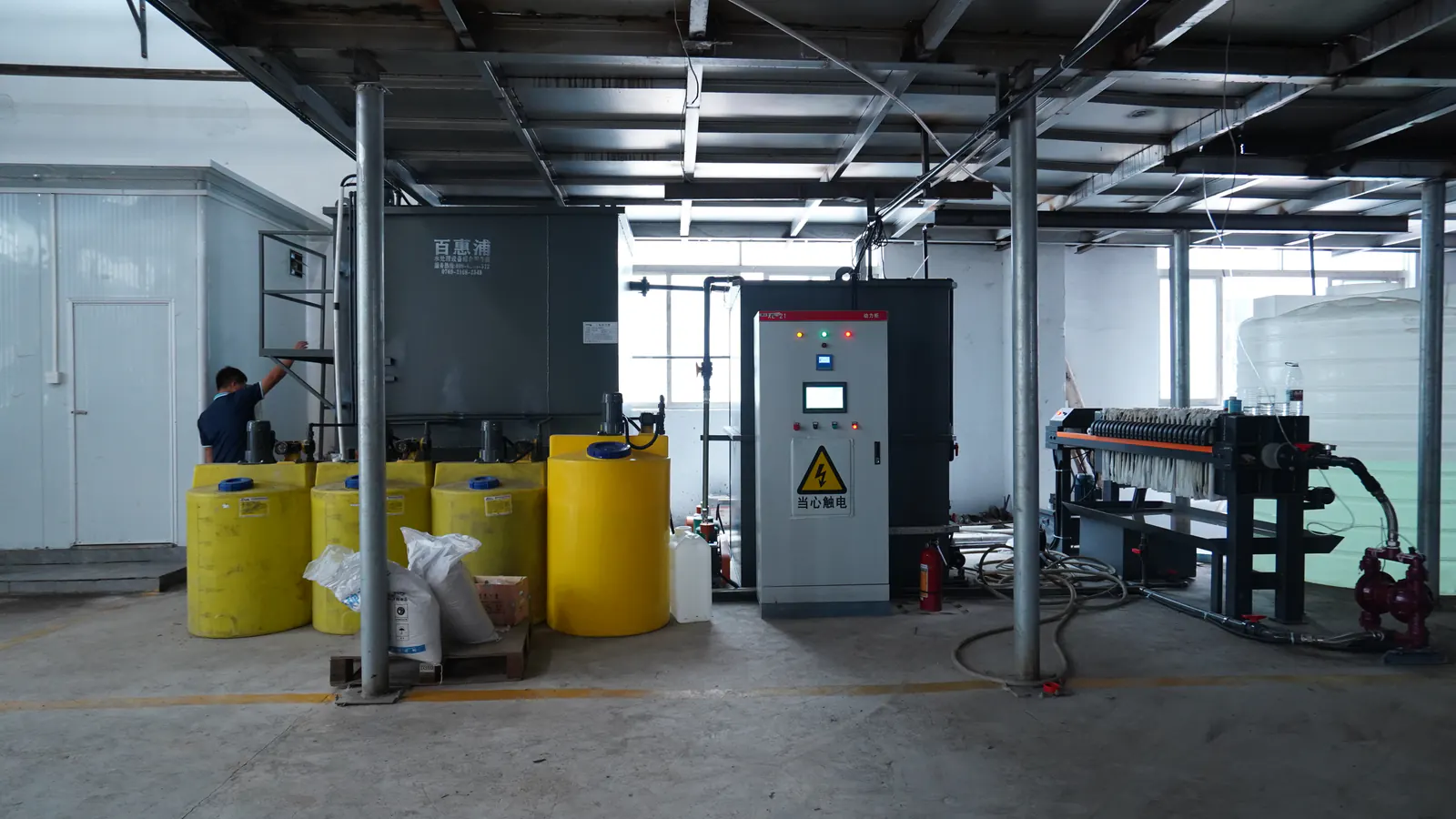
Review what is measured, what is only indicated locally, what is alarmed, and what can stop the system automatically. Ask about flow, pressure, level, pH, conductivity, oxidation-reduction potential, turbidity, or other application-specific measurements. Confirm data logging, remote access, communication protocols, and the division between package controls and the factory’s main control system.
9. How are sludge, concentrate, and other residuals handled?
Treatment does not make contaminants disappear. Ask for the expected residual streams, the assumptions used to estimate them, and the proposed collection, dewatering, storage, or downstream handling equipment. Final classification and disposal requirements normally depend on local testing and regulation, so the supplier should not make unsupported disposal claims.
10. Which parts are manufactured or assembled in-house?
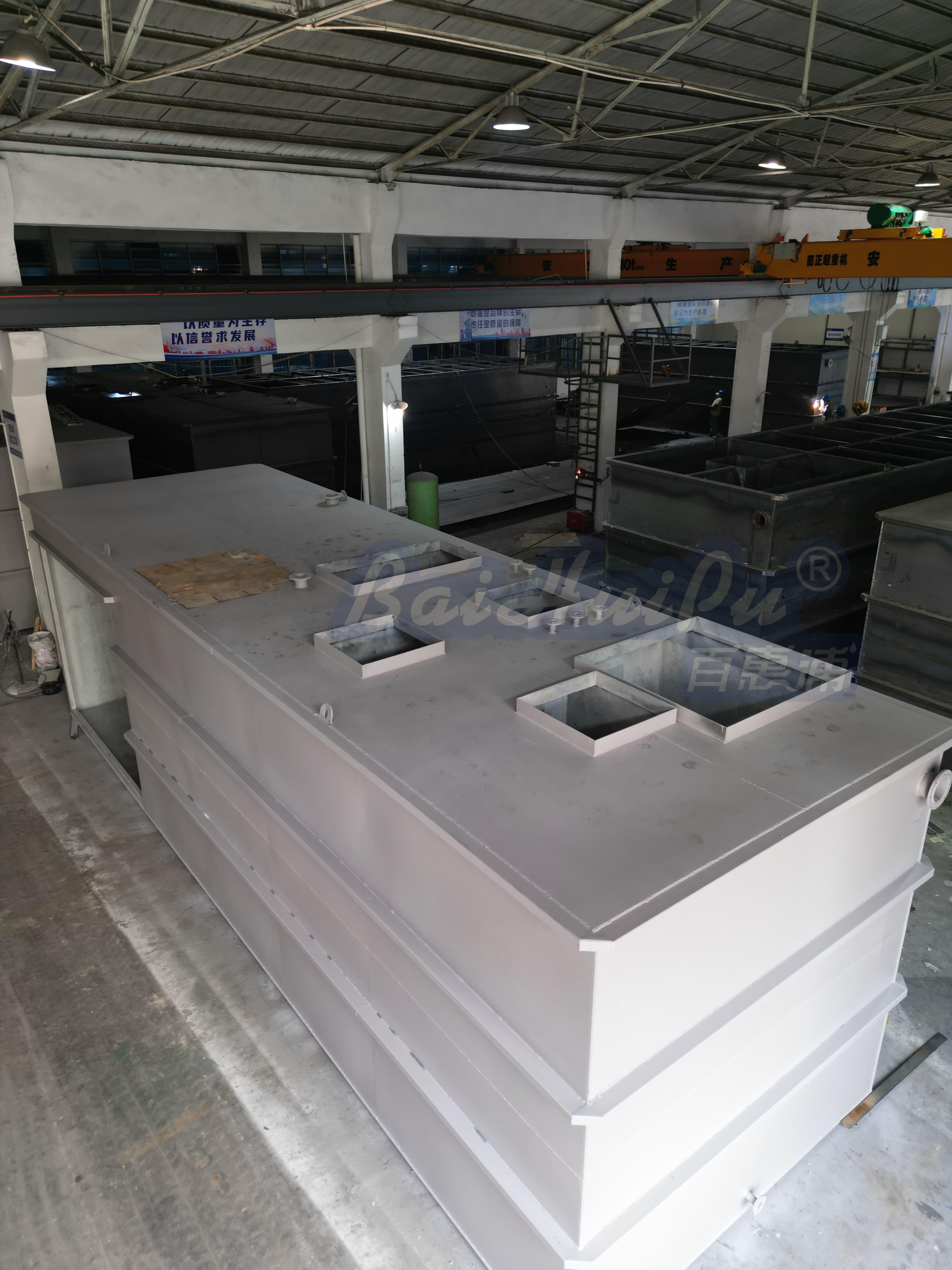
The buyer should understand what happens at the supplier’s factory and what is purchased from third parties. Request an equipment responsibility matrix and identify critical bought-out components. In-house assembly can improve interface control, but it does not replace the need to review component makes, models, materials, documentation, and service availability.
11. How is quality controlled during manufacturing?
Ask for an inspection and test plan appropriate to the equipment. It may cover incoming-material checks, dimensional inspection, welding or fabrication records where applicable, coating or lining checks, pressure or leak testing, electrical inspection, instrument calibration records, identification tags, and document review. Not every test applies to every system, so the plan should be project-specific.
12. What will be tested during the factory acceptance test?
The FAT should be agreed before manufacturing is complete. Confirm which mechanical, electrical, control, alarm, interlock, rotation, leak, and functional checks can be performed at the factory. If actual wastewater is unavailable, the FAT cannot automatically prove final treatment performance. The protocol should separate equipment verification from process-performance verification.
13. How will shipment inspection and packing be documented?
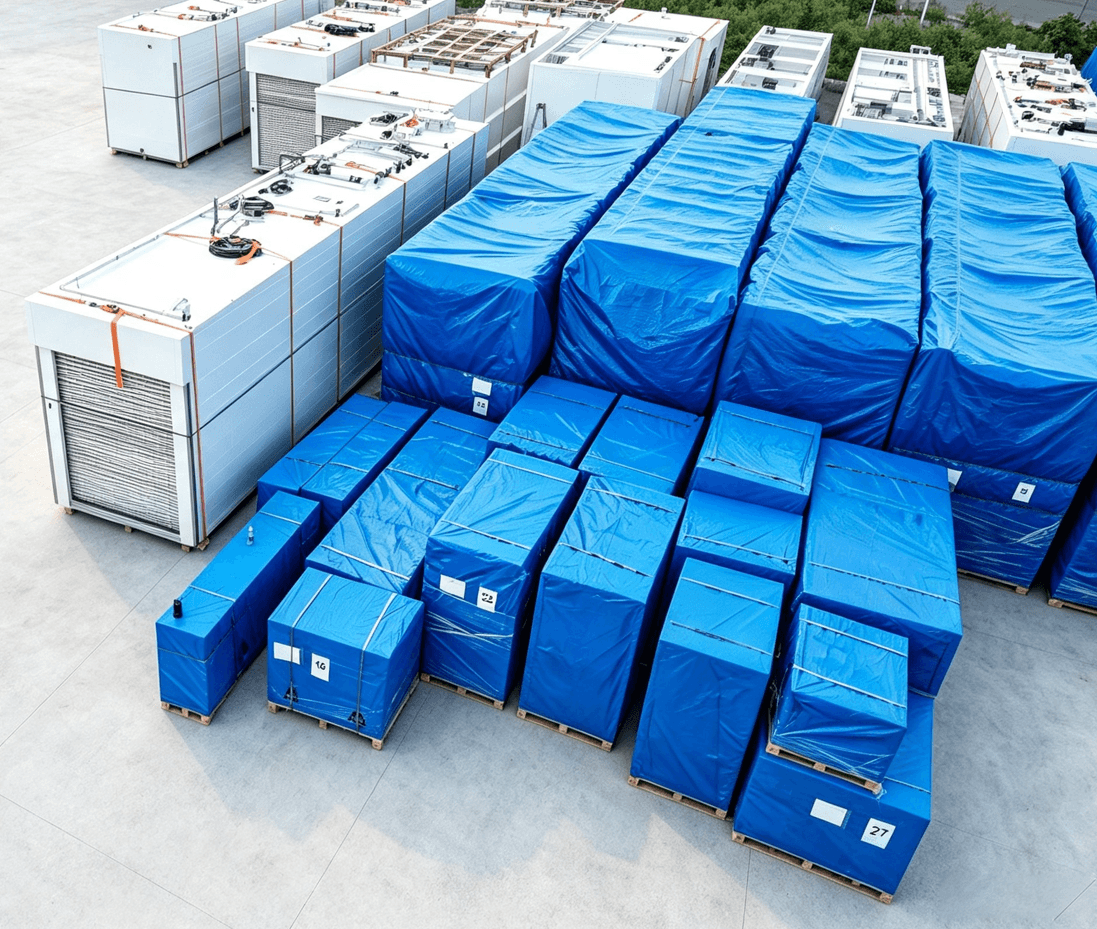
For an international project, request a packing list linked to equipment tags, preservation requirements, lifting points, centre-of-gravity information where necessary, protection of openings and instruments, loose-item identification, and photographs before closure. Confirm container or skid dimensions, transport weights, lifting arrangements, and responsibility for export packing.
14. What must the buyer prepare before delivery?
The supplier should provide an installation input list early enough for civil and utility work. This may include foundation loads, embedded parts, drainage, ventilation, access, chemical storage, water supply, compressed air, power quality, grounding, upstream and downstream piping, and space for operation and maintenance.
15. What is included in commissioning?
Clarify whether commissioning is remote or on site, how many days or visits are included, which utilities and chemicals the buyer must provide, who supplies laboratory testing, and what conditions must exist before the supplier’s engineer arrives. Separate mechanical completion, cold commissioning, wet commissioning, biological startup where applicable, optimization, and performance testing.
16. What training, spares, and maintenance support are included?
Ask for operator and maintenance training topics, recommended startup spares, commissioning consumables, critical two-year spares if required, routine maintenance tasks, and the process for obtaining replacements. Component availability in the destination country may influence the preferred brand or level of redundancy.
17. How will compliance and certificate claims be verified?
If a supplier presents ISO or other management-system certification, review the certificate number, issuing body, validity, site, and certification scope. ISO itself notes that ISO 9001 defines a quality-management framework; it does not prescribe exactly how a supplier must build a particular system. Certification is useful evidence, but it is not a substitute for technical review, factory inspection, or project-specific quality records.
18. How are design changes controlled?
Industrial projects evolve. Ask how revisions, substitutions, deviations, and buyer comments are recorded and approved. A change-control process should identify technical impact, price impact, schedule impact, document revision, and responsibility. Verbal substitutions made late in production create avoidable acceptance disputes.
How to Compare Industrial Wastewater Treatment Proposals Fairly
Build a comparison matrix that evaluates more than the total amount. At minimum, compare:
| Comparison area | What to verify |
|---|---|
| Design basis | Same flow, water analysis, variability, target, and operating hours |
| Process route | Purpose of each stage and declared process risks |
| Performance | Values, conditions, test point, duration, and exclusions |
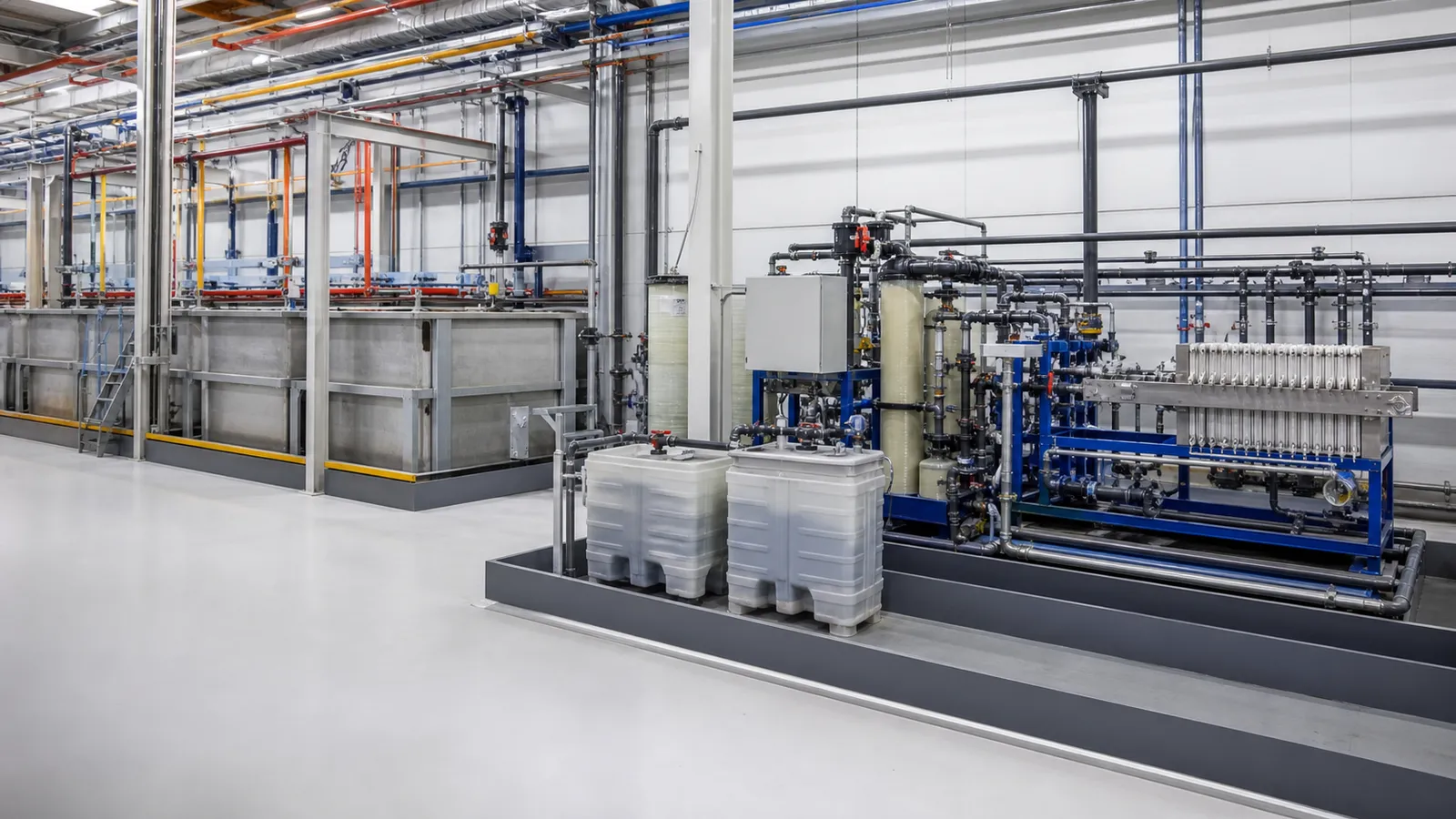
| Equipment scope | Tanks, pumps, instruments, controls, chemical systems, residuals handling |
| Materials | Grades and wetted-service boundaries |
| Utilities | Power, water, air, steam, chemicals, heating or cooling |
| Documentation | Drawings, lists, manuals, certificates, records, revision schedule |
| Testing | Inspection plan, FAT scope, test medium, acceptance criteria |
| Site scope | Civil, piping, cabling, installation, commissioning, laboratory work |
| Delivery | Packing, transport dimensions, shipment inspection, loose items |
| Lifecycle support | Training, spares, warranty boundaries, response route |
Normalize commercial differences before scoring vendors. If one proposal includes sludge dewatering and another stops at a sludge holding tank, the prices are not directly comparable. If one includes on-site commissioning and another provides remote guidance, the scope is different even if both say “commissioning support.”
Warning Signs During Supplier Evaluation
Be cautious when a proposal:
- guarantees final water quality from an unrepresentative sample;
- provides a process diagram without identifying design inputs;
- uses “standard materials” without grades or service conditions;
- omits sludge, concentrate, reject water, or chemical consumption;
- provides no exclusions or battery-limit drawing;
- treats FAT as proof of final effluent performance;
- changes component brands without buyer approval;
- cannot provide an equipment list linked to the quotation;
- gives a fixed commissioning duration without stating site prerequisites;
- relies on certificates or factory images instead of project-specific evidence.
These signs do not automatically disqualify a supplier, but they indicate questions that should be resolved before contract award.
A Practical Remote Factory Review
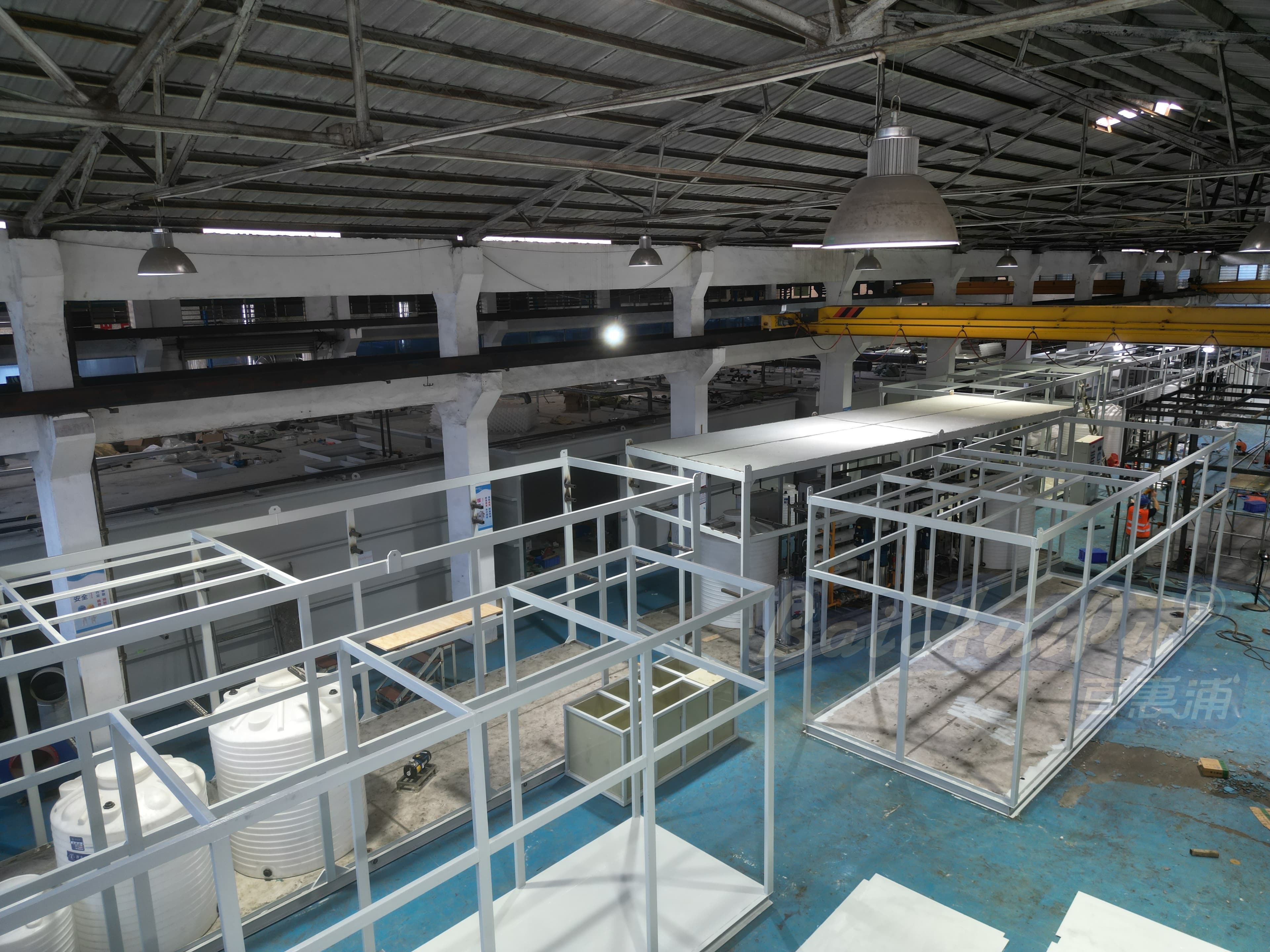
When an overseas buyer cannot visit in person, a structured remote review can still provide useful evidence. Ask the supplier to show the relevant assembly area live, identify the project equipment by tag, open control panels, show accessible nameplates, demonstrate the agreed checks, and review the document index on screen. The buyer can also appoint an independent inspector where the project risk justifies it.
Pre-recorded factory videos are helpful for orientation but should not be the only acceptance evidence. Project-linked photographs, test records, calibration documents, signed punch lists, and packing records provide a stronger audit trail.
Frequently Asked Questions
Should I select the wastewater treatment supplier with the lowest price?
Not before normalizing the technical and delivery scope. A lower price may reflect a legitimate simpler design, but it may also exclude instruments, residuals handling, installation inputs, testing, documentation, or commissioning. Compare the same design basis and battery limits first.
Can a supplier guarantee performance from one wastewater sample?
A single representative sample may support specific bench tests or an early proposal, but it rarely defines the full operating envelope of a variable industrial discharge. The guarantee should state the agreed influent range, flow, operating conditions, sampling method, and buyer responsibilities.
Is ISO 9001 certification enough to approve a supplier?
No. It can provide confidence that a quality-management system exists within a stated certification scope, but buyers should still review technical competence, project scope, factory controls, inspection records, and delivery capability.
What documents should I request before placing an order?
At minimum, request the design basis, process description, scope and exclusions, equipment list, material information, utility requirements, preliminary layout, documentation schedule, testing approach, delivery boundary, and commercial terms. The exact package depends on project stage.
Can factory testing prove the final effluent quality?
Usually not unless representative wastewater and an appropriate process test are available under controlled conditions. A conventional FAT primarily confirms that the manufactured equipment, controls, and available functions match the approved scope before shipment.
When should an independent inspection company be used?
Consider third-party inspection when the project value, destination requirements, contractual risk, unfamiliar supplier, critical fabrication, or buyer travel limitations justify independent verification. The inspection scope and acceptance criteria should be agreed in advance.
Conclusion
The best industrial wastewater treatment supplier is not simply the company that proposes the most advanced process or the lowest price. It is the supplier that can connect the treatment route to the real wastewater, state assumptions clearly, define supply boundaries, manufacture and inspect the agreed equipment, prepare it for international delivery, and support a controlled transition into site operation.
Give every shortlisted supplier the same design basis. Require written assumptions, exclusions, deliverables, testing limits, and responsibilities. Then compare the complete project—not only the equipment name and quotation total.
Send Your Requirements
If you are preparing or comparing an industrial wastewater treatment RFQ, send Baihuipu your wastewater sources, representative analysis, average and peak flow, treatment objective, site conditions, and expected supply boundary. Our team can review the available inputs, identify information gaps, and prepare a project-specific technical discussion without treating preliminary data as a universal performance guarantee.
CTA button: Send Your Requirements
Technical Reference Notes
- US EPA — Industrial Wastewater: industry and facility conditions affect discharge requirements.
- ISO — ISO 9001 Explained: ISO 9001 is a quality-management-system framework and certification is performed by independent certification bodies.
- IAF CertSearch: a resource for checking available accredited management-system certificate records.