Introduction
Buyers often ask whether a wastewater system should be made from PP, FRP, stainless steel, or “corrosion-resistant material.” The question is reasonable, but the answer cannot be selected from a material name alone. A tank that performs well for a dilute ambient-temperature rinse stream may not be appropriate for a hot cleaning solution, a high-chloride concentrate, an oxidizing stream, a vacuum vessel, a structural platform, or equipment exposed to outdoor sunlight and mechanical impact.
Material selection is therefore an engineering exercise, not a visual preference. It begins with what the equipment will actually see during normal operation, cleaning, upset conditions, storage, and shutdown. It also needs to distinguish between wetted process components and structural or external components. One system may correctly use several materials: a thermoplastic chemical tank, stainless hardware where justified, lined steel for a structural vessel, and selected elastomers for gaskets and pump seals.
This guide provides a practical way to frame the decision before requesting a quotation. It does not replace supplier compatibility review, chemical data, relevant standards, or site-specific risk assessment.
Start With Service Conditions, Not a Material Name
Before comparing materials, build a simple service-condition sheet for each important equipment item: equalization tank, reaction tank, piping, pump, valve, filter housing, membrane skid, evaporator contact component, duct, bund, or chemical storage vessel.
The sheet should include:
- chemical names, concentrations, and expected contaminants;
- normal, minimum, and maximum temperature;
- normal and maximum pressure, vacuum, and surge conditions;
- pH range, salinity, chlorides, oxidizing or reducing conditions, and solvents where relevant;
- solids, crystals, abrasive particles, sludge, and cleaning procedure;
- flow, velocity, batch frequency, and expected residence time;
- indoor or outdoor exposure, UV, weather, and ambient temperature;
- structural loads, support arrangement, lifting, access platform, and maintenance access; and
- what happens during a spill, wrong connection, or temporary upset.
It is important to document chemical names rather than only pH. Two streams may both be acidic yet place very different demands on materials because of oxidation potential, halides, solvent content, temperature, or concentration. Likewise, a statement such as “alkaline wastewater” is not sufficient when the equipment will also see cleaners, chelants, salts, heat, or periodic sanitization.
Common Material Families in Industrial Water Treatment
The materials below are frequently used in the industry. Their inclusion here is not a universal compatibility claim; the actual grade, fabrication method, operating limits, and chemical service must be confirmed for the project.
Polypropylene (PP)
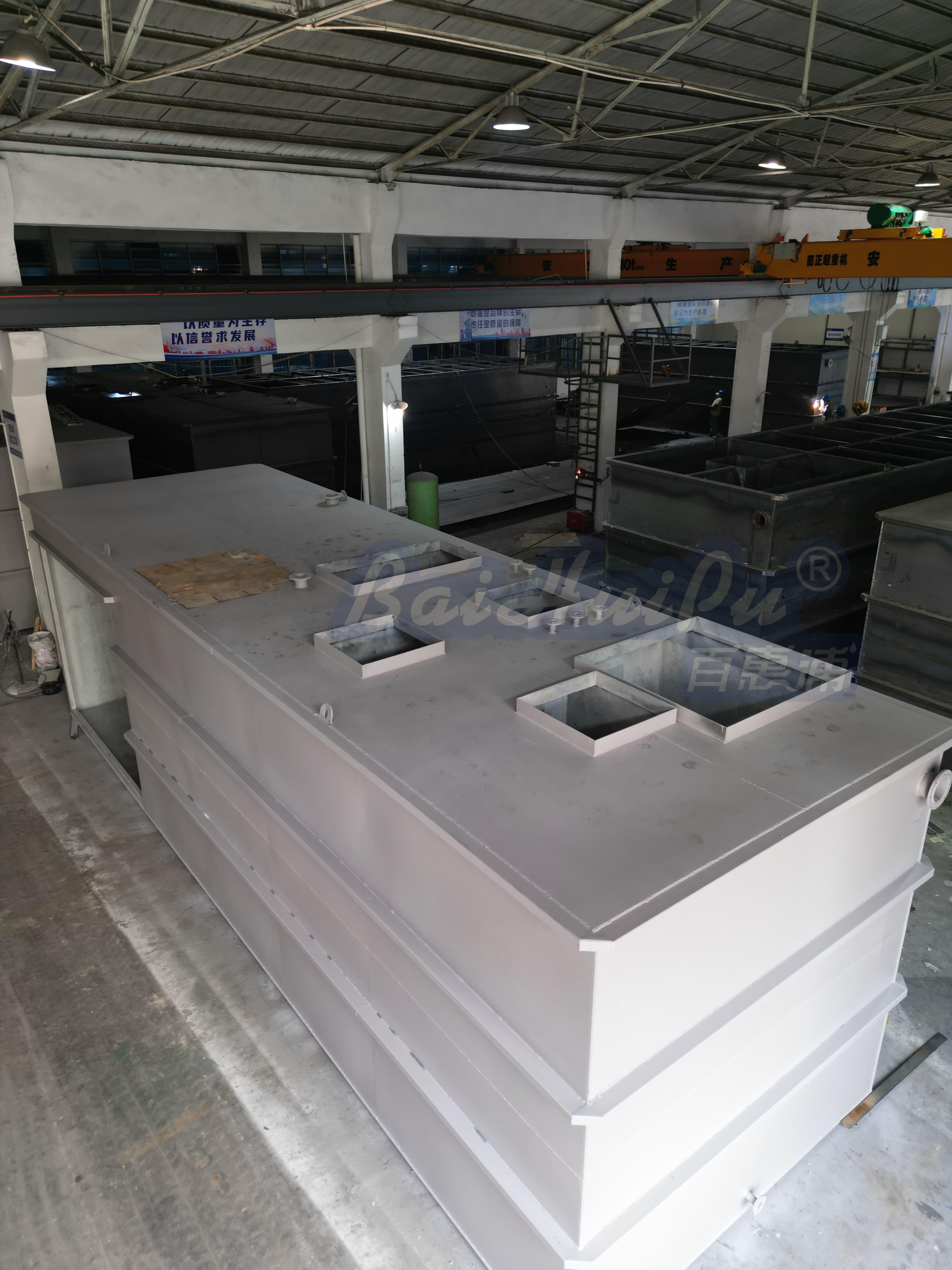
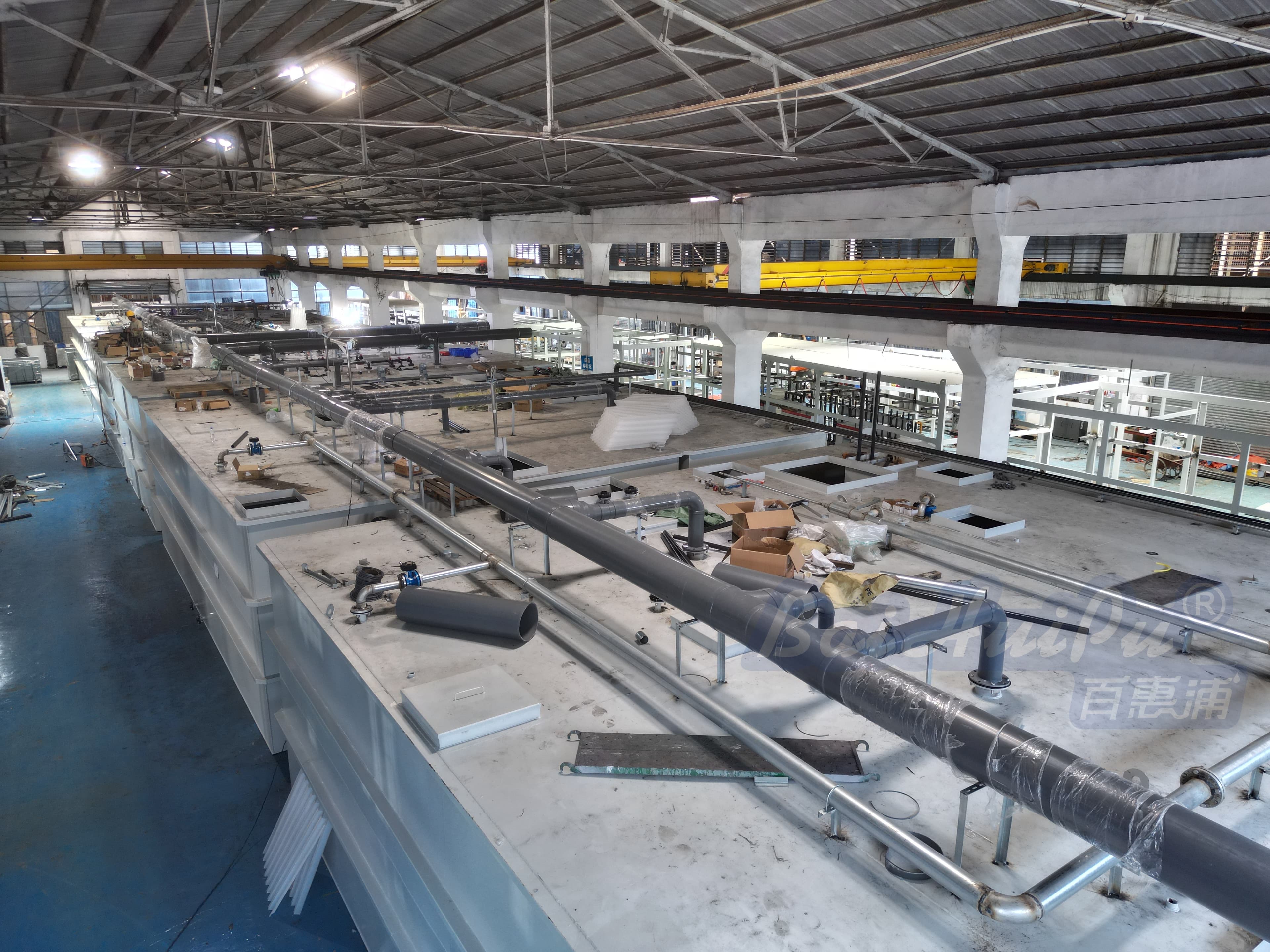
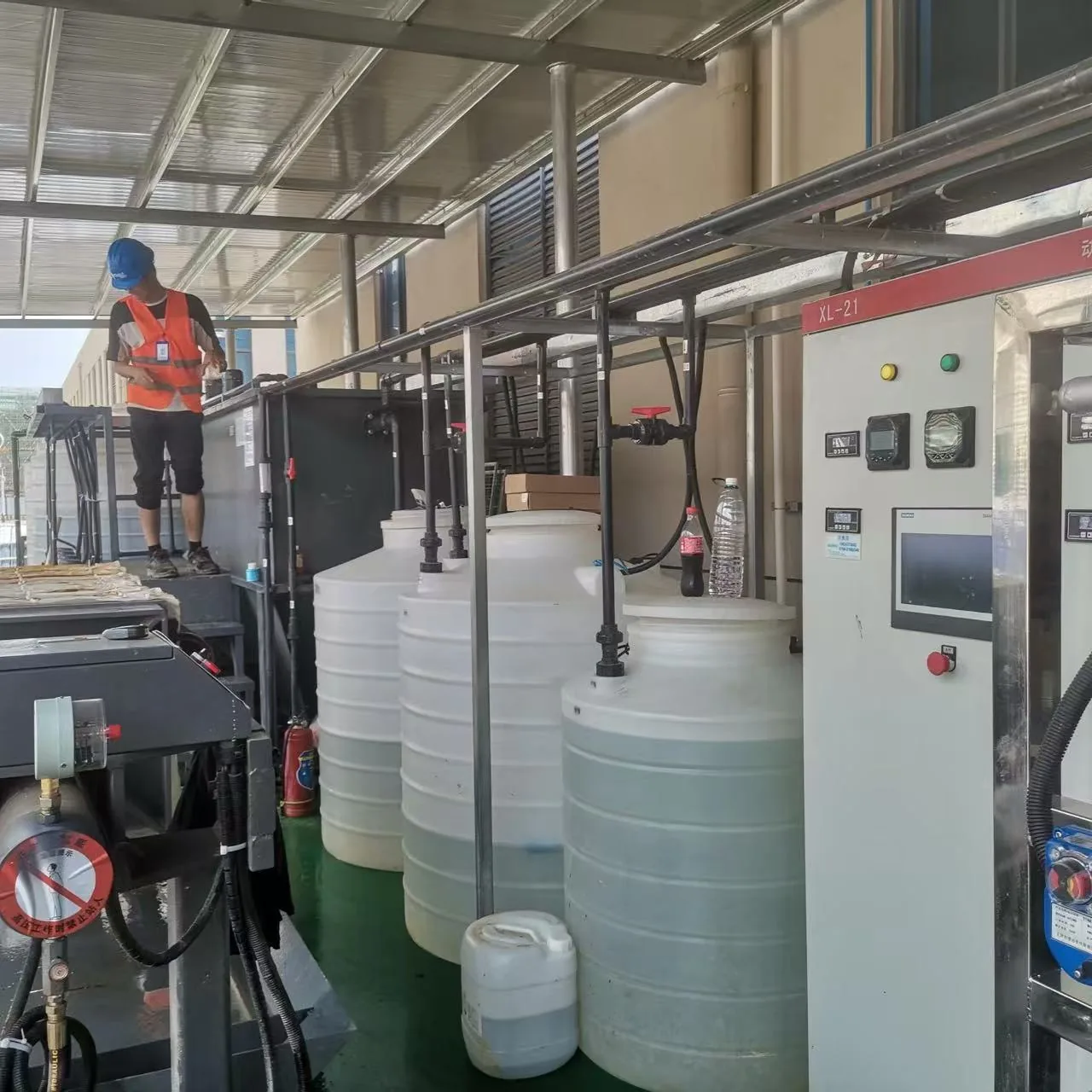
PP is commonly used for chemical-contact tanks, ducts, pipework, scrubber components, and fabricated wastewater-treatment equipment because it can offer useful resistance to many aqueous chemical services and is practical to fabricate into custom shapes. It is often considered for reaction tanks, dosing tanks, neutralization equipment, and selected piping applications.
However, PP is not a shortcut around service review. Temperature, mechanical loading, support design, UV exposure, solvent exposure, stress concentration, and fabrication quality all matter. A large PP tank needs appropriate stiffening, support, overflow design, access provisions, and consideration of whether external loads or vacuum conditions are expected. The selection should name the grade and design basis rather than stop at “PP tank.”
Fiberglass-reinforced plastic (FRP)
FRP can provide structural strength and is used for tanks, pipes, ducting, covers, and larger fabricated equipment. Its chemical suitability depends heavily on resin system, reinforcement, liner or corrosion barrier, manufacturing method, temperature, and the actual process environment. “FRP” describes a family of constructions, not one universal corrosion rating.
For wastewater equipment, ask what resin and liner concept is proposed, what chemical and temperature condition it is intended to manage, how nozzles and penetrations are reinforced, and how inspection or repair will be approached. If the equipment will experience vacuum, fluctuating level, outdoor exposure, or substantial structural loads, those conditions should be part of the design review.
PVC, CPVC, PVDF, and other thermoplastics
Thermoplastic piping and components are selected for different combinations of chemical resistance, temperature capability, pressure requirement, fabrication method, and cost. PVC is common in many ambient-temperature water-treatment applications. CPVC may be considered where higher temperature capability is required. PVDF and other higher-performance fluoropolymer-related materials may be selected for more demanding chemical conditions, but they should be justified by the service rather than specified only because they sound more durable.
The crucial questions are the actual chemical medium, concentration, temperature, pressure, joining method, support spacing, exposure, and maintenance environment. Pipe material alone is not enough: valve bodies, seats, gaskets, unions, instrument wetted parts, and pump components must also be compatible with the same service.
Stainless steel
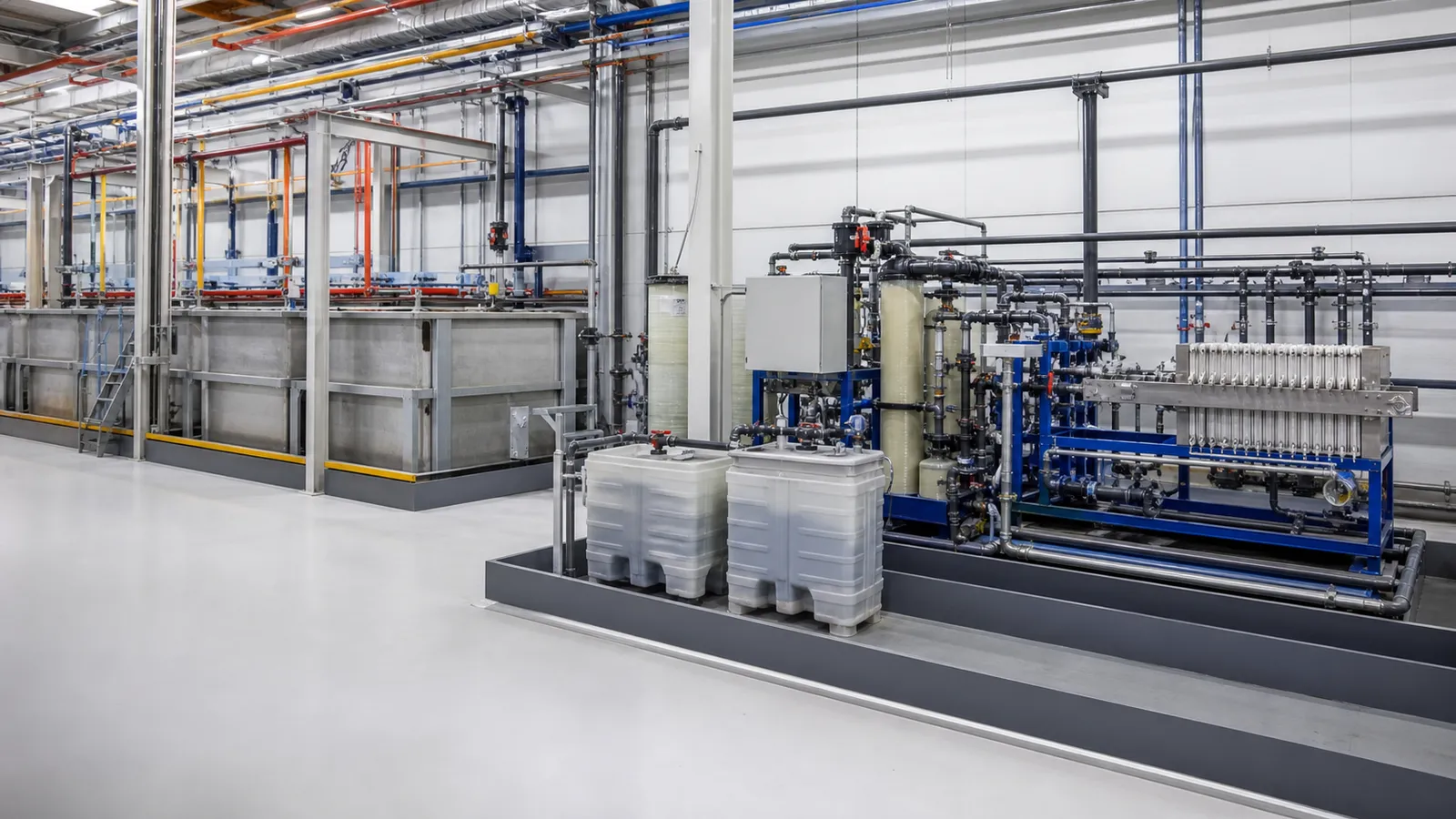
Stainless steel can be appropriate for many water-treatment structures, process pipes, pressure equipment, membrane skids, sanitary services, and clean-water applications. The applicable grade matters, as do weld treatment, surface condition, chloride exposure, crevices, cleaning chemicals, temperature, and whether the material is in continuous contact with an aggressive waste stream.
Stainless steel should not be assumed to be the premium answer to every corrosion problem. Certain chloride-bearing, oxidizing, acidic, or concentrated wastewater conditions can require a different material strategy. Buyers should ask for the stated alloy grade, wetted-service boundary, assumptions, and any limits that require review if the chemical regime changes.
Carbon steel, coatings, and lined steel
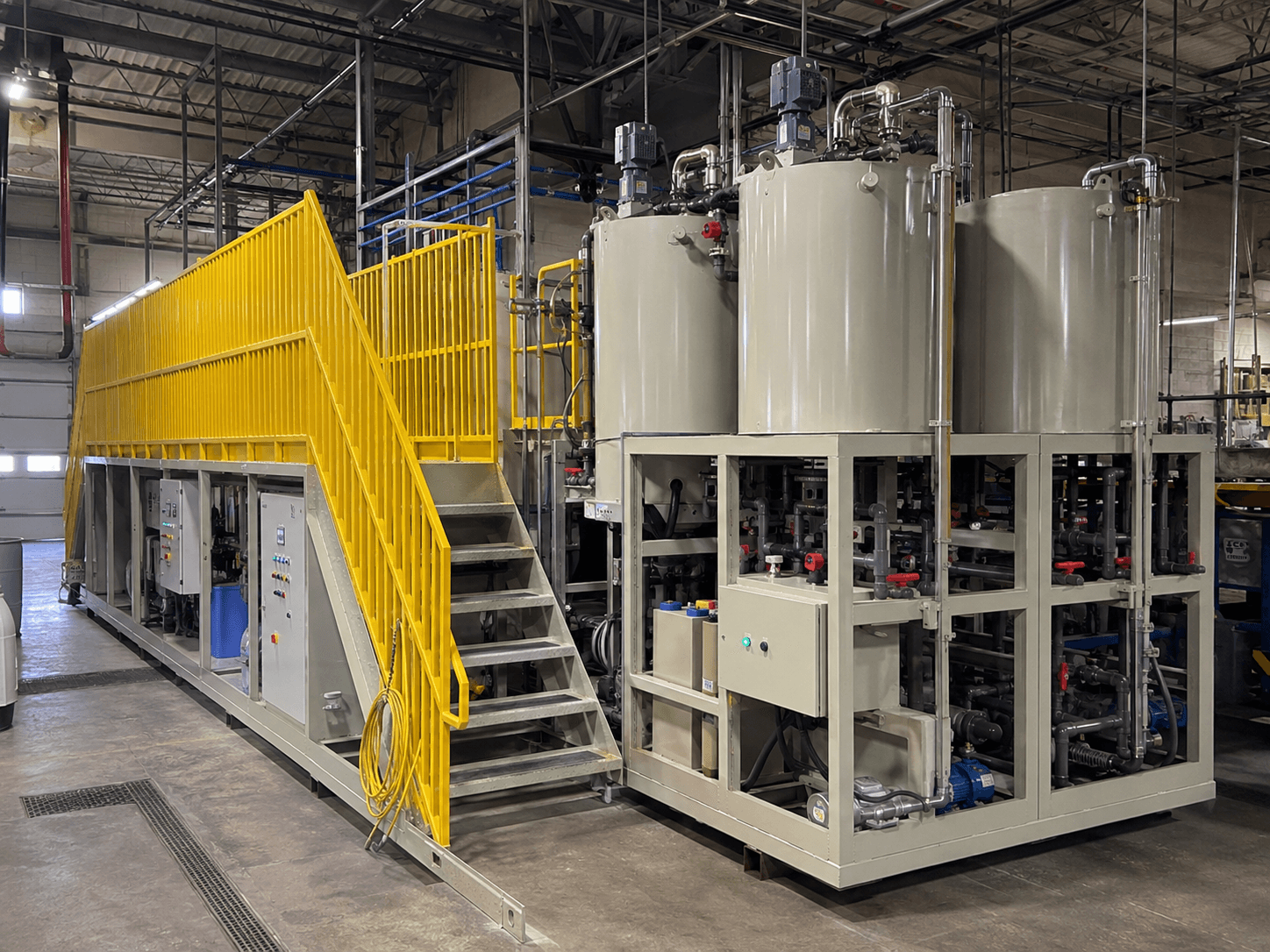
Carbon steel can be a practical structural or vessel material in suitable service when paired with an appropriate internal coating or lining. It may offer strength and fabrication advantages for larger equipment, but the long-term result depends on surface preparation, lining or coating selection, edge treatment, inspection, repairability, operating temperature, and avoidance of damage during installation and maintenance.
The right question is not merely “is it lined?” Ask what the base material is, which surfaces are wetted, what lining system is proposed, what service conditions it is designed for, how penetrations and joints are treated, and how future inspection will be performed.
Small Wetted Components Often Decide Reliability
A tank may be correctly specified while a pump seal, valve seat, gasket, sight glass, electrode, flexible hose, or instrument probe is not. These small components can create disproportionate downtime because they see the same chemical service, pressure, temperature, and cycling as the main equipment.
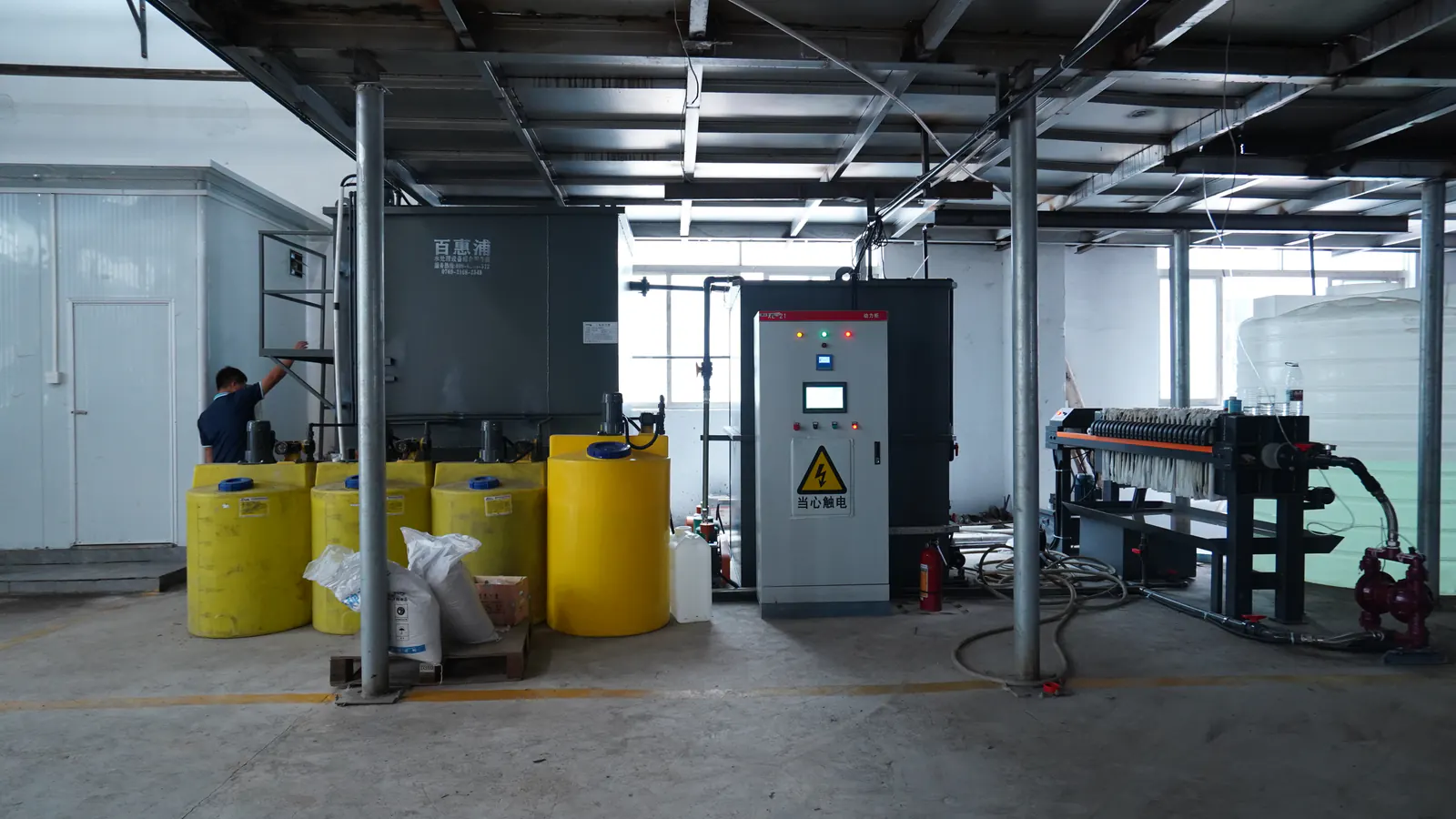
For each critical stream, the equipment list should identify wetted materials for pumps, valves, seal faces, elastomers, tubing, level devices, pH or conductivity sensors, sampling points, and filter elements. If an item is supplied by a third party, include its specific model and material options in the review rather than assuming that a catalog image represents the final configuration.
A Practical Comparison Matrix
The following matrix is a screening tool for discussion, not a final compatibility table.
| Material family | Typical use in water treatment | Review points before selection |
|---|---|---|
| PP | Fabricated tanks, pipework, chemical-contact equipment | Chemistry, temperature, stiffness, UV, support, vacuum, fabrication detail |
| FRP | Tanks, ducts, pipework, large fabricated structures | Resin/liner system, chemical duty, temperature, nozzles, structural loading |
| PVC / CPVC / PVDF | Pipework, valves, fittings, selected components | Chemical medium, temperature, pressure, joining, support, elastomers |
| Stainless steel | Skids, pressure components, clean-water and selected process services | Alloy grade, chloride and chemical exposure, welds, cleaning, crevices |
| Lined or coated steel | Larger vessels and structural equipment | Lining system, surface preparation, repairs, penetrations, temperature |
The matrix shows why “material comparison” is only the first step. The final choice must connect the actual fluid conditions to the complete component and fabrication design.
Temperature, Pressure, and Mechanical Design Cannot Be Separated
Material compatibility charts can be misleading if they do not include temperature and mechanical conditions. A material may be suitable for a chemical at room temperature but lose margin at a higher operating temperature. A tank may be chemically appropriate yet need different reinforcement for height, liquid density, mixing load, external support, seismic conditions, transport, or vacuum risk.
Similarly, a piping system must account for pressure, transient pressure, thermal expansion, support spacing, valve operation, and access for maintenance. A vessel or skid that is transported internationally should also be reviewed for lifting points, module supports, vibration, packing, and the order in which parts will be installed.
For high-consequence conditions, buyers should ask how the design basis treats normal operation, start-up, cleaning, upset conditions, and shutdown. The answer should be specific enough to review without exposing proprietary manufacturing details.
Factory Testing and Material Verification
Material verification does not have to mean an unrealistic promise that every component has the same level of traceability. It means agreeing which material-critical items need records, visual checks, tags, supplier certificates, leak checks, or inspection evidence before shipment.
During factory testing or shipment inspection, confirm the final equipment list, selected materials for critical wetted components, physical labels, accessible documents, and agreed test scope. If the factory test uses clean water, record that it verifies assembly and available functions—not long-term chemical performance with an untested feed.
This distinction is part of trustworthy project communication. A factory can verify that the delivered item reflects the documented selection; final suitability still depends on the customer providing correct chemical data and operating within the agreed conditions.
How to Compare Supplier Quotations
When reviewing competing quotations, compare the documented design basis, not only the headline material name. Ask each supplier to state:
- which components are wetted and their proposed materials;
- the chemical, temperature, pressure, and operating assumptions used for selection;
- any stated restrictions, exclusions, or items requiring customer confirmation;
- proposed tank, piping, valve, pump, seal, gasket, and instrument materials where relevant;
- the fabrication, inspection, and factory-test scope; and
- how the equipment will be packed, handled, installed, and maintained.
This makes it easier to spot a false like-for-like comparison. Two offers described as “FRP system” or “stainless system” may include very different resin systems, liners, alloys, pressure ratings, accessory materials, or delivery boundaries.
When a Compatibility Review Must Be Reopened
The original selection should be reviewed when process conditions change. Common triggers include a new product chemistry, higher concentration, elevated temperature, change in cleaning agent, addition of a solvent or surfactant, higher chloride level, increased salinity, longer storage time, new reuse route, or an unexpected batch discharge.
Do not wait for visible damage before revisiting the design basis. Early review is particularly important where the process contains mixed chemicals, proprietary additives, or intermittent off-spec streams that were not represented in the original inquiry.
FAQ
Is PP better than FRP for wastewater tanks?
Neither is universally better. PP and FRP have different fabrication and structural characteristics. The appropriate choice follows the actual chemical duty, temperature, tank size, loading, UV exposure, support design, and required service life. The resin and liner system are especially important for FRP.
Is stainless steel always corrosion resistant in industrial wastewater?
No. Stainless steel performance depends on alloy grade, chemical composition, chlorides, temperature, weld condition, crevices, cleaning chemicals, and operating conditions. It should be selected for a documented service, not as a generic upgrade.
What information does a supplier need to select materials?
Provide chemical names and concentrations, representative water analysis, temperature range, pressure or vacuum, flow pattern, solids, cleaning chemicals, site environment, and whether the equipment is indoor or outdoor. Include expected upset or batch conditions where known.
Are gaskets and pump seals included in material selection?
They should be. Small wetted components often fail first when their material is not compatible with the service. Request a review of valve seats, gaskets, seals, tubing, sensors, and flexible connections for critical streams.
Can a factory test prove long-term corrosion resistance?
No. Factory testing can verify the delivered configuration, assembly, and agreed records. Long-term performance depends on actual service conditions and operation within the agreed design basis.
Conclusion
Good material selection for industrial wastewater equipment is specific, documented, and revisited when the process changes. It connects real chemistry and operating conditions to tanks, pipework, pumps, valves, instruments, structures, inspection, factory testing, shipment, and maintenance. This disciplined approach is more useful than selecting a material from a short ranking of “best” options.