
- Plant owners and facility teams
- Engineering and technical teams
- EPC contractors and project integrators
- Procurement teams evaluating treatment scope
Compact sewage treatment & reuse
Municipal, Commercial & Decentralized Wastewater Treatment Solutions
Modular and integrated sewage-treatment solutions for municipalities, hotels, communities, schools, hospitals, camps, villages and commercial sites.
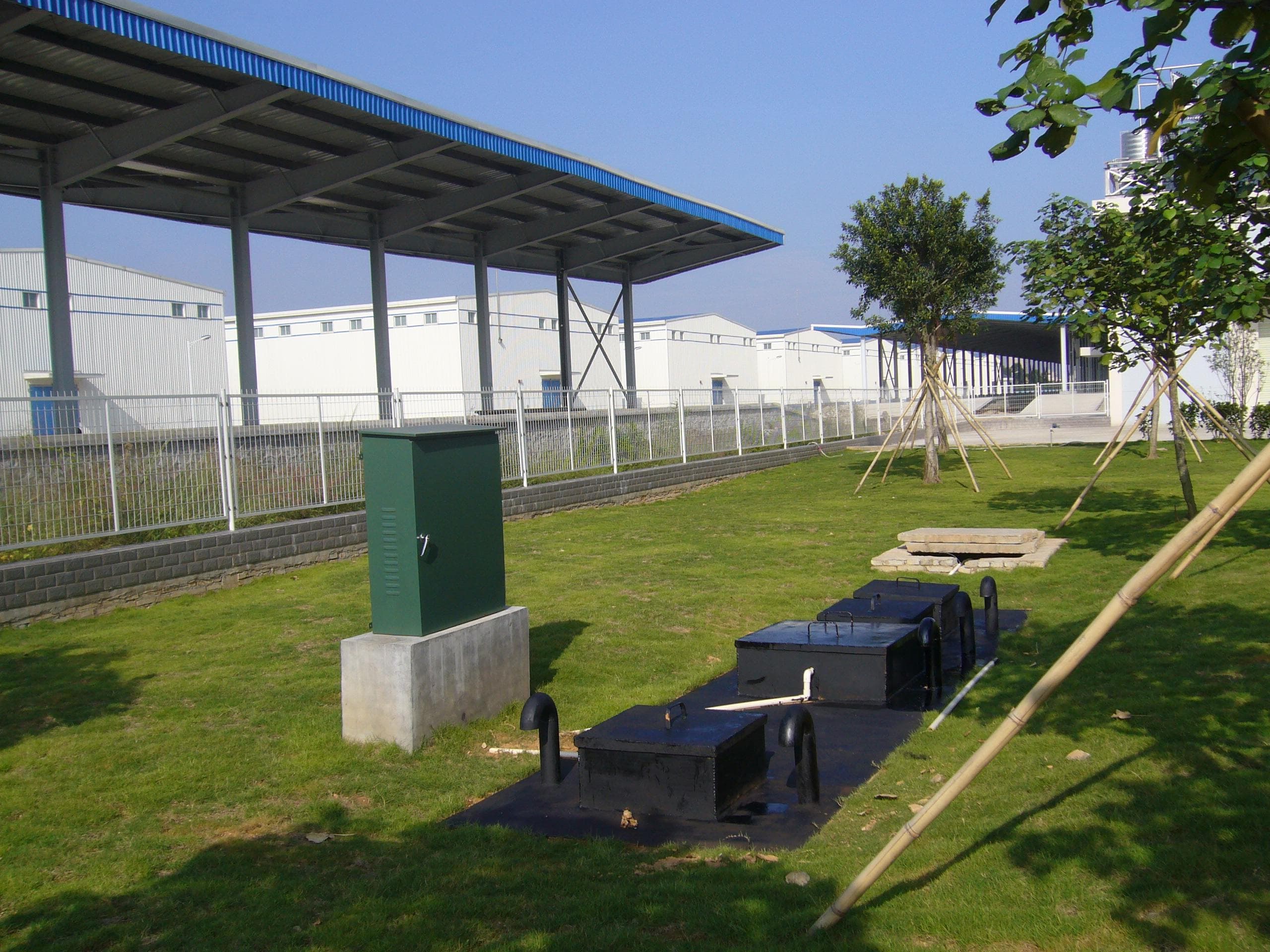
Direct answer
What Usually Defines the Treatment Route?
Decentralized sewage-treatment projects must match variable occupancy, operator capability, available civil works, odor constraints and the final discharge or non-potable reuse target. Package format alone does not define the treatment performance or the work required around the equipment.
- Project and facility type
- Design population or average/peak flow
- Influent characteristics or sewage basis
- Variable occupancy
- Compact treatment
- Non-potable reuse evaluation
- Containerized Water Treatment Systems
- Industrial Wastewater Treatment Systems
- Industrial Water Reuse Systems
Confirm equipment, materials, capacity and performance targets from representative water data, site conditions and the agreed project scope.
Applications covered
Where This Industry Solution Applies.
Use the closest application as a starting point. The treatment route still depends on the actual water source and project target.
Municipal Sewage
Start with population loading, peak flow, influent analysis, discharge target, sludge route and operator capability.
Hotels & Resorts
Account for occupancy variation, kitchens, laundry, limited space, odor control and potential landscape reuse.
Residential Communities
Confirm resident population, daily peaks, collection system, discharge point and long-term operating responsibility.
Schools & Hospitals
Define occupancy cycles, kitchen and laundry loads, any special wastewater streams and disinfection requirements.
Worker Camps
Plan for changing occupancy, remote operation, transport access, sludge removal and straightforward maintenance.
Villages & Remote Areas
Prioritize simple operation, variable flow, available utilities, service access and a practical sludge route.
Highway Service Areas
Review sharp traffic-driven peaks, kitchen wastewater, oil or solids sources and unattended operating periods.
Commercial Buildings
Confirm occupancy, kitchen or retail tenants, basement space, odor limits and the municipal connection conditions.
Buyer-critical conditions
Issues to Resolve Before Equipment Selection.
These conditions influence process reliability, operating workload, footprint and the treatment boundary.
Variable occupancy and flow
Tourism seasons, school terms, shifts and population changes can create low-load and peak-load operating conditions.
Limited operators and space
Equipment access, automation, maintenance frequency and civil-work boundaries should fit the actual site.
Odor, sludge and reuse
Sites near guests or residents need explicit plans for ventilation, sludge storage, removal, disinfection and reuse-water interfaces.
Water streams & treatment direction
Do Not Design from an Industry Label Alone.
Map the source, contaminants and treatment objective of each important stream before combining flows.
| Water stream | What must be checked | Possible treatment direction |
|---|---|---|
| Municipal sewage | Variable domestic load and scalable capacity | Screening, biological treatment, clarification, disinfection and sludge management |
| Hotels and resorts | Seasonal occupancy, kitchen wastewater and odor sensitivity | Equalization and compact biological treatment with practical sludge storage |
| Schools, hospitals and communities | Daily peaks and site-specific operating constraints | Biological treatment and disinfection selected for the project requirement |
| Worker camps and remote areas | Transport, utilities and operator limitations | Modular or containerized equipment with defined civil and utility interfaces |
| Commercial buildings and service areas | Intermittent flow, kitchen oil and limited footprint | Pretreatment, equalization and compact biological treatment |
Request a process review
Send the Water Source, Flow and Treatment Target.
Available analysis, stream list and site conditions help identify the questions that must be resolved before the treatment route is selected.
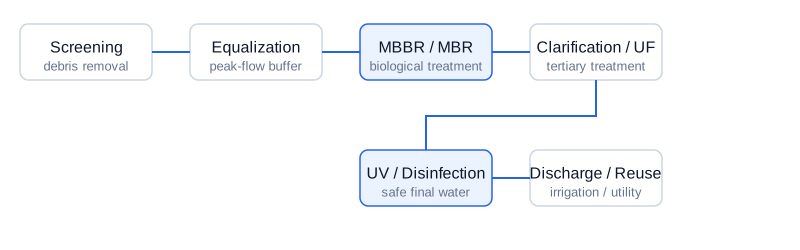
Typical process route
Define the real operating envelope before choosing a package
The diagram shows a common biological route. Flow variation, temperature, influent quality and the target standard determine the actual sizing and process.
Equipment options
Evaluate Each Module Against a Defined Treatment Job.
Match every equipment stage to the actual water, operating conditions, required outlet quality and residuals route.
Screening and equalization
Evaluation focusProtect the biological line and buffer occupancy-driven flow changes.
MBBR, activated sludge or hybrid treatment
Evaluation focusSelect the biological process around load, footprint, temperature and operator capability.
MBR or clarification
Evaluation focusChoose solids separation according to effluent quality, footprint and maintenance requirements.
Disinfection
Evaluation focusSpecify the disinfection method for the final discharge or non-potable reuse objective.
Packaged and modular delivery
Evaluation focusCoordinate tank, skid, container or civil structures with shipping and site installation constraints.
Sludge and odor control
Evaluation focusProvide storage, removal access and ventilation appropriate to nearby users.
Selection framework
Match the Process to the Condition That Drives the Design.
Compare each project condition against water analysis, operating requirements and the treatment target before selecting the process route.
| Project condition | Evaluate | Possible direction |
|---|---|---|
| Large occupancy variation | Minimum, average and peak population or flow | Equalization and a process tolerant of low and peak loads |
| Limited footprint | Civil space, access and maintenance clearance | Compact clarification or membrane-based alternatives |
| Remote site | Transport limits, utilities and operator availability | Modular delivery with clear installation and operating boundaries |
| Non-potable reuse | Reuse point, required quality, storage and distribution | Tertiary filtration, disinfection and suitable controls |
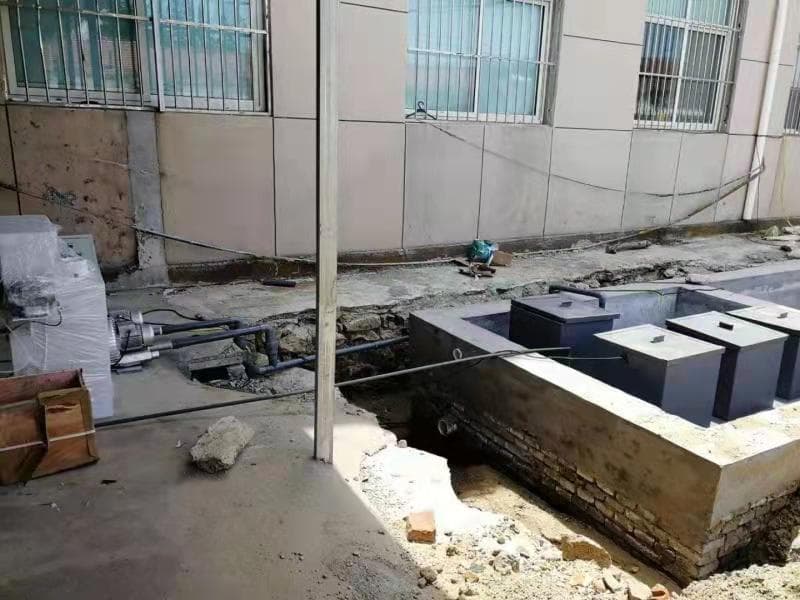
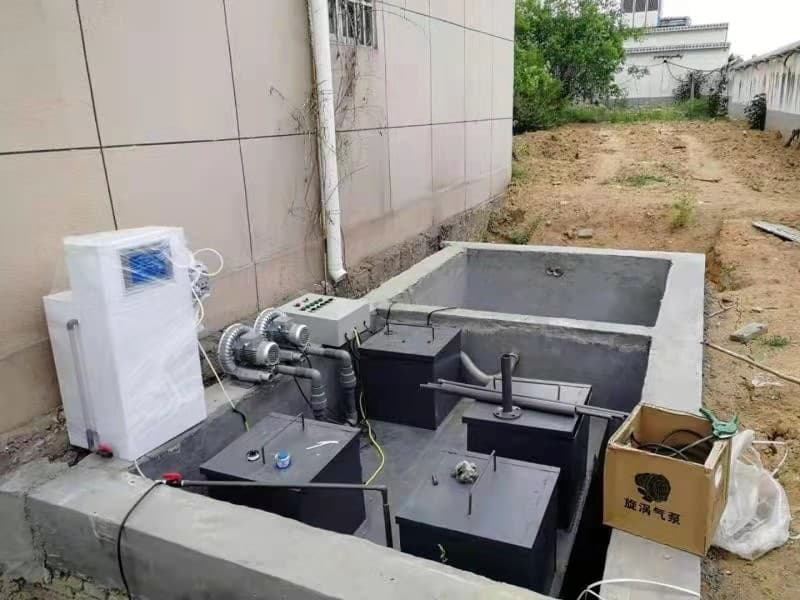
Equipment and layout
Review Equipment Arrangement and Site Access.
Use these views to discuss equipment arrangement, operating access, piping interfaces and the space available for the treatment system.
Prepare a useful RFQ
Provide the Inputs That Change the Design.
Share what is available now. The missing inputs can then be identified before equipment scope, materials and performance targets are confirmed.
Send Project RequirementsProject and facility type
Design population or average/peak flow
Influent characteristics or sewage basis
Occupancy and operating pattern
Discharge or non-potable reuse target
Climate, altitude and utility conditions
Footprint, civil works, access, odor and sludge-removal constraints
Buyer FAQ
Questions to Resolve Before Requesting a Final Quote.
Answers remain conditional where water data, local requirements or project standards determine the result.
How is a decentralized system sized?
Sizing should use average and peak flow, occupancy pattern, wastewater strength, temperature, discharge or reuse target and the intended operating schedule.
Is a containerized plant always the best option?
No. Containers can simplify transport and integration, but access, tank volume, climate, maintenance and civil works may make modular skids or site-built structures more suitable.
Can treated sewage be reused for irrigation or flushing?
Potentially, when the project defines the reuse standard, disinfection, storage, distribution and local requirements. It should not be assumed from the treatment process alone.
What must be planned for sludge and odor?
Include sludge storage and removal frequency, vehicle access, ventilation, odor control, equipment-room layout and proximity to residents or guests.
Plan your industry solution
Turn Your Water Data into a Clear Technical Scope.
Send the stream source, flow, available analysis, treatment objective and site conditions for a project-specific discussion.