Practical guides for industrial water-treatment planning, equipment selection, and confident project conversations.
Latest technical articles
Useful Reading for Your Next Water Project.
Technical Guide31 Aug 2026
Chelated Heavy Metal Wastewater Treatment: Why Conventional Precipitation Fails and How to Specify a Reliable Process
Understand how ammonia and other complexing agents affect metal precipitation, using a real high-strength nickel wastewater bench test and a practical specification framework.
Heavy Metal Wastewater Treatment: A Buyer’s Guide to Precipitation, Solids Separation, and Sludge Dewatering
Specify heavy metal wastewater treatment from actual streams, metal chemistry, precipitation testing, solids separation, sludge dewatering and written acceptance conditions.
Potable Process Water Treatment for Food Manufacturing: How to Specify an RO System from Source Water to Point of Use
Specify potable process water from intended use, source-water risks, treatment barriers, hygienic distribution, monitoring and written acceptance—not an RO skid alone.
Ultrapure Water for Energy Storage Battery Manufacturing: A Buyer’s Guide to Quality, RO/EDI Design, and Acceptance
Define an ultrapure-water system for energy-storage battery manufacturing from actual points of use, feed water, RO/EDI design, distribution, monitoring and written acceptance.
Lithium-Ion Battery Wastewater Treatment System Design: A Buyer’s Checklist from Source Mapping to Acceptance
Define a lithium battery wastewater treatment system from source mapping, representative analysis, process roles, residuals, site interfaces and written acceptance conditions.
How to Size an Equalization Tank for Industrial Wastewater
Size equalization from a time-based balance between measured inflow and controlled outflow, then verify pollutant loads, mixing, pumps, controls, freeboard and usable working volume.
Dairy Wastewater Treatment: How to Handle Milk Losses, CIP Chemicals, FOG and Variable COD
A practical dairy wastewater route starts with source control, screening and equalization, then applies separation, biological treatment and polishing only where each stage has a defined treatment job.
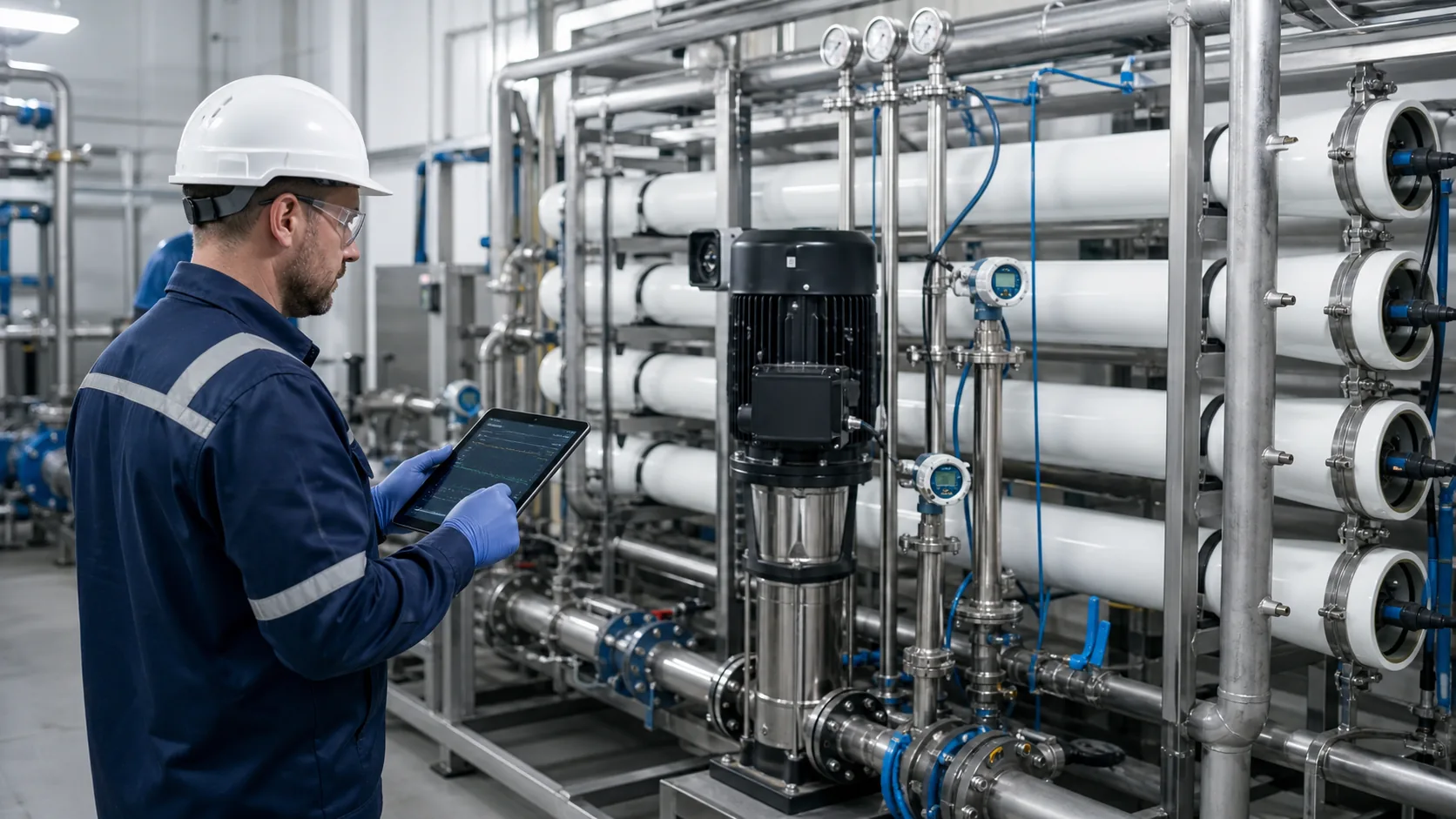
Use normalized RO trends, instrument checks, foulant evidence and cleaning recovery to decide whether membranes need cleaning, further diagnosis or replacement.
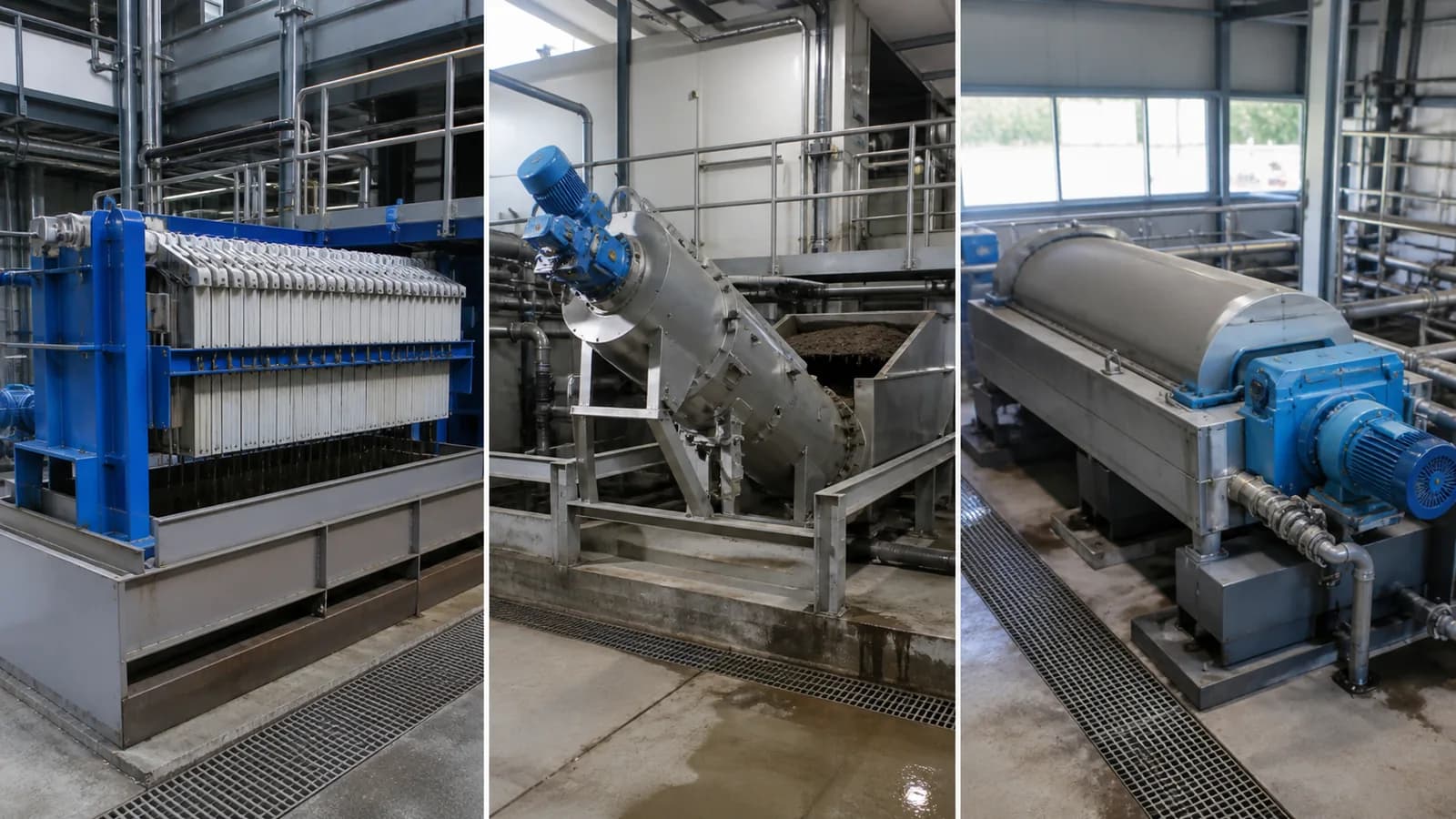
Sludge Dewatering Equipment Selection: Filter Press vs Screw Press vs Centrifuge
No sludge dewatering machine is universally best. Compare the sludge, dry-solids load, cake destination, operating schedule, utilities and verified test results before selecting a filter press, screw press or decanter centrifuge.
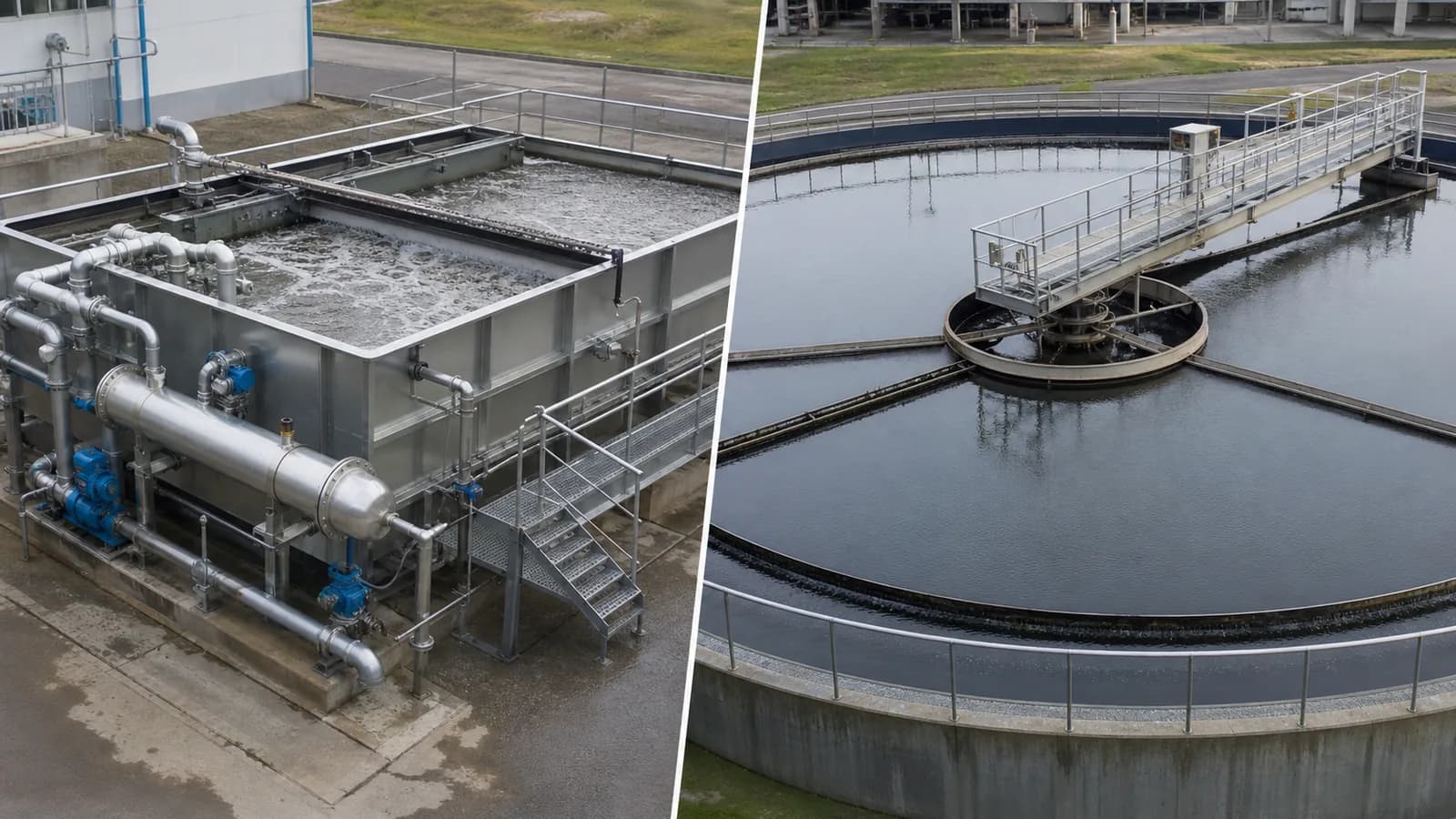
Dissolved Air Flotation vs Clarifier: How to Choose for Industrial Wastewater
DAF is generally shortlisted for light, slow-settling or oily solids, while gravity clarification suits dense, reliably settleable flocs. Representative testing and the complete sludge route should decide the final selection.
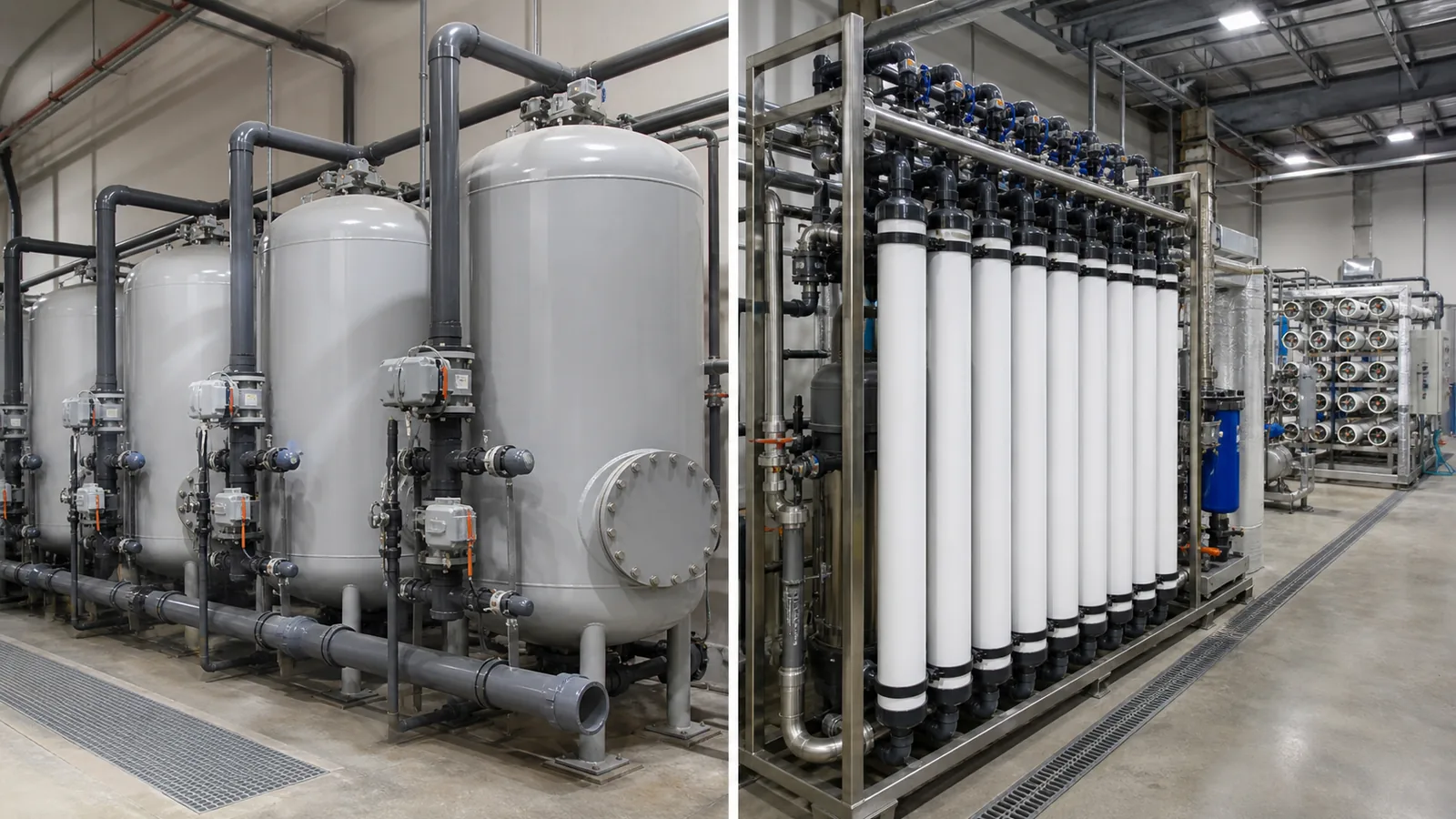
Ultrafiltration vs Multimedia Filtration Before RO: A Buyer’s Pretreatment Guide
Multimedia filtration can suit stable, manageable particle loads; ultrafiltration is often considered for variable colloids and a more defined membrane barrier. The RO feed envelope, net recovery, cleaning and waste route determine the choice.
Boiler Feed Water Treatment: How to Choose Softening, RO, Ion Exchange or EDI
A buyer-focused guide to boiler makeup-water requirements, softening, reverse osmosis, demineralization, EDI, condensate return, waste streams and acceptance planning.